
Tabby is a color of cats
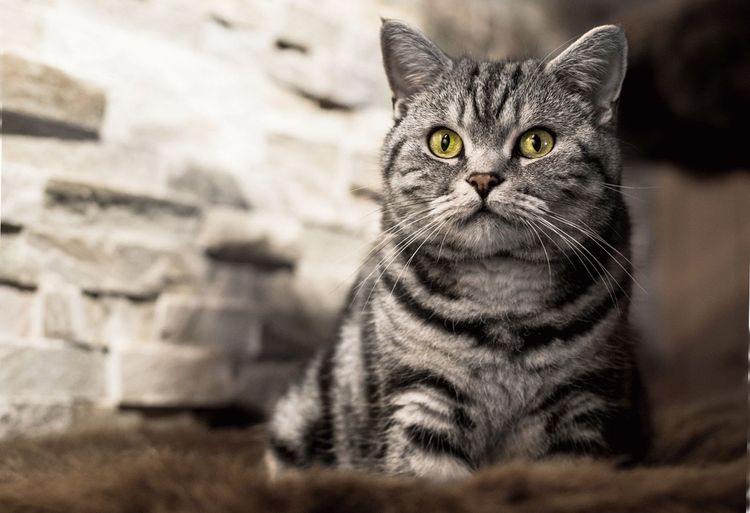
Tabby means "striped" in English. It's not a breed variety, but a color pattern in cats. The tabby pattern is unique to cats and is not found in other animal species. Tabby cats are a character in many fairy tales. Puss in Boots, the Cheshire Cat, and Murenka from "Silver Hoof" all had tiger-striped coats. Today, portraits of tabby cats are used in advertisements for Whiskas and Friskies cat food as images of healthy and active animals.
Content
A bit of genetics
Tabby is considered the basic color of cats: tigers, lynxes, leopards, cougars, panthers, ocelots Other members of this family of predators have either striped or spotted coats. Ancient cats were also striped, without exception, because the dominant gene for coat color, A (agouti), was their dominant color pattern. This was nature's way of providing these animals with the best conditions for survival. Their "camouflage" coloring makes them invisible against vegetation, allowing them to hunt more successfully and hide more effectively in case of danger.
After humans domesticated cats, they began developing new breeds. As a result of selective breeding, there are now up to 70 cat breeds with varying body types and color patterns. However, all kittens are born with spotted coats, and the coloring characteristic of the breed developed through selective breeding only develops after several weeks.
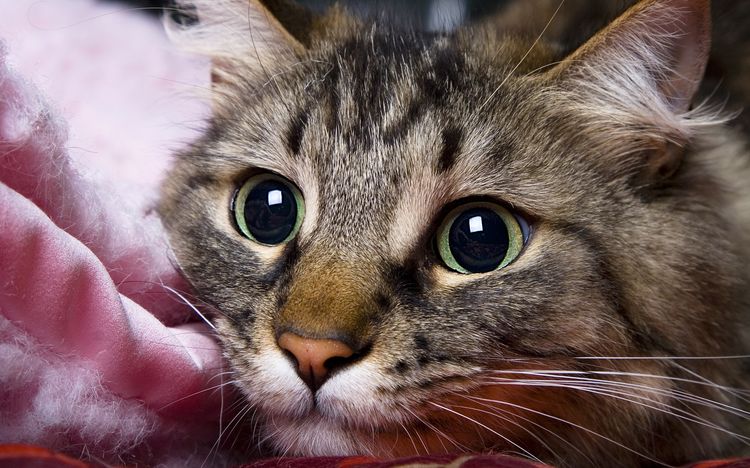
A distinctive feature of the tabby coloring, in addition to the spotted coat, is the distinctive pattern on the head. Photos of tabby cats clearly show dark lines on the forehead, forming an "M," and eyeliner, which, like well-placed makeup, accentuates their expressiveness. Several patterns exist on the cat's body.
Tabby color patterns
There are over a dozen officially recognized variations of the tabby pattern. Four of these are considered primary, while the others are variations.
Mackerel
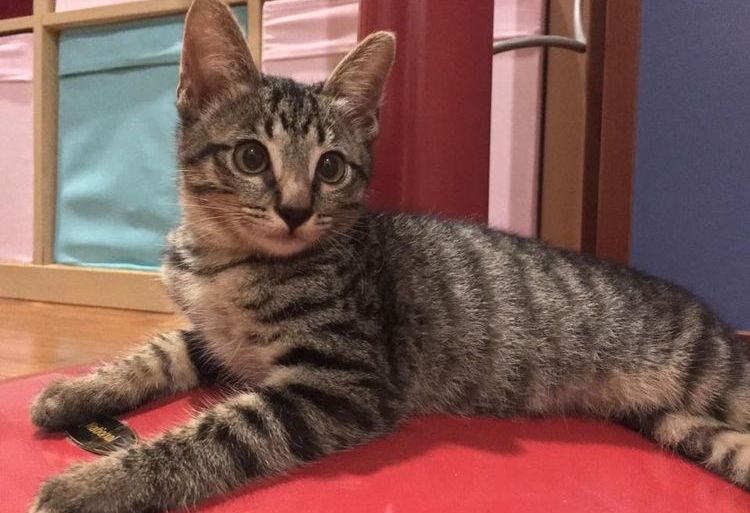
The tabby pattern is the most common in cats. In the photo, you can see that the cat's body has distinct dark stripes arranged vertically, with a wide central stripe running from head to tail. This pattern is somewhat reminiscent of a fish with striped sides—a mackerel, hence the name "mackerel." Narrower transverse stripes on the paws, neck, and chest resemble exquisite bracelets and necklaces. Dark lines on the forehead form the typical tabby "M," and the cheeks and chin may also be decorated with stripes of varying widths.
Marble (classic)
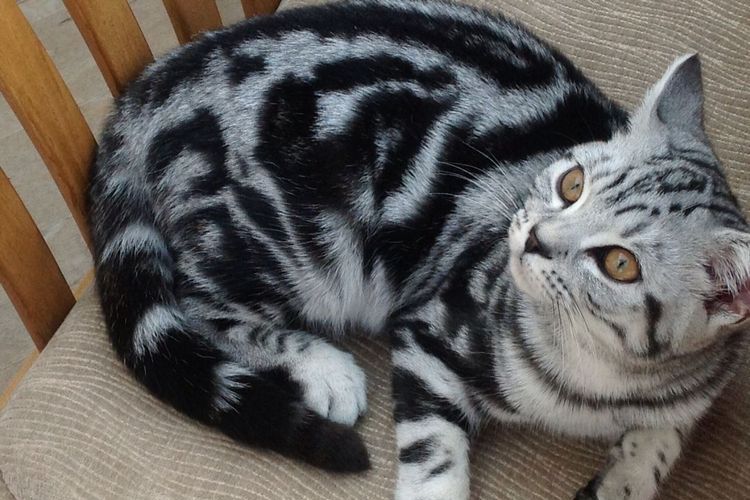
This is the most recessive, but also the most striking, pattern in the tabby family. Cats with this pattern have a refined, elegant appearance: three wide parallel stripes on the back, transverse necklace-like stripes on the neck and chest, and similar ring-like stripes decorate the paws and tail. According to the standard, the animal should have symmetrical circles on the hips, and a butterfly-shaped pattern on the shoulders and nape.
Spotted
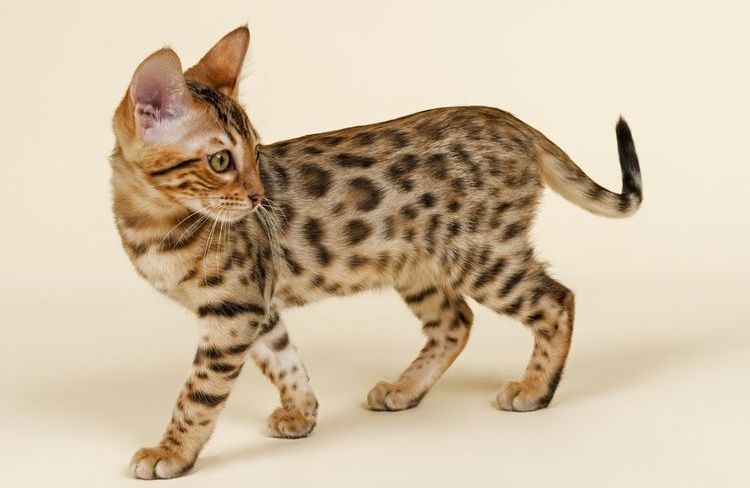
These cats resemble leopards: their bodies are evenly distributed with contrasting round spots ranging in size from a few centimeters to 1-2 millimeters. Their tails also have rings, and a broken stripe runs along their spine. A solid line down their back is considered a breed defect.
Ticked
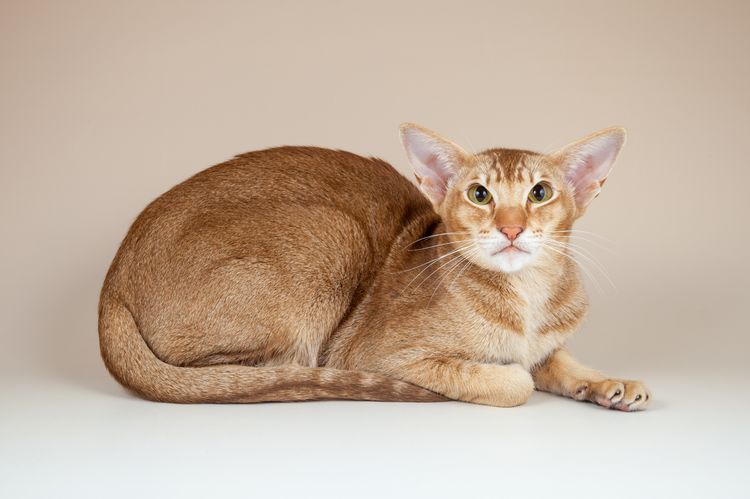
This type of coloring is called tabby Abyssinian, as it is most common in this breed. At first glance, the coat of these cats appears uniform and patternless, with only the characteristic tabby lines forming an "M" visible on the forehead. The secret lies in the fact that ticked cats have alternating stripes of the primary and contrasting colors on each hair, creating a delicate moiré "spray" on the coat. This effect is most noticeable on the animal's back.
Tabby cat breeds
The tabby pattern is characteristic of many cat breeds. For some, it's one of several possible variations, while for others, it's the primary, exclusive pattern. For example, longhaired Somalis, shorthaired Abyssinians, and Singapuras are exclusively ticked.
Representatives of the spotted type are:
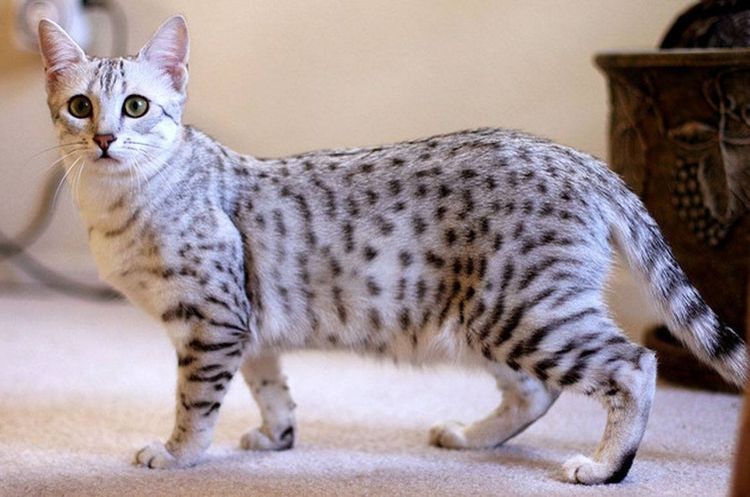
- Egyptian Mau (these cats have spots not only on their fur, but also on their skin);
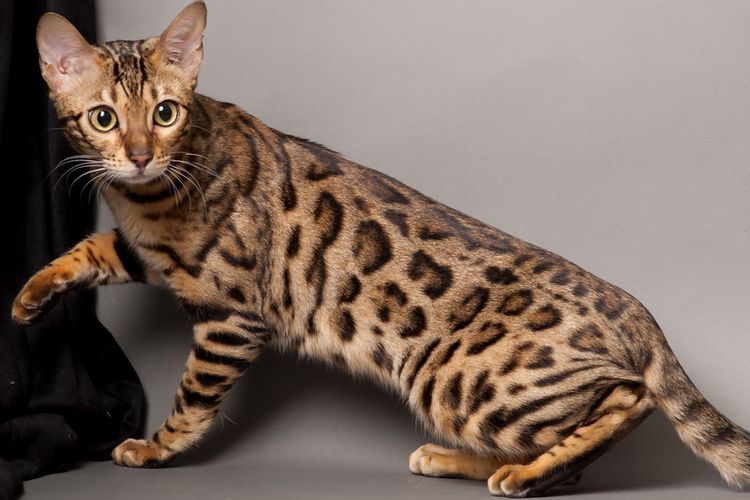
- Chito, which resembles a small leopard (obtained by crossing a domestic spotted cat and a Bengal cat);
- The Ocicat, also known as the "ocelot cat" due to its resemblance to its wild relative;
- Pixiebob, a large, lynx-like cat with tufted ears and a thick, short tail.
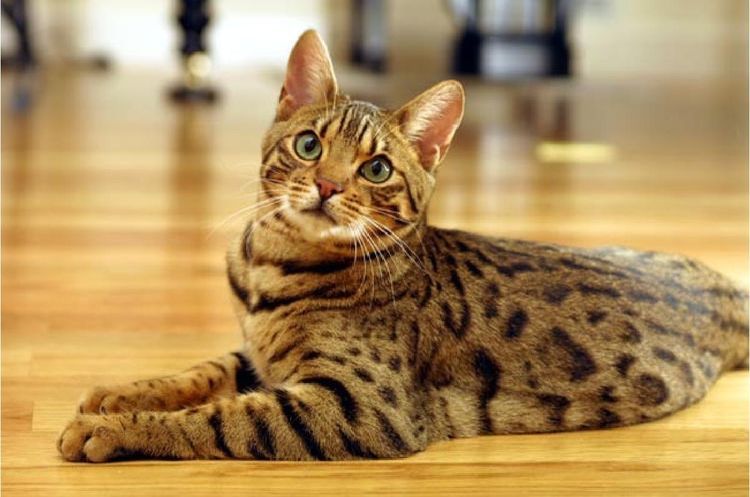
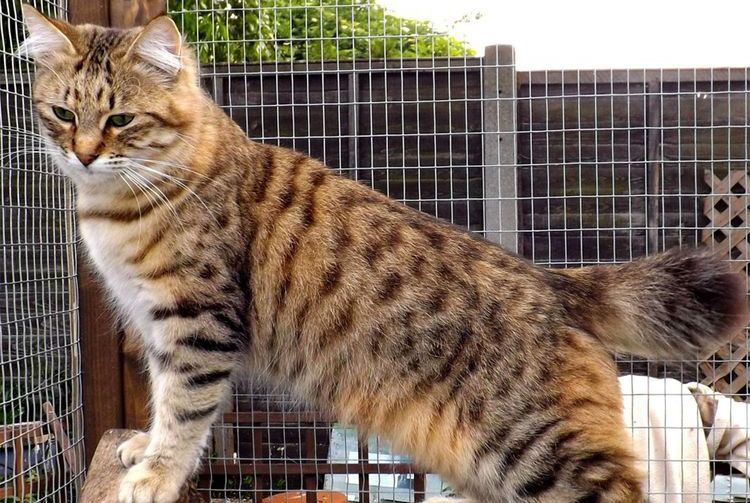
Tabby coloring is also found in British cats, although the classic option for British cats is considered to be a solid color coat.
All variations of tabby colors, except ticked, can be found at Siberian cats and Maine Coons. The Siberian tabby cat's coat can be decorated with interesting, bright, and varied patterns: stripes, spots, circles, and necklaces. The facial markings always include the signature tabby mark—the letter "M" on the forehead.
Scottish Fold cats can have any monochrome or multicolored coloring, except brown. On websites dedicated to felinology, you can see photos of Scottish Fold cats with tabby, tortoiseshell, marble or the harlequin type (white coat with a few dark spots).
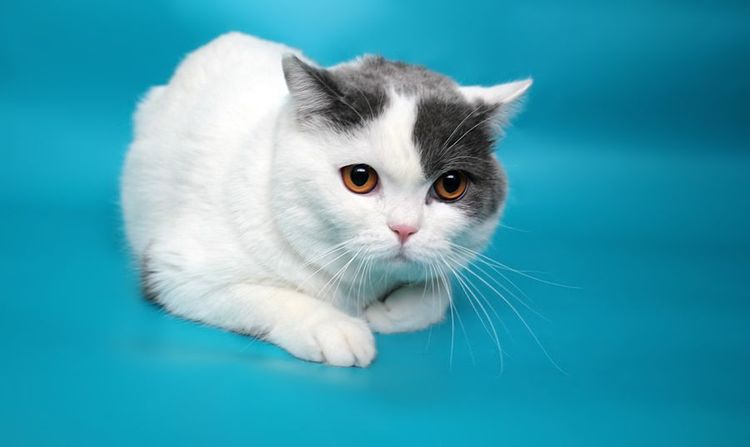
Some cat breeds may have patterns only on specific parts of their body. For example, Thai cats often have a tabby point pattern: they have contrasting stripes only on their ears, face, and paws. Hairless Sphynx cats also have patterns, but unlike their furred relatives, these appear as dark spots on the animal's body.
For cats of the Russian Blue, Burmese, Bombay, Siamese, Chartreux, Tonkinese and Korat breeds, the tabby color is considered unacceptable according to the standards of the World Cat Fanciers' Federation.
Read also:


Add a comment