
Sussex Spaniel
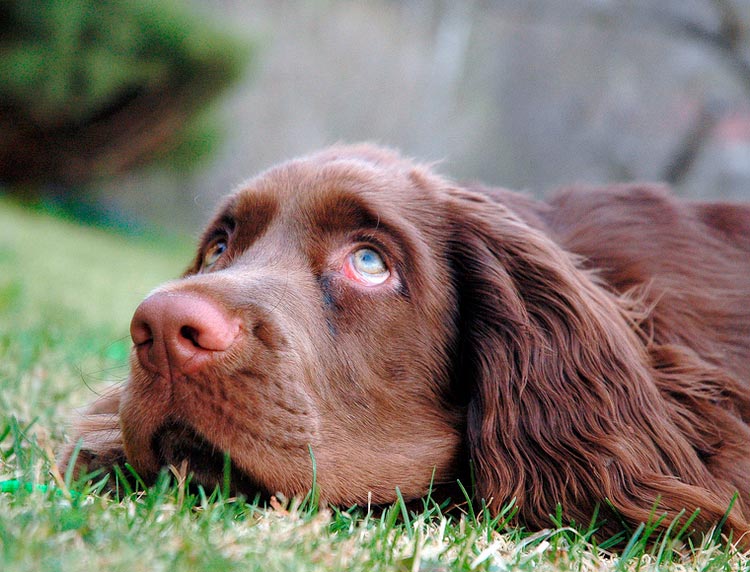
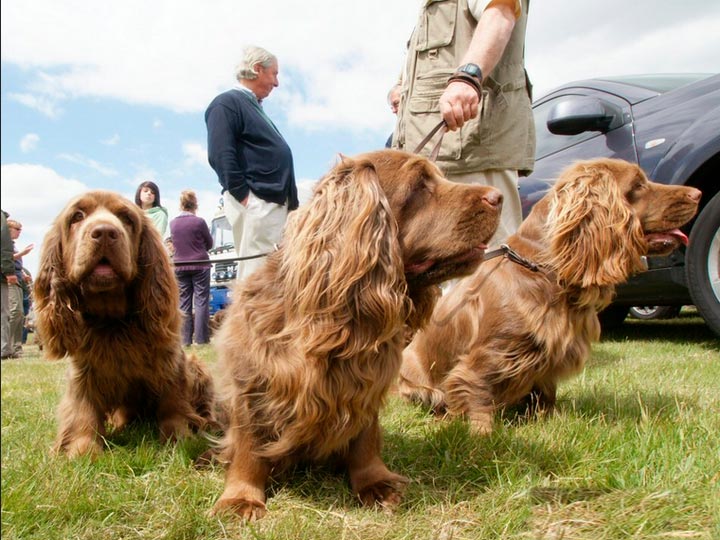
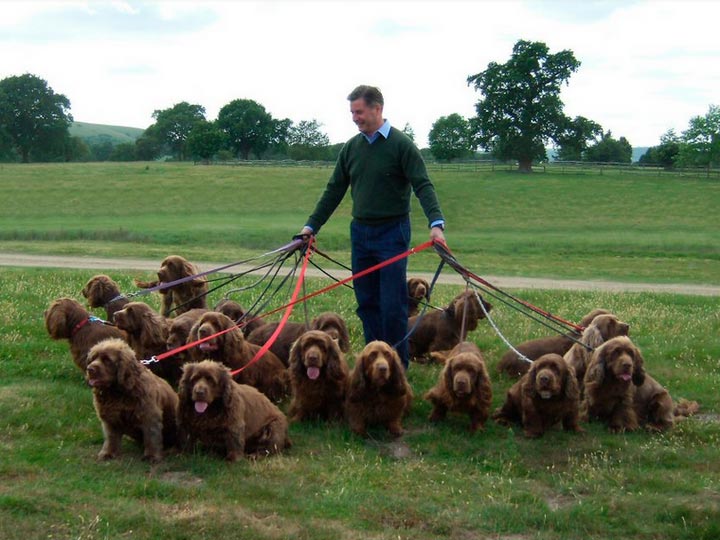
The Sussex Spaniel is a medium-sized, short-statured dog with a beautiful copper-gold coat and a calm, docile nature. Representatives of this rare English breed have retained their working qualities, but are more often kept as companions.
Content
History of origin
The Sussex Spaniel was bred by Mr. Augustus Elliott Fuller (1777-1857) at Rosehill Estate, Sussex, England. Sussex Spaniels are believed to have some blood from the now-extinct Norfolk Spaniel. Clumber Spaniel, English Springer Spaniel and some hounds. Fuller's goal was to create a dog suitable for hunting birds in dense thickets. The estate's kennels not only gave birth to a new breed, but also refined it over 50 years. Other hunters also bred Sussex spaniels. Until 1870, they were simply shown as large spaniels. In 1885, the Sussex Spaniel Breed Standard was approved in Great Britain. In 1924, the Sussex Spaniel Association was founded to protect and promote the breed.
The Sussex Spaniel was never particularly popular. There was a slight upswing in the breed's history at the beginning of the 20th century, but the situation changed radically after World War II. Only seven Sussex Spaniels were ever found. Farmer Joy Freer took on the task of restoring the breed. All of the current population descended from his seven dogs. In 2004, the English Kennel Club added the Sussex Spaniel to its list of vulnerable breeds. In 2018, only 34 puppies were registered, three of which were imported.
Purpose
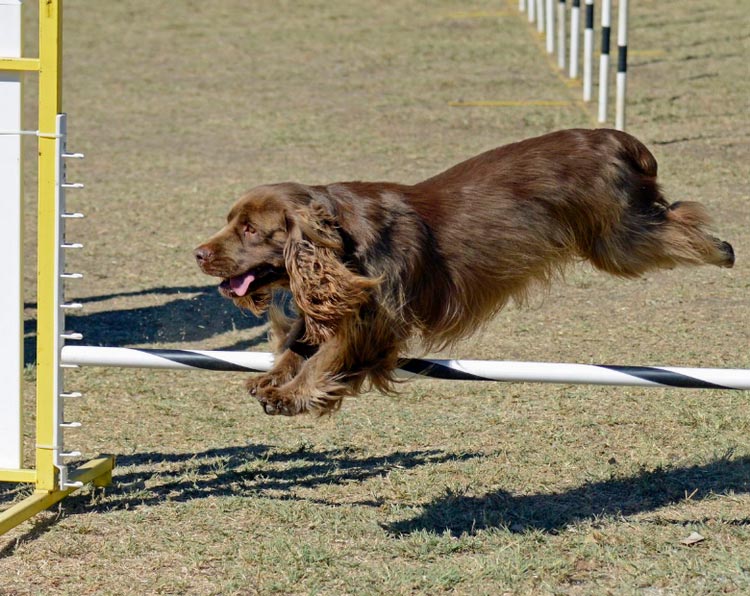
The modern Sussex Spaniel is primarily a companion dog. In America, these dogs can be found in the ranks of canine therapists. In Europe, they are agility competitions, obedience, tracking, and more. There are also Sussex hunting licenses. The Sussex spaniel can flush pheasants, black grouse, woodcock, and partridges from the brush with a clear voice. It works ducks in the reeds. It swims and dives well. It has a natural retrieving talent and a soft grip.
Appearance
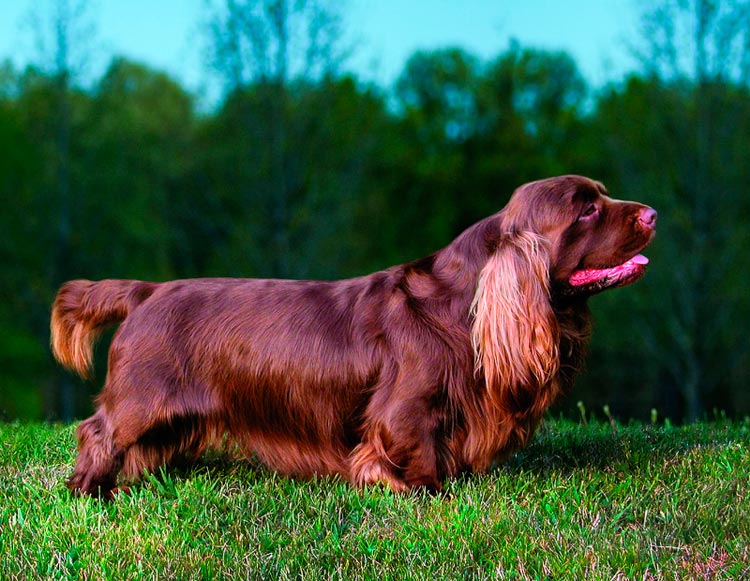
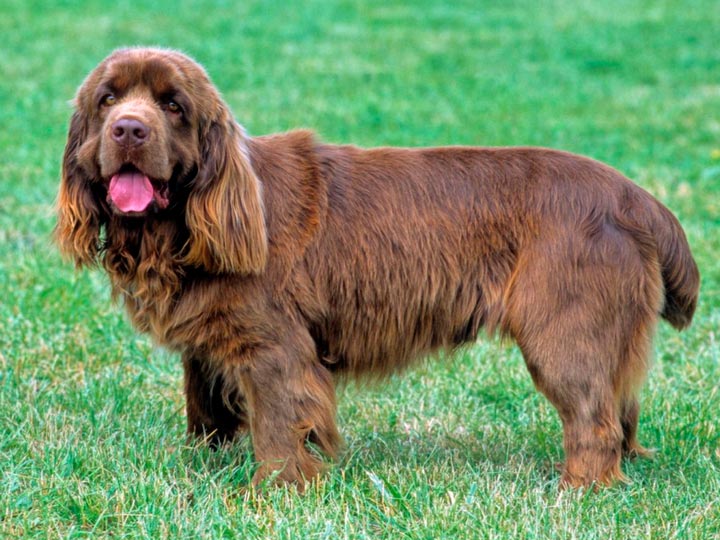
The Sussex Spaniel is a short, elongated dog with a soft, copper-gold coat. Sexual dimorphism is pronounced. Height at the withers is 38-41 cm; weight is 18-20 kg.
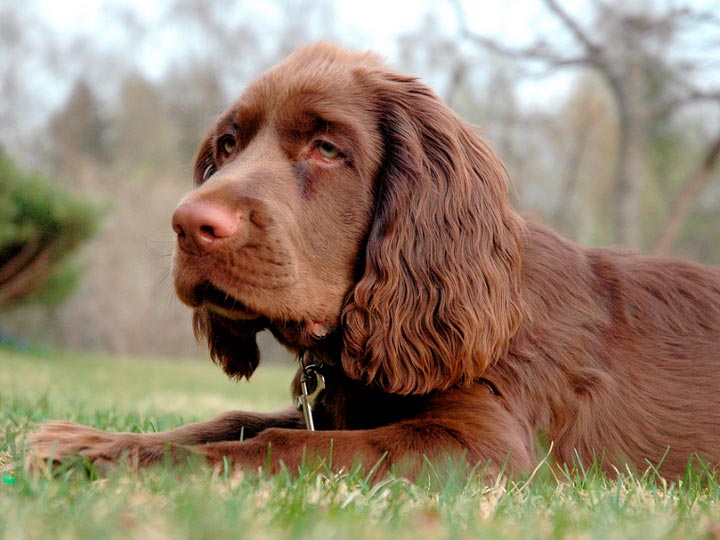
The head is well formed, broad, and not set too high above the back. The skull is broad with a prominent nasal bridge and frontal furrow. The muzzle is broad, square, and approximately 7.5 cm long. Heavy eyebrows create a frowning appearance. The nose is dark brown. The lips are slightly pendulous. The bite is a scissor bite. The eyes are medium in size, hazel-colored. The ears are pendant, lobed, long, and set relatively low. The neck is strong, slightly arched, and long. The loose skin on the throat forms a fold.
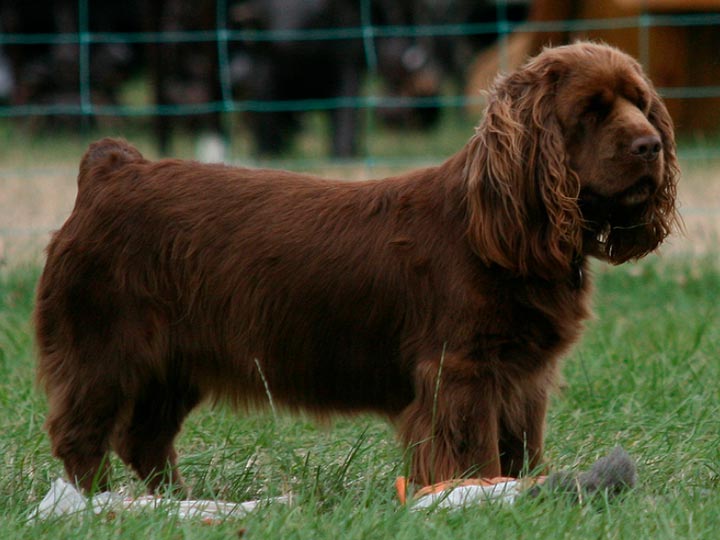
The body is low and proportionate. The chest is well developed. The loin and back are muscular, wide, and deep. The topline is level. The limbs are relatively short, with strong bone and well-developed muscles. The paws are large, densely furred, and rounded. The tail is carried no higher than the topline. In countries where it is not prohibited, the tail may be docked to 12 cm.
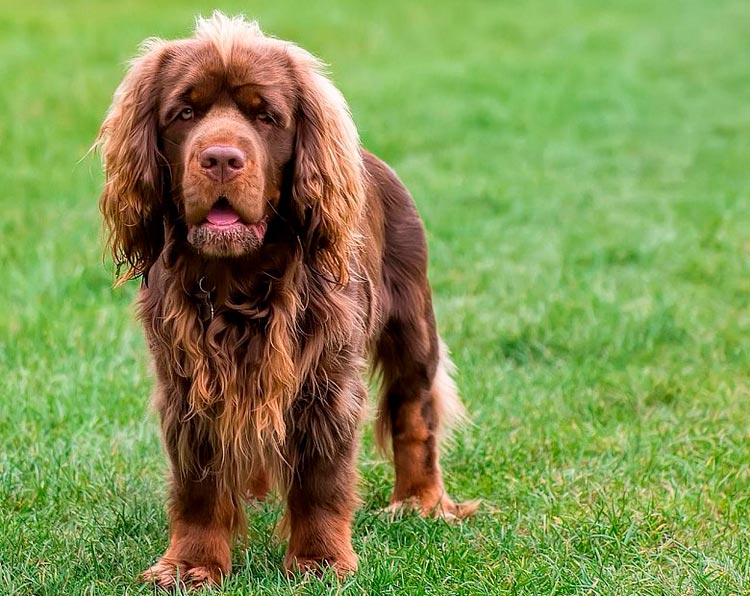
The coat is thick, smooth, with an undercoat. It is longer on the ears, neck, and back of the legs. The tail is carried with a plume. The color is a rich copper-gold. Liver and red-brown are unacceptable.
Character and behavior
The friendly and affectionate Sussex Spaniel is a wonderful family dog and companion. In the field, he is full of energy and stamina. At home, he is calm, even-tempered, and unobtrusive. Left to his own devices, he develops bad habits, becoming disobedient and destructive. He gets along well with children, but feels more comfortable with older children. He has strong watchdog qualities, but is not suited for protection.
The Sussex's temperament depends on a number of factors, including genetics, training, and socialization. Puppies are typically very curious and playful, and owner-oriented. With proper training, an adult dog will grow up obedient and responsive, but training will require considerable time and effort, and sometimes the assistance of an experienced trainer. Sussex responds well to positive training methods, but can sometimes be very stubborn. Besides being a friend and companion, the Sussex can become a good hunter, an outstanding athlete, or a show dog.
Sussex Spaniels generally get along well with other dogs, but if they haven't been socialized, they can be aggressive toward unknown dogs. They coexist relatively peacefully with domestic cats, but they tend to chase other dogs away.
Content Features
The Sussex Spaniel is not suited to life in a crate, much less on a leash. The dog will thrive in a private home with a large yard and the opportunity to spend plenty of time on walks with its owner. The owner does not necessarily have to be a hunter. A Sussex's talents can be realized in sports or playing together. A city apartment is possible, provided they are given ample exercise. It's important to note that Sussex Spaniels do not tolerate extreme heat well.
Care
The Sussex Spaniel's coat is not prone to matting. Seasonal shedding is moderate, and the rest of the year, it's light. It's best to brush the dog several times a week and bathe it as needed.
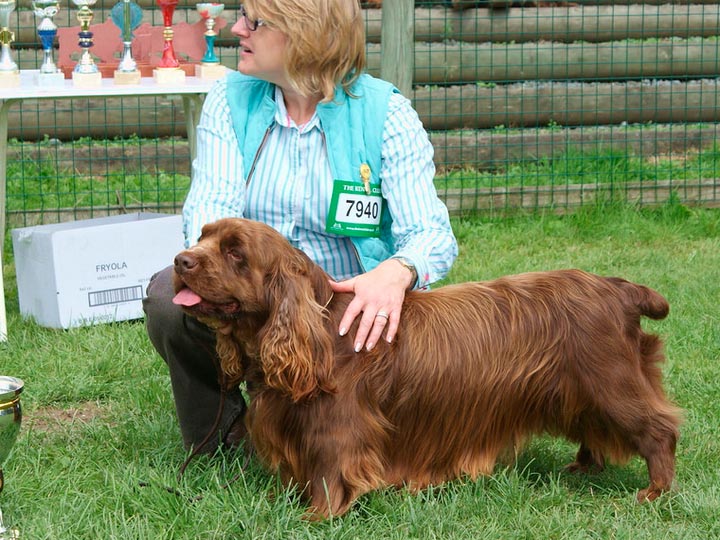
Trimming is not permitted for show-bred Sussex cats. Only a light trimming of the fur on the paws up to the hocks and between the pads is permitted. The fur between the toes should cover the nails.
Normally, nails wear down on their own. Otherwise, it's important to trim them as they grow. Ears should be inspected weekly and kept dry and clean. Teeth should be brushed at least once a week.
Health and life expectancy
Sussex Spaniels are healthy and robust dogs. The incidence of hereditary diseases in the breed is minimized through careful selection. Hip dysplasia is common, so all breeding animals must be screened. Some dogs suffer from allergies. Cases of gastric bloat and gastric torsion have also been reported. Sussex Spaniels are predisposed to oral and eye infections. Life expectancy is 13-16 years.
Where to buy a Sussex Spaniel puppy
The Sussex Spaniel is a rare and rare breed. The largest number of these dogs is concentrated in the UK and the USA. They can also be found in some European countries. There are about 20 Sussex Spaniels in Belgium, a similar number in France and the Netherlands, about 5 in Germany, and just over 10 in Russia, along with several kennels dedicated to breeding and promoting the breed.
Price
The price of Sussex Spaniel puppies in Russia is 50,000-70,000 rubles.
Photos and videos
You can see photos of Sussex Spaniel dogs in the gallery.




Video about the Sussex Spaniel dog breed
Read also:


Add a comment