
Struvites in a cat's urine: how to treat them
The urine of warm-blooded animals contains approximately 5% organic and inorganic salts—waste products of the body. These compounds are dissolved, but if for some reason their concentration increases, the salts crystallize. They can then form hard conglomerates in the kidneys or urinary tract, leading to urolithiasis.
One of the elements of urine that can crystallize to form conglomerates is magnesium or ammonium salts of phosphoric acid (struvites, or triple phosphates). In cats, urolithiasis is caused in 80% of cases by urine oversaturation with these salts, with struvite stones most often forming if the urine has a pH above 7, i.e., an alkaline reaction.
Content
Causes of high struvite levels
According to statistics, this urological syndrome occurs in every 10th feline under 6 years of age.
The causes of struvite precipitation (also called struvite urolithiasis in cats) can be:
- Lack of free access to water, which causes urine to become more concentrated.
- An excess of foods containing large amounts of protein or magnesium and phosphorus compounds (for example, fish or plant foods) in the cat’s diet.
- A sedentary lifestyle contributes to the formation of conglomerates from salt crystals.
- Obesity, which often results in metabolic disorders.
- Diseases of the genitourinary tract, accompanied by retention or disturbance of urination (cystitis, nephritis, urethritis).
Good to know: Due to the anatomy of their urinary tract, male cats are more likely to develop struvite urolithiasis than female cats. Siamese, Maine Coon, Burmese, Persian, and Chartreux breeds are more prone to developing triple phosphate stones.
Symptoms
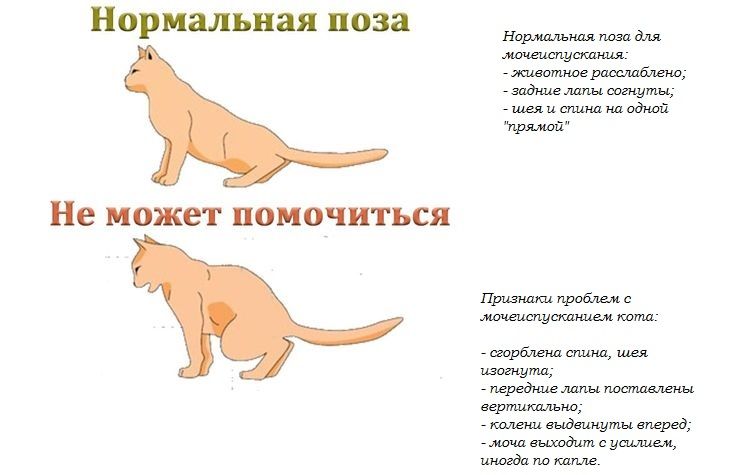
The main symptom of struvites in a cat's urine is difficulty urinating. Urination becomes difficult, and constant irritation of the urethral mucosa leads to urinary incontinence (the cat frequently sits on the litter box or urinates anywhere) or strangury (painful urination, indicated by an unnatural, tense posture when sitting on the litter box).
As the urolithiasis progresses, the cat loses appetite, drinks water frequently, and deterioration of general health may also be manifested by rapid breathing and heart rate. Urine becomes cloudy and may contain urinary sand or blood. If the stone obstructs the ureter and urine is not eliminated for more than 24 hours, toxins begin to accumulate in the animal's blood, causing poisoning. Without immediate treatment, the cat will die from bladder rupture or acute renal failure.
Important! If a stone obstructs the ureter, do not attempt to expel it by giving your cat a diuretic. This could result in damage to the urinary tract or a ruptured bladder.
Diagnostics
The primary method for detecting struvites in a cat's urine is a urinalysis, which involves examining the physical properties, chemical composition, and microscopic examination of the sediment. Normal values for cats include:
- transparency level - high;
- color - yellow in any variations;
- density ― 1.02÷1.03;
- pH ― 5.5÷7.
Should be absent in urine (permitted in small quantities) protein, glucose, acetone bodies, hemoglobin, bilirubin.
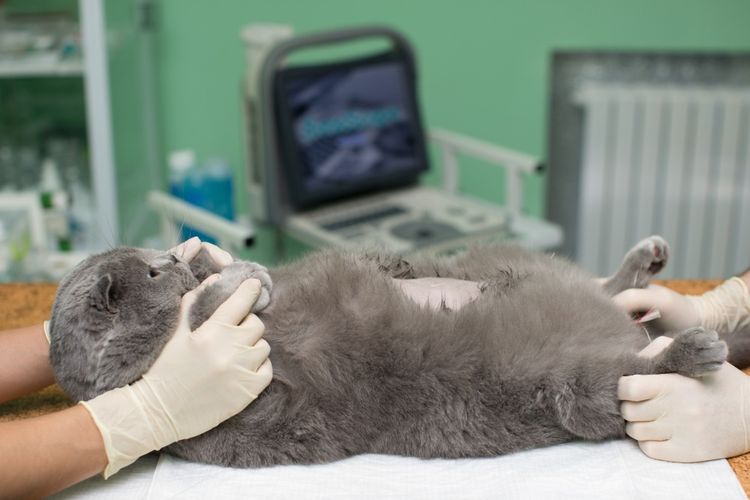
Microscopic examination of urine can detect struvite crystals, as well as pathogenic microflora (some microorganisms contribute to the formation of salt conglomerates). If necessary, radiography (struvite crystals are radiopaque) and ultrasound are used to confirm the diagnosis.
Important! If collecting urine for testing at home, the container must be washed with clean water and then rinsed with boiling water. Urine is delivered to the laboratory in a sterile container. If collecting urine at home is not possible, a doctor will perform the procedure using a catheter.
Treatment of struvite in cats
Phosphoric acid salts are highly soluble, so struvite stones can often be removed with medication. To soften the salt deposits, a veterinarian may prescribe medications or a course of herbal therapy. Mild diuretics are also used to stimulate the bladder muscles and facilitate the removal of residual salts.
A mandatory component of treatment for struvite urolithiasis is a diet limited in protein, phosphorus, and magnesium—the building blocks of triple phosphates. If the disease is accompanied by inflammation or infection, the cat may be prescribed antibiotics.
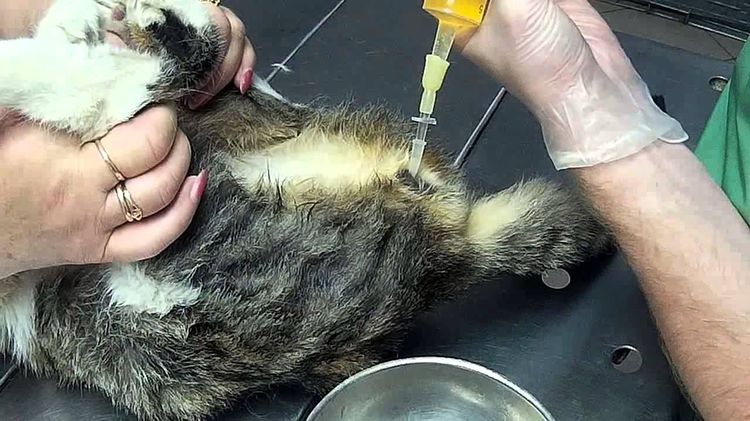
If the urethral canal is blocked, urine is evacuated using a catheter.
If the stones are large, they are removed from the bladder surgically. This may involve an open cystotomy, which involves an incision in the peritoneum, or laser or ultrasound fragmentation of the struvite stone, followed by evacuation of the smaller stone fragments with diuretics.
Prevention
To prevent the formation of struvites in cats' urine, veterinarians recommend following a few simple rules. The most basic of these are providing a balanced diet and adequate drinking regimen.
If your pet eats homemade food, focus on boiled meat, fish, and vegetables. Periodically use commercially prepared therapeutic foods to supplement their diet with essential minerals. It's not recommended to feed cats sausages, fatty meats, strong broths, or large amounts of dairy products. When feeding canned cat food or dry kibble, choose premium or super premium foods. They contain all the nutrients your cat needs and are free of harmful preservatives, flavorings, and additives. Fresh water should be available 24 hours a day.
Preventing struvites in cats' urine also includes an active lifestyle. Provide your pet with opportunities to run, jump, and play, even if they live indoors and don't go outside. An overweight cat who spends all their time on the couch or rug is at a much higher risk of developing urolithiasis than a playful, active cat.
Struvite stones are more likely to form if your cat urinates infrequently. Since cats are very clean and avoid using a dirty litter box, remember to change the litter regularly. To ensure your pet is healthy, have a veterinarian perform a preventative checkup twice a year, which includes a urine test.
You can also ask our website's staff veterinarian a question, who will answer them as quickly as possible in the comments box below.
Video advice from a veterinarian: How to properly collect a cat's urine for analysis
Read also:


52 comments
Alina
Hello!
In January 2024, a kitten was diagnosed with cystitis. He hadn't urinated on himself for a month and a half. He was treated at a veterinary clinic. He was prescribed a diet to treat struvite stones.
We bought cat food, made water more accessible, and bought a fountain. There's been some improvement: the cat goes to the bathroom on his own without any problems or straining. But we had blood tests done, and they show pH 7.0, protein 0.30, glucose 0, ketone bodies 0, specific gravity 1.076, yellow, translucent color, no bilirubin, no hemoglobin, urinary sediment: single erythrocytes, 0-5 leukocytes per field of view, squamous epithelium 0-1, transitional epithelium 0p1 per field of view, no casts detected, coccal bacteria +, disorganized sediment: struvite crystals +++. They said the urine was dense and had a lot of struvites, but the initial tests showed struvites +, and he was much worse. Why is this? At the vet, they only told the cat to drink more and change the food; it could be addiction. I don't know what to do. The cat looks better, but the test results suggest it's worse. Please tell me what to do.
Daria is a veterinarian
Hello!
Now I am writing an answer for many, since this problem is quite common.
Never rely on just one urine test, that's the first point. It's always worth testing several times, spaced 3-4 days apart.
Secondly, the method of collecting urine is important. If you collect a sample from a tray after some time, some parameters will be distorted. Therefore, for an accurate assessment of urine density, it is recommended to collect the urine in a clinic using cystocentesis. However, if you need to check for sediment in the urine, then yes, this is done by collecting urine immediately after urination from a clean (new) tray into a test tube with stabilizer.
And thirdly, urine that's more than two hours old already distorts the results. So, if you collected the urine, but it took two hours to get to the clinic or lab, and then a significant amount of time passed before it was processed, which affected the results.
Bottom line: We recommend collecting urine samples several times to obtain average results. After collecting the sample, immediately bring it for analysis and request that it be done in front of you. Alternatively, use preservative-treated tubes if you can't take the sample right away. Preservative-treated tubes are available at pet stores and veterinary pharmacies.
Catherine
Hello
The cat was found to have struvites (relative density - 1.04; pH - 6; protein - 0.3g/l)
The doctor keeps prescribing Onsior, Gabapentin, and Terazosin. It basically just relieves the symptoms. I ask what to do about the sediment, and they tell me to increase fluid intake and reduce stress.
There is enough fluid and he doesn't have any stress as such.
And relapses with urinary tract obstruction have occurred 3-4 times over the past 2 months...
I'm trying to get the doctor to prescribe medication to somehow dissolve the sand (according to the doctor, my kidneys are healthy), but they just shrug their shoulders...
Please tell me what to do. I don't want to add to my cat's worries with constant trips to the vet...
Tatyana Shmonina - veterinarian
Hello! There is a veterinary diet and special therapeutic food for this problem.
Love
The cat, I think, is 1 year and 5 months old (I found him in the yard in 2021 at the age of approximately 2-3 months).
In May 2022, he began to go to the toilet very often, a urine test was done: density - 1.015: acidity - 7.4; protein - 2g / l; struvites ++;
Cocci ++. Treated with homeopathy. Got better.
On January 30, 2023, he started urinating twice a day and had little urine. Urine analysis: pH 6.5; protein -2; struvites+++; cocci +; density -1.068
We feed Proplan for sterilized cats.
Daria is a veterinarian
Hello! My pet needs an ultrasound to check the bladder and kidneys. The animal clearly has urolithiasis, which requires a different therapeutic diet and treatment that is definitely not homeopathic. If the stones are already large, surgical removal is necessary. The urine contains cocci, an infection that should be treated with antibiotics. Antispasmodics, anti-inflammatory medications, antibiotics, a change in diet, and monitoring water intake and urine output are also recommended. Your pet should drink plenty of water! Add wet food to the diet if it isn't drinking enough fluids. The less water, the more concentrated the urine, the more irritating it is to the bladder lining, and the more serious the situation.
Svetlana
Hello. My cat is 1 year old. He started peeing on the couch. We took him to the vet, where he had tests done. His urine showed protein, struvites, and cocci. His blood showed elevated protein, alkaline phosphatase, and globulin. He was prescribed Marfloxacin for 10 days, Canephron for 14 days, and Stop Stress for 14 days. We took these medications and had tests done. The struvites showed ++++, protein was elevated, and bilirubin was also detected in the sediment. What's wrong? Where is the bilirubin coming from? Why didn't the treatment help? What should we do next?
Daria is a veterinarian
Hello! We need an ultrasound of the kidneys and bladder. Since there's protein in the urine, we're looking for kidney problems. We're checking the struvites. Is it sand or stones? Is there a blockage that's blocking urine flow? We're also looking at the feeding. What are we eating? We measure the urine pH and select food based on that: acidic or alkaline. I see there are no cocci, which means the antibiotics have helped. But! If the struvites remain, the bacteria will soon reappear. What about the amount of water the cat drinks? Is it drinking enough? What about the amount of urine produced? The smell? The color? Is it concentrated?
Maria
Hello! Please help me with some advice. My cat is almost 10 years old and neutered. We've had his urine and blood tested. The urine is normal except for two things: struvite crystals ++ and cocci microflora + (abnormal). Should I be concerned and switch him to a therapeutic diet, or are additional tests needed?
Daria is a veterinarian
Hello! Ideally, you should have your pet have an ultrasound of the bladder and kidneys. If there's just sand in there, it's not that critical: treat your pet with therapeutic food, plenty of clean water, monitor urine output, and medications may be prescribed at the doctor's discretion. If there are stones, the situation is more complicated. The main thing is to ensure there's no obstruction (blockage of the urinary tract). But don't panic right away. Get further examinations. And if possible, have your pet titrated on antibiotics at the clinic (if nothing has been prescribed or used yet), as cocci have already appeared.
Olga
We completed treatment and now we have struvites in our urine again. He's been eating wet food with urine samples for two weeks after treatment. What should I do?
Daria is a veterinarian
Hello! What exactly did you administer or pierce? Did you clean the bladder of any remaining stones and sand? If struvites reappear after two weeks, then it's not a relapse, but rather a recurrence. Your pet wasn't fully treated. Most likely, the anti-inflammatory and pain medications relieved the spasms and pain, which is why it seemed like your pet had fully recovered. Struvites don't form as stones so quickly (provided you strictly adhere to the diet and treatment regimen). Either the treatment wasn't right, or there was a relaxation in the regimen somewhere.
Nikita
Hello! Our cat loves to drink tap water in the bathroom. We always pour fresh water into two bowls, using filtered water. He drinks it, but not very well, but he enjoys lapping up the tap. Is this normal? Is it harmful?
Daria is a veterinarian
Hello! Many cats prefer drinking from the tap or running streams (there are special fountains available that solve this problem). It's not that critical that they drink from the tap. Filtered water is, of course, better. However, tap water isn't fatal. So, don't worry about it. It's best to ensure your cat drinks the required amount of water daily to prevent the development of urolithiasis.
Xenia
Hello. My 5-month-old cat fell on his lower back with an empty saucepan. He hasn't walked for a week, but he moves his hind legs. He constantly pees orange-red urine; when he moves or is lifted, he often splashes and bleeds. I'm removing some fairly large salt crystals from his pee. His bladder is hard when he's tense, so I'm giving him antibiotics. We live in a village where there's no vet. Can I give him diuretics? The cat himself seems to have recovered, drinking and eating. I think he'll be able to walk, but I'm really worried about the blood and bloated belly. He poops normally, naturally, all while lying down. Please advise what to do. It's a shame, I'm so attached to him.
Daria is a veterinarian
Hello! The animal likely has a broken spine, and most likely a damaged bladder, which is why there's blood in the urine. The animal needed emergency care, an X-ray, and possibly surgery! What diuretics are we talking about? Poor urine flow can be caused by a spinal injury, which can lead to nerve damage.
Tatiana
Good morning! Our beloved British Shorthair, a 2-year-old male, is sick. He stopped going to the toilet, and we immediately became alarmed, taking him to the vet for a catheter. There was a lot of blood in his urine, so we gave him IVs and injections. He ate practically nothing, but drank water. After a week of treatment, his urine still wasn't coming out on its own. We reinserted the catheter and took a urine sample. Yesterday, he ate very well and became more active. His urine analysis today showed blood -250, ketones 0.5, protein 0.1, leukocytes 15, struvite stones, pH -5? The rest is negative. We fed him dry food on the vet's recommendation, as he broke his paw at 4 months, and it was attributed to brittle bones. He loves jelly. We've never given him cheap food. Please advise what to feed him now to prevent a relapse. And please analyze his urine sample; we'll tell you what to do next! We're continuing treatment and will be doing an ultrasound. Thank you so much!
Daria is a veterinarian
Hello! Have you been feeding your cat this food for too long? It's likely the ingredients in the food triggered the formation of struvites (excess calcium and phosphorus in the diet can easily "convert" to the disease, forming insoluble salts—aka stones). Vitamin D, a calcium and phosphorus supplement, given for a month, then a break was sufficient. Definitely switch to a food formulated for animals with urolithiasis (a therapeutic series; good quality foods have a huge selection). Continue on the therapeutic food for 2-3 months, and have urine and blood tests done at least once a month to monitor progress. So far, it's definitely urolithiasis, which leads to blood in the urine and poor drainage due to severe swelling in the urinary system.
Olesya
Good evening! My British Shorthair cat is 3 years old. She eats Hill's dry cat food for spayed cats. We took a urine sample, and here are the results:
Color: yellow
Transparency: transparent
Density: 1.051
pH: 6,500
Protein: + (deviation)
Erythrocytes: 0-1 per field of view
Leukocytes: 0-1 per field of view
Crystals: struvites ++++
Microflora: cocci +
Notes: fat drops +/-
She drinks little water and is not very active. We haven't had any other tests or ultrasounds. I also feed her wet food, but only half a pack a day. In June 2019, she also had struvite ++, which was treated with Hill's CD (as recommended by her doctor). Could you please tell me if I should put my cat back on CD? And for how long? Thank you!
Daria is a veterinarian
Hello! Yes, as a preventative measure, you can put your cat on Hill's c/d. The feeding period is two, three months maximum. And be sure to review the diet. Don't mix natural and commercial food; it's better to feed wet food more often to increase the moisture content (especially if your pet doesn't drink much). But if you feed dry food, make sure clean water is always readily available (you can place several deep bowls around the house). It's long been proven that cats drink better from larger, deeper containers: mugs, saucepans, fish tanks, etc., than from their own bowls. Mine drinks from a plastic half-liter bucket and a fish tank. When I had a small cat bowl, she'd take a couple of sips. Since I've added the bucket, she's been drinking about 100 ml a day, and the rest she steals from the fish tank.
Arina
Hello!
My cat is about 4 months old. Just two days ago, he started going to the bathroom more frequently than usual, in small amounts. His urine was clear and yellow. We immediately took him to the vet, who ordered some tests. The next day, when I collected his urine, it was cloudy and brownish. A urine test only revealed a urolithiasis. His urine showed positive protein, elevated white and red blood cells, and normal density and pH. They also found struvite+. No further diagnostics were available, and he was prescribed Ceftriaxone, Dicynone, and Drotaverine. He also received RC s/0 dry food. The cat is active, has an appetite, and is acting normally. Are the diagnosis and treatment options correct?
Daria is a veterinarian
Hello! To be sure, an ultrasound would be necessary. The urine showed a bit too much protein. The kidneys would need to be examined. If not an ultrasound, then at least a blood chemistry panel would be helpful. This will give an idea of how the kidneys are doing. The medications were prescribed correctly: an antispasmodic, an antibiotic, and a hemostatic agent. And dietary therapy (a 2-3 month course of this). Make sure the animal drinks plenty of clean water. What was the animal being fed before that it developed urolithiasis at just 4 months? It's extremely rare for such young animals to suffer from it.
Olga
Hello! My cat is 3 years old. She has a large amount of struvites in her urine (++++). We switched her to Royal Canin Urinary s/o (dry and wet) food. She doesn't drink water. She goes to the toilet once a day, sometimes less often. We gave her courses of Koterwin. After treatment with Koterwin, the struvites dissolve and the urine returns to normal. When we stop giving Koterwin and only give her the therapeutic RK food, the analysis shows a large number of struvites again. We recently did a urine test: pH = 8, protein 100 mg/dL (++), density 1.043, leukocytes 4-7-5, squamous epithelium 6-8-9, struvites - the entire field of view, cocci ++, mucus ++. The ultrasound is normal. We have been giving her the therapeutic food for almost three months now. Please advise what to do?
Daria is a veterinarian
Hello! Is everything normal with these ultrasound results in an animal??? I don't believe this is possible. There's tons of sand, high protein (the kidneys need to be checked), and cocci—that means an infection. Eliminate dry food completely and only give the animal a medicated wet food. Switch to a different super-premium or holistic formula (you can find these even in the smallest towns, like Proplan or Hills, they have the Urinary series). Feed your pet yourself using a syringe without a needle. Animals need water and moisture! Otherwise, how will urine be produced? The less urine produced, the more concentrated it is, the more irritated the bladder becomes (cystitis will become more severe), the more sand settles, and the more difficult it is to eliminate. Also, thick blood (and with low water intake, it will become thicker) puts strain on the heart.
Christina
Good afternoon, my cat is 2.5 years old. A urine test revealed the following: single struvites; single cocci; protein: 0.53; specific gravity: 1.050. Could you please tell me what these results indicate and what action should be taken first? He is currently taking 2 ml of Koterwin twice a day, plus only Formica therapeutic food for urolithiasis.
Daria is a veterinarian
Hello! Based on the results, we can tell that the urolithiasis is just beginning. Therefore, continue feeding the cat a special therapeutic food (ideally, switch to a wet diet to increase moisture intake, especially since summer is approaching, and the animal should be drinking even more water). Add an antibiotic (at least Synulox or similar), and a diuretic for a day or two to "cleanse" the bladder, as well as an antispasmodic (to facilitate emptying the bladder). Usually, after a week, the symptoms improve, and the medications are discontinued, but the cat should continue feeding for at least a month (or however long they prescribed before the urine test).
Olga
What if a cat refuses to eat Hills, Proplan, Farmina, or Royal Canin—either canned or dry—he'll chew 10-20 grams and that's it. Where else should he look? He's always eaten holistic Applaws, but holistic brands don't carry therapeutic foods. He's been eating tuna pouches his whole life (he's 2.9 years old)—real tuna, fish broth, and brown rice. I have no idea how to transition him to a diet so I can start giving him the prescribed Sinulok and Cyston.
Daria is a veterinarian
Hello! What's wrong with pouches? If you feed good-quality food, especially wet food, it's good for your cat's health. If your cat won't eat dry food, well, you can't starve them. Moreover, you shouldn't give antibiotics on an empty stomach.
Julia
Hello! Help me make the right choice. I have a 7-year-old Scottish fold cat, spayed. For the first four years, she was fed Royal Canin, but developed severe allergies. We switched her to a natural diet: boiled meat or fish with grains and vegetables. Occasionally, she gets a boiled egg and sour cream. She doesn't eat low-fat dairy products (kefir, fermented baked milk). After switching to a natural diet, she stopped drinking water completely, even though there's always water available. A month ago, she was diagnosed with cystitis, and the doctors gave her antibiotics. It all ended with a week of vomiting, a complete refusal to eat, and IVs. Her appetite has now returned to normal. We did an ultrasound, and sand and crystals measuring 3 mm in diameter were found in her bladder. We also did a urine test. Leukocytes +, protein ++, ketones -, nitrites -, urobilinogen -, bilirubin -, sugar -, specific gravity 1.030, blood -, pH 6. Sediment: isolated struvites, isolated hyaline casts. Prescribed food from the Royal Canin Urinary series, Hills c/d, other doctors - Hills s/d. Which food is right for you, and can you keep your cat on natural food, and which one?
Daria is a veterinarian
Hello! Have you had a kidney ultrasound? Did they just look at the bladder? Have you had a blood chemistry panel done (it would be easier to understand how well the kidneys themselves are functioning)? Hill's s/d food is not suitable for long-term feeding; it is prescribed at the very beginning of an acute urolithiasis. Maximum 2 months, but I would recommend 2-4 weeks first. Then switch to Hill's s/d for 2-3 months, followed by a follow-up ultrasound and urine and blood tests to assess the progress. I would not recommend keeping her on natural food; it will be extremely difficult for you to balance the magnesium, phosphorus, and calcium levels, which can trigger a relapse, and a high percentage of protein in the diet will harm the kidneys. Vomiting, for example, can indicate acute renal failure, which is why I would recommend a biochemistry panel.
Victoria
Hello! My neutered 1.5-year-old cat eats super-premium dry cat food and drinks bottled baby water. He feels well, but his urine tests showed some issues. One test showed struvites, three others showed no struvites, but an elevated protein level of 1 to 3. His protein to creatinine ratio is normal. Should I be concerned or should I perform any other procedures? What would you recommend? Perhaps I should try a food for urolithiasis prevention or Renal for kidney problems, try it, and then retest his urine after a while?
Daria is a veterinarian
Hello! The easiest way to determine the condition of the kidneys and bladder is to have an ultrasound. This will show if there is any sand. You can prevent urinary tract infections by feeding your cat food. Choose the same brand as your current one (to avoid sudden changes in food).
Victoria
Thank you for your prompt response!
I'll schedule an ultrasound. What's the prognosis for the elevated protein? Is it a kidney problem, or is it just a temporary flare-up that will pass? For example, if the ultrasound doesn't detect crystals, but there's still protein in the urine, what's that, and what should I do?
Can I give food with urolithiasis prophylaxis right away, or is it better to mix it with regular food and introduce it gradually?
So, what do you think, should I give my cat bottled water, or is it irrelevant? Because it contains magnesium and phosphorus... Is plain boiled water better?
Daria is a veterinarian
Magnesium and phosphorus should be kept to a minimum. You won't see struvites on ultrasound, but sand and stones are easily visible. Protein levels may be aggravating (especially since the protein level is slightly elevated). Introduce food gradually. Replace ¼ of the usual portion with the new food every day. Within 4 days, you'll have completely transitioned. Repeated tests are absolutely necessary; this will help monitor progress (improvement or worsening). Boiled water is best (you may have a water filter that removes these elements, as not all cats drink boiled water).
Victoria
Got it. Daria, you've been really helpful in deciding what to do next. I'll switch her to an anti-urolithiasis diet for the duration of the tests, we'll do an ultrasound, and I'll give her regular water (or bottled water, but without added minerals). Could you clarify one last point: is it okay if I wait a while before repeating the urine and ultrasound tests to try to improve the results by changing her diet? Should I skip the tests for a couple of months and then see how things change between April's results and June's, for example? Or does this protein level require further urgent intervention?
Daria is a veterinarian
Hello again! It's still best to have an ultrasound done now to assess organ function and check for any abnormalities. Also, based on the ultrasound results, a decision may be made to adjust the treatment plan and change the feeding. Because for urolithiasis, the Urinary series of foods is prescribed. However, if kidney abnormalities are detected, the Renal series will need to be fed. These are completely different foods in composition. One acidifies the urine, the other alkalizes it. So, an ultrasound is essential. As for progress, you'll need to have blood and urine tests repeated in a month to see how things are progressing.
Victoria
Daria, all the best to you! Thank you for the helpful tips, I'll keep them in mind.
Yana
The cost of the service was significantly different from what was stated over the phone.
Alexey
Hello. My cat (3 years old, neutered) had blood in his urine. A urine test showed protein - 1, leukocytes - 5-10, erythrocytes - a large amount, salts - struvites. We gave him a hemostatic injection, an antispasmodic and an antibiotic. During this period, we fed him Hills s / d food for a month, as recommended by the doctor. The blood disappeared, protein - 0.3, leukocytes - 3-5, erythrocytes - 2-4-6, salts - struvites. We switched him to Hills c / d food, as recommended. A month later, we repeated the tests, but the struvites did not disappear. We gave him "Stop cystitis" for 7 days, continuing to feed the same food. We took another urine test: protein - 1, leukocytes - 1-3, erythrocytes - 20-30, salts - struvites. What else can I do to remove salts?
Daria is a veterinarian
Hello! Struvites won't dissolve with food; the food helps prevent new ones from forming. As a recommendation, switch your cat exclusively to wet urinary food. This will increase the percentage of water consumed, resulting in more urine being produced (meaning a lower concentration of salts and other suspended solids), and possibly flushing out most of it. Have you had an ultrasound? Are there only salts in the bladder, or are there stones? It wouldn't hurt to have the kidneys checked, too; they might also be damaged or have stones. Have you had a bladder lavage performed to flush out the struvites? Traditional medicine can sometimes also help (such as madder infusions, extracts, and decoctions for urolithiasis).
Irina
Hello. My piggy cat is 10 years old. He has had urinary tract infection since he was 5. We ate the therapeutic line of food, Hill's Urinary Prevention, or Royal Canin, but his stools were infrequent and hard. According to monthly urine tests, his urine pH is 6.5. There are no or very few struvite crystals. However, he undergoes bladder surgery every two years to remove or flush out sand. The last surgery was on January 25, 2019. I switched him to Sanabelle Urinary. His stools have returned to daily, soft ones, and he drinks more water. A urine test on March 6 showed normal results, but he had four crosses of struvite crystals! The doctor recommended feeding him Royal Canin Urinary intramuscularly, but the stool problems will return. What would you recommend?
Daria is a veterinarian
Hello! Switch to wet food. Only wet food, no dry food. Firstly, this will solve the problem with hard stools, as wet food provides additional moisture, making the stool softer. Secondly, wet food prevents the animal from drinking as much as on a dry diet, but produces more urine, which is less concentrated, meaning salts are eliminated faster and don't accumulate and form stones. Have you had a blood test? An ultrasound? Have you had kidney function checked? Is anyone at home indulging in "treats" in addition to the therapeutic diet? Has the animal been given any medications?
Irina
Blood chemistry tests were done, and her kidneys were normal. An ultrasound was done only 10 days after the surgery, so on February 10th, the urine was clear. Unfortunately, Sanabel doesn't have a wet series. Should I switch her to Farmina Vet Life food? This company has a therapeutic and daily line, but only dry.
no wet food
Daria is a veterinarian
Hello! I see struvites in my urine, but my bladder is empty and doesn't contain even a hint of sand? That's odd. Either there was a mix-up with the tests, or they missed it on the ultrasound. Regarding feeding, I advised you to look for Urinary wet food. It's up to you to choose a reputable brand (you never know what your store has). If you really want to feed dry food, then make sure they're drinking clean filtered water. I'll change the water at least once a day, and more often in the summer. Remember, an animal with urolithiasis needs to drink as much clean filtered water as possible! It's a good idea to use a filter to trap magnesium and phosphorus ions and prevent them from getting into the water.
Elena
Good afternoon. My cat is a 3.5-year-old British shorthair, neutered. He was diagnosed with urolithiasis 1.5 years ago. We had a catheterization, and for four days, we lived like we were on a volcano with a catheter and diapers. Then we had about a month of recovery. He's constantly on Urinary Aid, either as a preventative or a treatment, with Royal Canin. There are recurrences every six months... The last time, there was blood in his urine. We had a blood test—everything was fine. An ultrasound showed sand in the bladder, quite a lot. He's on gabapentin for pain relief. A single dose once a day helped before, but now he's taking it twice a day—morning and evening. A urine test showed a large number of crystals. He's on a strict Urinary Aid High Delight diet. No improvement. It's only getting worse. What should I do? The doctor is suggesting repeated bladder irrigation, without prolonged catheterization.
Daria is a veterinarian
Hello! Yes, it's best to flush the bladder to remove all the sand, which irritates the mucous membrane, scratches, and worsens the inflammation. Try switching to a different super-premium or holistic food; Royal Canin may not be right for your pet. And be sure to switch to a wet food to increase the body's moisture intake. Your pet should also drink more to promote urine production and excretion, which will help clean out the bladder. Add No-shpa to relieve bladder spasms and make urination less painful.
Zhanna
Hello, my 10-year-old cat was treated for cystitis and had a blood ultrasound done. The ultrasound results showed dilated renal pelvises, sand, and stones in the bladder. I was diagnosed with urolithiasis, signs of nephritis, and cystitis. Blood biochemistry and kidney function are normal, but my cat is very lethargic, although he has a good appetite. Could you please tell me if I can start feeding him some kind of therapeutic food since I don't know what kind of stones and sand he has (I haven't been able to collect a urine sample yet) and if this food can be combined with Royal Conin Fiber for constipation?
Daria is a veterinarian
Hello! Don't mix. With urolithiasis, the diet should contain less magnesium, phosphorus, and calcium (especially since you don't know what kind of stones it is). Since there's a kidney problem, the protein percentage should also be reduced (it puts extra strain on the kidneys). Switch your pet to a wet food formulated for kidney disease and urolithiasis. They'll likely prescribe a urinalysis (most likely nephritis due to irritation from sand and stones). But choose wet food. Firstly, it's less likely to cause constipation because it contains enough moisture. Secondly, with urolithiasis, your pet needs plenty of fluids. And if feeding dry food, you need to monitor how much they drink. When feeding wet food, the recommended amount is 30% less than with dry food. And be sure to ensure your pet is drinking plenty of water!
Nastya
Good afternoon! Could you please tell me, my 3-year-old cat is neutered and eats dry and wet food. I recently noticed that he couldn't pee, he just sat there unable to. Then I noticed something white on the head of his penis. He was sitting on the potty and suddenly this thing came out. It looks like a worm, about half a mil in size and about 2-3 cm long. It looks like sand or even salt. The cat plays, eats, drinks, and then goes to the toilet as usual. Our vet recommended a catheter and antibiotics. Is this all worth it?
Daria is a veterinarian
Hello! Before immediately inserting a catheter, I'd recommend getting a bladder ultrasound. This will help me understand what's in the bladder. Could it be salts and sand, or could it be inflammation and pus coming out? A urine test will be done. This will immediately reveal what's in the urine. Antibiotics will likely be added to the treatment regimen, but it's best to select them after titrating the patient's sensitivity to antimicrobial drugs. Besides antibiotics, there are plenty of other medications that may be needed for treatment. But an accurate diagnosis is needed, not just a guess.
Olga
Hello, my 11-year-old cat had multiple struvites in her urine. The sediment showed 4-5 leukocytes, 2-3 erythrocytes, and a urine pH of 7. There is no mucus. Could this be a sign of urolithiasis? How should it be treated? What additional tests are needed? We feed her Sheba food in a pouch and she drinks little water. She leads a sedentary lifestyle. She is not neutered. We had her vet check her and she began twitching her back near her tail periodically and was restless at that moment. She has been treated for fleas and worms.
Dasha is a veterinarian
Hello! A large number of struvites suggests urolithiasis in a cat. Red blood cells are solitary and often overlooked, while white blood cells, up to six per field of view, have diagnostic properties. Ideally, a bladder ultrasound would be appropriate. I suspect the doctor will detect sand or even stones. The cat eats wet food, so she's drinking little water. Confirm or rule out urolithiasis. Change the diet to one lower in magnesium and phosphorus (especially for those with urolithiasis). You'll choose the right food based on the diagnosis. However, treatment is essential.
Add a comment