
The structure of a cat's eye
No other domestic animal has eyes as large relative to their head size as a cat. If these proportions were applied to a human body, the eye diameter would be 20 cm. Despite such remarkable dimensions, the structure of a cat's eye is in many ways similar to that of humans, with a few exceptions that pet owners will find useful to know.
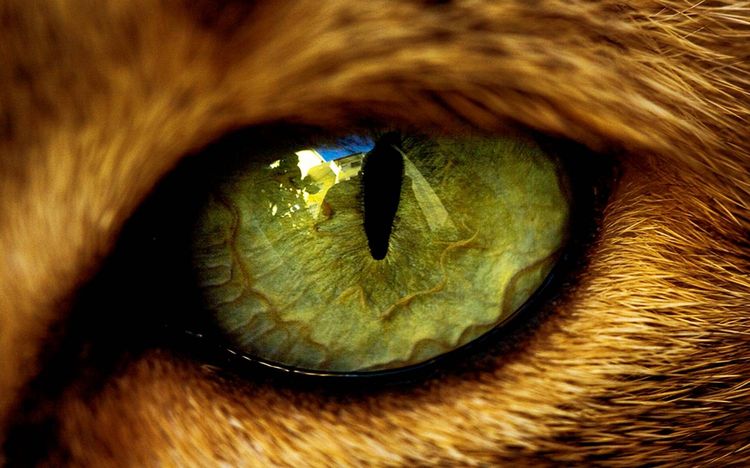
The structure of the visual organs
The cat's eye consists of three layers, each of which performs unique functions in detecting and perceiving light—the visible portion of electromagnetic radiation. A general diagram of its structure is shown in the photo.
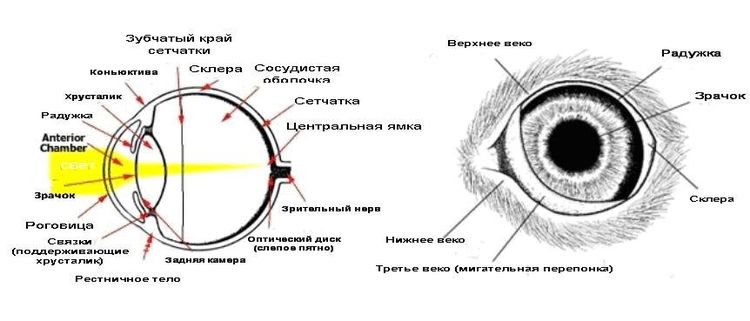
- The fibrous layer of the eye is formed from collagen fibers and the protein elastin. It consists of the sclera, which lines three-quarters of the ocular surface, and the anterior visible portion, the transparent cornea, which covers the remaining quarter. The cornea is responsible for receiving light and transmitting it into the eye for processing.
- The choroid is the middle layer containing microscopic blood vessels that supply the ocular tissues with nutrients and oxygen. Anterior to this layer is the ciliary body, whose muscles hold the lens in position and adjust its shape based on the distance to the object being viewed, ensuring clearer vision (a process known as accommodation).
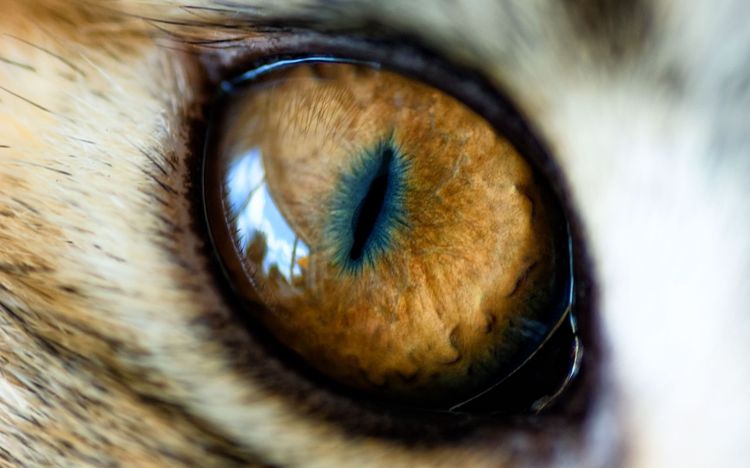
Anterior to the ciliary body is the iris, the colored portion of the eye that divides it into outer and inner chambers. Its color depends on the presence of pigment and can be fully formed between one month of age and two years of age. At the center of the iris is the black pupil, which changes size with changes in illumination to regulate the intensity of light entering the eye: it constricts in bright light and dilates in dim light to allow maximum light in.
- The retina is the innermost layer of the eye, composed of photosensitive cells responsible for converting light into nerve impulses for transmission to the brain via the optic nerve. Cats, like humans, have two types of photoreceptors:
- rods - provide light reception, passing it through themselves, which forms vision;
- Cones – responsible for image clarity, the ability to see small details and color perception.
The predominance of rod cells in the retina is responsible for cats' superior vision in low light compared to humans, which is essential for them as nocturnal animals. In other respects, the structure of the eyes, as well as their mechanisms of operation, are virtually identical.
Near the entrance of the optic nerve from the retina is an area insensitive to light—the "blind spot." Photosensitive receptors are completely absent here, so information about the surrounding world is simply not perceived. However, immediately behind it is the corpus luteum, a disk-shaped area of optimal vision where all light entering the eye is focused. Therefore, animals turn their heads to ensure that light rays fall precisely on this area of the retina.
Mechanism of operation
Upon reaching the eye, light rays pass through the transparent cornea to the crystalline lens and vitreous body, where they converge at a single point on the surface of the retina. Due to refraction, the image is reflected upside down. From the retina, information is transmitted to the brain via the optic nerves, where it is transformed into a true, upright image. The transmission pathways from the left and right eyes intersect, so each hemisphere receives data from both eyes. This information is subsequently processed and combined, producing a three-dimensional image of objects around us.
Read on our website about eye diseases in cats such as: cataract, glaucoma, panophthalmitis, corneal ulcer.
Another distinctive feature of the cat's eye is the presence of the tapetum lucidum. This is a special layer of cells at the back of the eyeball that reflects light not absorbed by the photoreceptors back onto the retina. It is thanks to this natural "mirror" that cats' eyes glow in the dark when they reflect incident light (but are not the source of it).
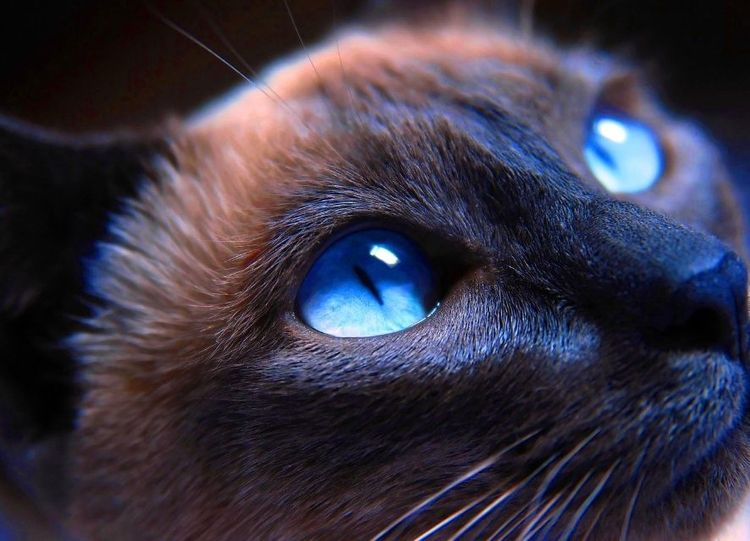
Interesting! Most cats have green eyes, but there are exceptions: for example, owners of Siamese cats may see a yellow glow, and due to different levels of ocular pigmentation, even two cats of the same breed may have different colored eyes.
The claim that cats can see well in a dark room is incorrect: in the complete absence of light, they are unable to see anything. Their ability to see in the dark depends on the presence of even the smallest glimmers of light. Once they reach the retina, these glimmers are magnified by the reflective layer, providing excellent vision in this situation.
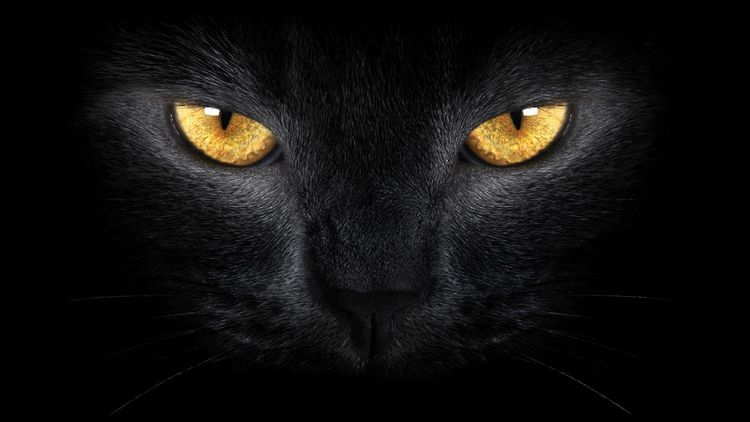
Early vision loss in animals leads to a reduction in the number of neurons in the brain responsible for vision, while the number of those responding to light and tactile stimuli increases. The heightened awareness of other senses compensates for the loss of vision so well that blind animals are virtually indistinguishable in behavior from their healthy counterparts. The only thing is that owners will no longer be able to see joy, sadness, and all the other nuances of mood and emotion in their pet's eyes.
Read also:
- What is the significance of a cat's tail?
- Why do cats have rough tongues?
- Cat Skeleton: Detailed Anatomy


Add a comment