
Ringworm in dogs: how to treat it
Ringworm (dermatophytosis) is an infectious skin disease caused by the proliferation of a certain type of pathogenic fungus. Infection can occur through contaminated environments and personal care items (rugs, dishes, toys), as well as through contact with sick animals. The infection most often occurs in individuals with weakened immune systems. This is especially true for older pets, puppies, and those who have recently recovered from an illness. The smaller the pet, the more severe the disease. This is because fungus Ringworm most quickly affects larger areas of skin, proportional to the animal's overall body surface area. Ringworm in dogs is a curable disease. The main thing is to know how to treat it properly and strictly follow your veterinarian's recommendations.
Content
Manifestations of lichen
The first signs appear within a few days (sometimes weeks) of infection. They consist of a barely visible, reddish rash on the skin that causes itching. The first stage of the disease can be identified by changes in the animal's behavior: restlessness, constant scratching of one area of the skin, and, in some cases, loss of appetite.
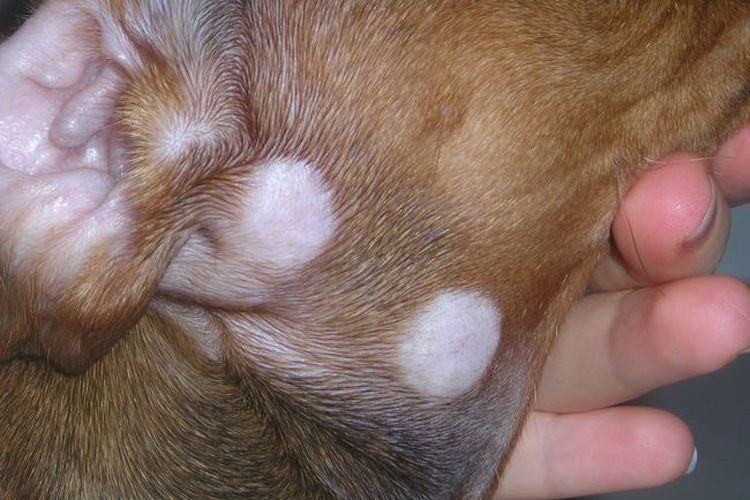
Over time, the main symptoms of ringworm appear:
- bald spots on the body;
- profuse hair loss in areas of inflammation;
- peeling and crusting on the affected areas;
- itching of the skin, ranging from slight to very strong;
To begin treatment as quickly as possible, it's important to understand what ringworm looks like in dogs. Pink, scaly patches of varying shapes and sizes appear on the affected areas (head, ears, lower legs, and tail).
Regular scratching of the affected areas traumatizes the inflamed skin, causing pustules and scratches, possibly leading to secondary infection. If left untreated, the fungus spreads throughout the body (back, paws, abdomen).
Important: Hair loss can be a sign of other diseases, so only a veterinarian can make a correct diagnosis after conducting diagnostic tests for the presence of fungus.
The fungus affects not only the top layer of the animal's skin but also the hair follicles, causing hair growth in the affected areas to sometimes stop. This is why the disease is called "ringworm," as it "shears" the hair.
Precautionary measures
Once symptoms of lichen are detected, the following precautions should be taken to ensure successful treatment and the disease does not return:
- isolate the animal from children and pregnant women;
- It is advisable to allocate a room where your pet will spend time until it is fully recovered, and clean it frequently, collecting and burning any scales and fur that fall onto the floor; you can disinfect the room with a quartz lamp;
- Regularly clean other areas of the house and wash the floors using disinfectants, and treat all objects that the dog has come into contact with;
- take walks only on a leash, preferably in areas away from other animals;
- Avoid contact with other dogs and do not allow others to pet the infected pet;
- All family members living with a sick animal should follow hygiene rules and wash their hands more frequently.
How to treat
A comprehensive approach is the key to successfully treating ringworm in dogs. The photo shows what ringworm looks like on a dog.
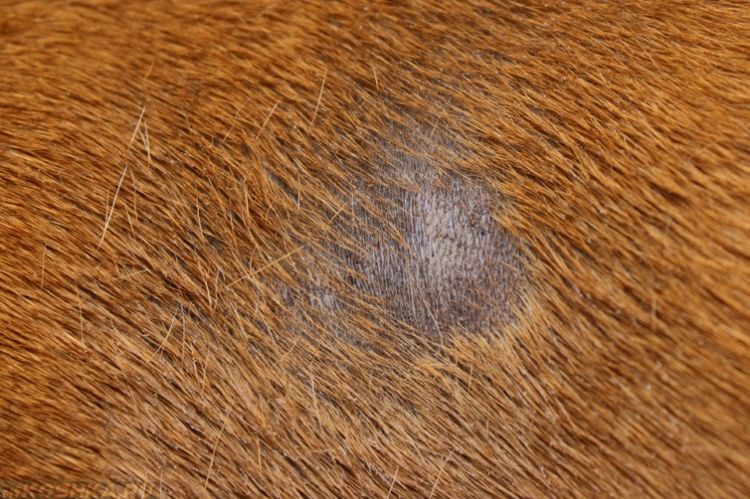
At the first sign of infection, consult a veterinarian immediately to eliminate the fungus and its effects on the body as quickly as possible. It is strongly recommended not to choose treatment methods on your own or based on the advice of friends. These treatments may provide a temporary effect, after which the disease will progress. They may also distort the clinical picture, making it difficult for a specialist to make an accurate diagnosis.
Principles of treatment
Complex therapy for the treatment of ringworm in dogs consists of the following areas:
- local treatment of lesions;
- strengthening the immune system;
- supportive therapy.
The duration of treatment depends on the severity of the disease and is typically 4-6 weeks. It is important to complete the entire course prescribed by your veterinarian and never stop immediately after the clinical picture improves. After completing the course, a repeat examination should be performed to confirm the absence of fungi in the body. The pet is considered healthy when two tests performed a week apart show negative results.
How to treat ringworm in dogs
The following are used during the treatment:
- Ointments (Miconazole, Thiabendazole, Clotrimazole, Yam Ointment). Apply a thin layer to the shaved areas of the body two to three times daily.
- Solutions of iodine, salicylic acid, or clotrimazole are used for additional external treatment only on the recommendation of a doctor and with strict adherence to dosages, as they can provoke necrosis of the superficial layers of the skin, which will require additional treatment.
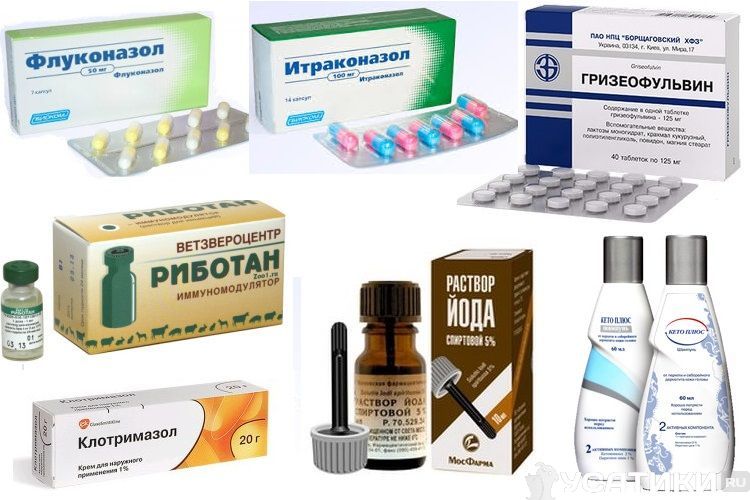
- Tablets (Fluconazole, Itraconazole, Griseofulvin) are prescribed for large areas of the body affected or for fungal infections resistant to topical treatments. Hepatoprotective medications are taken in combination with these tablets to reduce the negative impact on the liver.
- Shampoos (Keto Plus) – used in cases of large bald spots, according to the instructions. It's important to rinse off the foam thoroughly to prevent it from getting into the stomach or on mucous membranes, which could cause poisoning. If the fur is thick, it's best to shave it off, but in this case, the animal should wear a jumpsuit during walks to prevent hypothermia and weakened immunity.
Using shampoo is not recommended for minor bald spots, as the spores will spread to healthy areas of skin during bathing, causing damage.
- Immunostimulants and vitamins (Immunofan, Ribotan) – provide support to a weakened body, strengthen the immune system and accelerate the restoration of hair and skin.
- Antibiotics in the form of ointments, injections or tablets are used as prescribed by a veterinarian when a secondary infection (staphylococcal or streptococcal) occurs, which causes inflammation and suppuration of wounds.
Rules for external processing
All treatment procedures must be carried out wearing rubber gloves and clothing, which can then be treated with disinfectants or discarded altogether.
Processing stages:
- cut off the hair, extending a couple of centimeters beyond the affected area;
- Remove easily detachable crusts and scabs. You can soften them first with warm soapy water or hydrogen peroxide;
- treat the affected areas and surrounding healthy skin with medications;
- Ensure that the animal does not lick the medication. Special collars or muzzles can be used for this purpose.

Removed scabs and clipped wool must be burned, as pathogens can adapt to the environment and remain viable for up to 18 months.
Vaccination effectiveness
Vaccination against ringworm in dogs is a controversial method of treating ringworm. Firstly, ringworm is a fungal, not a viral, disease, so a truly effective treatment has not yet been developed. Secondly, pets do not tolerate the vaccine well, and afterward, the fungus develops resistance to medications, complicating further treatment. Just a few years ago, antifungal vaccines were considered the best option for treating ringworm in Russia. However, recent international studies confirm that the vaccine is not effective for treating or preventing the disease.
Prevention
The following preventative measures can help minimize the risk of your pet becoming infected:
- adherence to a proper diet and eating regimen;
- adding multivitamins and immunomodulatory drugs to the diet;
- regular examination of the skin;
- hygienic shower after walks;
- systematic antiparasitic treatment of the animal’s things and body;
- timely vaccinations and visits to the veterinarian.
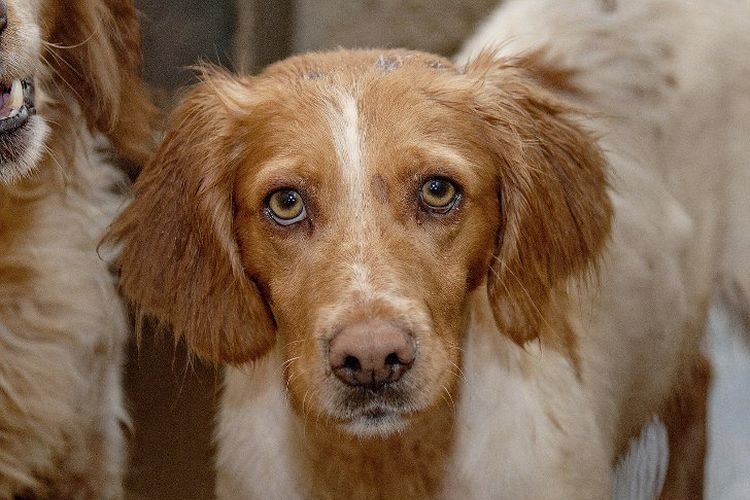
All of the above measures will help increase the body's resistance to pathogenic fungi and prevent the development of favorable conditions for their proliferation. If an animal has low resistance to fungal infections, the underlying cause should be investigated. Possible causes include immune system problems or underlying illnesses.
You can also ask our website's staff veterinarian a question, who will answer them as quickly as possible in the comments box below.
Read also:
- Ringworm in dogs: symptoms and treatment
- Bad breath in dogs
- Dermatomycosis in dogs: causes and treatment


10 comments
Antonina
My German Shepherd developed two coin-sized spots in the corner of her mouth on her upper lip. A similar spot appeared earlier on her nose, and later, larger spots appeared on her front paws above the pads. We went to the vet, got an injection, and prescribed griseofulvin tablets twice a day for 10 days. They didn't give a clear diagnosis. There's no fur covering the spots, and they're not getting any bigger.
Daria is a veterinarian
Hello! Judging by the symptoms you described and the rapid spread of the spots, the veterinarian, like me, suspected a fungal infection. To make a diagnosis, a scraping and a trichoscopy (examining the hairs under a microscope) were needed. An antifungal medication was prescribed. I would also add a fungicidal ointment (like clotrimazole) three times a day, and something to boost the immune system.
Antonina
My 2 year old shepherd has small red spots on his nose. What could it be?
Daria is a veterinarian
Hello! You need to see what kind of spots there are. Has hair loss occurred? What kind of spots are on the skin: scaly, blistered, or just red? What size are the spots? How long have they been there, how many of them are there, and how quickly are they growing? What are you feeding her? Could it be ringworm, an allergy, dermatitis, an insect reaction, or something else entirely?
Venus
Good morning. My German Spitz has ringworm. He has a 1 cm bald spot on his back paw. I apply clotrimazole twice and sulfur ointment at night. The area has turned blue. Am I treating it correctly? We haven't been to the vet.
Daria is a veterinarian
Hello! Why use sulfur ointment? The dog doesn't have scabies mites. Clotrimazole alone isn't enough. It's essential to also administer oral medications: intraconazole (the dosage and course of treatment have already been mentioned repeatedly in the comments to the article about ringworm), Lamisil, or terbinafine, as safer options—20-40 mg of the active ingredient per 1 kg of the animal's live weight orally once a day (it's better to use pulse therapy, meaning you give the medication for 1 week, then take a week off). Before applying the ointment, you can bathe the dog in antifungal shampoo (you can easily buy one at a human pharmacy). There are also antifungal sprays (Zoomikol, for example). Vaccination is not necessary. It has already been proven that if the animal has a good immune system, the recovery time is the same with or without the vaccine. Self-healing is often observed. Just be sure to thoroughly wash and disinfect your floors at home to prevent reinfection.
Julia
Hello. My mongrel puppy has ringworm on almost half her body, mostly from her chin to her belly, the rest on her head and paws, and a few spots on her back and sides. The vet gave her the Vakderm vaccine twice, 14 days apart, along with an immunomodulator and Fungin Forte spray for treatment. We completed the prescribed treatment for 20 days, but after 10 days, the ringworm has returned, even more severe. I wash the floors daily and treat the furniture and her toys with bleach and bleach. She only eats homemade food; she won't even smell dry food.
Dasha is a veterinarian
Hello! Firstly, therapeutic vaccinations are given three times (!), sometimes up to five times. If it's REALLY ringworm, then in addition to topical treatments, it's necessary to take oral antifungal medications (such as Fucis or Itraconazole) for up to 30 days. Externally, you can treat with Mycoseptin, Ecodax, Clotrimazole, and other similar antifungal medications. Two hours after applying these solutions, it's a good idea to spray the affected areas with Zoomikol spray (twice a day for up to 10 days). It's also a good idea to add 4-5 injections of Ribotan every 3 days.
In general, did the veterinarian rule out demodicosis and sarcoptic mange? Did they scrape the area between the affected and healthy tissue before the discharge appeared? How was the ringworm diagnosis made?
Nelya
I graduated from veterinary school during the Soviet era, and the best treatment for ringworm is to lubricate the affected areas with melted pork fat in a moderately hot state. This has been confirmed by many years of practice. It is completely cured in several doses, but the sun also helps, as does an ultraviolet, but this is only in the spring and summer.
Dasha is a veterinarian
Here, everything changes 10 times a year. Someone taught a 50-year-old colleague to use used oil. When a colleague from the lab graduated from the academy 10 years ago, the only thing they said about pets with dermatomycosis was euthanasia. By the time I graduated, they were already talking about vaccinations and the use of ointments and tablets. When I started working with small animals, they had already started using sprays, and Yam-BK ointment and other tar-based products for cats were banned.
Veterinary medicine is constantly evolving. If you want to stay current and keep up with modern therapeutic trends, you need to attend seminars and refresher courses at least once a year (or even more often) and subscribe to (and read) veterinary journals. My colleagues, with whom I studied, send me scanned copies of new monographs, dissertations, theses, dissertations, journals, and books, as well as any manuals they can find. You know, you can learn so much from what you read.
Add a comment