
Ringworm in cats: symptoms and treatment
Ringworm, or dermatomycosis (Latin for ringworm), is a skin disease caused by dermatophyte fungi, which can break down the keratin in hair and skin. Currently, up to four dozen species of these eukaryotes are known. In cats, dermatomycosis is most often caused by Microsporum canis, Microsporum gypseum, and Trichophyton. The disease is highly contagious and can be transmitted to humans and requires long-term treatment.
Content
Risk factors and routes of infection
Spores of pathogenic eukaryotes can remain viable for many years in a dormant state, and when introduced into a favorable environment, they begin to actively reproduce. Cats are primarily infected by their fellow cats: stray animals are very often carriers of the fungal infection.
Important to know! A cat can catch a fungal infection even without leaving the house. Microscopic fungal seeds can enter the home through dusty air, on dirty shoes, on cat food, bedding, and even in water.
Veterinarians believe that the following factors predispose to the development of dermatomycosis in cats:
- Reduced immunity. In kittens under one year old, the immune system is not yet fully developed, and in adult cats, it can be weakened by illness.
- Poor nutrition reduces the animal's ability to resist disease.
- Skin damage. Pathogenic fungi can more easily penetrate the skin if its natural protective barriers are compromised.
- Genetic predisposition. Persian cats have been shown to be more susceptible to ringworm: this artificially bred breed lacks a gene responsible for fighting certain types of infections, including fungi.
Symptoms
The disease develops gradually, initially affecting small patches of skin. The appearance of ringworm is clearly visible in the photo: hair in the affected areas falls out, as if shedding, and the skin is inflamed and soft. The primary sites of ringworm are the head and ears, sides, and base of the tail. The patches then expand, and in advanced cases, they can cover almost the entire body of the animal. It appears as if the cat's hair has been shaved bald, hence the name of the disease.
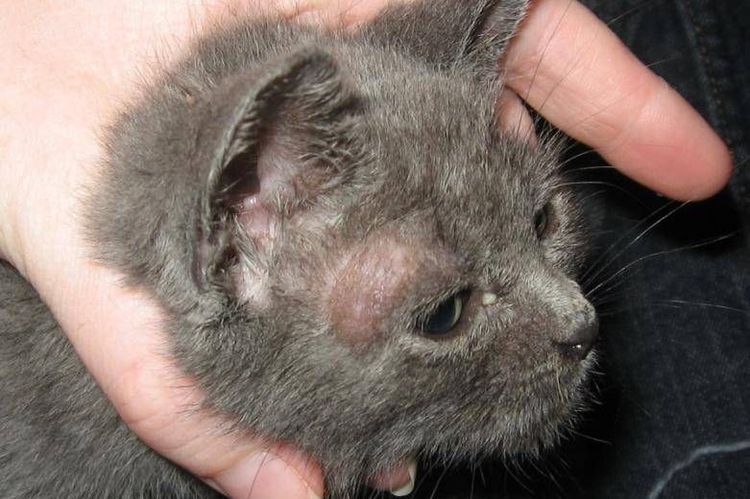
One of the most difficult symptoms of dermatomycosis is severe itching. Oily, scaly crusts form on the affected areas of the skin. The cat constantly scratches these crusts, transferring dermatophyte spores to the micro-scratches that form on adjacent areas.
The disease can occur in different forms:
- superficial (external) - manifested by focal alopecia (hair loss in certain areas).
- deep - characterized by damage to all layers of the skin, capable of causing severe, sometimes purulent, inflammation.
- erased - characterized by the fact that fungal spores are concentrated in small but numerous local areas, making them extremely difficult to destroy.
Although the signs of dermatomycosis are quite obvious, other skin conditions, such as allergic dermatitis, eczema, and alopecia of various origins, have similar symptoms. Therefore, only a veterinarian can prescribe the correct treatment after conducting a differential diagnosis.
Diagnostics
The diagnosis of ringworm is made based on the results of microscopic, bacteriological and fluorescent examination of wool samples and scrapings taken from the skin of a sick animal.
Microscopic examination of the specimen reveals dermatophyte fungi in 50-70% of cases. Another common method for diagnosing ringworm is the use of a Wood's UV lamp. The photo shows that under its light, the spores of the fungi that cause ringworm fluoresce bright green. However, the effectiveness of this method is limited to 60%, as some species of Microsporum canis and absolutely all species of Trichophyton mentagrophytes are not sensitive to ultraviolet light.
The most accurate way to detect ringworm spores is by culturing the fungal culture in a nutrient medium. Microsporia colonies grow within two to three days, so bacteriological testing is not a rapid method. However, it does provide the most accurate results and allows for identification of the eukaryotic species, which is important when selecting an antifungal drug.
Treatment
In mild cases of the disease, especially if the cat is a short-haired breed, antifungal ointments or sprays:
- Miconazole,
- Thiabendazole,
- Fungin,
- Sanoderm,
- Fukortsin,
- Yam Ointment.
A combination of topical treatments and lime sulfide baths produces good results. However, the animal's coat takes on a yellowish tint after such a bath, and the odor of this solution is very unpleasant.
For severe cases of ringworm, if baths and topical treatments are ineffective, a veterinarian may prescribe oral medications. Veterinarians consider the antibiotic griseofulvin and the antifungals intraconazole or terbinafine to be the most effective treatments for ringworm. The dosage and duration of treatment are determined individually.
Important! Cat owners should be aware that treating their pet for ringworm can take up to six weeks. This is due to the high viability of the dermatophyte fungus, making it difficult to completely eradicate its spores. Even a minimal number of surviving spores increases the risk of recurrence.
Preventive measures
A reliable way to prevent dermatomycosis is vaccination, which can be done at any veterinary clinic. To make your pet less susceptible to infections, you should strengthen their immune system by providing proper nutrition and, if necessary, periodically administering vitamin supplements.
Microscopic fungal spores are easily carried in from outdoors by dust. To prevent pets from becoming infected with ringworm, clean the premises regularly, at least once a week, using a wet cleaning method.
If you have a cat with ringworm, all procedures necessary during treatment must be performed wearing disposable medical gloves, as this disease is also dangerous to humans. This requirement must be followed until your pet is fully cured.
Read also:


Add a comment