
How to relieve stress in a cat?
Surprisingly, cats also experience stress—today we'll explore the main causes and symptoms, and offer recommendations on what to do in this situation. Although seemingly independent and proud, cats are actually very sensitive, vulnerable, and defenseless. In nature, all felines are incredibly cautious and timid. Domestic cats are no exception. Any unfamiliar noise, loud sound, or new environment can frighten them. Of course, much depends on their personality. Some cats panic when their owners don't return home on time, while others sleep soundly during renovations. Nevertheless, everyone, without exception, is susceptible to stress.
Regardless of age, gender, or breed, cats value safety and comfort. How can you relieve stress in a cat?
Content
What can cause stress in your cat?
But seriously, cats are incredibly possessive and protective by nature. They own everything within their territory, including their owners. Any changes or the appearance of strangers or other animals on their "private" property makes them anxious and seek ways to protect themselves and their habitat.
Change of scenery
Stress is most often caused by a change in a cat's familiar environment. Changes that may seem insignificant to owners can leave a lasting impression on a cat. Stress-provoking changes can range from a change in food or litter to a rearrangement of the home or the arrival of new residents. moving.
The arrival of a new family member
A cat's behavior and emotional state can be unpredictable after the arrival of a child, a new family member, or another pet. This is always accompanied by stress. The animal doesn't understand why it's suddenly receiving less attention. And in some cases, jealousy develops as a result. A prolonged separation from a beloved owner inevitably causes intense tension and fear in cats. Left at home, the animal becomes bored and meows piteously, even despite regular visits from caring neighbors or friends who come to feed the pet.
Loss of a family member
The loss of a family member, including a furry friend, can be equally devastating. Sometimes, the resulting apathy can last for months. The danger of prolonged stress is that constant nervous tension significantly weakens an animal's immunity and increases the risk of developing various diseases. When the body is weakened, it becomes much easier to catch an infection.

When traveling, some people leave their cats in pet boarding facilities. The overcrowding, new surroundings, and absence of their owner inevitably lead to intense fear and stress.
Not accustomed to noisy places
If a kitten isn't accustomed to shows from an early age, such events can be very frightening for your pet as an adult. Add to that the large crowds, noise, and other frightened kittens, and the unpleasantness of transport.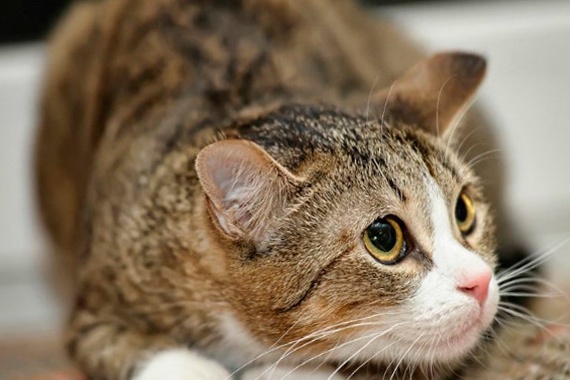
Trips
Cats have a very difficult time traveling, especially long ones. Often, upon arrival in a new place, a cat will retreat to a dark corner, where it can remain for a long time, refusing food and water. If you're planning a trip, prepare your cat for it in advance. There are special herbal remedies that can help make the journey less painful.
Symptoms of stress in cats
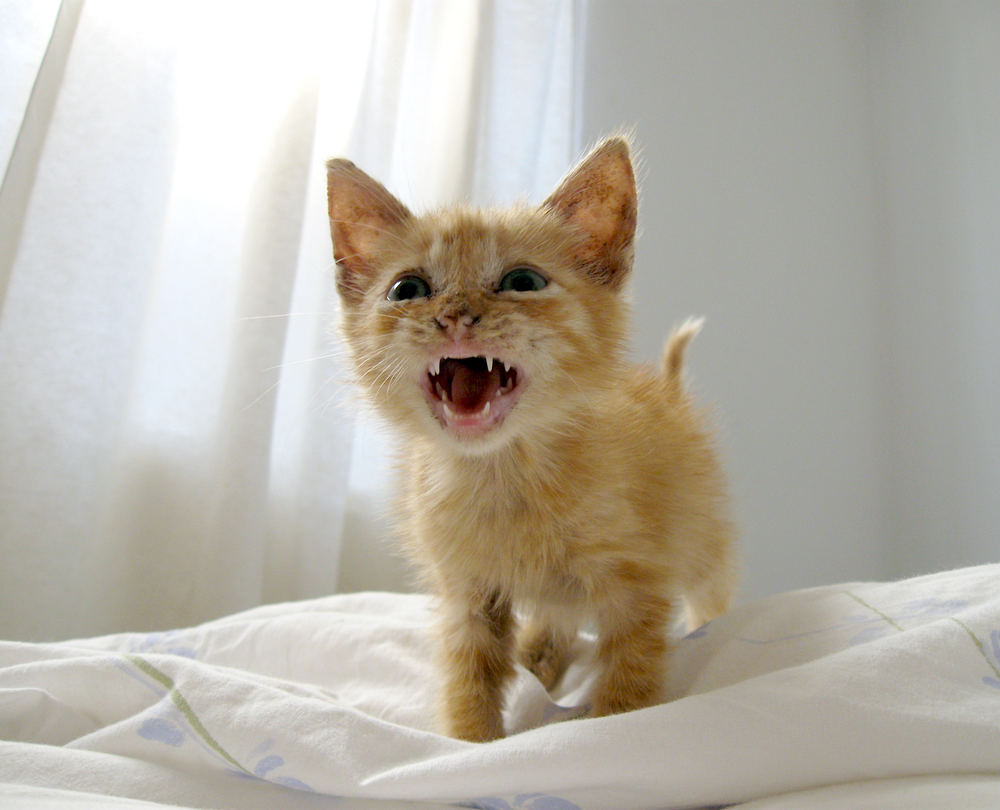
Stress can manifest itself in a variety of ways. But usually, observant owners easily notice changes in their pet's behavior and habits. Symptoms include:
- Lethargy, apathy or, conversely, excessive activity.
- The cat may become overly affectionate or show uncharacteristic aggression.
- Completely refuse food or, on the contrary, eat heavily.
- Sometimes, emotional stress leads to excessive licking, even to the point of hair loss and bald spots in some areas.
- When a well-behaved animal starts sharpening its claws on furniture, walls, or ignoring the litter box, leaving “puddles” in the corners, some perceive this as revenge, but your pet is most likely experiencing stress and is trying to cope with it.
It's crucial to recognize early on whether your pet is truly experiencing emotional stress or simply feeling unwell. It's virtually impossible to do this on your own, but a veterinary examination and necessary tests can help rule out possible illnesses and determine the cause of behavioral changes.
How to relieve stress in a cat?
To help animals overcome stress, it's necessary to eliminate the source of their anxiety. When this isn't possible, try to teach them to tolerate it calmly. Surround your pet with attention and care, offer a new toy or a favorite food. Engage them in active games; physical exercise can help distract them. Take care of your pets and try to protect them from stressful situations and unnecessary worries as much as possible.
Any questions? You can ask our website's staff veterinarian in the comments below, who will answer them as quickly as possible.
Read also:


30 comments
Olga
Good afternoon! Our six-month-old kitten was very frightened by the noise of a passing motorcycle and stretched her paws. She didn't get up for three days. It cleared up a month ago, but she's become very frightened and apathetic. She doesn't play and doesn't go to the bathroom every day. We've replaced her toys with new ones, but she doesn't respond. She lies around a lot. We gave her two courses of Kot Bayun, but we didn't see any significant results. How can I get her out of this state?
Tatyana Shmonina - veterinarian
Hello! Your dog needs an echocardiogram. If everything is normal, then consult a zoopsychologist.
Xenia
Hello! Please help me!!!
The cat has polycystic kidney disease. He is an older cat, has a good appetite, no vomiting, and goes to the toilet normally, both peeing and bowel movements. However, the cat has become terribly aggressive towards other cats in the house, including his owners. He can attack without reason. He was never a peaceful cat before, but after moving to a new house, the situation became critical. No one has any peace from him, he can attack at any moment. He has also become very restless, pacing around the room in circles, starting from the door and ending at the door, and vocalizing very loudly, including at night...
But he doesn't poop anywhere, he strictly uses the litter box! He had a kidney attack this summer: he was vomiting, not eating, and urinating a little everywhere. We gave him saline drips, circulacrum injections, and prescribed a renal diet, which he refused. Force-feeding him kidney pates was useless; he either spat them out or vomited them! Dry kidney food also worked, causing him to rapidly lose weight. We switched him to an offal diet—he eats happily, has gained weight, and hasn't vomited, plus we're giving him Fita Elite Healthy Kidneys. But how do we deal with the cat's aggression and anxiety? Can we try giving him Kot Bayun given his kidney condition? Are there any contraindications? There's absolutely no information about it online, by the way! I'm desperate...
Daria is a veterinarian
Hello! The only contraindication for "Kot Bayun" is age. Let's just say it's not suitable for children and teenagers. There are no health contraindications. It's purely homeopathic, with sedative and antispasmodic properties. It's worth a try. It's inexpensive. Felliway is much more expensive. Although, to be honest, reviews and the effectiveness of all sedatives are questionable. There are strong medications, but they are only prescribed under a doctor's supervision. And they can only be purchased with a prescription. So, start with simple methods for now. Your pet may be experiencing severe stress. And almost all kidney patients have poor appetites due to frequent nausea (serenia and its analogues can help). The main thing is to stay hydrated.
Lyudmila Gorbunova
Hello! We have two cats, one 2.8 months old and the other 1 year and 8 months old. We've been living together for 1 year and 8 months. They're spayed and had a wonderful relationship. They started fighting when a strange cat appeared outside on the window. The younger one let out a threatening scream, and the older one apparently took it personally. She pounced on her, and a terrible fight ensued, chasing her around the apartment. The conflict has been going on for a week now. The older one attacks, the younger one runs away, and the younger one screams. The younger one is urinating and defecating out of fear. We've been giving her anti-stress pills for 4 days, but there's been no positive result. We keep her in separate rooms. Please advise what to do. We love both of them.
Daria is a veterinarian
Hello! It seems like they've been living together for the same amount of time as the younger one. =) Are they mother and daughter? Are they spayed or neutered? Could it be a fight over territory and the male? Try KotBayun or Fospasim. They need to be separated for a while so they don't even cross paths. There's a chance the older one will calm down. We need more specifics about the situation.
Seraphim
Hello! My cat is 8 years old. She lived with me for three years as a kitten. Then I had to give her to my parents because I moved to another city and couldn't take her with me; it was too far away. My parents moved her into a separate room in the summer kitchen. They live in the house, and the summer kitchen is where the bathroom and boiler are, and they visit the cat a couple of times a day. Everything was fine; she was an affectionate and calm cat. But when she turned 6, she started showing aggression, throwing herself at my feet, tearing, and hissing, as if she had met a rival or another cat. She had never been around other cats before, and we don't want to spay her; we used Antisex drops (I think). This aggression began to happen once a year. Since then, everything has been fine.
I consulted the vet, and he said to let her outside, otherwise she'll go wild and become more emotional, and she'll stop acting like that. He also recommended a shot that calms her hormones (we gave her one, it lasted a year), and everything was fine. Now she's started acting aggressive again. More often now, almost every other day, she'll lunge at my legs for no apparent reason. I don't know what to do; she's severely torn and bitten my mom's legs. Before that, a year ago, she'd severely torn her arm, and it was so bad that she hit a vein. I had to go to the emergency room, and they gave my mom a tetanus shot just in case. But that's not right. I don't know what to do; what's causing it? Stress, a hidden grudge?
Could it be hormones or the lack of a cat? I'd appreciate any information! What should I do? Should I give her some sedatives or give her another injection? Or will it just keep getting worse?
Daria is a veterinarian
Hello! You don't want kittens, but for some reason you can't bring yourself to spay her. You're poisoning her with these hormones! You'll end up with cancer (on her ovaries, for example). This will lead to behavioral changes, and you'll still have to have surgery. Plus, after using hormonal medications in animals (all these contraceptives and their analogues), the risk of developing mammary tumors increases significantly. You should already have an ultrasound done to rule out ovarian cysts.
The animal's behavior may be linked to a lack of human attention. While she was once a pet, now she's essentially locked away and not socialized. She's turning feral. She needs companionship. At first, she'll resist and hiss, but over time, she'll give in and become more affectionate. She just needs to be brought into a home with people, not kept as an outcast.
Natalia
Hello! Please help! We have a 4-year-old cat, a cat housed in a fire, never been outside, not vaccinated, and has no contact with other animals. He eats dry food: Whiskas, Kitekat, and Purina for cats housed in fire, with clean water and sprouted grass always nearby. Since puppyhood, he has been afraid of loud noises and sudden movements. A week ago, we got a puppy (the puppy is not vaccinated, we don't take him outside yet, and he feels fine). At first, the cat behaved aggressively (towards the puppy, but he ate and drank from the dog bowl a few times), then he stopped coming to us, stopped eating (he runs up to his favorite food, sniffs it, and leaves), and practically doesn't drink, and he stopped licking himself.
We took him to the vet, and they said his mucous membranes, teeth, and ears were fine. The ultrasound results were excellent (nothing to complain about), and his temperature was normal. They prescribed STOP-STRESS and said he'd start eating in the evening, but he refused to eat again. Now he's in a separate room with bowls and a litter box. He hasn't eaten or drunk again, sleeps constantly, barely reacts to anything, is very lethargic, and has lost a lot of weight. We force-fed him today. Please tell me what to do?
Daria is a veterinarian
Hello! Well, you're expecting miracles from the first day of use. Such medications have a cumulative effect, and visible changes can appear within three days (and in the case of constant stress, even within a week). But if the animal is sensitive (and cats are already easily stressed), such stress can trigger the development of cystitis, enteritis, and dermatitis. Give the sedative regularly; don't miss a dose. Besides Stop-Stress, there are other homeopathic sedatives. 90% of the change in the animal's condition is a consequence of severe stress, not an infection. Patience and affection are needed. Otherwise, the cat will also become jealous.
tatimarkova2016@mail.ru
Hello, I've encountered this problem. I bought a cat from a cattery four days ago; she's almost a year old. She might sleep, then suddenly run to the potty, dropping poop, or, if the child doesn't let go of her litter box at the wrong time, she'll relieve herself. Could this be stress or an illness?
Daria is a veterinarian
Hello! This is unlikely to be a sign of stress (but to rule this out, administer homeopathic sedatives: Stop-Stress, Kotbayun, Fospasim, and others). Judging by your description of the problem, this happens regularly (almost constantly). Most likely, the problem is with the animal's health. It doesn't understand that it urgently needs to go to the litter box. By the time it does, it's too late. The gastrointestinal tract and lumbosacral spine need to be examined (an X-ray is needed). It's also suspicious that a one-year-old cat has been kept at the cattery for too long.
Tatiana
Hello! Our five-year-old cat is spayed. My grandmother recently passed away, so we had to adopt her cat. She's 10 years old, not spayed, and is aggressive and feral. She also frequently goes to the bathroom in corners, likely due to stress. Our cat constantly bullies the new arrival, chasing her around and not letting her leave the room. We've put a litter box and bowls in the room, but we'd like the cats to at least let each other live peacefully, if not become friends. How can this be achieved?
Daria is a veterinarian
Hello! This is a normal reaction for an animal to the presence of another – a rival – in its territory. Imagine how you would react if you lived alone in an apartment, and then – bam! A stranger was brought in. You, too, would be nervous and worried, perhaps even aggressive. It's the same here. There are several options. First: find a good home for the older cat (ask volunteers), otherwise, due to constant stress, the animal, God forbid, could develop an idiopathic condition (cystitis, dermatitis, enteritis).
The second is to sedate both animals (for example, Fospasim or Stop-Stress), but the process is lengthy and there are no guarantees. The third is to observe, wait, separate them in different corners, and prevent any contact (but in a small, enclosed space, this is impossible; they will still smell each other). The chances of them becoming friends are very slim. The competition for your attention and territory is too intense.
Julia
Hello! After a visit to the vet, my cat became depressed. He won't eat or drink, and tries to hide in secluded places. He hasn't slept for 3-4 days. Whenever I pick him up or at the slightest stress or anxiety, he foams at the mouth. Even at night, when everyone is asleep and it's quiet, I can hear him slurping and foaming. For the second day, I've been giving him stop drops—stress relief. Yesterday they calmed him down a bit, but he still couldn't sleep properly. Eventually, when the effect wore off, he returned to his terrible state. Toys don't help—he doesn't respond to them. I avoid physical contact, and he immediately starts foaming at the mouth. Help, I don't know what to do.
Daria is a veterinarian
Hello! Why did you take your pet to the vet? Is this definitely a stress reaction, not a symptom of the underlying illness (if your pet was sick)? Could he have choked on something? Or was he poisoned? Perhaps he was given other medications before, or did he eat some houseplants? Try stronger sedatives: Bayun for the cat, Fospasim (pure homeopathy). The effect is cumulative; they don't work quickly. It takes several days of treatment to see visible results.
Tanya
The cat is afraid of something. He's been nervous for several hours now, running around the apartment and hiding behind the couch and under the bed. He keeps looking at the front door, even though no strange sounds or anything unusual have happened or are happening. He's become afraid out of the blue. This is the second time this has happened, and like the first time, we didn't notice anything strange or unusual that would frighten him so much. Do cats react to dog whistles? That's the only thing we can think of right now, since the neighbors downstairs have a dog.
Daria is a veterinarian
Hello! Dog repellers rarely work on cats (they have different hearing ranges). Dogs can hear up to 40 kHz, while cats hear in the 50-60 kHz range. Therefore, only a few individuals are susceptible to ultrasonic dog repellers (again, it depends on the device). Perhaps the cat was frightened while you were away. Perhaps someone was yelling, slamming metal doors, knocking, or making other unusual loud noises. You probably don't stay home 24/7, after all. Have you had any head injuries? Could the injury be causing a nervous system disorder?
Marina
Good afternoon, we took our cat to another city and had no one to leave her with. We've just returned home, but she's become restless, going out into the hallway and screaming. How can I help her and what's the best thing to give her? I was also wondering about the pheromone-based product that plugs into an outlet. Is it worth trying?
Daria is a veterinarian
Hello! There are homeopathic sedatives. Fospasim, glycine, Fitex calming drops, Stop-stress, Kot Bayun, Stresnil. As for the ones that plug into a socket? Well, I don't believe in such "miracles." You're probably talking about Feliway and the F3 facial muscle pheromone? I don't like such "new products." And why would there be unnecessary chemicals in the air? You don't know how they'll affect you. I'm in favor of individualized administration of medication, meaning you give the exact dose the animal needs. That way, at least you can be sure the animal will receive the medication and it will work.
Lyudmila
Hello! My 11-year-old cat has chronic renal failure and atrophic gastritis. He refuses to eat on a diet and is losing weight, but he's very hungry. Force-feeding keeps his weight off, but he becomes very stressed and resentful. He hides and refuses to eat at all. It's a vicious cycle. What should I do? Is force-feeding even acceptable?
Daria is a veterinarian
Hello! Forcing the cat is not recommended at all, as it will stress the animal, which will only make the situation worse. You need to look for alternatives to the prescribed therapeutic food (maybe wet food or baby meat food). You need to find a higher-calorie diet so that it eats a little but has enough energy for a long time. What did they even prescribe for feeding? Are you treating chronic renal failure?
Elena
Hello. I have two cats who have lived for 11 years. Yesterday, for some unknown reason, a conflict broke out in which the older cat (they are 1.5 years apart) won, while the younger one hid under the blanket and hissed and lunged at everyone. They simply can't be in the same room together. Moreover, the older cat behaved as before. I had to take the younger cat to another apartment (since she was moving there herself), and the older one stayed at home with her parents. In the new place, the cat stopped hissing and snapping and started petting and purring like she did at home. Can you tell me what to do? How can I resolve the conflict and return the cat to the family?
Daria is a veterinarian
Hello! Could you check if the cats are sharing anything? The litter box? The food bowl? The water bowl? Maybe the younger one has been getting more cuddles lately, and the older one is jealous? You need to figure out what's causing the conflict. You can give them both a calming medication (at least Fospasim) for about a week, and then try to bring them back together. But still, check at home to make sure the cats aren't sharing anything.
Xenia
My cat is 7 years old, neutered. There was a funeral in the family recently, a lot of people were there. He hid under the couch, then came out when I called, but became apathetic, doesn't eat and drinks very little, and this has been going on for 3 days. What should I do? The vet clinic is closed until Monday. How can I help the cat? Can I give him regular human valerian or a small piece of gidozepam?
Daria is a veterinarian
Hello! Absolutely not! Valerian doesn't calm cats! On the contrary, it overstimulates their nervous system even more (there are even plenty of videos of cats' pupils dilating and becoming aggressive when they smell valerian). There are homeopathic sedatives for animals: Stop-Stress, Fospazym. As a last resort, Glycine is a good human remedy. In general, don't bother your cat. He'll sleep at night, hide during the day, and calm down on his own. Your excessive attention will only make things worse. The more you cuddle and pay attention to him now, the worse he'll feel. Give him peace and quiet, let him find a secluded corner and be there alone, and then his nervous system will calm down.
Tatiana
Two days ago, we took our cat to the vet (he had a small lump on his face; they said it was a papilloma). It was a long drive and a long wait. He hissed and bit at the clinic and on the way back. Now he's not eating, he's not interacting with us, and when we pick him up, he starts meowing and struggling. I know he's stressed. How can I help him?
Daria is a veterinarian
Hello! Please use Fospasim according to the instructions. It's a good homeopathic sedative with no side effects or contraindications. Use for at least a couple of days, ideally a week or two.
Anastasia
After losing her sister, my 5-year-old British Shorthair cat became apathetic. She licks herself constantly and for a long time, eats more, and searches in the places where her sister used to sit. Almost two months have passed, and she still won't accept it. We tried feeding her both a kitten and an adult, but she won't accept either (we returned them). She's been giving her water for over a month—Bayun cat—but it didn't help. What should I do? SOS!
Dasha is a veterinarian
Hello! Remove all toys, bowls, and other items that your "sister" has been in contact with. Animals (especially cats) don't typically form long-term bonds with their fellow animals; they forget their family ties after a while (a mother might mate with her son, or a sister might fight over attention/food/toys, and they forget their kinship). You need to spend more time with your pet, play with it more, and give it attention. Why did you take other animals and then give them away? It's stressful for other animals too, but don't you feel sorry for them (they're living creatures, not toys: you took them in, it didn't work out, you gave them away).
Maybe your cat is a bit of a recluse? Although at a young age, she should be more outgoing and inquisitive. Play with her more often, and buy her more interesting toys.
Add a comment