
Stomatitis in cats
Like humans, cats sometimes develop inflammatory diseases of the oral cavity, one of which is stomatitis. This condition is accompanied by the formation of painful ulcers in the affected areas, causing severe discomfort to the animal.
We invite you to learn more about the causes of stomatitis in cats, its diagnosis, and treatment methods.
Content
Causes of stomatitis in cats
Stomatitis can have many causes. Depending on the underlying cause of the inflammatory process, the disease is divided into two types:
- Primary – occurs as a result of the impact of negative factors on the mucous membrane.
- Secondary – appears as an addition to an existing disease in the animal.
The main causes of primary stomatitis in cats include:
- poor hygiene, which in turn leads to the proliferation of pathological microorganisms that provoke an inflammatory process;
- microtraumas, which an animal can get while playing or when gnawing on bones with sharp edges;
- feeding errors – food that is too hot or too cold;
- chemical burns, which can be caused by contact with mucous membranes with household chemicals or aggressive medications for external use.
Important! The oral mucosa is very delicate, and any aggressive contact can trigger an inflammatory process, which without proper treatment quickly progresses to stomatitis, as cats' saliva contains a large number of different microorganisms.
Also at risk are animals that already have problems in the oral cavity:
- carious teeth;
- dental plaque;
- tartar;
- periodontitis.
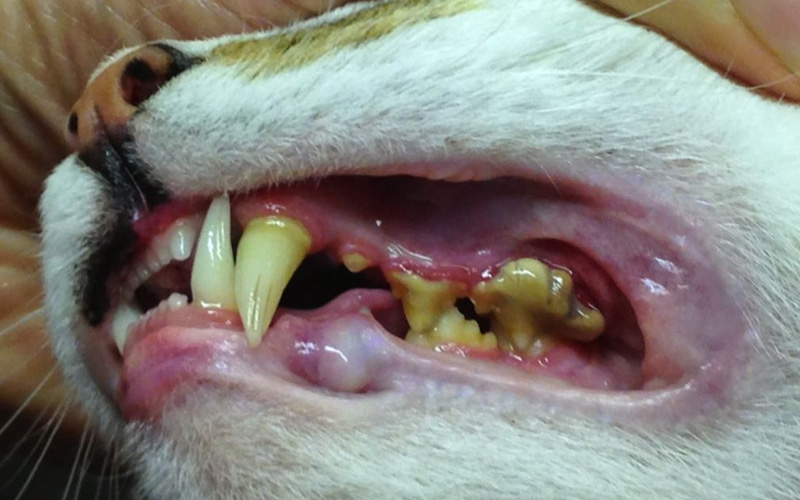
Thus, by eliminating the provoking factors through regular hygiene procedures and, if necessary, hardware techniques available in veterinary offices, the likelihood of primary stomatitis can be minimized.
Secondary stomatitis must be treated in conjunction with the underlying condition. In most cases, when the primary condition is cured or remission is achieved, stomatitis also subsides.
Secondary stomatitis in cats can occur due to the following conditions:
- parasitic infections;
- diseases caused by viruses, fungi or bacteria;
- diabetes mellitus;
- hormonal imbalance;
- disorders in the functioning of the immune system.
Types of stomatitis
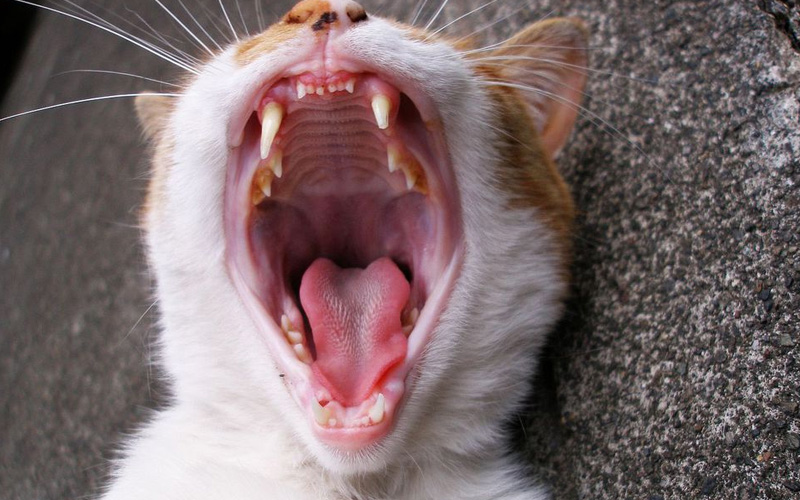
Depending on the location of the inflammatory process, a distinction is made between:
|
Name |
Area of damage |
|
Glossitis |
language |
|
Gingivostomatitis |
gradually covers the entire mucous membrane |
|
Palatinite |
sky |
|
Faucite |
palatoglossal arch |
|
Giggivitis |
gum |
|
Cheilitis |
lips |
Symptoms
Depending on the nature of the inflammation, the following types of disease are distinguished:
|
Type of stomatitis |
Manifestations |
|
Alternative |
|
|
Ulcerative |
weeping ulcers on the mucous membrane |
|
Necrotic (ulcer complication) |
tissue necrosis |
|
Exudative |
|
|
Catarrhal |
redness, soreness, swelling, excessive salivation, foul odor |
|
Serous |
white or yellowish coating on the mucous membrane |
|
Purulent |
|
|
Gangrenous (ulcer complication) |
a strong foul odor is added to the symptoms |
|
Fibrinous |
white discharge |
|
Hemorrhagic |
pink discharge with blood impurities |
|
Proliferative |
|
|
Productive (the rarest) |
proliferation of cellular tissues |
Important! The severity of stomatitis symptoms, as well as their progression, depend on the underlying cause and the animal's health.
You can suspect that your pet has stomatitis if the following main symptoms are present:
- lack of appetite and strong thirst;
- increased salivation (sometimes saliva may be pink in color);
- enlarged lymph nodes in the lower jaw;
- increase in body temperature;
- bad breath.
Upon closer examination, redness of the mucous membrane or the presence of ulcers may be noticed.
Diagnostics
Since stomatitis in cats can be caused by a wide variety of reasons, the most important step towards curing your pet is diagnosing the cause of the inflammatory process.
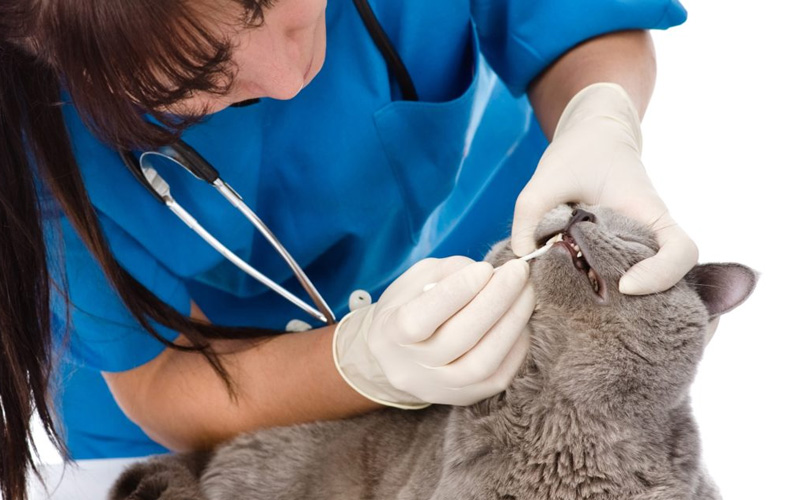
Diagnosis of stomatitis in cats may include:
- collecting anamnesis to identify the possible cause;
- visual examination (if necessary, using anesthesia);
- mucosal culture for various types of pathogenic microflora;
- blood and urine tests;
- virological tests.
Treatment
Important! Do not self-medicate. Advanced cases can be life-threatening. Folk remedies are often ineffective for severe mucosal lesions.
Depending on the type of infection detected, your doctor will prescribe a course of medication, which may include:
- antibiotics, antiviral or antifungal agents;
- analgesics to reduce pain;
- cleaning and antiseptic treatment of the mucous membrane;
- drugs to boost immunity.
For complex, advanced cases of stomatitis, a veterinarian may recommend inpatient treatment with 24-hour monitoring, medications, and supportive care via IV. In some cases, the animal may also require surgery (tooth or mucosal removal). However, such cases are rare. Treatment of uncomplicated catarrhal and ulcerative stomatitis in cats is most often done at home with scheduled veterinary visits. In this case, the owner's primary responsibility is to strictly follow the instructions. You can alleviate your pet's condition and promote a faster recovery by following these simple guidelines:
- only liquid food during the treatment period;
- complete refusal of milk (the milk environment is favorable for the development of bacteria);
- feeding in small portions through a syringe (without a needle) if there is a complete refusal to eat;
- treatment of the mucous membrane with a 1% solution of soda, Lugol's solution or herbal decoctions (calendula, string, oak, sage, chamomile) on the recommendation of a doctor.
- constant monitoring of the animal's condition.
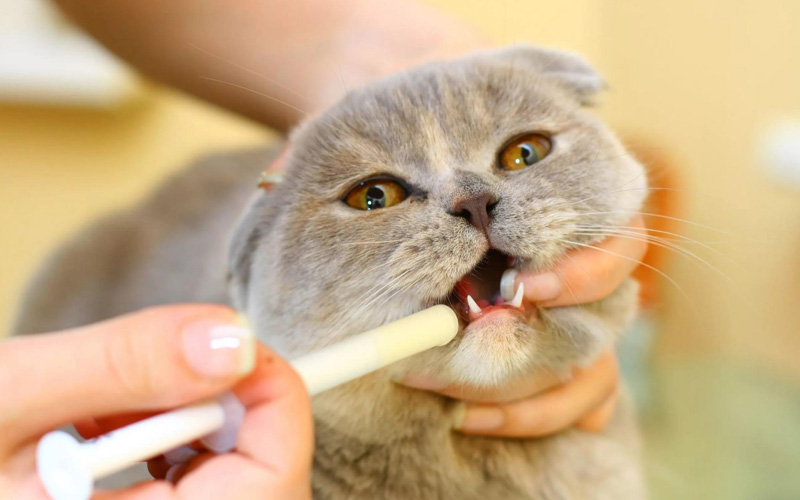
Remember that when treating stomatitis, folk remedies should only be used as part of a comprehensive treatment plan and under the supervision of a veterinarian. Chamomile will not relieve inflammation caused by a bacterial or viral infection. Furthermore, an improperly chosen rinse solution can worsen the animal's condition.
Important! Stomatitis can be contagious. Its infectious forms can easily be transmitted from animal to animal, as well as from animal to human. Therefore, it is crucial to isolate other pets in the household from the large cat during treatment and strictly observe personal hygiene rules.
A video on how to properly treat a cat's mouth with Lugol's solution:
Prevention
Preventing stomatitis in cats is much easier than treating this painful and dangerous condition. The basic rules are as follows:
- High-quality teeth cleaningIt's important to get your pet used to this procedure from puppyhood, but you can also try introducing it to an adult pet. Read more about brushing teeth in the article. Brushing a cat's teeth.
- Regular inspectionThere shouldn't be any buildup, plaque, cavities, or, especially, tartar. If you notice anything, take your pet to the vet immediately.
- Deworming and vaccination according to age.
- Individual bowlsNever feed a cat from someone else's plate.
If you have any questions about stomatitis in cats, please leave them in the comments. We'll do our best to answer them!
Read also:


4 comments
VETCH
Everything is written so clearly and calmly - the video is just brilliant. And when there are 10 street cats and a cat with ulcerative stomatitis eats from a common bowl - or rather, eats and then there you can stand there and fall, drooling. I went with him to the vet - you need to smear his tongue and gums with a special liquid and gel and give him a couple of three injections. I gave the injections with great difficulty. But when the cat sees me, he runs away from me like from the PLAGUE .. It’s not a matter of swaddling. The main thing here is to catch him and not let him scratch. The bastard knows that now they’ll smear his mouth .. The other cats plus 2 domestic cats walk in the same garden where he lives ... and to vaccinate everyone - I’LL BE BURST .. With a domestic cat there are no problems, but with street cats - you can’t brush his teeth and besides that, I give him soft food - and I CATCH HIM LIKE I CAN'T DO ANYTHING, ALAS. Stupid street cats see us as sadists - BUT I JUST WANT TO HELP SO HE DOESN'T SUFFER, and how can I explain this to a cat?
Daria is a veterinarian
Hello! Vaccinate your indoor cats to protect them from viral infections first and foremost. Do you think brushing a stray cat's teeth and feeding it dry food will prevent stomatitis? It's easy, if their immune system is weakened, they'll lick something nasty that has pathogens/viruses/fungi on it, and that's it—they'll get sick. No one is immune to this. There's no other way to help than topical treatment and intramuscular injections. The only option is to wait for it to subside on its own if you can't catch a stray cat, but other animals are at high risk of infection (even during treatment). And you can't explain this to the cat =)) I can't explain to my stubborn cat that I don't like waking up at 2 a.m. to her meowing =) And at the appointment today, they gave my cat some very painful injections, and he ended up breaking free from his owner's arms and biting everyone who tried to help him. When an animal is afraid, it behaves like a beast in a corner - defending itself with teeth and claws
Maria
What antibiotics are suitable for ulcerative stomatitis? The doctor also prescribed Vinilin, but it's simply impossible to pour it onto the cat's skin, and it's impossible to wash it off after the procedure. Can we replace it with something else?
Dasha is a veterinarian
Nothing is impossible =) It's difficult, that's true. Swaddle the cat like a small child (find an old bath towel or a thick blanket), leaving only the head exposed. Apply pressure with your fingers to the junction of the upper and lower jaws (leave your fingertips between the jaws, pressing lightly on the cheeks). This will prevent the cat from closing its mouth. And treat it. Liquid solutions are good for treating all wounds, and they heal faster. Don't let the cat out of bed immediately after the procedure, so it won't make a mess by spitting out everything it got into its mouth. Let the doctor prescribe an antibiotic based on the severity of the illness. I don't see what kind of lesions the cat has in its mouth. Amoxicillin might be fine, but maybe something stronger is needed.
Add a comment