
Laparoscopic sterilization of cats
Every pet owner—cat or dog—knows the troubles that come with the heat. The cat insists on going outside, screams loudly day and night, becomes aggressive, and begins to mark every corner. And since the fluid he sprays contains a whole host of foul-smelling substances (urine, pheromones, hormones, semen), the smell is difficult to bear. Some cats refuse food, lose their fur, and can develop various illnesses due to the increased hormone production.

Content
Types of sterilization
Hormone-reducing pills provide a temporary effect, and their use is far from harmless to your pet's health. The most reliable solution is surgical termination of the animal's fertility. Depending on the type of surgery, your pet will either be unable to reproduce while retaining the reproductive instinct, or will completely lose interest in the opposite sex.
In the first case, you won't be able to stop the cat's grooming, as the animal's body will continue to produce sex hormones. During the mating season, the cat will continue to "mark" your furniture and shoes. And since the fluid it sprays contains a whole host of foul-smelling substances (urine, pheromones, hormones, and semen), the odor is difficult to tolerate. Some cats refuse food, lose fur, and may develop genitourinary diseases due to the increased hormone production. Therefore, from any perspective, it's best to choose the radical option of spaying the animal.
According to medical classification, the surgery that removes all internal reproductive organs is called castration, while sterilization (from the Latin "sterilis" meaning sterile) is the ligation of the fallopian tubes or vas deferens (vasectomy). However, in veterinary medicine, the term "sterilization" is often used as an alternative term for castration, the surgery to remove the ovaries in cats (ovariectomy) or the ovaries and uterus (ovariohysterectomy), or the resection of the testicles in male cats.
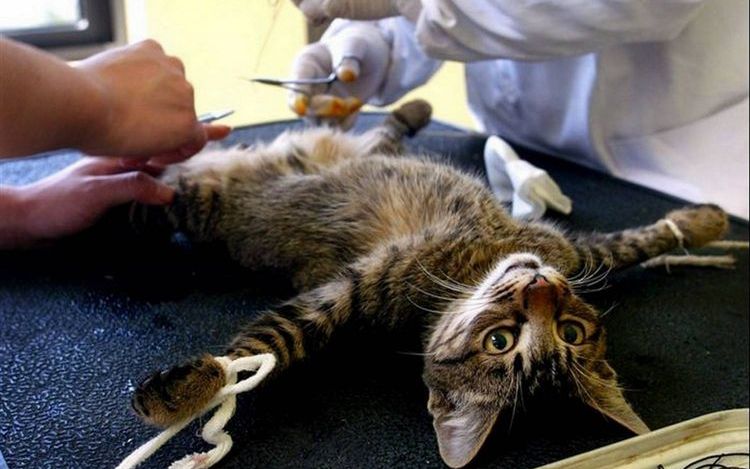
This operation can be performed in several ways, which differ in access to the abdominal cavity:
- through an incision along the white line of the abdomen;
- through a side incision;
- through punctures in the abdominal wall (laparoscopy).
Which is better: laparoscopic spaying or conventional sterilization of a cat? Veterinarians believe the former option is more atraumatic and safer, involving the removal of the reproductive organs using specialized equipment through several punctures in the abdomen. The advantages of the laparoscopic method include:
- minimal tissue damage (incision sizes do not exceed 5-6 mm);
- an increased level of sterility, which makes it possible to exclude the use of antibiotics in the postoperative period (contact of the intra-abdominal cavity with the surrounding atmosphere is practically reduced to zero);
- no risk of suture material rejection or fistula formation (the skin is not stitched, but glued);
- the ability to visually control the progress of the operation and eliminate even minor internal bleeding;
- the ability to simultaneously assess the condition of internal organs and detect their diseases;
- a very short recovery period (just a few hours after sterilization surgery, the animal can lead a normal life).
Good to know. Animals that have undergone radical sterilization enjoy better health, as female cats are less likely to develop polycystic ovary syndrome, uterine inflammation, or mammary tumors, and neutered male cats are much less likely to develop urinary tract infections. Neutered animals live longer than their intact counterparts, and the idea that they inevitably become fat and lazy is a misconception. Your pet will not gain excess weight if they are given ample exercise and a sensible diet.

Preparing a cat for laparoscopy
Any planned surgery requires specific preparation. The following steps are necessary before laparoscopic spaying of a cat:
- deworming;
- treatment for fleas, ticks and Vlas-eaters;
- trimming claws (to prevent the animal from injuring itself during the postoperative period);
- scheduled vaccination at least 3 weeks before surgery.
The cat should not be fed for 12 hours before the laparoscopy, and should not be given any water for 2-3 hours before sterilization.
Description of the operation
Laparoscopic spaying, whether partial (where only the ovaries are removed or the fallopian tubes are ligated) or complete (where all reproductive organs are removed), is usually performed under local anesthesia. Anesthesia is achieved by either conduction or infiltration of 0.25-0.5% lidocaine. In the first case, the anesthetic blocks impulse transmission to the trunk of the major pelvic nerve; in the second, it "freezes" all nerve endings in the surgical area.
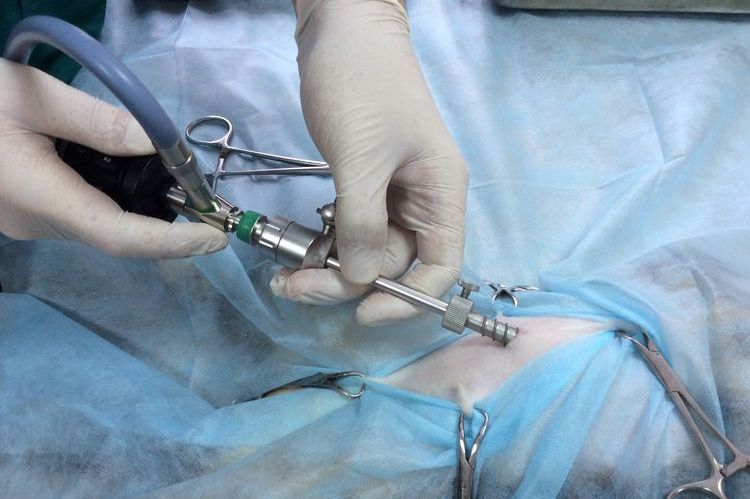
The incision area is shaved and disinfected. Two to three small incisions are then made in the peritoneum, through which a laparoscope—a surgical instrument equipped with a miniature video camera—is inserted. The image is transmitted to a monitor, allowing for visual guidance during the operation. To create a surgical space, the abdominal cavity is filled with carbon dioxide, which causes the peritoneal wall to rise. The removed organs are removed through the incisions, which are sealed with medical glue after the operation. The entire procedure takes 20 to 40 minutes, depending on the extent of the procedure.
Rehabilitation period
Some veterinary clinics recommend keeping animals under medical observation for several hours after laparoscopic spaying. Upon arrival, the cat should be placed on the floor, on a soft surface, and covered with something warm. Your pet may be lethargic and drowsy for several hours after the procedure. Food and water should not be given for 24 hours.
Cats typically recover quickly after laparoscopic sterilization, within a few days. For the first 2-3 days, the animal will receive pain medication, which can be administered by a veterinarian or you. Care during the recovery period includes feeding regularly (the diet should consist primarily of semi-liquid, mashed food) and providing rest: the pet should avoid overly active play for several days.
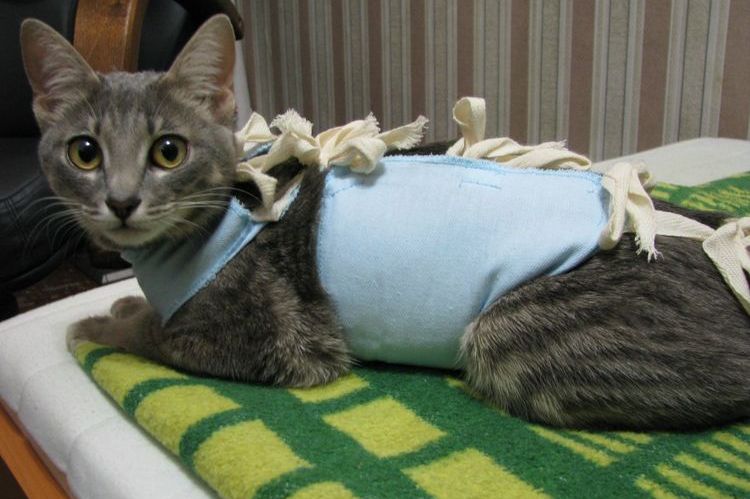
Important! To avoid damaging the healing stitches, do not allow your cat to lick or scratch them. If necessary, you can place a special blanket on your cat to prevent access to the wound.
Prices for laparoscopic sterilization
The cost of standard cat sterilization, performed through an abdominal incision, and laparoscopic sterilization differ slightly. In Russia's regions, the cost of this procedure ranges from 2,500 to 4,000 rubles, while in Moscow and St. Petersburg it ranges from 3,200 to 5,000 rubles. This cost typically includes consumables and, in some veterinary clinics, a few hours' inpatient care under a veterinarian's supervision.
Reviews
Natalia:
"Three weeks ago, our cat was spayed using a laparoscopy. Everything was done quickly and carefully, and by the evening our beloved one was doing quite well. walkedShe tried to bully the dog, asking for food, but she had to wait until the morning. The stitches healed cleanly and barely bothered her. Now, only small bald spots remain where the fur was shaved. If you want to spay your cat, I recommend this method. My only advice is to carefully choose a clinic that performs such procedures. Laparoscopy requires, firstly, good equipment, and secondly, an experienced, knowledgeable specialist. I've read stories where the surgeon's "clumsy" hands led to dangerous complications.
Tatyana Ivanovna:
"We weren't able to spay our cat before her first heat, as recommended; we took too long to get around to it. However, everything went well. The surgery was done quickly and efficiently—it's clear the clinic is run by professionals. The stitches were perfectly aligned and healed very quickly. A special thank you to the veterinarians for taking the time to provide free advice, and the surgeon who operated on our Asya even called us at home the next morning to check on her. We were also very pleased with the price—we paid 2,600 rubles for the laparoscopic sterilization."
Svetlana and Arkady:
"We decided to spay our cat, Musya, when we couldn't stand her periodic "concerts" and her attempts to escape the house in search of a male cat anymore. The vet recommended radical laparoscopic sterilization. It turned out to be very simple: Musya was put on the operating table at 3:00 PM, and 40 minutes later she was handed over to us—half-asleep, with her tummy taped shut. By nightfall, she was already walking around the apartment, and the next morning she ate. For anyone with problems with "cat walks," we recommend this atraumatic sterilization. It will only make things easier for both you and your pet."
Inna Alexandrovna:
"We live in a small town, so finding a clinic that could perform a minimally invasive spay/neuter procedure on our cat wasn't easy. But we finally found one. Beforehand, I asked to see the equipment used for the procedure and spoke with the veterinarian who would be performing it. We were put on a waiting list, examined, and prescribed an anti-worm medication to be taken two weeks before the procedure. My Linda's laparoscopic spay/neuter procedure took less than half an hour. We went home immediately. Two days later, our beloved cat was already running around the apartment. We didn't have to put a blanket on her because the tiny stitches didn't seem to bother her—they weren't painful or itchy. Two weeks have passed, and there are practically no traces of the surgery left."


Add a comment