
Old English Bulldogge (recreated)
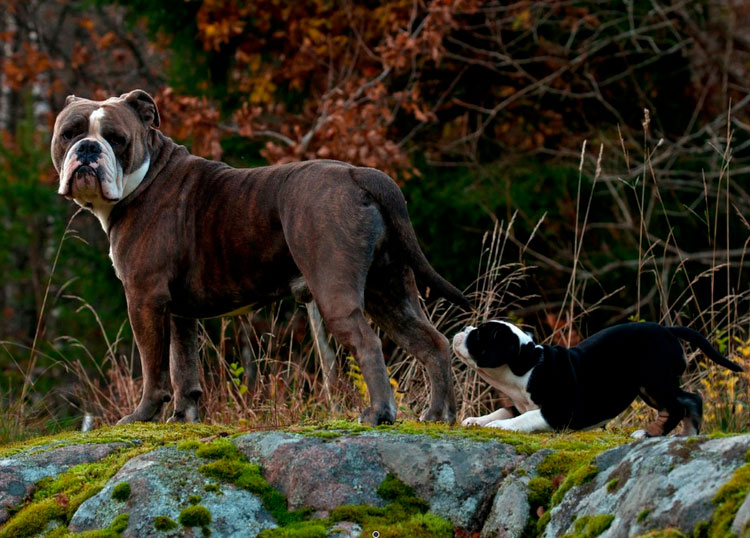
The Olde English Bulldogge is an English dog breed that became extinct in the 19th century and was revived in America in the late 20th century. According to the breed's creator, David Lavitt, his updated bulldog should have the appearance and health of the Olde English Bulldogge, but be less aggressive. The breed is not yet recognized by the Fédération Cynologique Internationale.
Content
History of origin
David Levitt began his work on restoring the Old English Bulldog in 1971, when he became disillusioned with modern English Bulldogs and discovered that they bore no resemblance to their ancestors in either appearance or health. He based his research on paintings, engravings, books, and figurines of Bulldogs from the 17th to 19th centuries. He used a linebreeding scheme developed for cattle at Ohio State University. The original breeds were primarily those with Old English Bulldog bloodlines: English Bulldog, American Bulldog, bullmastiff, American Pit Bull Terrier.
The Old English Bulldog originated in England between the 17th and 18th centuries. It was bred for dog and bull fighting. Over the course of its existence, it gave rise to many other breeds. In 1835, British laws outlawed bloodsports, and English Bulldogs fell into disuse. They almost completely disappeared, and those that remained evolved into the modern English Bulldog, with its short legs and extremely brachycephalic skull.
In 1993, David Lavitt founded the Olde English Bulldogge Association (OEBA). To this day, it remains the breed's parent club and continues to register puppies. By 1995, two lines already existed in the 8th and 9th generations. Since then, crossbreeding with other breeds has been prohibited.
To avoid confusion, the newly revived Old English Bulldogge is spelled with a difference in English: Olde English Bulldogge. The spelling of the extinct Old English Bulldogge is Old English Bulldog.
It's worth noting that breeders in other countries were simultaneously working to restore the breed. Most lines were subsequently renamed after the breeder. Mr. Leavitt did just that. He resigned his chairmanship of the OEBA, named his line of dogs Leavitt's Bulldogs, and formed the Leavitt Bulldog Association (LBA). Since then, breeders have split into two camps: some continue to breed Olde English Bulldogges and register them with the OEBA, while others have followed Leavitt and call their dogs Leavitt's Bulldogs. There are two standards. The United Cynological Union (UKC), a more prominent organization in the cynological world, recognizes both breeds as the Olde English Bulldogge (a newly created version). Further confusion will likely only be avoided when the breed is recognized by the American Canine Association (AKC) or the Federation Cynologique Internationale (FCI).
Appearance
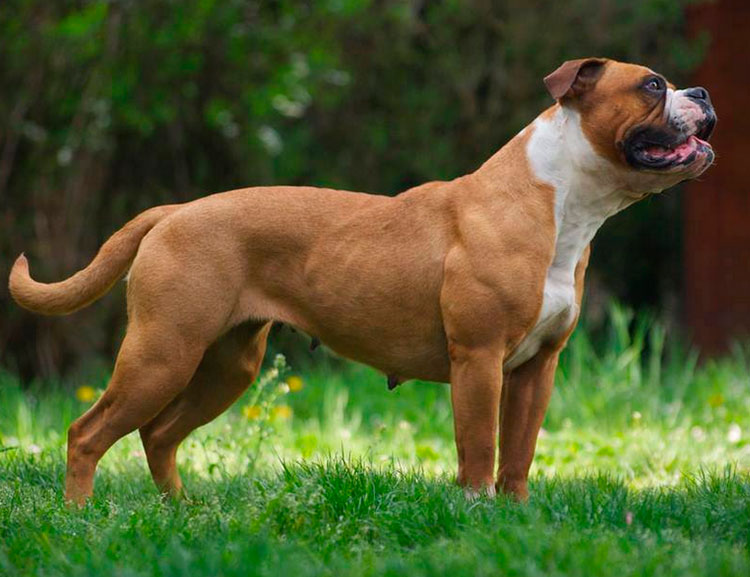
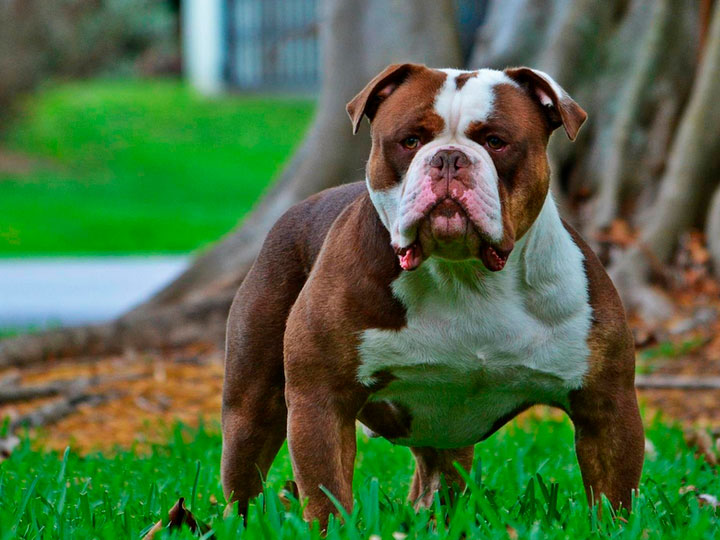
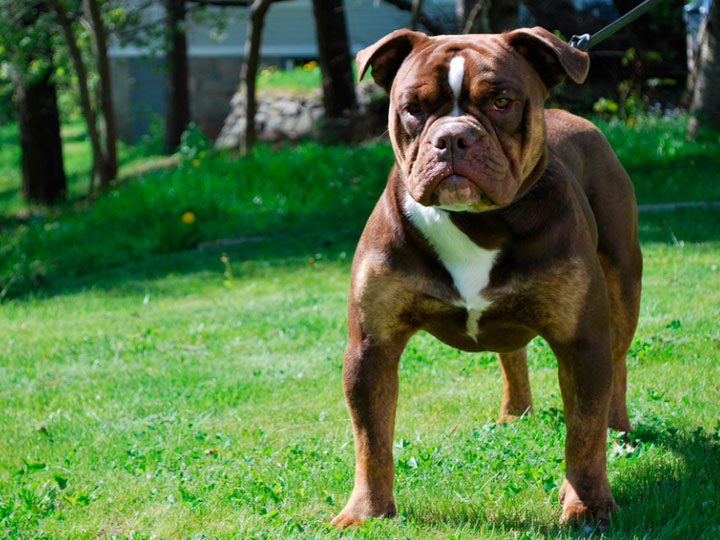
The Olde English Bulldogge (revised) is a well-balanced, proportionate dog of medium size and great strength. Sexual dimorphism is clearly evident. Males weigh 27-36 kg and stand 43-50 cm tall; females weigh 22-32 kg and stand 40-48 cm tall. Proper muscle tone and endurance are essential for the Olde English Bulldogge.
The Old English Bulldogge (recreated) is a more active, playful and healthy remake of the 17th century bulldog.
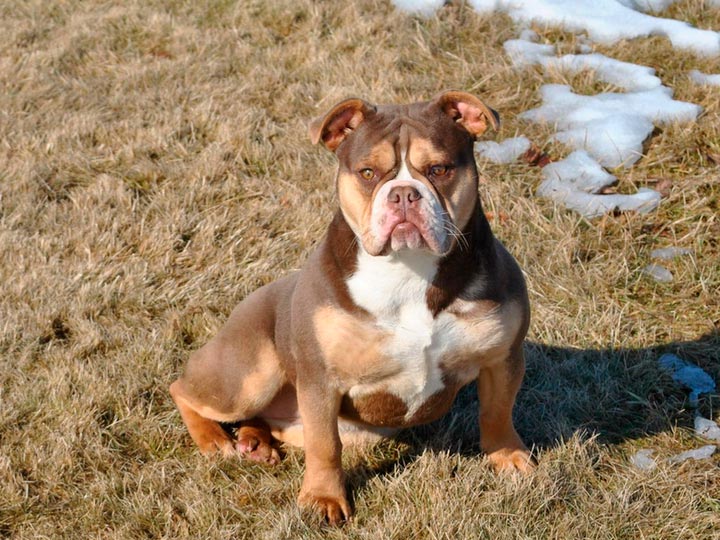
The skull is large, substantial, and well-proportioned. The muzzle is square, deep, and broad. The stop is noticeable. The lower jaw is moderately arched back. The bite is level or undershot. The nose is wide with a vertical line between the nostrils from the tip of the nose to the lower part of the upper lip. The eyes are almond-shaped, medium in size, set wide apart, level with the top of the muzzle, and dark or light brown. The eyelids are pigmented black. The ears are set high, wide apart, small in size, and fold in the shape of a rose, button, or tulip.
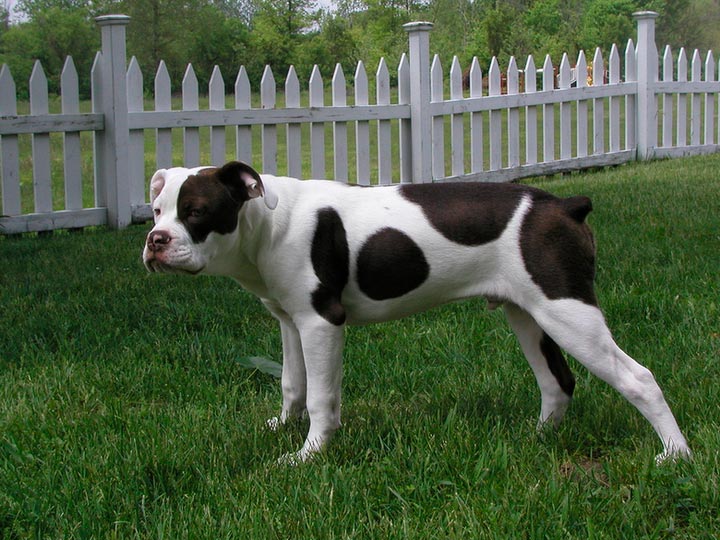
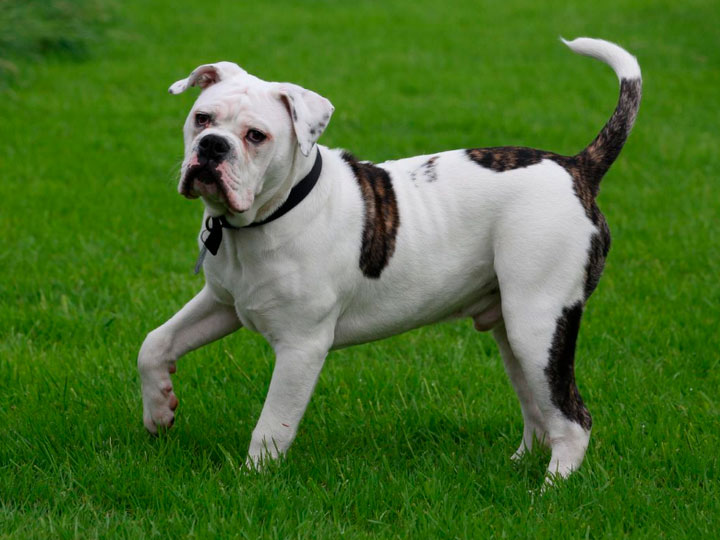
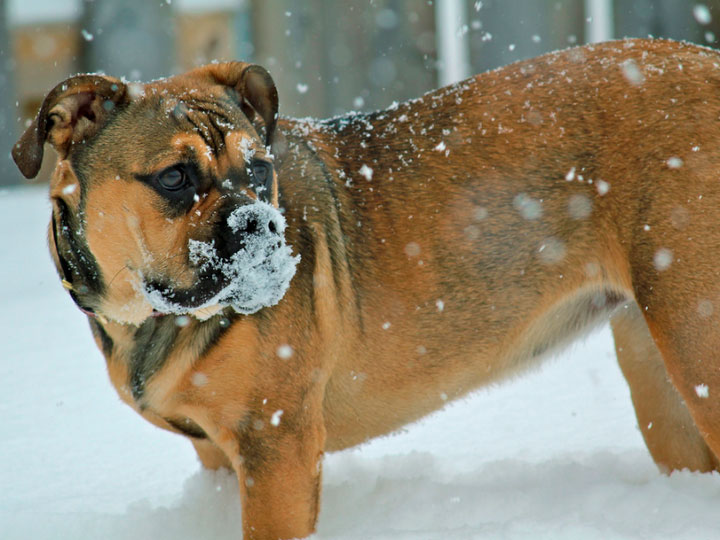
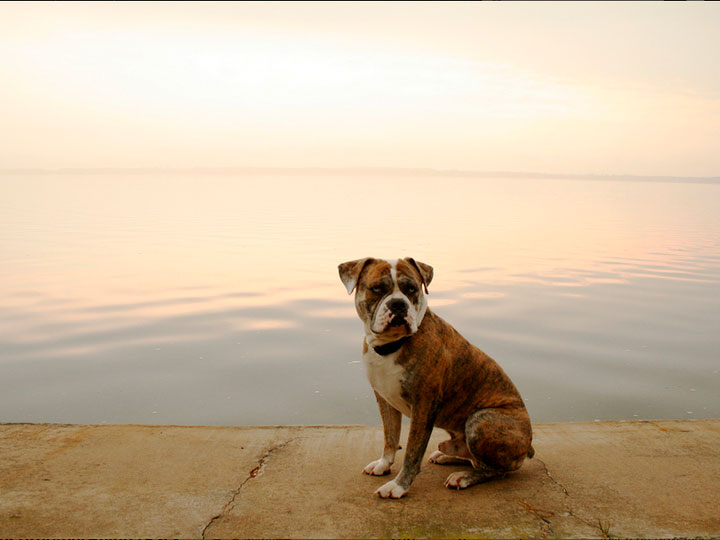
At this stage of the breed's development, the "updated" Old English Bulldogs are quite diverse.
The neck is medium in length, slightly arched, and widens toward the shoulders, with a double dewlap. The shoulders are broad, with elbows neither turned in nor out, and medium bone. The forelegs are straight, with strong pasterns. The hind legs are well muscled, slightly longer than the front legs when viewed from the rear, straight and parallel. The feet are rounded, with well-arched toes, and strong. The body is rectangular. The chest is deep and broad. The topline rises above the loin. The tail is usually straight, tapering to a point, and carried low or level with the topline. When excited, it may be carried vertically, but not curled over the back.
The coat is dense, short, close-lying, and shiny. Colors include brindle and solid white, fawn, and red, with or without white. Disqualifying colors include blue, black, black and tan, red, liver, and albinism.
Character and behavior
The Olde English Bulldogge is courageous and determined, but not overly aggressive. Generally friendly with people, affectionate with family, self-confident, and somewhat phlegmatic. It has a strong guarding instinct and, in extreme cases, is capable of defending. It is very attached to its family, reliable, and obedient. It gets along well with other animals, including dogs, cats, small livestock, poultry, and livestock. Overall, the Olde English Bulldogge's temperament can be described as balanced. Traits such as courage, willpower, stubbornness, cunning, and a desire for dominance, to varying degrees, are also noteworthy.
When well socialized, they get along well with small children. Due to their energy and large weight, they can accidentally push children, so adult supervision is recommended when playing with a dog and a child. Furthermore, it is not recommended to walk an adult bulldog with a child or teenager who is unable to handle them.
The Old English Bulldogge is designated as a working dog, an excellent companion for active people and sports.
The Olde English Bulldogge is hardy and agile, with an athletic build, but not as athletic as, for example, the Amstaff or Bull Terrier. It is well suited to moderately active and strength-based sports, such as weight pulling and spring pole.
Education and training
Given the English Bulldog's loyal nature (a newly developed breed), sociability, and eagerness to please, training and raising it should be relatively straightforward. However, this breed is not recommended for those without experience or those unwilling to seriously consider training and, if necessary, seek the help of an experienced dog trainer. Good socialization and basic obedience training are essential.
Training a bulldog should begin as early as possible. It's important for the owner to establish leadership and then not give up that position to the dog. You can't expect a bulldog to exhibit the same level of obedience and agility as a Malinois. They are too independent for that and prefer to be a companion rather than a subordinate.
Content Features
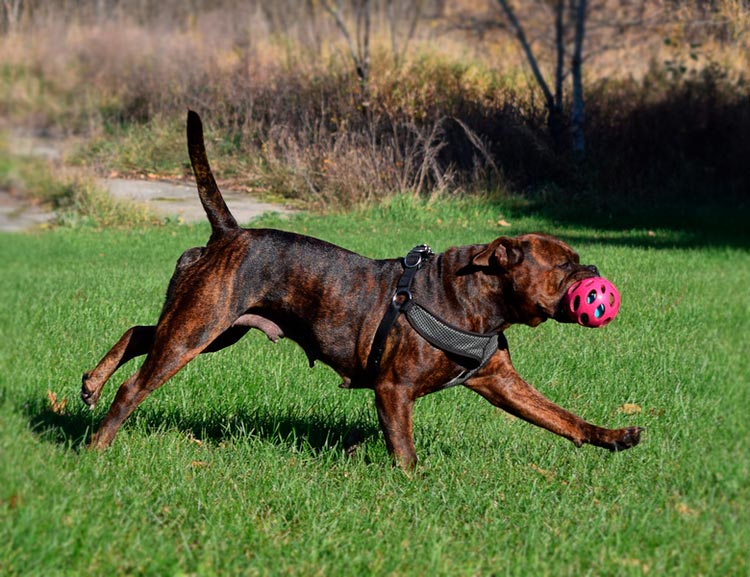
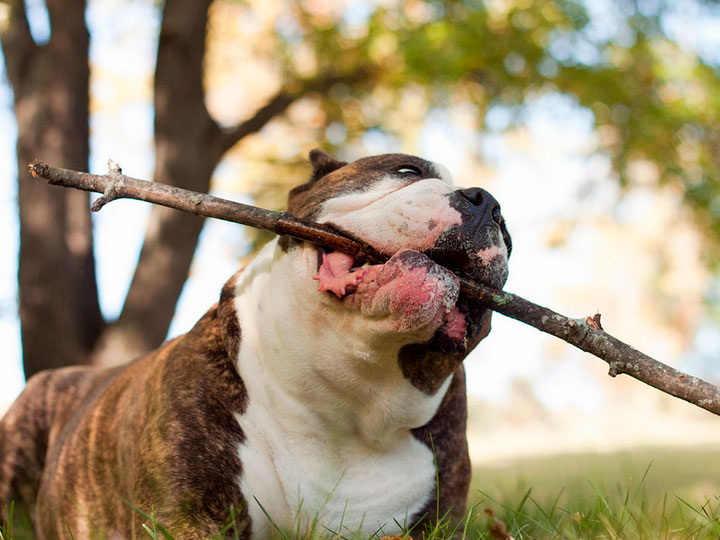
In temperate climates, the Old English Bulldog is more suited to indoor living than to outdoor living. Apartment living is possible, provided the dog receives sufficient exercise. Potential owners should note that Old English Bulldogs are droolers. They shed moderately. One of the favorite pastimes of Lavitt's Bulldogs is chewing, and this is true not only as puppies. Therefore, it is important to provide them with plenty of safe toys.
A dog's energy level and stamina depend largely on its training. The Olde English Bulldogge requires moderate exercise, daily walks with opportunities for play and free running. A sedentary lifestyle will inevitably lead to health and behavioral problems. Strenuous exercise includes jogging or running on a treadmill, swimming, and other activities. Training or strenuous sports are not recommended for puppies until they reach full physical development (approximately 1.5 to 2 years).
Care
English Bulldogs don't require complex grooming. Grooming follows the standard grooming procedures for short-haired breeds:
- Once a week, the coat is brushed with a special mitten or a thick brush. More often during the seasonal shedding period;
- A full bath with shampoo is recommended once every 2-3 months;
- Regularly inspect the ears, skin folds and eyes, which are important to keep dry and clean;
- Teeth brushing is recommended, but the breed is not known to have any significant dental problems.
After vigorous walks, it's a good idea to thoroughly inspect your dog for cuts on their paw pads or other injuries. Due to their high pain threshold, bulldogs rarely show signs of minor injuries, but they should be treated promptly.
Nutrition
Feeding can be natural or prepared dry food. It's important to pay attention to the quality and composition of the diet, especially during the puppy's growth and development period. Supplements are essential for proper musculoskeletal development. Furthermore, the diet should contain a sufficient amount of protein (at least 1/3), which is necessary for muscle development and maintenance.
The diet and feeding regimen should be designed in such a way as to minimize the risk of gastric torsion.
Health and life expectancy
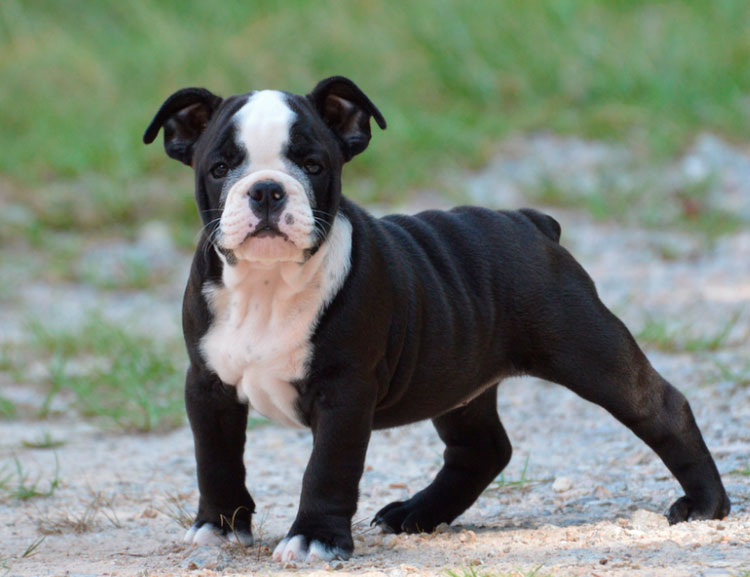
The Olde English Bulldogge (a newly created version) does not suffer from the health problems typical of the English Bulldog (various breathing problems, heat and cold intolerance, and difficulties with mating and whelping). However, it cannot yet be considered a completely healthy breed. Recently, several hereditary diseases have been reported in these dogs:
- Hip dysplasia;
- Elbow dysplasia;
- Allergies;
- High risk of gastric torsion.
Unlike the modern English Bulldog, Old English Bulldogs mate independently and usually give birth themselves. They have a strong maternal instinct. Litters typically range from 3 to 12 puppies. Life expectancy is 10-11 years.
Choosing a Reinvented Olde English Bulldogge Puppy
The majority of Olde English Bulldogges are concentrated in America. However, more and more kennels are opening in Europe (Denmark, Hungary, and the UK) every year. In Russia, several breeders are cultivating this rare breed. One of the first kennels opened in Moscow.
Breeding Olde English Bulldogges is a very complex and extensive subject. Careful selection of breeding pairs is essential, as the population still retains a high degree of variation in type, as well as pedigree records and health screening. One of the breeder's tasks is to avoid the disaster that befell the English Bulldog, who begins panting after 30 seconds of running.
It's almost impossible to find puppy ads for sale online. Litters are usually planned, and most puppies are reserved before birth. Upon purchase, the breeder must provide documentation of pedigree from one of the organizations that registers Olde English Bulldogges. Testing for hip and elbow dysplasia (X-rays taken at least 24 months of age) is encouraged. The puppy should be strong and outwardly healthy. I always evaluate the psyche and behavior of the parents, or at least the mother. The veterinary passport confirms that the puppy has been dewormed and vaccinated according to age.
Price
In America, the price of an Olde English Bulldogge puppy from a breeder typically ranges from $2,000 to $3,000, sometimes reaching $8,000. In Russia, puppies typically cost from 60,000 rubles. The price of purebred Olde English Bulldogge puppies with good characteristics and potential can exceed 100,000 rubles.
Photos
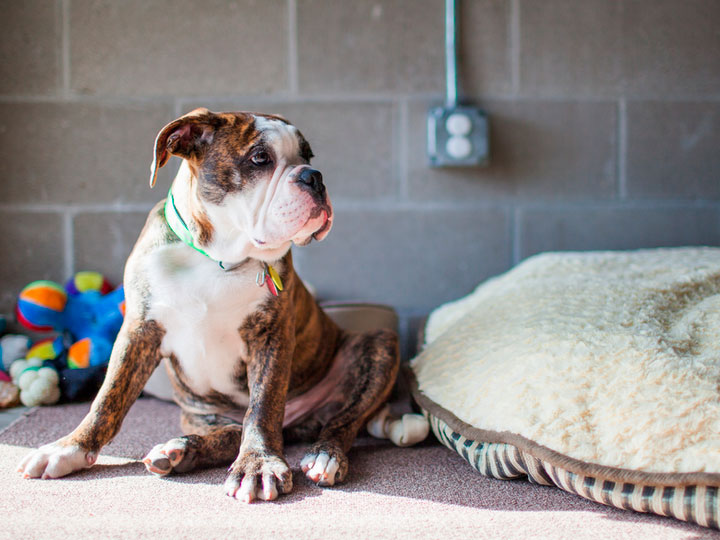
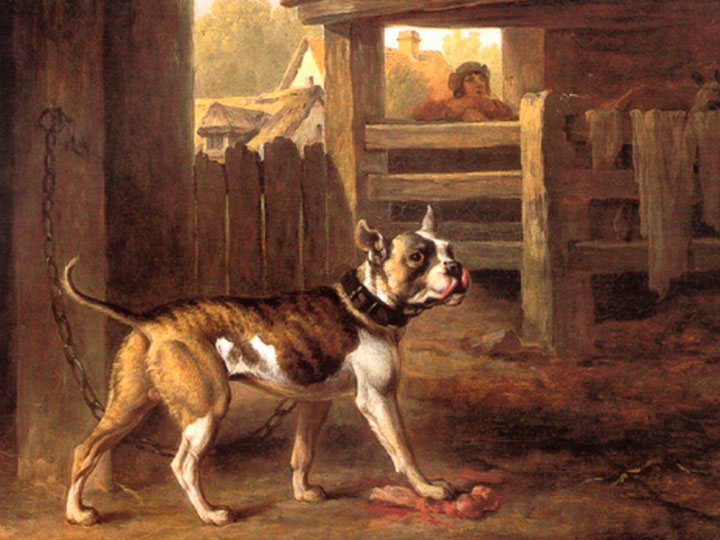
The photos in the gallery show what the newly created Olde English Bulldogge looks like. The last image is a painting by Philip Reinagle (1790), which depicts the Olde English Bulldogge of that time.
Olde English Bulldogge (recreated) on video:
Read also:


Add a comment