
Stabyhoon
Stabyhouns are a breed of hunting dog from Friesland. Their working qualities are classified as pointers, with an excellent sense of smell, a good point and gentle retrieve, and they follow blood trails. They have proven themselves to be excellent family dogs, sport dogs, and companions for active people. Loving, energetic, and loyal, they are capable of performing almost any task with proper training.
Content
History of origin
Stabyhouns are believed to have descended from Dutch partridge dogs, French spaniels and German pointersFor many centuries, they were kept primarily on farms. Stabyhouns had to perform a wide variety of functions: guarding, exterminating rodents, hunting large game and birds, and draft work.
The breed's name roughly translates to "Stand by me."
In 1942, the Stabyhoun was officially recognized by the Dutch Kennel Club, and a little later, as a national treasure. Today, only a few thousand of these dogs exist worldwide.
Usage
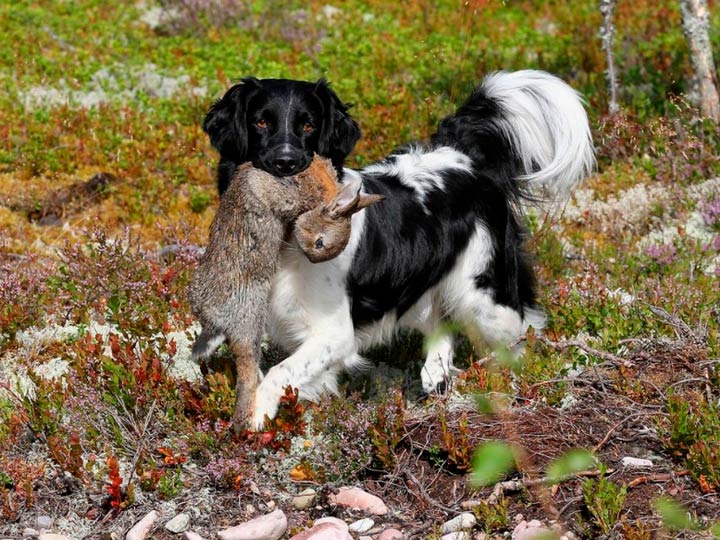
The stabyhoun was formerly used for hunting foxes, hares, other small game, and birds. Its working style is similar to copHe has a keen sense of smell, a strong stance, and a gentle grip. He exterminated pests, rats, mice, and moles around the house, and served as a guard dog.
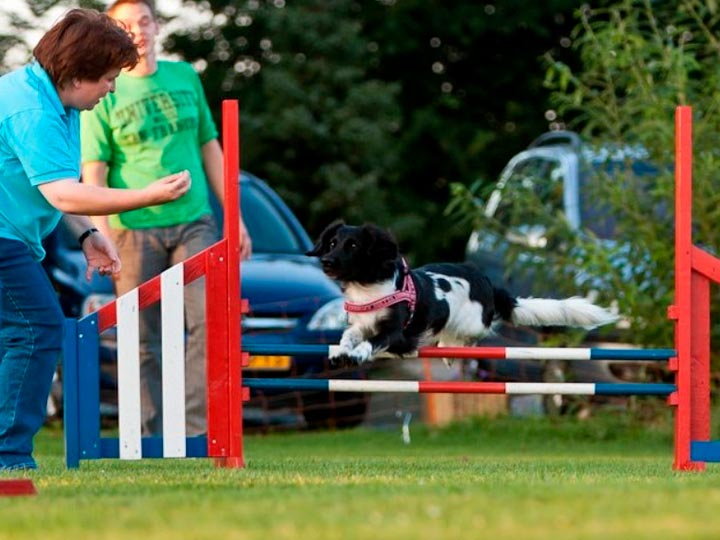
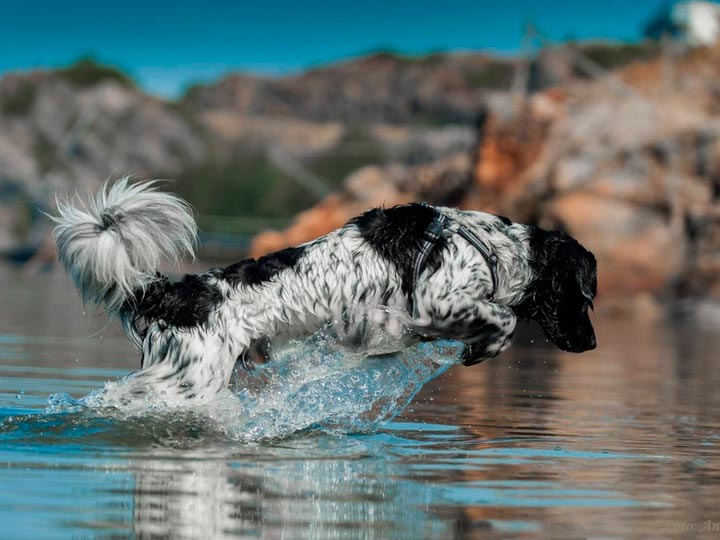
Modern Stabyhouns have proven themselves to be excellent family dogs and companions. Their energy, agility, and trainability make them suitable for many sports, including agility, obedience, trekking, triathlon, frisbee, freestyle, etc. In Western Europe, stabyhouns are still used for hunting.
Appearance
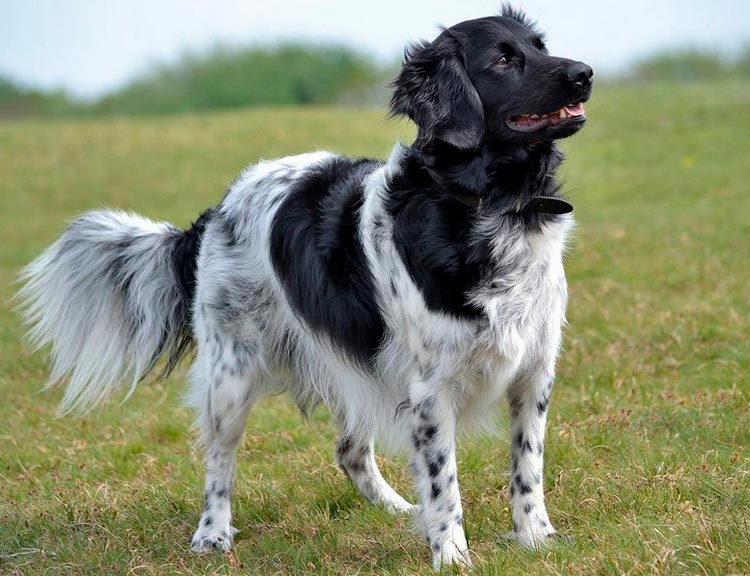
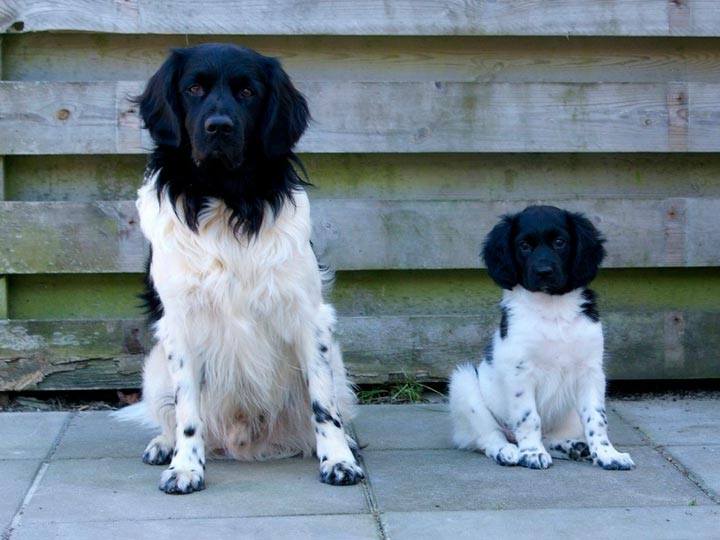
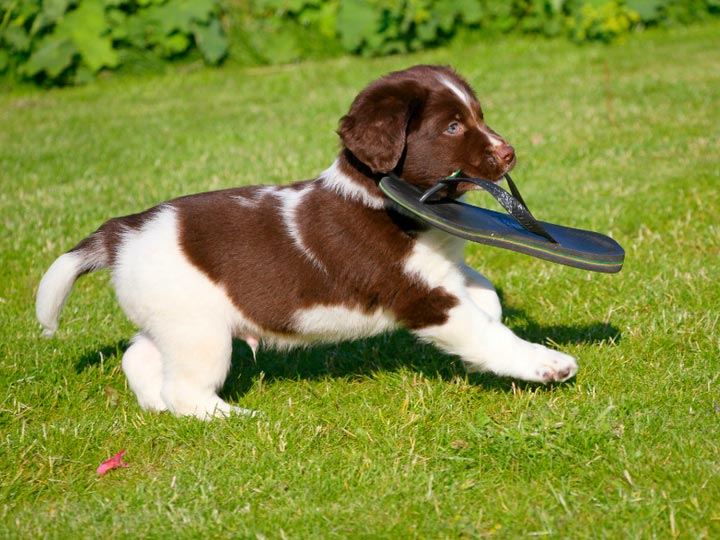
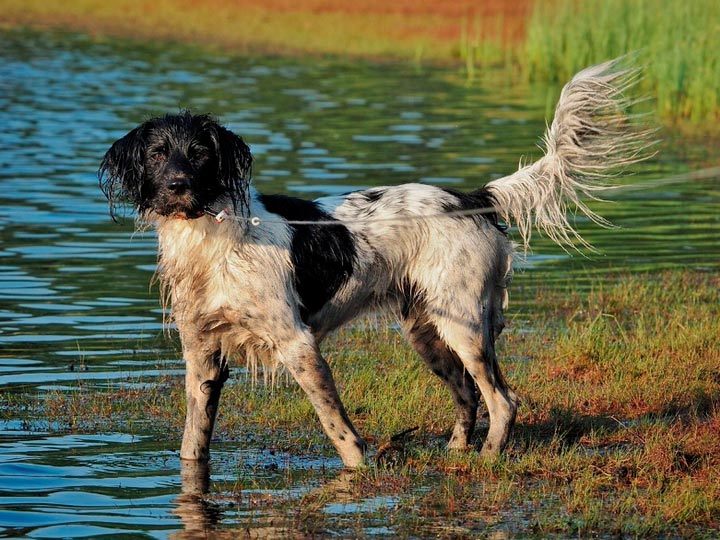
Judging by records from the 18th and 19th centuries, the Stabyhoun has remained virtually unchanged since then. It remains a beautiful, well-proportioned dog, black and white or white and brown in color. Sexual dimorphism is pronounced.
- Height at withers 49-53 cm.;
- Weight 18-25 kg.
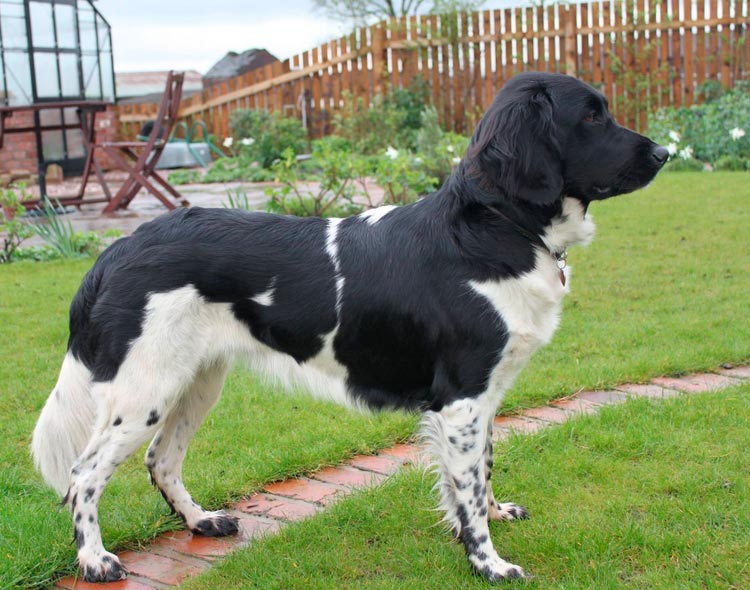
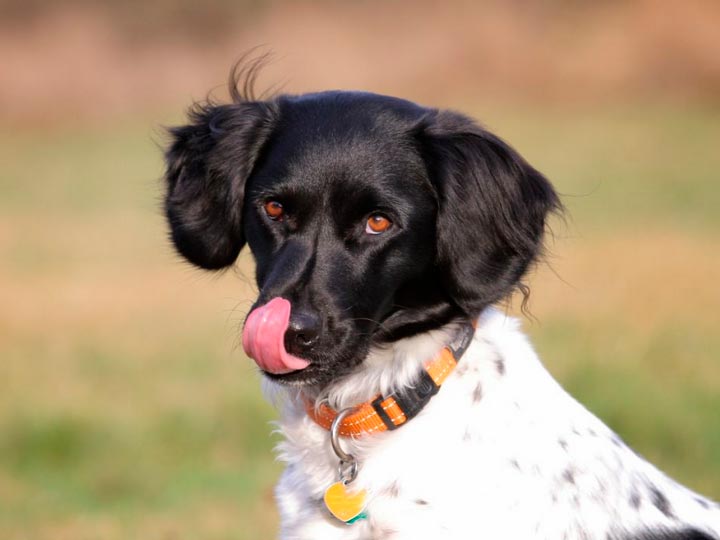
The head is proportionate and dry. The skull is rounded and fairly wide. The muzzle gradually tapers toward the nose. The earlobe is black, wide, with open nostrils. The lips are not overhanging, but tightly closed. The bite is a scissor bite. The eyes are level, medium in size, rounded, and dark brown. The ears are set low, hanging, close to the head, and of moderate length. The neck is short and rounded.
The body is somewhat elongated, strongly built. The back is straight. The belly is moderately tucked up. The tail is long and carried with a slight arch. The chest reaches down to the elbows and is fairly wide. The forelimbs are set wide apart. The hindquarters are strong and moderately angulated. The paws are rounded, with well-developed pads.
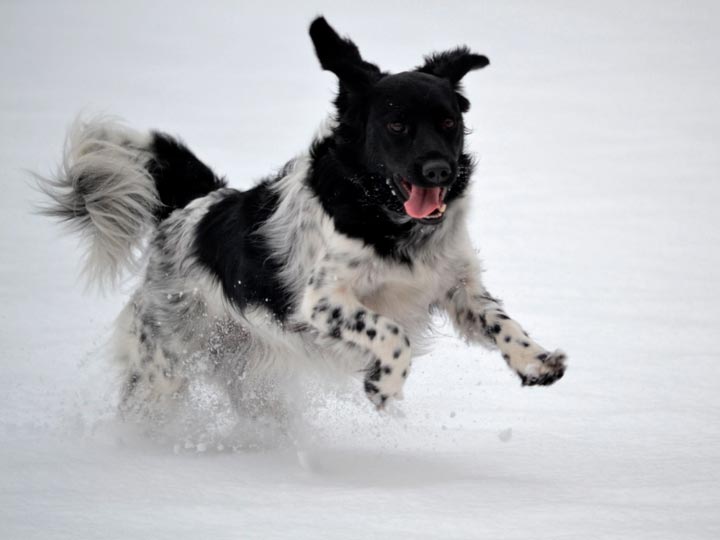
The coat is straight, with a slight wave allowed on the croup. The hair on the head and legs is short. It forms a ruff on the chest, feathering on the back of the legs, and a plume on the tail. The Stabyhoun's coat is self-cleaning, covered in natural oils, and has a slight, distinctive odor. Color: black and white or white and brown with speckles.
Character and behavior
The Stabyhoun has a balanced, sincere nature, without excessive excitability or aggression. He is intelligent, sociable, and inquisitive. He does not like to be left alone for long periods of time. He is energetic and active, especially when it comes to walks. He is always ready to join in any company and any undertaking, whether it be a jog in the forest, training, or simply playing in the yard. Otherwise, he is calm and patient. He is very gentle and loving towards his family. He gets along well with children, if properly trained. He is loyal to livestock and poultry, and gets along well with other animals.
The Stabyhund is quite independent, which can make it seem stubborn. They are quite trainable, but raising an obedient, working dog will require considerable time and patience. It's advisable for the owner to have experience with hunting breeds. Stabyhunds are vigilant watchdogs and often bark at the slightest sound. They will try to scare off attackers, but are unlikely to bite.
Content Features
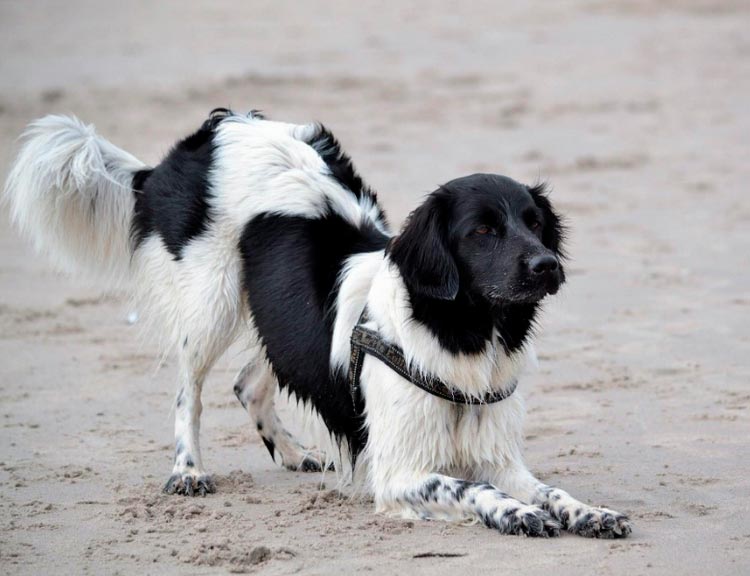
Stabyhouns adapt well to both house and apartment life, provided they receive sufficient exercise. Keeping them in a cage or on a chain is not recommended. To satisfy their exercise needs, they need 1.5-2 hour walks. Walking a puppy or young adult should include basic training, socialization, and playtime with other dogs.
Care
Grooming includes brushing (on average once a week), regular ear checks and cleaning, and nail trimming. Seasonal shedding is heavy, while the rest of the year it's moderate. Bathing a Stabyhoun with shampoo is not recommended; only plain water is recommended if it's extremely dirty. The dog's coat is coated with oils that add shine and moisture.
Health life expectancy
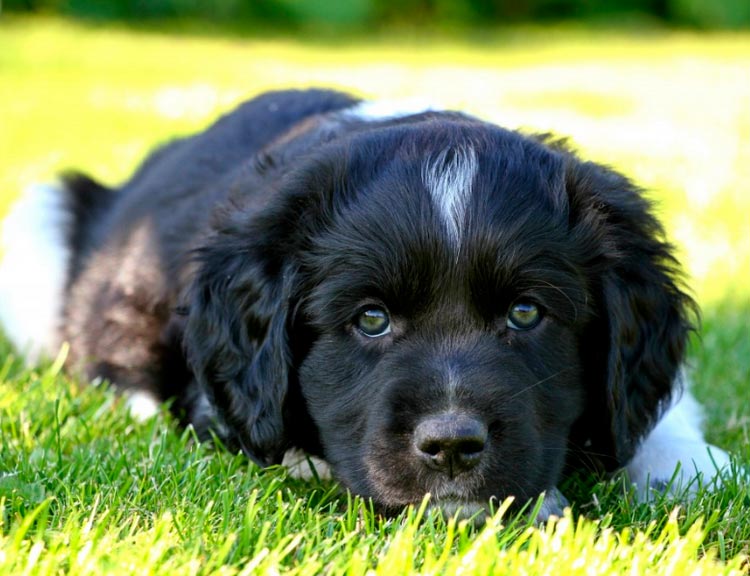
The Stabyhoun is a relatively healthy breed, and breeders do everything possible to maintain it that way. The life expectancy is 13-15 years. However, there are a number of health issues that are occasionally reported:
- epilepsy;
- elbow dysplasia;
- hip dysplasia;
- cerebral dysfunction;
- von Willebrand disease;
- congenital heart defect;
- cataract;
- non-specific cancer;
- retinal reactive meningitis-arteritis.
Where to buy a puppy
There are approximately 6,000 Stabyhouns worldwide. The largest number of dogs is found in their native Netherlands. They are also common in Finland, Sweden, Denmark, Norway, the UK, the USA, and Canada. Around 350 puppies are registered worldwide each year. Potential owners are best off searching for breeders through breed clubs.
Price
In the Netherlands, the average price of a Stabyhoun puppy is 900 euros, in Denmark – 12,000 Danish kroner, in the UK – 1,100-1,200 pounds.
Photos and videos
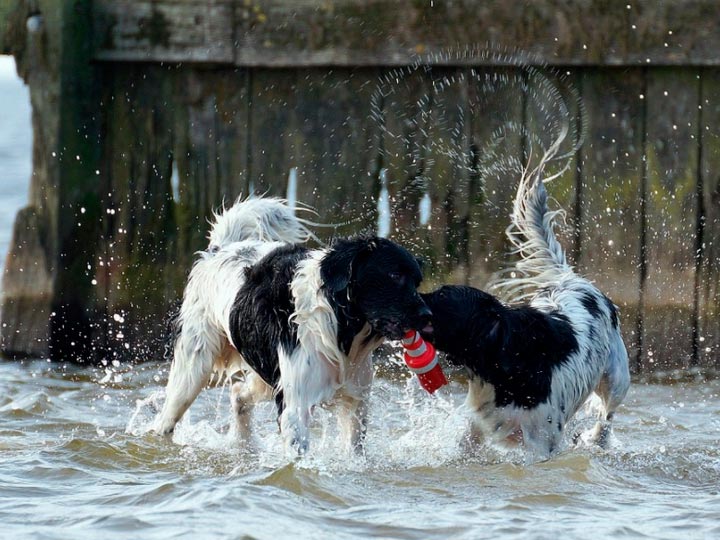
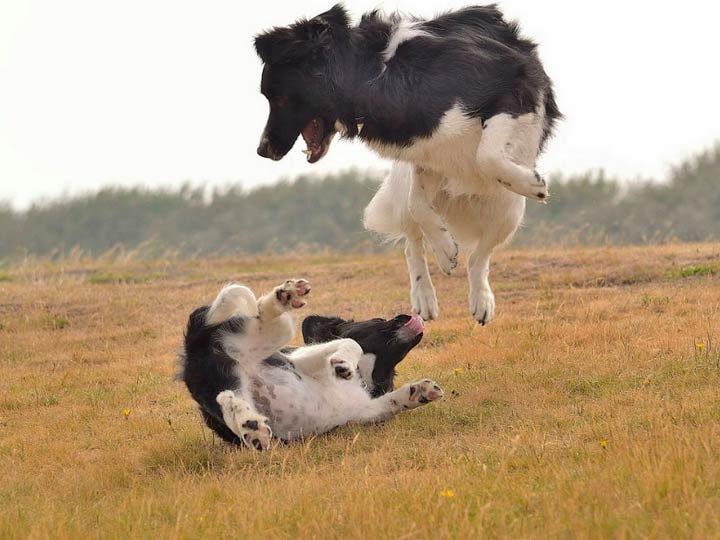
The gallery contains more photos of Stabyhoun dogs.
Video about the Stabyhoun dog breed
Read also:


Add a comment