
Somali cat (Somali)
Somali cat — a stunningly beautiful creature. In 1967, Evelyn Mague, an American breeder of Abyssinian cats, adopted a male cat who had already been abandoned by five owners within a short time. The incredible beauty of the resulting Somali stunned Evelyn. She decided to find out everything she could about his origins.
Content
History of the breed
In 1967, Evelyn Mague, an American breeder Abyssinian cats, took in a cat who had already been abandoned by five owners within a short time. The incredible beauty of the unknown breed stunned Evelyn. She decided to find out something about his origins, no matter what.
But the truth was right there, because the semi-longhaired cat turned out to be an Abyssinian, born some time earlier in her own cattery. Maggie then decided to try to breed similar semi-longhaired kittens from a pair of Abyssinians (the very same pair who were the parents of this unusual cat). She ultimately succeeded, and the new breed was named "Somali," after the country that borders the birthplace of the cats from her cattery—Abyssinians—Ethiopia (formerly known as Abyssinia).
It took Evelyn an incredible amount of effort to get the new breed recognized. In 1972, she founded the first Somali Cat Club (SCCA) in America. Mrs. Mague also became its first president. The International Federation of Cats (FIFe) (the oldest European system) only recognized the Somali cat in 1982.
There are several theories regarding the origin of longhaired Abyssinian cats. Two theories are most common:
- result of crossbreeding;
- instant mutation.
But each of the hypotheses assumes the appearance of a new long-haired gene in the kitten’s DNA.
The Somali cat is a fairly popular cat breed. However, in Russia, it is still considered rare and little-known.
Video review of the Somali cat:
Appearance and standards
The Somali cat is, with rare exceptions, a small, graceful and fragile cat of proportional build with developed muscles, lively movements, curiosity and an active life position.
Head and muzzle
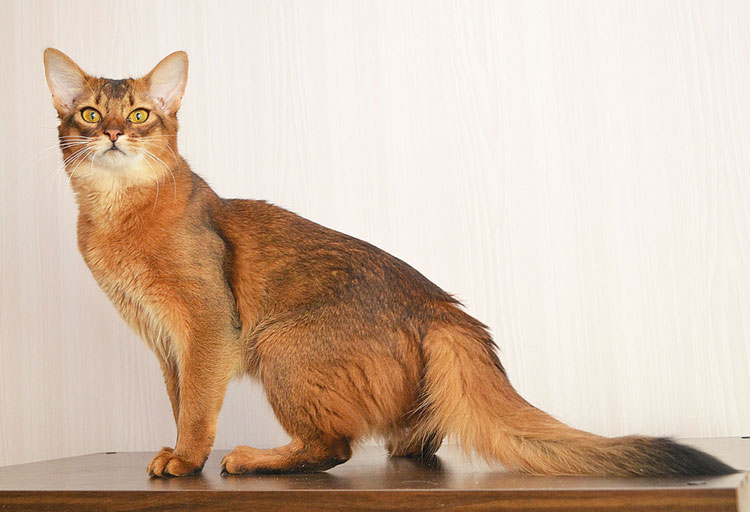
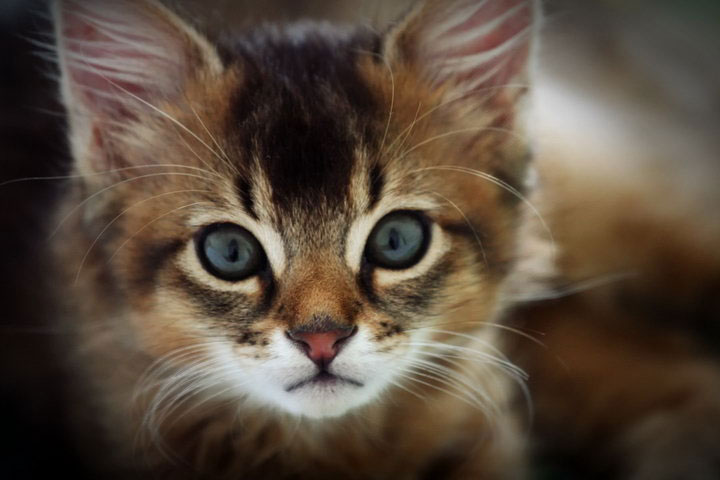
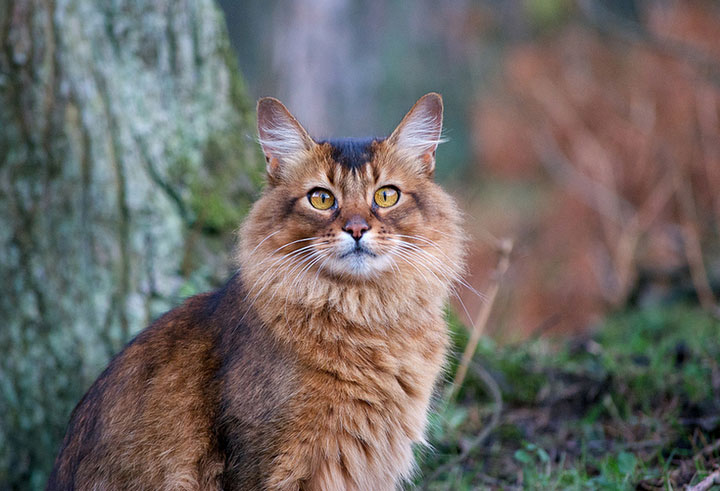
The head is shaped like a modified wedge. The outline is rounded, without any angularity. There is a slight curve where the forehead and nose meet. The muzzle tapers slightly before the whisker pads. The ears are large and wide, cupped, with well-developed fur inside the ear canal. The eyes are almond-shaped, large, and expressive. The light area of fur around the eyes is outlined by a dark border, and there is always a vertical line running up toward the ear. The eyes are golden or green.
Frame
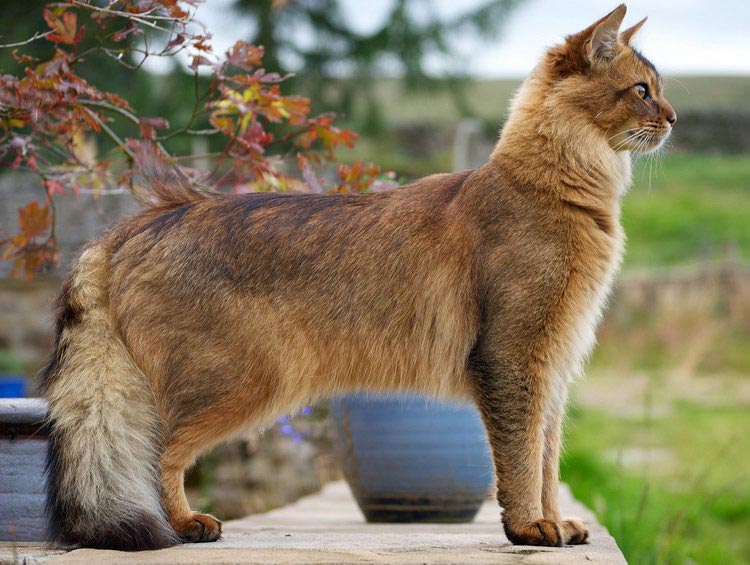
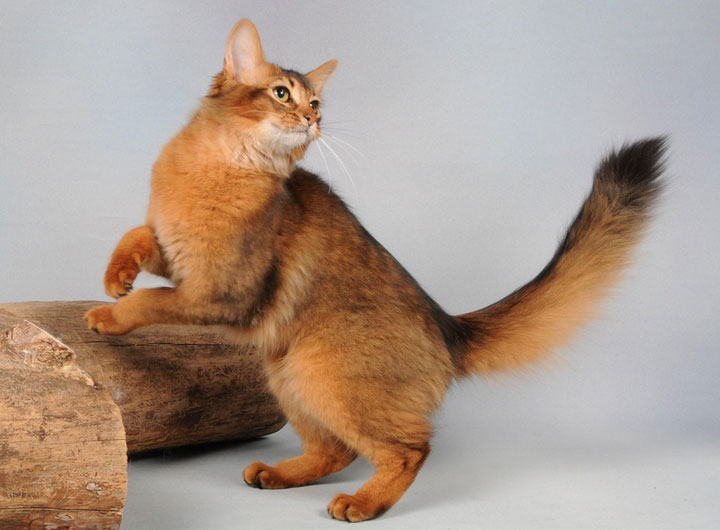
The body is flexible and graceful. The chest is well developed. The back is slightly arched, as if the cat is always ready to pounce. The build is medium, not light, but not too stocky. The legs are proportional. The tail is thick at the base, medium length, and well feathered.
Coat and colors
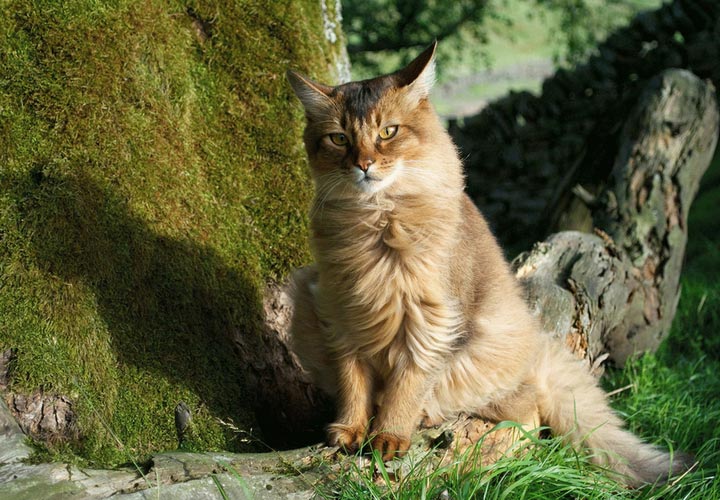
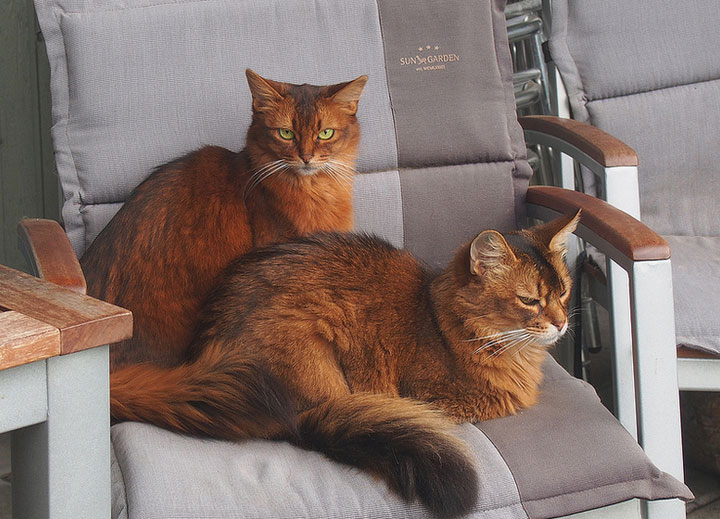
The main characteristic of the Somali cat breed is its ticked coat. Ticking means that each hair has several tones intersected by dark stripes. The number of these stripes determines the value of the specimen: the more, the better. The coat of this breed is medium-length, with only the hind legs having breeches and a collar around the neck. The Somali cat is a small, graceful, and delicate cat. With rare exceptions.
Longhair is a recessive trait. If both parents carry this gene, they will produce longhaired kittens. A mating between a Somali and an Abyssinian will produce shorthaired kittens, carrying the longhair gene.
The Somali cat's color palette is becoming more sophisticated every year. Originally, there were only two colors—wild and sorrel. Today, the number of colors has expanded to four. A new color, "roe deer," has been added to the already known colors. This is a matte cream shade, warmly dark in places. The coat is very light at the base. Uniformity of color is prized most in roe deer-colored Somali cats.
The next color is "blue." This is a smoky blue coat, light beige or cream at the base. The gray-blue stripes and paw pads are clearly visible.
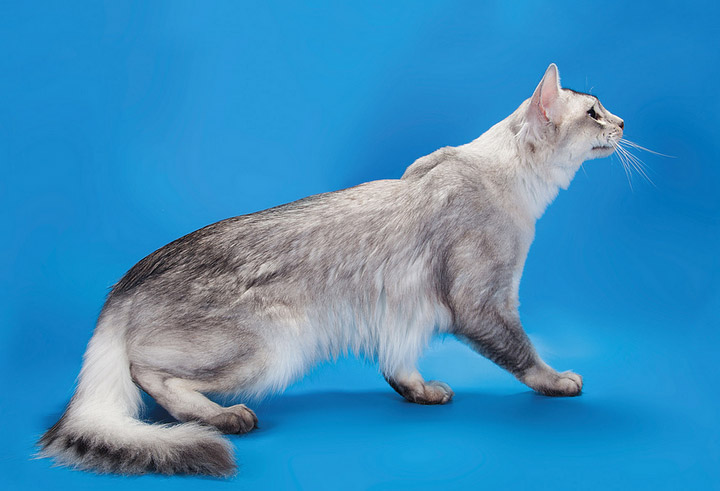
Additionally, the Somali cat's coat can be "silvered." This effect is achieved when the animal has a classic coat color and a white undercoat.
Initially, the main colors of Somali cats were wild and sorrel, the same as those of the Abyssinian. But the breed could not escape the influence of fashion, and soon new shades appeared in addition to the classic varieties.
Recognized colors of Somali cats:
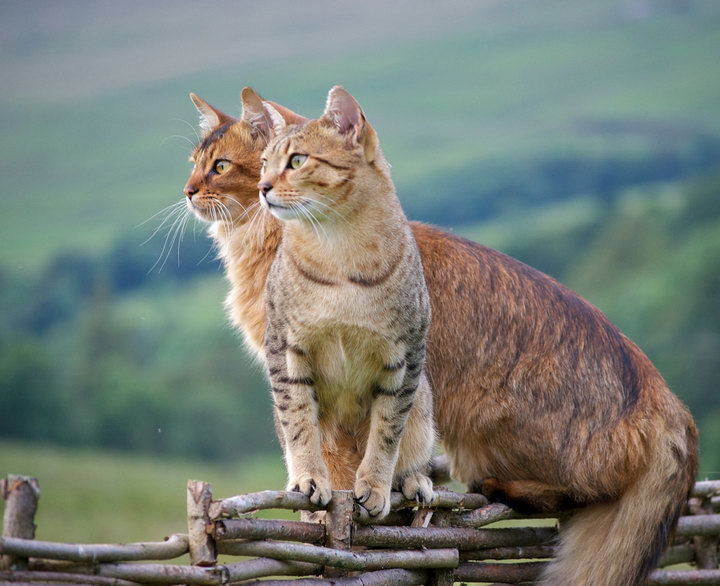
- Wild The base color is red, with black or brown tips. A darker shade runs along the spine. The insides of the legs and chest are light apricot, with tufts of dark hair between the toes. White specks may appear on the tip of the nose, chest, and lips. The tip of the nose is reddish-brown, possibly with a black rim. The feet of the hind legs are black or dark brown.
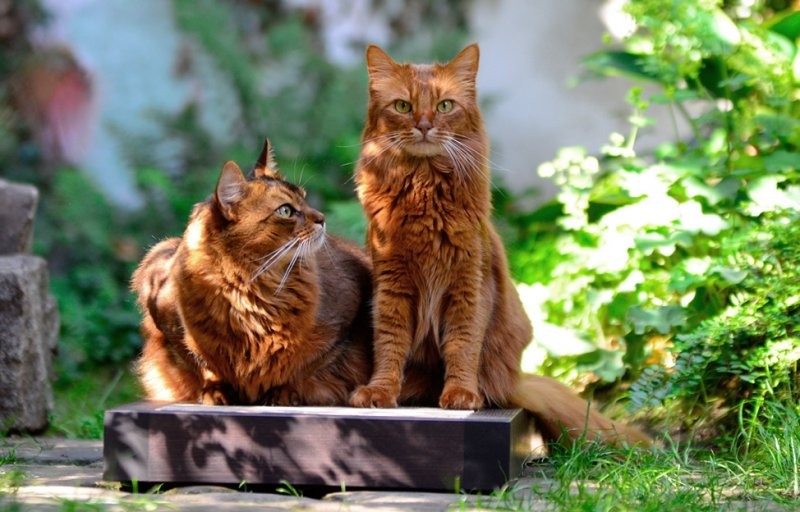
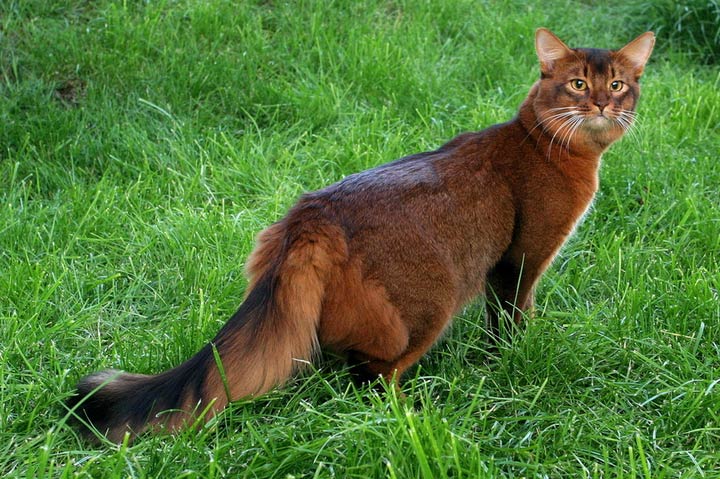
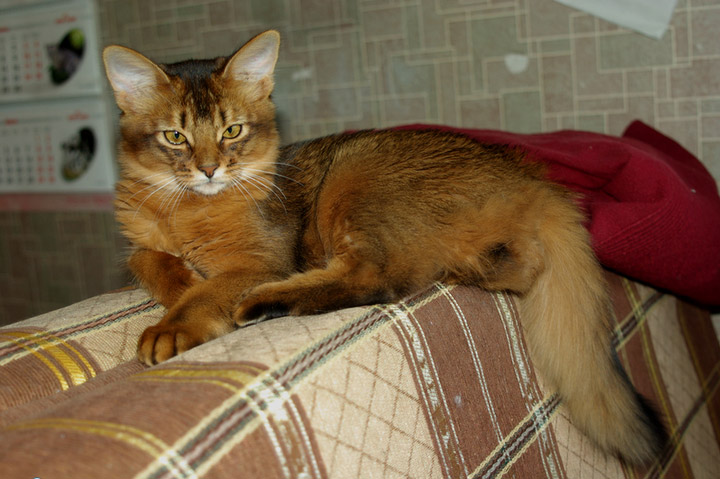
- Sorel The base coat color is copper-red. Darker red tones appear in the shaded areas. The paw pads and nose leather are pink, while the feet and tufts of hair between the toes are chocolate.
- Blue The coat is smoky blue in color, with light beige or cream tones at the base. The tip of the nose is brown, and the pads are gray.
- Faun The coat is cream-colored with darker areas and a very light base. The paw pads and nose leather are pink.
- Silver Currently, several silver colors are recognized: common blue, fawn, and sorrel. They are distinguished by a white undercoat.
Character
The Somali cat's personality is distinguished by a surprising number of positive qualities. The Somali's curiosity knows no bounds—it's capable of endlessly exploring whatever interests it. Its excellent acting skills make it highly trainable: it easily and quickly learns various commands. And, in general, being the center of attention is an incredible pleasure for the Somali. Thanks to their impeccable obedience, these cats are always universal favorites.
An exceptional sense of tact allows the cat to understand well whether its owner needs its presence and attention at any given moment. The Somali will never show aggression and will not push people into contact unless they so desire.
Somalis are happy to make contact with any pets, be it dogs, other cats, hamsters or parrots.
However, these pets, out of fear or bewilderment, usually do not accept their offers to become friends.
Somalis remain playful even in old age. Make sure they have plenty of toys, and that their selection is regularly replenished and updated; otherwise, this picky cat will start stealing any small objects within reach. Allow them to have fun occasionally—Somali kittens love to catch drips from the faucet.
Somalis are also ideal cats for playing with children: they will never let their claws out when interacting with children and will steadfastly tolerate any unintentional cruelty. Somalis are completely non-stubborn. You won't have to repeat the same words over and over again or constantly monitor them to make sure they don't repeat their mischief. If you're persistent enough with Somalis, they'll even make your life easier by knowing and obeying the commands you teach them.
Features of Somali maintenance
Toys are an important attribute for the Somali. Most toys should be hanging, as Somalis enjoy "boxing" and waving their front paws. Somalis can be trained to go for walks. While it's best not to let this beauty out unsupervised, she'll likely enjoy being walked on a leash, provided she's trained to do so from an early age.
Care
Their thick, lush coat requires regular brushing. This should be done at least a couple of times a week. Bathing them frequently isn't necessary; a few times a year is sufficient. However, it's important to remember that chlorinated water and highly chemical-laden shampoos should never be used for this purpose. Natural-based products, preferably hypoallergenic, are best.
Caring for a Somali cat's ears involves regularly wiping the ears with a damp, clean cloth (as dirt accumulates). The cat's claws can be trimmed two to three times a month if they are not worn down enough or if the cat is not accustomed to it. scratching post.
Nutrition
A complete diet containing a full range of minerals will help maintain the beauty and health of your Somali cat. Regular feeding twice daily with vitamin-enriched dry food is recommended. A natural diet should focus on meat and organ meats. Boiled fish should be given once or twice a week. Kefir and cottage cheese can also be added to the diet.
If feeding a natural diet, maintain the correct ratio of animal and plant foods. For kittens, this ratio is 3:1, and for adult Somalis, 2:1. Additionally, supplement the pet's food with eggs, fish oil, and vegetable oil.
Green grass supplementation is very beneficial for Somali cats, as it improves gastrointestinal function. And feeding carrots to cats of this breed will help enhance the intensity of their red coat.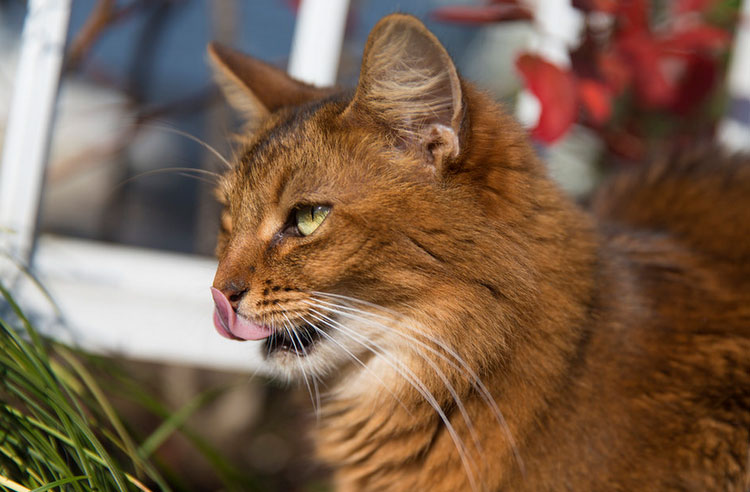
Health and life expectancy
Somali cats boast robust health, with an average lifespan of 12-13 years. However, they are susceptible to several specific health conditions. The first of these is gingivitis (inflammation of the gums), a tendency to plaque and tartar buildup. A proper diet of dry food or high-quality natural products will help prevent these problems.
The second major problem that can affect Somali cats is autoimmune hemolytic anemia. At the slightest sign of anemia, you should immediately take your cat to the veterinarian, who will likely prescribe steroid therapy.
And, of course, don't forget about regular veterinary preventative measures: vaccinations, deworming, and treatment for external parasites.
Somali cat breeders
The Abyssinian breed is popular and widespread throughout the world. It is bred in almost every country. And where Abyssinian cats are bred, Somali cats are usually also bred there.
There are several Somali catteries in Russia. If you live in Moscow or the surrounding area, you can purchase purebred kittens from the breeders at "Rocabella."
Ukraine also has its own Somali cat breeding centers. The breed is officially bred in Kyiv by breeders from "OBERIG UA."
You can buy a popular cat in Minsk by visiting the Somali cattery "King Solomon."
Please note: The Somali cat is a well-known and popular breed, so beware of unscrupulous sellers who may conceal information about breed defects or falsify the pedigree.
When browsing Somali cat for sale on private classifieds, be sure to check the seller's reviews. Carefully review the documents provided and inspect the kittens thoroughly.
Best of all, when planning to buy a Somali cat, contact an official cattery, where you can be guaranteed to purchase a purebred animal.
Choosing a Somali kitten and its price
The number of Somali cat breeders, as well as the breed itself, is growing every year. Therefore, acquiring a purebred kitten isn't all that difficult, especially if you don't have high standards.
When choosing a Somali kitten, it's crucial to evaluate its parents, their appearance, and personality. Also pay attention to the cats' living conditions, diet, appetite, and appearance. By the time they move into their new home, the kitten should be vaccinated, litter-box trained, and ideally, trained to use a scratching post.
The price of Somali kittens varies widely. Pet-class kittens typically cost 15,000-25,000 rubles. If kittens are born to purebred parents but lack papers, their price immediately drops to 5,000-10,000 rubles. Individual kittens from elite lines or rare colors can cost significantly more – from 40,000 rubles and up.
Any Somali cat color evokes enthusiastic oohs and aahs. But that's no reason to let your guard down when buying one.
If you decide to buy a Somali cat, make sure its coat doesn't have any sandy or gray tints or black root areas. Also, make sure there are no residual markings on the animal's body:
- stains on the body;
- stripes on the paws.
All of these signs indicate a fault in the breed, but the one that definitely disqualifies a kitten is the presence of white spots anywhere except the throat, chin, and nostril area. Furthermore, a hooked tail is considered unacceptable from a breed standpoint.
A Somali kitten should be active, playful, and robust. Avoid adopting a kitten that appears aggressive or frightened; choose a friendly one.
Knitting
A Somali cat's first heat cycle typically begins at 8 months. However, this is still too early for motherhood; it's best to wait until a year.
This breed suffers from infertility, and even healthy cats often struggle to conceive for a long time. Consequently, the price of Somali cats remains high.
Kittens should be kept near their mother until they are three months old. Removing them before this age can cause stress, which can impact their future development and even their health.
If a Somali cat isn't bred, heat cycles will become more frequent. If you completely neglect your cat's reproductive system, she'll eventually develop reproductive dysfunction, cysts, and polyps.
Once the mating of a Somali cat has been successfully completed, you can begin preparing for the birth of the offspring.
The Somali cat's pregnancy, like other cats, lasts for 65 days.
Newborn Somali kittens inherit a vibrant coat, which only intensifies as they mature. Young kittens are very active and inquisitive, and in their search for new and interesting things, they can wander into inappropriate places, so they require some supervision.
What owners say about the Somali cat
If you've recently adopted a Somali cat, you've likely read reviews online. However, if you're just considering getting a Somali, you might want to do some research. We'd like to share a review left on our website by a real owner.
Egor, 25 years old.
It's not for nothing that Somalis are described as very active animals. They're real fidgets. At least, my cat Franklin confirms this: in the three years he's lived in my apartment, I've never once noticed him sitting idle, unless he was sleeping, of course.
Looking at his sweet face, you'd never think he's capable of scratching, biting, or generally getting into trouble. But that's deceptive.
This Somali cat, like a pirate from his homeland, is constantly looking for adventure. And the more dangerous it is, the more satisfied his cunning face becomes. He constantly, literally "meows" for my attention—if he's in the mood to play, he won't leave until he's tired of it, whether I want to interact with him or not.
He always needs to climb somewhere, observe something, study everything that catches his eye.
Franklin never misses a chance to be naughty and mischievous. For example, he might steal some small, useful thing right from under my nose the moment I'm not paying attention, dump it on the floor, and then hide it somewhere under the couch. Sometimes I just want to scruff his neck... But it's a shame. It would be boring without his pranks.
For anyone who doesn't want a dull, monotonous life alone with a constantly snoring cat, I recommend getting a Somali – it will be a fun life with a sparkle.
Photos
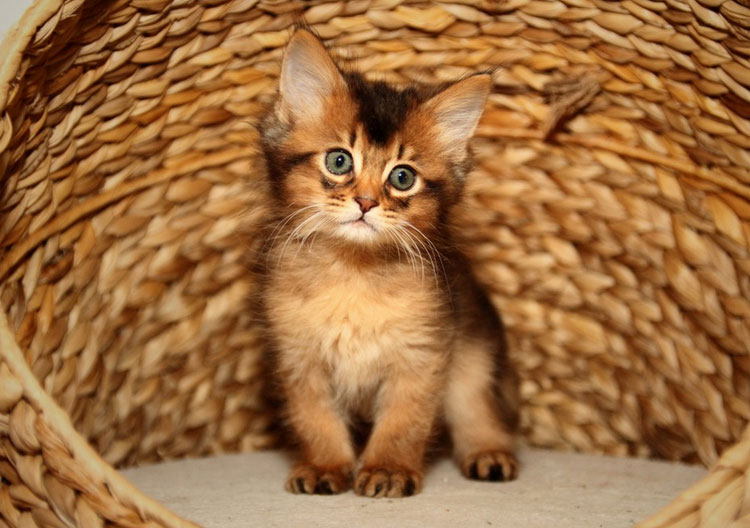
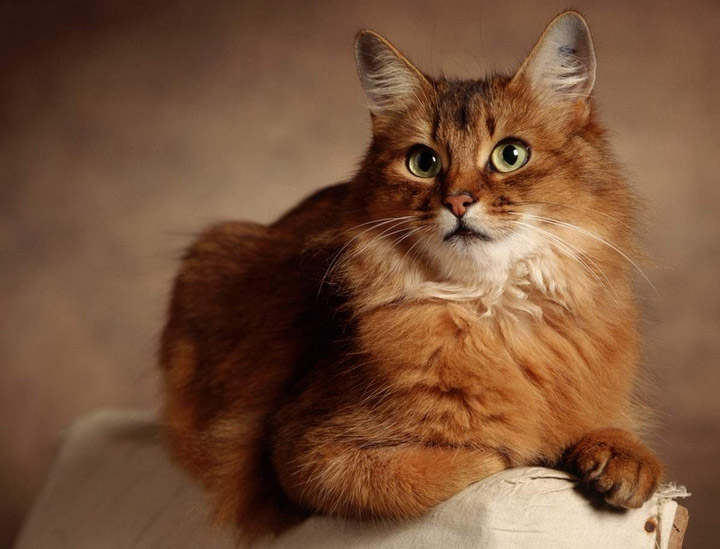
Photos of Somali cats, male cats, and kittens:
Read also:


Add a comment