
A few words about rescue dogs
Dogs have been human friends and faithful helpers for many years. They serve a variety of roles: nanny dogs, guide dogs, service dogs, and, of course, rescue dogs.
When talking about the latter, one immediately imagines a deathly blue mountain sky and dazzling white snow. There, beneath the snow, lies a person. And who will be able to find him, who will help him? A large, red-and-white St. Bernard or a fast and agile German Shepherd? Or perhaps a cheerful and affectionate Labrador, or an intelligent, smart spaniel? In short, a dog whose mission is to save people, a dog proudly called a "rescuer."
Content
Dedicated to the St. Bernards...
"St. Bernards, you know, don't live long. They love only one person in their life, and only him. And then they go to Heaven together..."—a line from a song by Diana Arbenina perfectly describes this breed.
These good-natured, gigantic "teddy bears" are versatile mountain rescue dogs. The breed takes its name from the dangerous Great St. Bernard Pass in Switzerland. Near the pass stood a monastery where monks and their dogs lived. A steep and dangerous road ran through the area, at an altitude of almost 2,500 meters. The weather in the area was known for frequent snowstorms, so the unfortunate travelers forced to traverse this route had a difficult time. Many lost their way and died. The monks provided shelter, and their four-legged helpers found the lost travelers, dug them out, and helped them reach the monastery. If a person was too weak to make it on their own, the St. Bernards returned to the monastery and brought aid to the victims.
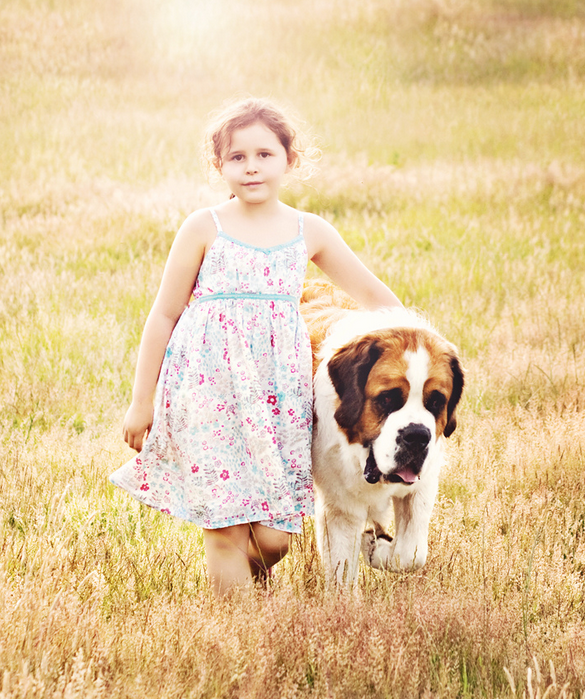
The most famous four-legged rescuer is a St. Bernard named Barry der Menschenretter, or simply Old Barry (1800–1814). During his twelve years of service, the dog saved more than forty people. One of those he saved was a little boy.
Barry found a freezing child in an ice cave; he had already lost consciousness. The dog warmed him up and then dragged him across the ground to the monastery. When the child came to, he was able to climb onto the St. Bernard's back. Barry delivered the injured child to the monastery. The legendary four-legged rescuer died of old age in Bern. To this day, the stuffed dog remains in the Bern Museum of Natural History.
Rescuers of World War II
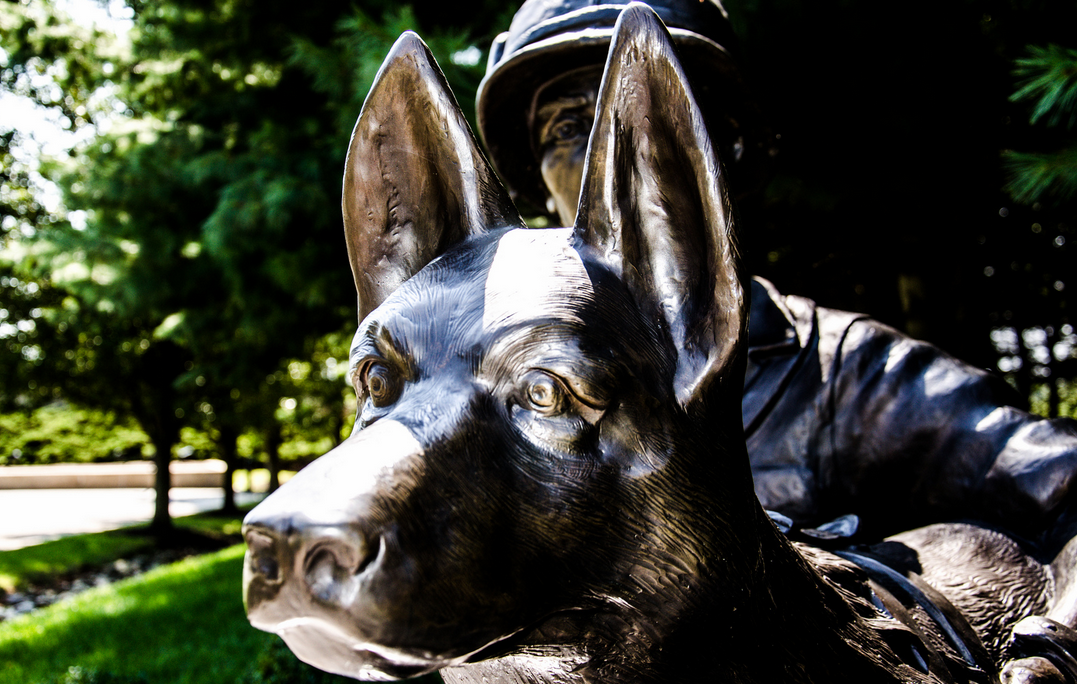
Dogs made a huge contribution to saving lives during the war. Dogs serving in the Soviet Army were credited with rescuing over 600,000 wounded soldiers from the battlefield. These orderly dogs were resilient, unafraid of gunfire, and worked under fire and during explosions, finding victims in fog, smoke, and at night. In short, when humans couldn't come to the aid of their comrades, dogs did. They carefully searched the area, locating wounded soldiers, alerted their handlers (using a leash), and led the orderlies to the victims. The most famous orderly was a German Shepherd named Mukhtar. He rescued approximately 400 wounded soldiers from the battlefield, including the dog's handler, Corporal Zorin, who was shell-shocked by a bomb blast.
A rescue dog, what should it be like?
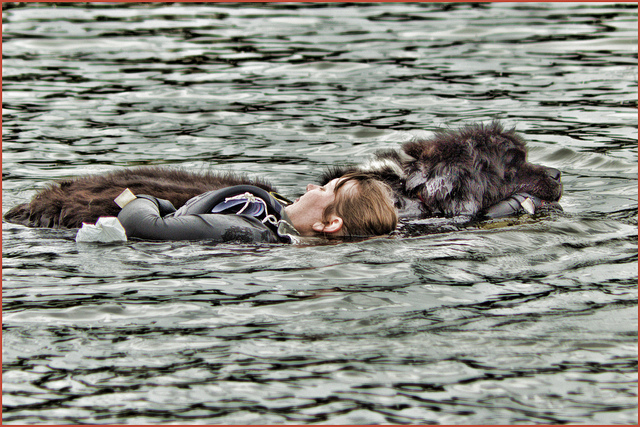
For these dogs, a kilometer-long pedigree or a specific breed isn't important. German Shepherds, St. Bernards, Labradors, Newfoundlands, and even collies can all be rescue dogs. A four-legged rescuer must have a strong, stable psyche, a keen sense of smell, and developed hearing and vision. A thick coat is essential for working in the mountains. Any rescue dog is strong and resilient, as their work is very difficult and selfless. Under no circumstances should the dog display malice or aggression toward people or other animals. A dog of medium height (45-55 cm), with a lean build, and a pronounced orienting and searching behavior is ideal for search and rescue work. Every animal has its own positive and negative qualities, so it's best not to look for an outstanding, ideal "ready-made" search and rescue dog, but to engage your puppy in serious, professional training for this type of activity.
Read also:


Add a comment