
My dog is shedding a lot: what should I do?
All dogs shed (except hairless breeds). The shed hair ends up on clothing, furniture, and even in food. Therefore, the question "What should I do if my dog sheds excessively?" is one of the top three most frequently asked questions of groomers and veterinarians.
Content
How many times a year does a dog shed?
In fact, cyclical hair loss is completely normal. Shedding is part of the natural life cycle of hair shafts. The rate of hair growth and the frequency of shedding depend on:
- breeds;
- age;
- hormonal levels;
- state of the environment;
- general health condition.
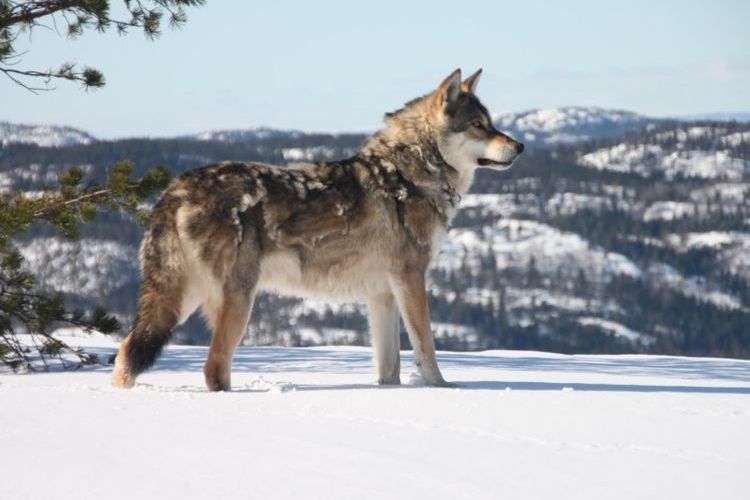
These same elements are responsible for hair length and texture, although genetics is the predominant factor. For example, breeds with continuously growing hair (poodles, Yorkshire terriers) shed dead hairs throughout the year, not just before winter and summer, so shedding is virtually nonexistent. However, Labradors, huskies, and other breeds with a thick undercoat shed strictly according to a schedule (unless there are any deviations).
Almost all healthy dogs shed twice a year: in spring and fall. Most breeds have both an undercoat and a coat. With the first rise in temperature in spring, the undercoat begins to shed rapidly. And with the onset of autumn cold weather, the thin, faded coat will fall out, and a thick, warm undercoat will grow in.
But not all breeds react equally to temperature changes. For example, Bichons and Shih Tzus have virtually no undercoat. To prepare your pet for the changing seasons, you'll need to consult a groomer or brush it yourself. Those with coarse, thick undercoats (Malamutes, Newfoundlands) have a very hard time with spring shedding, because if the bulk of the undercoat does not fall out, the animal may not survive the extremely hot summer.
Why does my dog shed so much all year round?
As mentioned above, the rate and frequency of hair loss can also be affected by health issues in your pet. If your dog sheds heavily throughout the year, you should schedule a veterinary appointment. Excessive shedding can be caused by:
- dermatological problems;
- endocrine diseases;
- nutritional deficiencies;
- flaw vitamins;
- parasites.
Bitches may shed during pregnancy and while nursing their puppies.

To determine what to do if your dog is shedding heavily, your vet will take scrapings and perform a blood test. Owners of pets with the hair is falling out in clumps, and the resulting bald spots take a long time to heal. For example, fungal and bacterial infections cause not only undercoat loss but also itching.
Active shedding in the summer is most often caused by flea infestations, pollen allergies, or topical antiparasitic medications. Less commonly, localized hair loss in the summer is caused by sun exposure. burnsBreeds that are particularly prone to this problem include: Chinese Crested, pug, bull terrier.
If, in addition to the loss of guard hairs, your pet experiences dandruffIf your dog has red spots on bald areas, it's likely that his diet needs to be balanced. However, a more serious problem that can cause year-round shedding is an adrenal tumor. Only a veterinarian can determine the appropriate course of action based on diagnostic test results.
What can you do at home?
Before figuring out what to do if your dog is shedding, it's important to remember: shedding is a natural process, and it's impossible to stop it completely. However, regular grooming can help speed up the shedding process.
Caution! Avoid shaving your dog to prevent shedding. In the summer, fur protects the animal from overheating and sunburn. While shaving will help prevent hair from flying around the house, it significantly increases the risk of skin problems. Furthermore, guard hairs may not grow back at all after being shaved completely, or they may become ingrown, ultimately leading to folliculitis.
It is best to brush your pet regularly using a brush or Furminator (for breeds with an undercoat). This simple procedure will collect dead hair before it gets on furniture or clothing. Brushing in the spring and fall is also important to prevent matting. In breeds prone to matting (Caucasian Shepherds, Afghan Hounds), the undercoat and guard hairs cannot completely fall out without assistance. If seasonal grooming is neglected, matted hairs will have to be trimmed or shaved off, which will not only result in an unsightly appearance but can also trigger folliculitis.
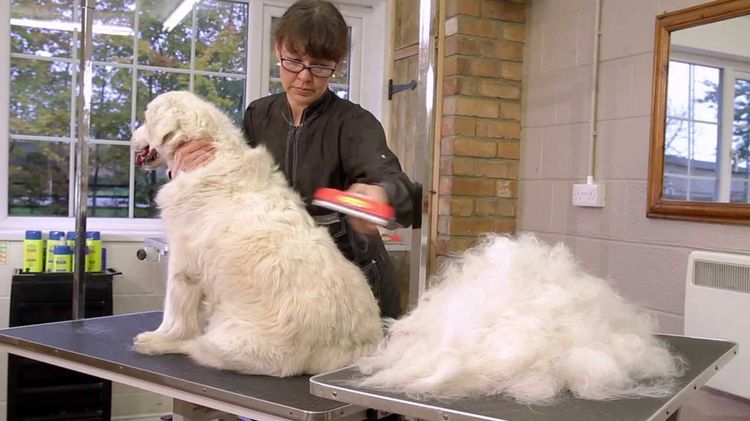
If your pet is particularly wary of being brushed, we recommend using special grooming gloves (especially for breeds with a thin undercoat and thick fur). Gloves will help remove dead hair, but will be ineffective at untangling tangles.
Interesting to know! Brushing will also help distribute the skin's natural oils throughout the entire coat. Ultimately, your dog's coat will gain a healthy shine and radiance.
Some owners prefer to take their pets to a professional groomer periodically, as some breeds also require seasonal trimming. Regular bathing is equally important. A special shampoo will help detangle mats and slightly speed up the shedding process.
What kind of nutrition is needed?
Whether your pet is fed a natural diet or commercial pet food, it's important to add more nutrients to their diet during the shedding season. Healthy fats will significantly accelerate the growth of new, healthy fur. However, it's best to avoid sweet treats during the spring and fall months. Natural food lovers should focus on meat (temporarily avoiding by-products), while those who prefer commercial pet food should choose a formula high in protein.
But while a protein-based diet is easier to digest and provides greater benefits to your pet, additional nutrients should not be forgotten. Store-bought pet food typically contains an optimal balance of vitamins, minerals, and other essential micronutrients. Maintaining a balance when feeding your pet natural food is much more difficult. In this case, specialized nutritional supplements and pharmacy vitamins (Beaphar "Vit Total" and Polidex "Super Wool") can help. According to reviews from veterinarians and dog owners, these supplements help stop prolonged shedding. Some note accelerated growth of dense guard hairs in areas of skin lost due to chemotherapy, dermatitis, and Cushing's disease.
If the owner is adamant about avoiding pharmaceutical supplements, it's recommended to introduce foods rich in omega fatty acids into the dog's diet, such as fish oil, seafood, and eggs. While such a diet is certainly not cheap, you'll ultimately notice a thick, shiny coat and soft, even moisturized skin. Furthermore, fatty acids help prevent seasonal infections, slow bacterial growth, and protect the animal from a variety of pathogens.
Don't forget about regular health checkups for your pet at a veterinary clinic. Only a veterinarian can determine whether shedding is normal and identify any underlying medical conditions causing abnormal hair loss early.
You can also ask our website's staff veterinarian a question, who will answer them as quickly as possible in the comments box below.
Read also:


24 comments
Timofey
Good afternoon! He's a 3.5-year-old Baikal-Siberian husky who lives in a kennel. He started shedding during severe frosts in February of this year, and he hasn't stopped shedding since. Before that, he shed normally once in the summer. His sister, Zita, lives with him, and she's doing well. They have a large, fully enclosed enclosure, about 200 square meters. He's been going into the forest weekly since May. They eat the same diet—wheat porridge with meat, and meaty bones (even better than us, just kidding). He doesn't lose weight and never seems lethargic. I've been tired of brushing him since February; if I lean against him, his entire clothes are covered in fur. His coloring is grayish-wolf-like. What could be causing this shedding?
Daria is a veterinarian
Hello! There are actually a large number of causes, both exogenous (external) and endogenous (internal). Parasites (both external and intestinal helminths), inflammatory processes of the skin (and any organ system), thyroid disease (such as iodine deficiency) lead to metabolic disorders and hair loss. Vitamin and mineral deficiencies. Is the dog itchy? Have you examined its fur? Are there fleas or lice? Are there any areas of alopecia? A course of vitamins and minerals is essential. They can be added to the food, but intramuscular injections are preferable. Ideally, choose a supplement that also contains amino acids (vitamin H is important – biotin, zinc, manganese, magnesium, B vitamins, and iodine are the minimum that should be added).
Alla
Hello.
Is it normal for a Karelian to shed hair when the hair on his neck and stomach has thinned considerably and the skin is visible? It's not a bald spot, of course, but still? And he scratches those areas periodically.
Daria is a veterinarian
Hello! This breed sheds a lot. Seasonal shedding is typical (spring and fall). It sheds its winter coat. It needs to be brushed thoroughly. However, if I were you, I'd rule out skin parasites (fleas or lice, for example), as they love delicate areas of skin, like the belly. That could be the cause of the itching. Perhaps they applied some product to the skin. What are they feeding them? Rule out an allergic reaction (to a food ingredient, new vitamins, or medications). Check how easily the hair comes out from other parts of the body. If it does, check what kind of hair is being pulled out (perhaps the winter undercoat). If the weather in your area suddenly warms up, the shedding will only increase.
Vlad
Good afternoon. I'm trying to stop my dog (puppy) from running into the house. I'm spraying him with water from a spray bottle. I noticed he's started shedding afterward. (The spray bottle is made with household chemicals, so I may not have rinsed it thoroughly.) What should I do?
Daria is a veterinarian
Hello! A puppy is like a child—inquisitive, omnipresent, and playful. They run to you because you're the most precious person to them. And they just need some training (no hitting or yelling). Spraying scares them. A dog isn't a cat; it's easier to explain to them that this isn't allowed. Shedding can be caused by an unbalanced diet, the presence of skin parasites, stress, or changing weather conditions (the change from a "winter" coat to a lighter summer coat). Although I wouldn't rule out the possibility of a chemical from a bottle. You didn't specify what kind of chemical. Is it for windows, toilets, or the kitchen? The active ingredients are different. Wash the puppy thoroughly and don't let it outside until it's completely dry. Then, focus on training (you might want to study books on training).
Galina
Hello, we were given a dog, I don’t know the breed, it’s almost a year old, it has started to shed a lot, it lives in an apartment, goes outside under supervision, eats all the food,
Daria is a veterinarian
Hello! Eating everything is wrong. An unbalanced diet could be the cause of shedding. Winter is ending now, so seasonal shedding—the shedding of the thicker "winter" coat—may have begun. However, if your pet has a short coat (like a Staffordshire Terrier, Bulldog, or Shar-Pei), it's unlikely to be a reaction to the changing seasons. Some breeds are prone to allergies. We need more information about feeding conditions, housing, recent treatments, any supplements (vitamins, minerals, medications, etc.), coat, skin condition, and other symptoms (itching, restlessness, dandruff, etc.).
Anna
Good afternoon and Happy New Year!
Here's the situation: I have a 10-month-old male English Bulldog. We did a thorough allergy test at 5 months: the results showed no allergies whatsoever. We initially fed him a good duck and potato food, and everything was fine. After a few months, he started having occasional diarrhea and heavy shedding. We switched to Purina Pro Plan Medium with salmon and rice. The shedding hasn't stopped. His stool is still loose. He's dewormed. He's been taking Bravecto for fleas and ticks. He lives indoors on the couch and doesn't go for walks often. He's scratched and has a bald spot, but there's no redness. His eyes have been runny since birth. His ears have been moderately dirty since birth. They don't smell. The veterinarian said this is normal. There's no need to treat anything in his ears. What could be wrong? I can't afford to go to the doctor.
Daria is a veterinarian
Hello! Congratulations to you too! Ideally, a biochemical and complete blood count would be needed to assess the internal organ function. A 12-hour fast is recommended, with free access to water. Enterosgel can be given, and a course of FortiFlora would be a good idea as well. How long has it been since you've had deworming? Has the stool been runny? Is there any mucus or blood?
Svetlana
Hello. We have the same problem as many of the people described above. Our husky is a female. She's almost a year old. She shed both summer and fall. It seemed normal. Winter came, and the shedding intensified. It's a nightmare. She walks in the yard, but lives in the apartment with us. She started scratching and biting her back. She's hyperactive and won't let us check her own skin. Her ears are a real problem! We feed her homemade food. Porridge: buckwheat, rice, pasta with carbohydrates. We give her vitamins and pamper her with a bone. Last month she was dewormed and given a flea treatment with Barrier. But she needs to do it again. She was hit by a car and injured. But, thank God, everything is fine! And she's in heat for the first time! Is this related to the shedding? And what solutions are there in this situation? Thank you.
Daria is a veterinarian
Hello! Treat the fleas properly! Use a quality, reliable product. You say your pet is biting itself, which is most likely due to skin parasites. First, treat with flea shampoo, then apply good topical drops (Inspector, Advocate, Strongold, Frontline, etc.). Don't torment your pet with barriers or other hormonal medications (this will harm your pet's health). If you don't plan to have puppies with your pet, have her spayed. This will reduce the risk of cancer. If you feed her chicken, remove it.
Svetlana
Hello. Thank you very much for your consultation.
I'd like to ask another question. I understand that my dog isn't getting enough vitamins with homemade food. Should I switch my dog to dry food? Does it contain the full range of vitamins? And what's the best way to do this?
Daria is a veterinarian
Hello! A natural diet requires careful balancing. Vitamins may be sufficient, but you'll likely struggle with the calorie/protein/fat/carbohydrate balance. Dry food is a bit easier, as long as it's high-quality. High-quality food also contains vitamins and minerals. However, it's sometimes necessary to supplement with vitamins and supplements (during periods when vitamin deficiencies are most common) every six months. Transition gradually, replacing a quarter of the previous diet with the new one every four days. You can completely switch to the new food within four days.
Dima
Chihuahua, sheds a lot. 2 years old. We feed her normally - Pedigree dog food. She has been shedding since birth, we don't know how to clean her up, so after 20 minutes we have to do it all over again. We've already combed her out.
Daria is a veterinarian
Hello! Chihuahuas are prone to allergies. First, the quality of Pedigree is nowhere near what it was originally (it's basically like Whiskas and Kitekat for cats now—budget food). Replace it with a proper super-premium food for miniature breeds. Second, have you had your pet dewormed lately? Third, get a blood test for biochemistry (vitamins, minerals, and thyroid hormones). Your pet either has problems with the endocrine glands, a vitamin and mineral deficiency due to an unbalanced diet, or parasites (not necessarily skin parasites; intestinal parasites can also cause profuse shedding and itching). Here's your course of action: get a blood test for biochemistry, change your pet's diet to a higher-quality one, add vitamins and minerals (there are plenty of good supplements), and deworm. And if thyroid problems are discovered, they'll prescribe treatment.
Angelica
Hello. I have a husky and there's a lot of fur in the apartment. At first glance, she doesn't seem to be sick. Could you tell me what vitamins or shampoo she might need?
Daria is a veterinarian
Hello! What do you feed them? Do you brush them? Is their age important? Did you turn up the heating at home? Remember that animals develop a coat of fur for cold weather, but since they spend a lot of time indoors, they don't need that kind of coat, so they shed a lot. They need plenty of vitamins (the most essential are B vitamins, and biotin is a must—it's also vitamin H, but others are also needed) plus minerals and micronutrients: iodine, magnesium, sulfur, zinc, selenium, and iron. And don't forget about essential amino acids, which the body can't produce itself but must obtain from the outside. L-cysteine and methionine are essential for coat health.
Olga
Hello.
We have a smooth-haired toy terrier, 9 years old, female.
Shedding was always seasonal, but there was never as much hair loss as there is now.
In the summer, the dog is at the dacha and goes for walks outside. From October to April in Moscow, we don't even go outside; Zayka uses diapers.
There wasn't THIS kind of shedding back in the spring, it started sometime in the summer and hasn't stopped now.
There is no visible loss of hair, no bald spots, or thinning of the coat.
For the third year running, we've been suffering from false pregnancy, lasting for two months. But the previous times, the spoon didn't react this way to the shedding.
We feed him natural food: raw chicken gizzards, frozen beef, and boiled chicken. He loves treats like Mnyams, Village Delicacy, and others. But we introduced him to them a long time ago and in reasonable quantities.
I recently had a vaccination, and they gave me an antiparasitic medication beforehand. At the vet, they focused on the profuse hair loss—nothing was done, they said everything was fine, even though the vaccination table was covered in black hairs.
Daria is a veterinarian
Hello! Is it possible to have a blood test for biochemistry? And a blood test for thyroid hormones (this is most often done in a human lab for a fee; the doctor will simply draw the blood, but you can take it to a private clinic and have it tested for hormones). Is there anything else besides protein? Where are the grains? Vegetables? Why hasn't the dog been spayed yet if she's prone to false pregnancies? This is a clear indication for castration; such animals (with a history of false pregnancies) are not allowed to breed! A hormonal imbalance can cause hair loss. Have you tried vitamin supplements? A complete blood count wouldn't hurt either, to rule out allergies.
Elena
Hello, we have a cocker spaniel mix living at home. He sheds heavily year-round. We feed him natural food. Could you please tell me which vitamins he should be taking? He is 2 years old. Thank you.
Dasha is a veterinarian
Hello! Deworm your pet according to the prescribed schedule. Review the diet (what exactly are you feeding? Perhaps your pet's menu is unbalanced?). Injectable vitamins are better (I trust them more than supplements and various treats). They are absorbed faster and are easier to dose. Contact the clinic so they can administer a proper vitamin therapy course (with vitamin H, also known as biotin, which is responsible for coat and claws). Or, buy it at a veterinary pharmacy and administer it yourself according to the instructions (but don't overdo it, as vitamin deficiency is also very serious). I like Oligovit, Multivit, Multivit + minerals, and Vitam (I use them most often). Some people recommend Eleovit.
Tatiana
I have a German Shepherd, he lives at home, he has been shedding since summer, I can't do anything, but there are no bald spots, it's itchy. He eats regular food, loves barley porridge with fish.
Dasha is a veterinarian
Hello! What is regular food? Could you please name it? What exactly does it contain? If it contains chicken or turkey, replace it. Choose premium food, a holistic gastro food, or a hypoallergenic one. Avoid barley porridge. It's not suitable for feeding dogs. There's an article on the website about which grains CAN be fed to dogs and which shouldn't (and why). Avoid overdoing it on fish. Deworm (Drontal, Milbemax, and other "powerful" medications). You can replace these tablets with Inspector, Advocate, or Stronghold neck drops (they treat both external and intestinal parasites, and they also combat scabies mites). Provide vitamin and mineral supplements (either intramuscular injections of complex medications or adding them to water or food). Observe the dog for a week after switching to a complete diet and after deworming. If the itching persists, consult a doctor. But something tells me the health issues are due to an unbalanced diet or a lack of deworming. Please let me know in a week how the dog is doing (there may be other symptoms).
Add a comment