
Rat-faced dog breed
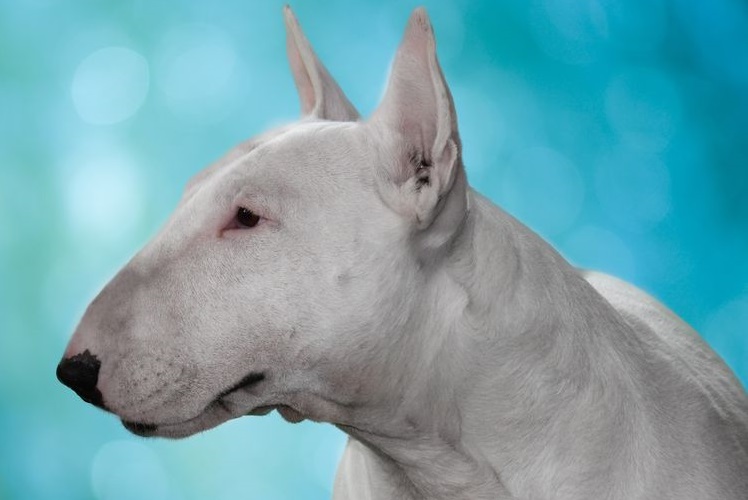
The Bull Terrier breed has acquired a special status—it's nicknamed the "rat-faced dog." Its emergence has sparked controversy worldwide. While it has been described as a killer dog, it has also been considered a reliable companion and guard dog.
Content
History of origin
The breed's founder was Englishman James Hinks. Thanks to him, experimental fighting dog puppies with an elongated, rat-like snout were born. bull terriers was formed as a result of 10 years of crossing an extinct breed of white terrier and an English bulldog, with some Dalmatian blood mixed in.
The primary goal—to obtain a fearless dog with a high pain tolerance—was achieved. Beauty and aesthetics of the animal's appearance were not considered.
In the late 19th century, the breed was recognized by the English Kennel Club. In the early 20th century, it was approved for breeding. Keeping a Bull Terrier became a prestigious occupation, emphasizing social status.
Bull Terrier – Description
This breed of dog was once used for hunting wild animals and dog fighting. Since the ban on bloody spectacles, the breed has undergone a long process of socialization and has adapted to the demands of modern humans.
Today, the Bull Terrier is a loyal friend, a cheerful companion, and an active athlete. Myths about its mortal danger have been dispelled. It embodies intelligence, endurance, strength, and agility. Its unique appearance makes it resemble a giant rat. This photo of a dog with a rat-like face confirms this.
Breed standard
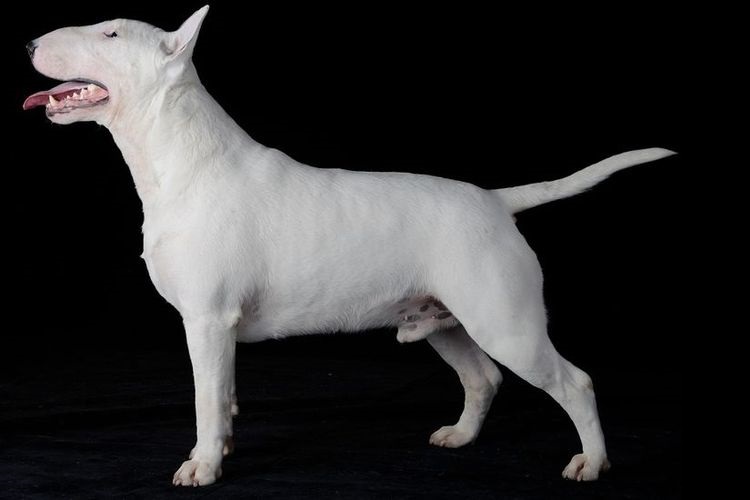
The Bull Terrier has an international breed standard, deviations from which are considered a fault:
- The body is athletic, muscular, strong.
- The head is oval, egg-shaped.
- The muzzle is elongated and arched.
- The neck is strong.
- The jaws are powerful, with a compression force of 25 atmospheres.
- The mouth is big.
- The bite of the teeth is cross-shaped.
- The ears are erect, V-shaped, and set close together.
- The nose is pronounced and large.
- The eyes are small, triangular in shape, slanted, wide and deep set.
- The tail is short and not docked.
- Average weight is 30 kg, not limited by standard.
- Height at the withers is from 40 to 55 cm. Males are larger than females.
- Life expectancy is 12-14 years.
Coat and colors
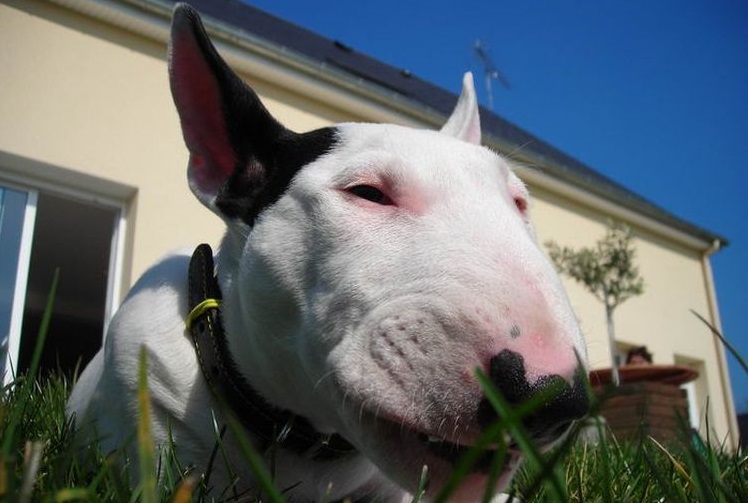
The coat is harsh to the touch, short, smooth, and uniform. The rat-faced fighting dog comes in a variety of colors. White is considered the most prestigious. Acceptable colors include brindle, reddish-brown, black, and tricolor. The shape and placement of white and other markings are not specified in the standard.
Character and upbringing
Bullies have a distinctive personality. They possess exceptional intelligence and can read people's minds. From the very first day, their aggression should be mitigated and their strength and energy channeled appropriately. With proper training and early socialization, a puppy will grow into a good friend and protector.
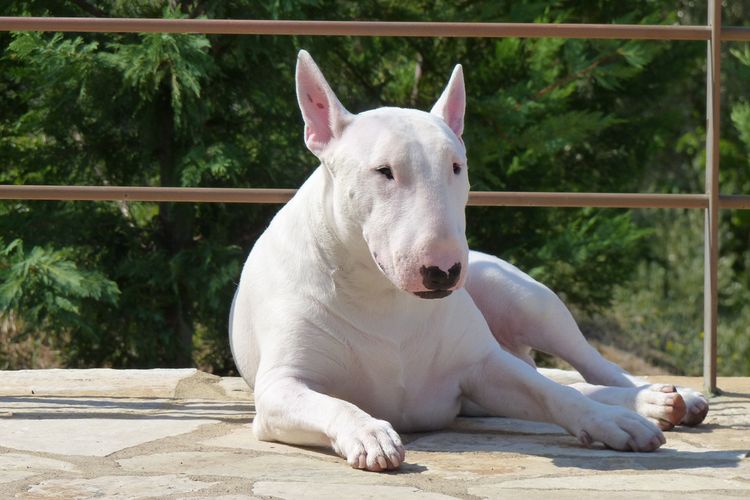
Bull Terriers are hyperactive and require extensive physical and mental training. They are willful and stubborn. They are not prone to cowardice or betrayal. They are willing to defend their owner with their lives. They are affectionate with family, loyal to children, and assertive in the outside world. They treat all animals as prey. Leash walking is prohibited.
Training
Training a bull terrier requires a great deal of time and effort. Strict and humane methods are essential for achieving results. Physical punishment is prohibited, as bulls remember offenses. These dogs require the strong-willed hand of a competent breeder. Otherwise, you could end up with an unruly and dangerous animal.
Care and maintenance
In terms of care, the Bull Terrier is not difficult, he is clean:
- Comb the coat with a rubber mitten 2-3 times a week, daily during the shedding period.
- Clean ears once a week.
- Wash your eyes daily.
- After walks, wipe with a damp towel.
- Bathe with shampoo as needed.
- Trim your claws.
Keeping a Bull Terrier indoors is strictly recommended, preferably in a family without children. Keeping them in a cage or on a chain can damage their psyche and lead to aggression. Bull Terriers are sensitive to cold weather; at temperatures below -10°C (12°F), walk them with clothing on. Avoid exposing your pet to the sun during hot weather.
Nutrition
Composition of natural nutrition:
- meat 60%;
- cereals 20%;
- vegetables 20%.
Allowed foods: seafood fillets, fermented milk products, and offal. It's best to choose commercial food of the deluxe, premium, or holistic grades.
Diseases
High-quality representatives of the breed have strong immunity. Hereditary diseases include:
- partial or complete deafness;
- loss of vision;
- kidney disease.
Other diseases arise due to poor care and maintenance (dermatitis, heart failure, pancreatitis).
Pros and cons of the breed
Like all dogs, the English Bull Terrier has its own breed-specific pros and cons.
|
Pros |
Cons |
|
Possesses intelligence |
Difficult to train |
|
Suitable for keeping in an apartment |
Does not tolerate frost and heat well |
|
The molt is not very pronounced |
Presence of genetic diseases |
|
Easy to care for |
Suitable only for experienced dog owners |
|
Playful and active |
Difficult to train, complex character |
|
Acts as a companion |
Prone to aggression |
|
It has protective and security qualities. |
Doesn't get along with other pets |
|
Strong and agile |
Jealous, capricious, vindictive |
|
Fearless |
Free range is prohibited |
Price
You can purchase a Bull Terrier puppy from breeders across the Russian Federation. Prices vary depending on color, conformation, and pedigree. A show-class puppy is priced between 40,000 and 50,000 rubles, while a pet-class puppy costs between 15,000 and 25,000 rubles. Avoid purchasing a puppy from reputable breeders.
Read also:
- Dogs that look like foxes
- Which dog is better to have in an apartment or house?
- Wolfhound: a dog breed or a purpose?


Add a comment