
Dog licking its paws: why and what to do
Owners of various breeds periodically notice their dog licking its paws and wonder whether this behavior is normal or a sign that a visit to the veterinarian is needed. In this article, we'll explore why dogs lick or chew their paws, what problems this behavior may indicate, and when it's time to take your pet to the vet as soon as possible.
Content
Licking – normal or pathological?
Licking is an important part of the daily hygiene ritual and expression of emotion for most animals, and canines are no exception.
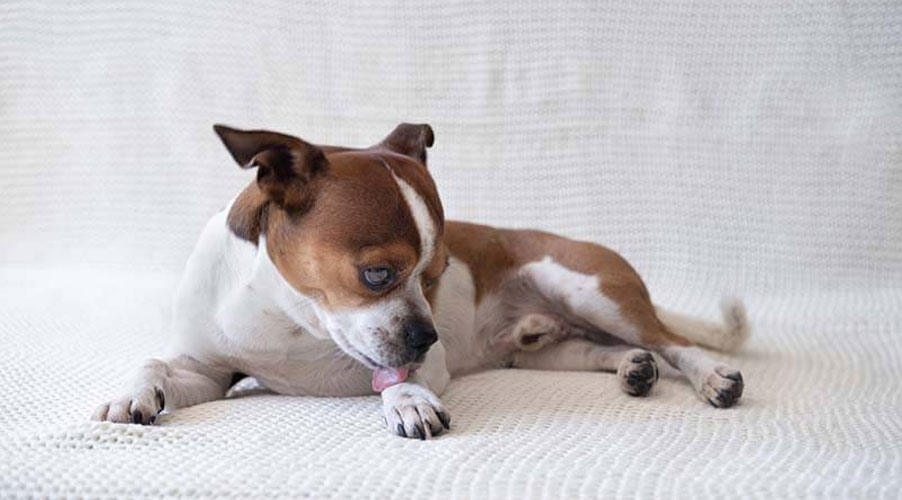
Although canines groom themselves less intensely than cats, and their tongue structure is significantly different, this behavior is also normal for domestic dogs. When observing your pets, you may notice them licking:
- yourself or your puppies for hygiene purposes, cleaning the fur from various contaminants;
- various wounds on the body, trying to reduce discomfort;
- other dogs or the owner, expressing favor and affection.
Therefore, if you simply notice that your dog periodically licks its paws or licks itself for hygiene purposes, then you should not worry - this is completely normal behavior.
You should be wary if the dog:
- constantly and quite intensively licks his paws at night, and also devotes most of his waking time to this process;
- licks the spaces between the fingers until they turn red;
- licks wounds, which increases inflammation;
- chews its front or back paws, injuring itself.
Paw problems are equally common in dogs of all breeds, so a small Chihuahua, a French Bulldog, a German Shepherd, a Husky, or any other breed of dog can lick their paws.
Causes of the problem
Before trying to help your pet in this situation, it is important to find out why the dog is constantly licking its paws, what exactly is causing the animal's anxiety, or the development of interdigital dermatitis.
Overgrown claws
If a dog spends a lot of time at home and rarely walks on surfaces that wear down its claws, then uncontrolled growth of claws can cause significant discomfort to the animal.
Long nails prevent a dog from placing its feet correctly while walking, bending the toes and improperly redistributing the load on the muscles, which ultimately causes pain and sometimes serious injuries requiring surgical treatment with claw removal.
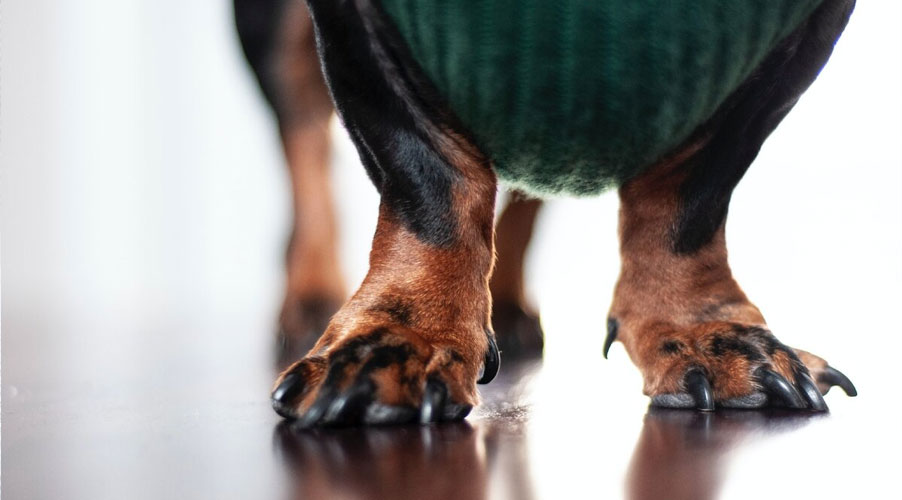
Feeling severe discomfort, the dog licks itself, trying to reduce the unpleasant sensation, and sometimes even begins to bite its claws, damaging the surrounding skin until it bleeds.
That's why it's so important to trim overgrown nails promptly (either by yourself or by a groomer). We've covered nail trimming in more detail in the materials on this website.
Paw injuries
If your dog is limping and licking its paw vigorously, carefully examine the space between its toes and the pads; it may have been injured.
Injuries can be very different:
- cuts (may occur when the dog paddles vigorously with its paws);
- cracks (form on dry pads, just like on people’s heels);
- punctures (occur when a dog steps on a thorn or spikelet);
- bites (can be quite painful for a dog) snake bites or insects, even non-poisonous ones);
- thermal burns (possible when driving on hot asphalt on hot summer days);
- chemical burns (salt mixtures used to treat roads in winter are the main cause of sores and redness between the toes).
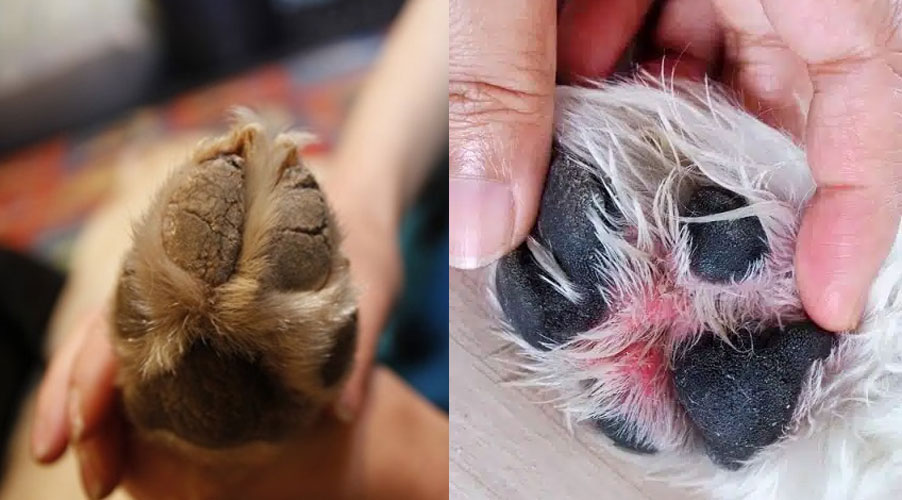
If the reason why your dog licks its paws is due to an injury, then it is necessary to treat the damaged pad with ointments (as prescribed by a doctor) and protect the paw from dirt and further licking during the healing period by bandaging it or putting on a "medical boot."
Fungal infection
In people with long hair, fungus often affects the space between the toes and the area between the pads.
Upon inspection you can see:
- red areas of inflammation;
- intense peeling of the skin;
- hyperpigmentation of the affected area.
A paw affected by fungus becomes very itchy, causing the dog to constantly lick it, which only worsens the situation, as the area between the toes creates a constantly moist environment, ideal for the development of fungus.
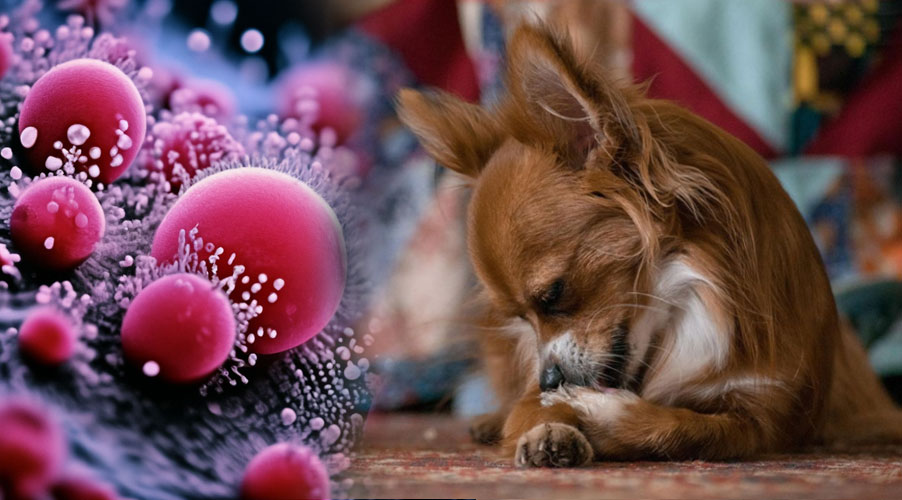
Often, a fungal infection isn't the primary cause of the problem, but rather occurs when a dog licks its paws intensely for some other reason. However, paw fungus can and should be treated at home using antifungal medications (naturally, it's important to prevent the ointment applied to the paws from entering the dog's stomach).
Stress
Another reason why a dog constantly licks its paws may be acute or chronic stress.
You've likely heard that people under stress often start chewing their nails, hands, and anything else they can get their hands on. Dogs, on the other hand, may calm themselves by licking themselves or chewing their nails when they're stressed, anxious, or experiencing psychological distress.
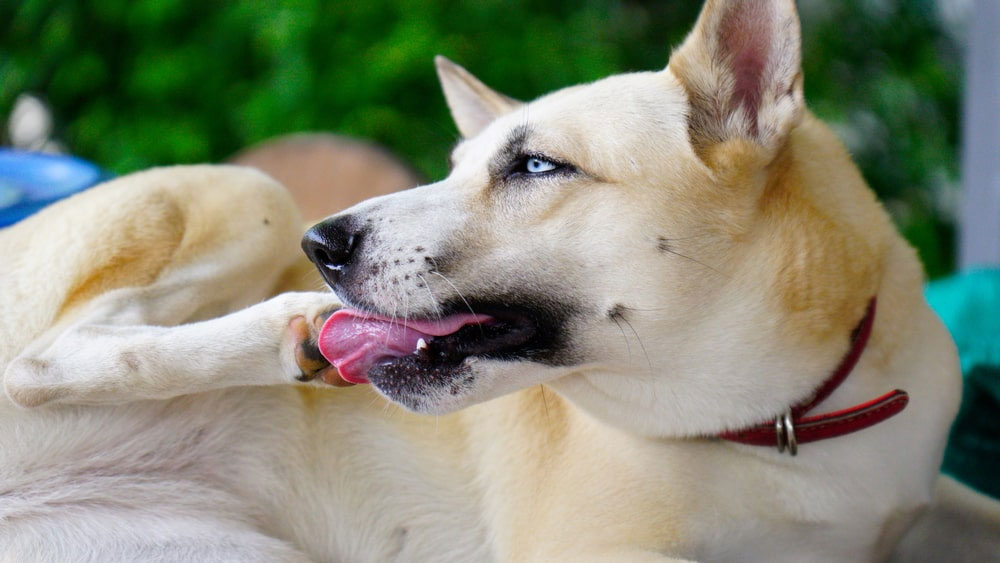
It is possible to conclude that a pet's licking is due to psychological reasons only after eliminating all other possible causes of the problem and analyzing the animal's situation.
A dog can be stressed:
- finding yourself in a new place of residence;
- against the backdrop of the appearance of a new pet (or child) in the house;
- due to dramatic changes in lifestyle and activity;
- against the background of prolonged loneliness;
- having lost his beloved owner.
The solution to this problem is a comprehensive approach to improving the dog's psychological state, including taking medications prescribed by a veterinarian, as well as adjusting the pet's diet, daily routine, and activity level.
How to stop a dog from licking its paws
Trying to simply "dissuade" a dog from licking or chewing its paws is not the right approach, as licking and self-injury are not the root cause, but a consequence. Therefore, it's important for the owner and the veterinarian caring for the animal to determine the specific cause of the animal's discomfort.
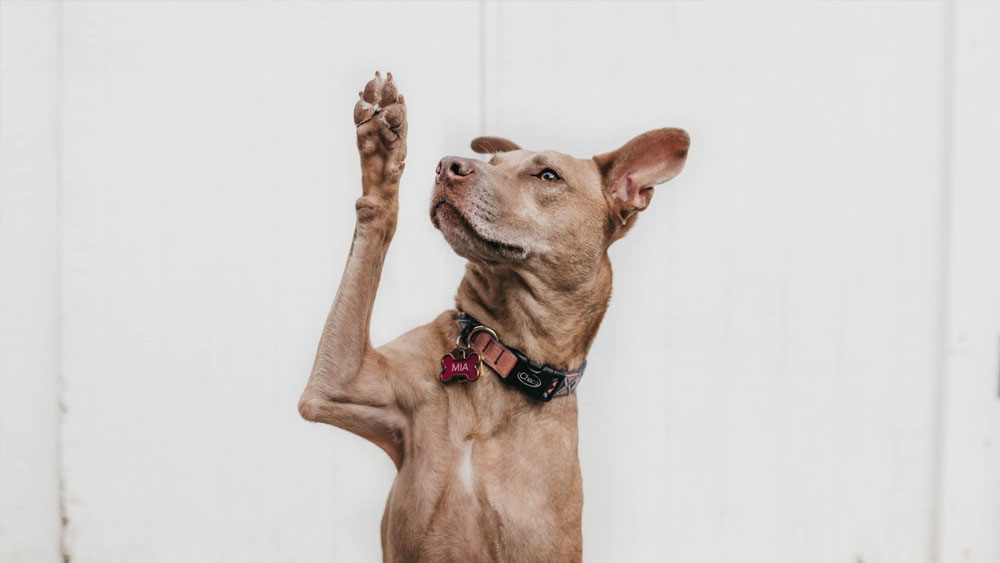
If the underlying cause is eliminated, the dog's special interest in the process of licking its paws will also disappear on its own.
If the problem becomes a habit, you can use special sprays and ointments that are unpleasant to dogs. However, it's important to understand that without addressing the underlying cause, this method alone won't be effective. Most likely, due to itching or pain, the dog will attempt to perform the habitual action, suffering additional discomfort (and sometimes gastrointestinal problems due to the product entering the stomach).
Veterinarian's advice
For more helpful tips on what to do if your dog is constantly licking its paw, watch this video:
Read also:
- Burns in dogs: what they are and what to do
- My dog is biting its claws: why and what to do
- Why does a dog twitch in its sleep?


Add a comment