
A dog that doesn't bark: the name of the breed
Among the wide variety of breeds, there is one species of four-legged creature that cannot boast of a loud "woof." To the question "what dog can't bark?" there is one answer: Basenji – a breed whose representatives are unique in that they are not known for their loud barking.
Content
History of origin
The breed is considered very ancient – has been known to humanity for over 5,000 years. Originating in Central Africa, it was widely present in Ancient Egypt, where puppies of this breed were considered amulets and presented as gifts to pharaohs. Researchers have found numerous drawings on the walls of ancient Egyptian tombs depicting barkless dogs, as well as their mummies in honorary burials alongside their wealthy owners. It was also common in Nubia (present-day Sudan).
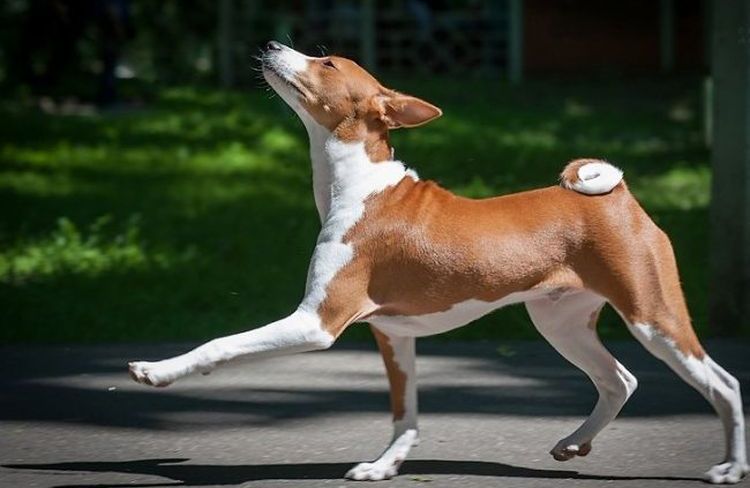
In 1895, the breed first traveled outside its native land, being brought to England. Unfortunately, the dogs did not survive the arduous journey and died. 1905 marked their arrival at the Berlin Zoo, where they were exhibited as exotic jungle animals. In 1930, Basenjis were brought back to the UK, where a uniform standard was established, which is still used today.
The breed developed independently in the wild jungles of Africa through natural selection, without human influence. Genetic data suggests that wolves from the Middle East and North Africa may be part of the mix.
It is believed that in ancient times, animals could speak like humans. One day, the pack leader overheard a great secret from one of the tribes, after which the dogs collectively promised themselves never to reveal it under any circumstances.
Description
The Basenji, the African Barkless or Congo Bush Dog, the Congo Terrier, the Nyam-Nyam Terrier, the Congo Forest Dog, or the Zande Dog (a people of North Africa), or the "creature of the bush"—these are all names for a dog that can't bark. But don't think it's completely silent. Howling, growling (a sound called "barroo"), growling, snorting, making a distinctive "trill" or emitting heart-rending moans—representatives of this breed can make noise. Almost all owners say that just looking at a photo of this four-legged friend is enough to fall in love with this amazing dog.
According to the specifications of the International Cynological Federation, Basenjis belong to the Spitz group and to the primitive type breeds.
These dogs are characterized by fearlessness, confidence, and innovative thinking. They are kind and affectionate, and have strong immune systems. They perform well in shows and are not aggressive toward people, but they clearly dominate when around other animals. They are suitable for apartment living. The average lifespan is 10-12 years (some sources indicate 13-16).
Parameters:
- height (at the withers) – male – 43 cm, female – 40 cm;
- weight – male – 11 kg, female – 9.5 kg.
The following colors are distinguished:
- white and red;
- intense black and white;
- tricolor - bright black with reddish-red tan (there are markings on the muzzle, above the eyes, and cheekbones);
- black stripes on a red-brown field.
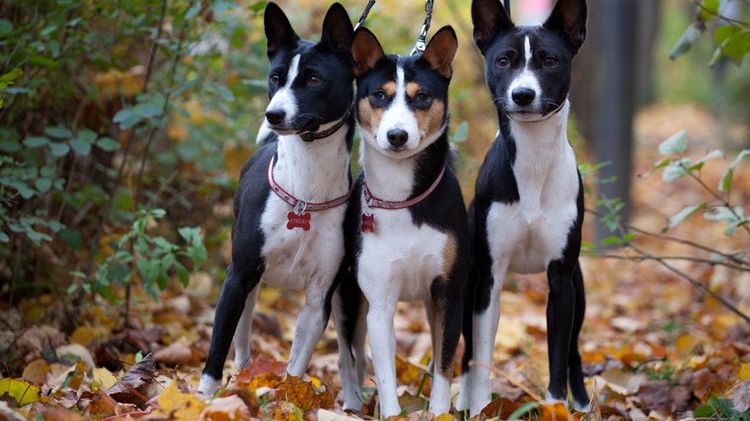
Any color is also characterized by the presence of a white chest, paws, and tail tip. A litter typically consists of 4-5 puppies.
Special characteristics of animals in this category:
- when excited they make sounds very similar to a cat's purring;
- when the ears are brought together, wrinkled folds appear in the forehead area;
- curled tail.
Many breeders note their pet's striking resemblance to cats. In addition to purring, Basenjis can wash themselves with their paws, dislike water (possibly due to genetic memory), enjoy praise and self-introduction, and are known for their trusting relationship with their owners. A certain independence, similar to that of a cat, can make the dog unruly, so only experienced owners can cope with this temperament.
She is very active and agile, making an excellent companion and possessing hunting skills. She loves to run; movement gives her a sense of freedom and fills her with energy. If she lacks exercise, she can become depressed. Today, she is often used as a hunting companion in the Congo.
Why can't they bark?
Scientists are considering two versions:
- It's likely that domestication and taming by humans occurred somewhat earlier than animals realized they were supposed to bark. Theoretically, they can bark, but they don't.
- The absence of barking is due to the specific structure of the animal’s throat.
Diseases
There is some predisposition to the following diseases:
- cataract;
- urolithiasis;
- problems with hip joints;
- retinal atrophy – can progress to blindness;
- Fanconi syndrome is a kidney disease that eventually leads to kidney failure;
- thyroid dysfunction;
- entropy with protein loss.
Care
Due to their activity, representatives of this breed require long walks in open areas, as well as emotional and dynamic stimulation in the form of play and energetic interaction with the owner.
Brushing is necessary periodically (1-2 times a week), and nails should be trimmed every two weeks. When bathing, use only high-quality grooming products, as Basenjis have quite sensitive skin.
Important! This breed is considered hypoallergenic; the animals are very clean and have no distinctive odor. Recommended for owners who meticulously maintain a clean home.
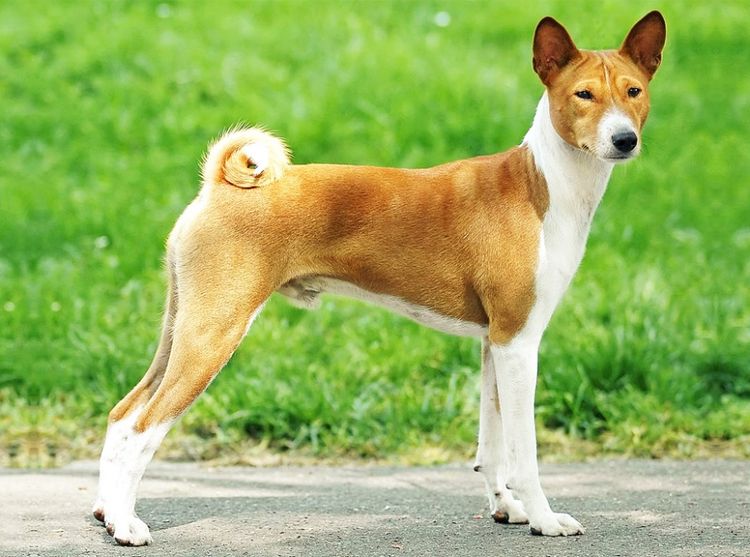
The rare Basenji breed can be purchased in Russia for between 45,000 and 80,000 rubles. It's perfect for active people with extensive canine experience. Only someone who accepts it into their pack and appoints it as their leader will be able to win the brave heart of this little "African hunter."
Quiet dogs
These dogs can bark, but their nature makes them reluctant to do so. Therefore, those who dislike loud barking should consider one of these breeds when choosing a puppy.
Saluki
The graceful and free-spirited Saluki is an Arabian greyhound. It possesses the purest genes, a keen sense of smell, and an elegant, lithe frame. The ancient Arabs considered it a gift from God and cared for it well. In return, the Saluki helped humans hunt small-hoofed animals. To catch a gazelle, this animal can reach the speed of a leopard (up to 70 km/h).
The Saluki has a calm but strong-willed disposition. Its barking is rarely heard, except in extreme situations. It does not exhibit guarding qualities and is more suited as a companion for active people who enjoy long journeys.
Horseback riding and cycling are the best ways to bond with a sporting Persian greyhound. The breed has retained excellent hunting abilities and is well-suited for working game in open terrain.
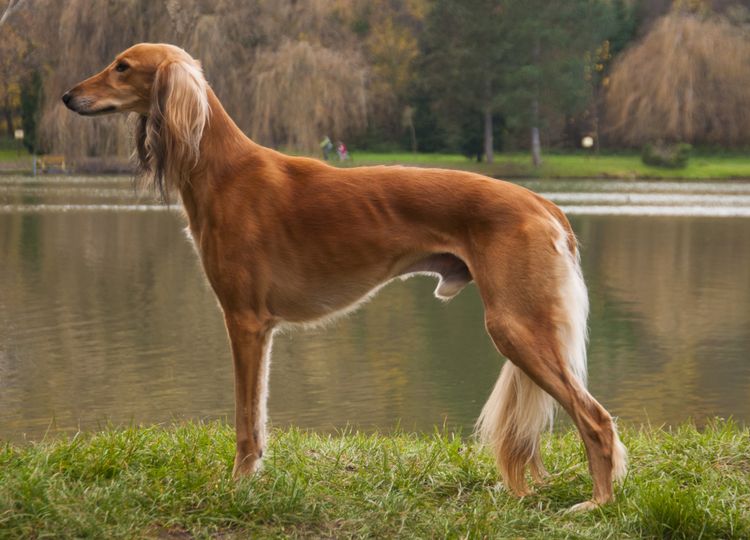
The Saluki is a gentle and refined creature. She demands affection and attention. She adores her owner and children. She does not accept other four-legged companions. She dislikes noisy games, and crowds of people stress her out. She is a solitary dog and enjoys interaction only with close friends.
The breed is more popular in Arab countries. In Russia, there are several official nurseries dedicated to breeding this ancient and silent breed. It is suitable for experienced breeders with the time and desire to establish a close relationship with the refined and thoughtful "Persian Princess."
A premium Saluki puppy can be purchased for between 35,000 and 60,000 rubles. You should only buy a pet from breeders with a long-standing and positive reputation.
Shiba Inu
Another representative of the barkless dogs is the Shiba Inu. A small but very cunning "inu" from the island of Honshu, a child of the Land of the Rising Sun and a descendant of the wild dogs that lived in Japan before the Common Era.
The Shiba Inu (Shiba Inu) is classified as a hunting dog. Its appearance has remained pristine and has not been subject to any breeding intervention. The Shiba is the pride and treasure of the Japanese people. It is a miniature member of the Spitz family.
The Shiba's bark resembles a piercing cry, which it emits when alarmed, frightened, or in protest. The rest of the time, the pet is silent and communicates with people through facial expressions, at the level of psychological perception. This dog can express joy and pleasure with a smile.
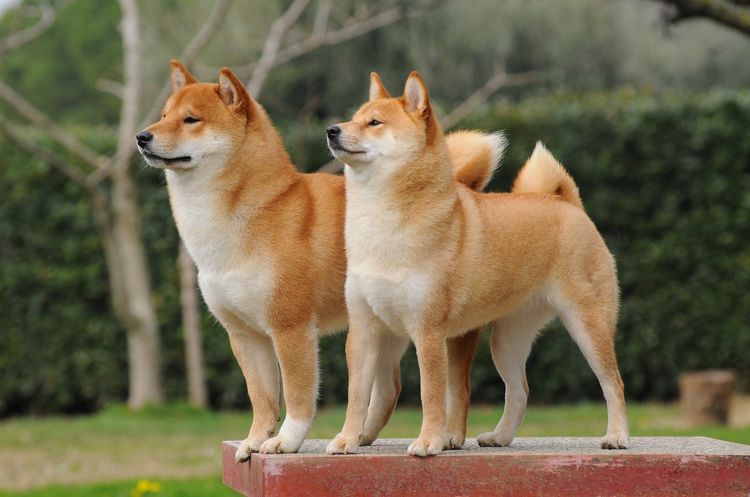
Little Innu is a one-man dog. Loyal, reasonable, and fair. She doesn't tolerate arbitrary treatment and will never forgive anyone who raises a hand against her. At heart, the Shiba Inu is a "samurai" who won't bow his head or grovel before a human for a piece of meat. Handling her isn't easy. Only through physical and mental training, affection, persuasion, and sometimes even example can one bring this unruly and proud little dog to terms.
New Guinea Singing Dog
When asked what breed of dog doesn't bark, you might get an unexpected answer: the one that sings doesn't bark. New Guinean singing The dog is so unique and ancient that there are no reliable sources about its origin and domestication. It is likely that its roots go back centuries and have connections with Australian Dingoes.
The singing New Guinea wolf is a subspecies of the red wolf. In the wild, it lives in packs in the forests of New Guinea. Its appearance is a mixture of wolf and fox. It feeds on birds and rodents. It is more often seen in zoos than in homes. It possesses the traits of a predator: cunning, agility, and endurance.
The New Guinea dog has two characteristics that distinguish it from the average dog. First, it barks very rarely. Instead of the typical bark, it produces sounds similar to birdsong or whale calls. Second, it can climb trees and cliffs like a cat.
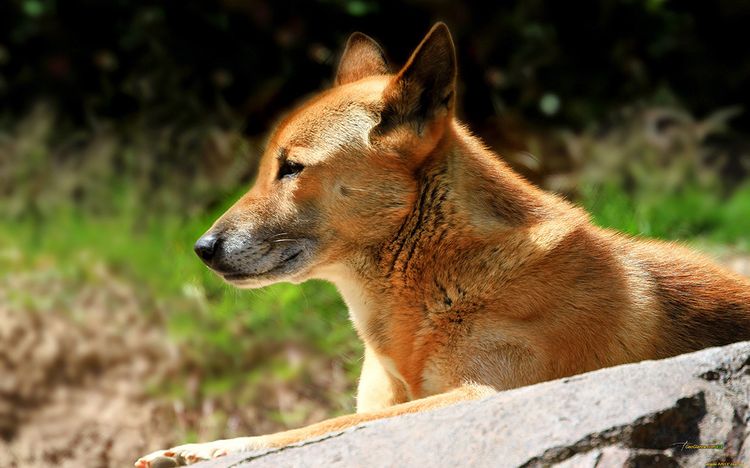
Over the centuries, humans have repeatedly attempted to domesticate this wild animal. Caught in the wild and domesticated, dogs helped people hunt and guard their homes. However, they showed no particular affection or love for humans, and many, driven by the call of blood, fled back into the forest.
For a long time, the "singing dog" breed was considered extinct. In the 1980s, cynologists once again turned their attention to it. Thanks to them, a revival of this unusual breed began.
To acquire this "wild" breed, you'll have to visit an official breeder in Australia or the United States. You can find the price of a puppy on the breeder's website. Before purchasing this rare and difficult-to-train breed, you should carefully consider your abilities and available time for training.
It's likely that after reading this article, many will consider getting a silent pet. After all, sometimes a quiet apartment and the absence of complaints from neighbors are so important. However, the "silence" medal has a downside. All of the above-mentioned barkless "four-legged friends" are too independent, willful, difficult to train, and demanding in every way.
Read also:


Add a comment