
Corgi Dog: Breed Characteristics
Welsh Corgi Welsh Shepherds are among the most recognizable and commercially successful Welsh dogs. They rank 10th among the smartest breeds, and their training speed rivals that of the Border Collie, the number one dog.
Content
Breed characteristics
The Corgi was recognized as an independent dog breed by the English Kennel Club in 1934. Today, there are two varieties of Corgi: the Permbroke (Welsh Corgi Pembroke) and the Cardigan (Welsh Corgi Cardigan).
|
Original title |
Welsh Corgi |
|
Country of origin |
United Kingdom |
|
Weight |
Pembroke (9-13 kg), Cardigan (12-17 kg) |
|
Height (at withers) |
Pembroke (25-30 cm), Cardigan (27-32 cm) |
|
Life expectancy |
12-15 years old |
|
Price of a puppy (with pedigree) |
30,000 – 50,000 rubles |
|
Price of a puppy (without pedigree) |
10,000 – 20,000 rubles |

Based on the characteristics given to their pets by owners, professional breeders, animal psychologists, and veterinarians, we have compiled a brief description of the Corgi breed.
|
Parameter |
Level |
Points |
|
Size |
|
2 out of 5 |
|
Intelligence |
|
5 out of 5 |
|
Training |
|
5 out of 5 |
|
Noisiness |
|
4 out of 5 |
|
Health |
|
3 out of 5 |
|
Picky eating habits |
|
2 out of 5 |
|
Activity |
|
4 out of 5 |
|
Aggressiveness |
|
1 of 5 |
|
The need for communication |
|
5 out of 5 |
|
Molting |
|
5 out of 5 |
|
Attitude towards children |
|
5 out of 5 |
|
Attitude towards strangers |
|
3 out of 5 |
|
Cost of maintenance |
|
2 out of 5 |





History of the breed
There is no definitive information about the Welsh Corgi's origins. It is believed that their ancestors may have been Swedish Vallhunds—Spitz-type herding dogs brought to Britain by Vikings.
This breed was used for herding sheep, horses, and poultry, and its working qualities were unique: Welsh Corgis could independently guard and herd flocks. They didn't frighten their "charges" with barks, but rather urged them on with gentle nip-and-bites: their short stature allowed them to easily dodge hoof strikes.
Already at the beginning of selection, the Welsh Corgi dog breed was divided into two separate subspecies: in the county of Ceredigion they were similar to dachshunds, in the county of Pembrokeshire they were more like Spitz-type dogsIn the 20th century, the varieties were recognized by the International Cynological Federation and received the status of separate breeds.
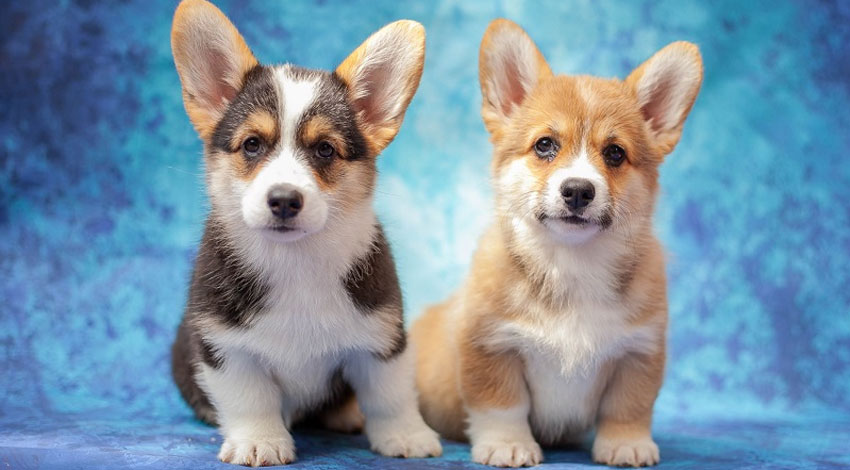
Over time, Welsh Corgis gained popularity throughout Europe, but they became especially recognizable after becoming royal pets. In 1933, the Duke of York bought a Pembroke Corgi puppy for his two daughters, Margaret and Lilibet. The girls were delighted with the charming little dog—intelligent, incredibly loyal, and good-natured. After becoming Queen, Elizabeth remained close to this breed for over 80 years. In total, Her Majesty owned around 30 Corgis throughout her life, and photos of them alongside the Queen could be seen in many magazines and newspapers.
Description of the Welsh Corgi
The Welsh Corgi is a small, sturdy dog, standing 25-30 cm tall and weighing up to 14 kg. The Cardigan Welsh Corgi and the Pembroke Welsh Corgi differ in appearance and character. The anatomical description and character of each Corgi breed are evaluated according to their own standards.
Welsh Corgi Cardigan
Cardigan Corgis have a strong body with a broad chest, a level back, and a well-defined loin. The head is large, the muzzle tapers slightly toward the nose, the forehead is broad and flat, the neck is long, and the erect ears are triangular in shape. The legs are short, the paws are rounded, and the front paws are turned slightly outward. The tail is moderately long, reminiscent of a fox's.
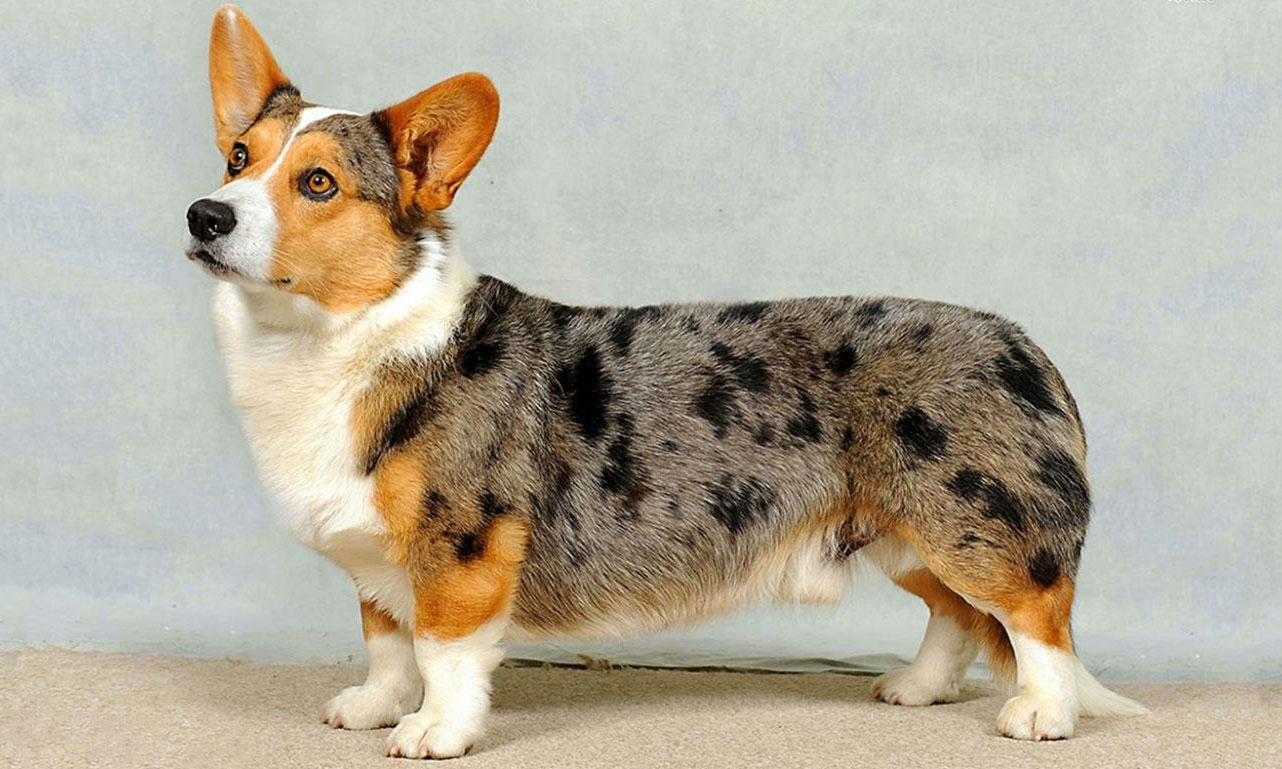
The coat is hard, medium length, with an undercoat. Color types: red, brindle (transverse dark stripes on a lighter background), sable (pigments are distributed along the length of the hair, with black concentrated at its end), blue merle (black spots on a gray background).
Welsh Corgi Pembroke
Pembrokes, unlike Cardigans, have a more compact build. Their broad chest is also low, but they lack a square silhouette when viewed from the front. Their short, straight legs are distinguished by well-developed thighs, and their paws have tightly knit toes. The tail is short, no longer than 5 cm according to the standard (the bobtail gene is present in the breed). Until the late 20th century, Pembrokes' tails were docked.
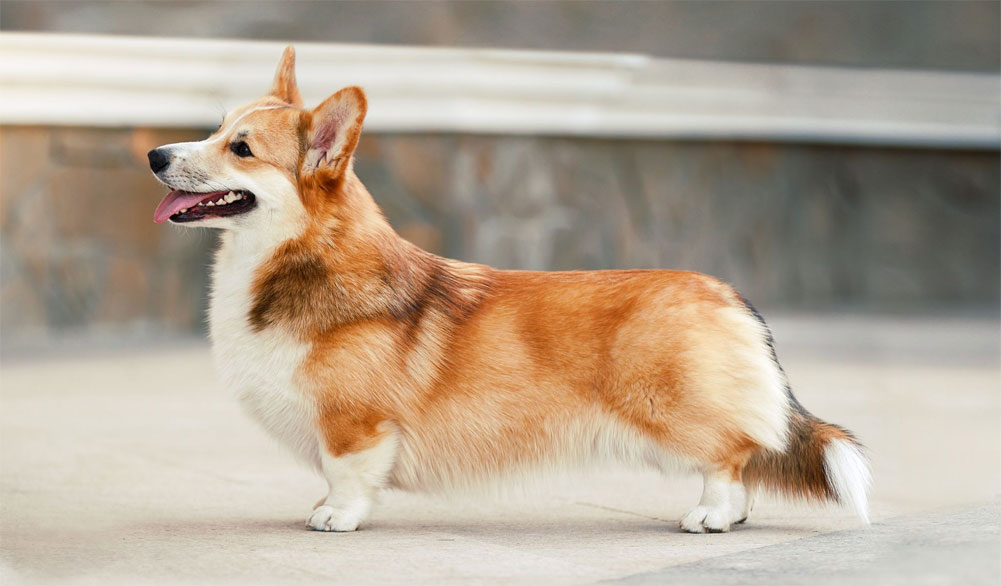
Pembroke Welsh Corgis have short to medium-length coats that are not very harsh. Colors include golden, red, fawn (cream), sable, and black and tan (red spots on a black background). Areas of red pigmentation are located on the mouth, cheeks, chest, and paws. The contrasting outline of the mouth gives the Pembroke a fox-like muzzle, making these dogs appear to be smiling. A distinctive feature of the Pembroke Welsh Corgi is a large dark spot on its back. This marking is popularly known as a "fairy saddle": according to legend, Pembroke dogs were given to humans by magical fairies.
Personality traits
Welsh Corgis belong to the shepherd family. Their positive qualities include:
- High intelligence. Corgis are intelligent, learn quickly and readily, are obedient, and adapt easily to new environments.
- Friendliness. These dogs are completely non-aggressive toward strangers and other animals. They are easygoing and may approach larger dogs or strangers on the street simply "out of a desire to meet them."
- Balanced temperament. Welsh Shepherds are naturally sanguine, rarely barking without provocation. They are capable of spending long periods alone, calmly waiting for their owners to return from work, and not disturbing their neighbors with their plaintive howls.
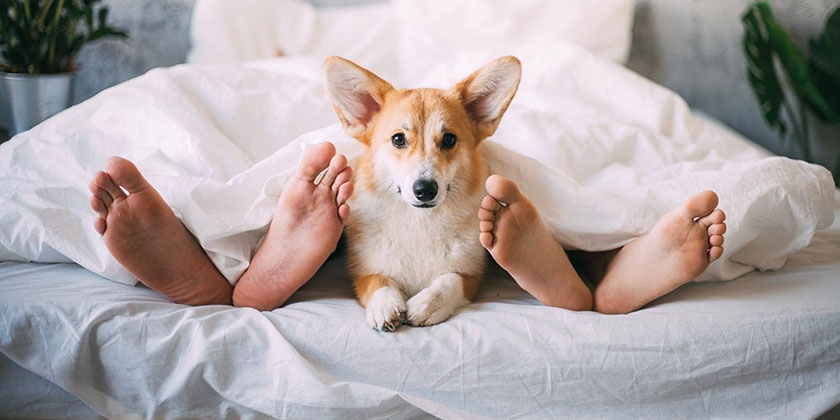
- A high level of affection and empathy. All corgis are devoted to their owners from an early age, willing to accompany them everywhere. They are keen observers of their owners' moods and therefore will not pester them if their owner is not in the mood for interaction or play. In extreme cases, to gain attention, they may sit at their owner's feet and gently touch their paw.
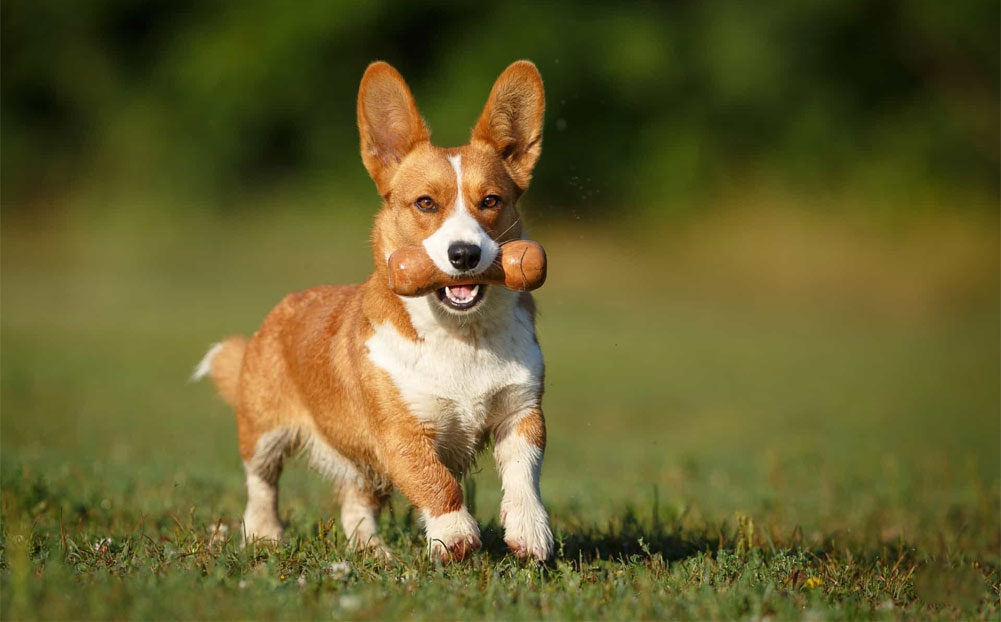
- Endurance and activity. Despite the short legs inherent in the Welsh Corgi's genes, these dogs are capable of withstanding considerable physical activity. They can be taken on long walks, run, play ball, and participate in various dog competitions, such as agility (running an obstacle course), frisbee (a game with flying discs), and flyball (a team relay race with a ball).
The disadvantages of the Welsh Corgi include:
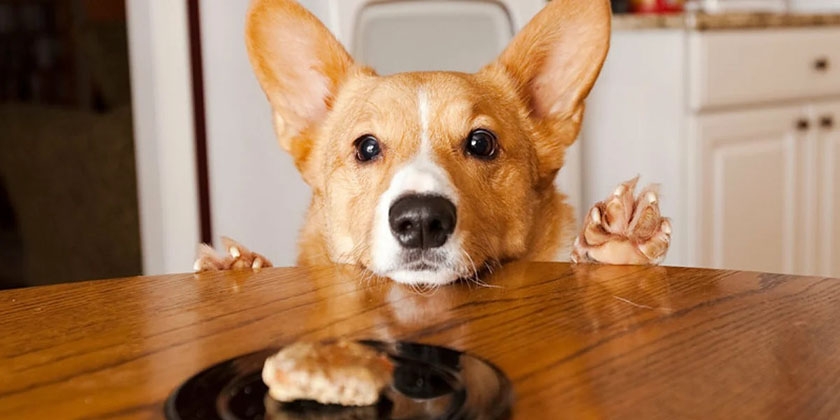
- Tendency to overeat. All Welshies are "eaters," willing to perform any task for a treat and unable to independently limit their food intake. The owner must monitor calorie intake and portion sizes, otherwise the pet will become obese.
- "Herding instinct." Sometimes dogs of this breed, believing that a house cat or a small child has trespassed—or, in the dog's view, "strayed from the herd"—will nip at their legs, trying to force them back into place. This behavior is usually observed only in puppies, as biting can be broken quickly, in just 2-3 sessions.
- Heavy seasonal shedding. All dogs shed in the spring and fall, but corgis shed a lot. Therefore, during shedding season, they need to be brushed daily or express link.
- Due to their short legs, corgi puppies must be carried up and down stairs until they are 4-5 months old. This is necessary to prevent elbow and hip dysplasia. This anatomical defect is genetic, so the puppy's parents should be tested beforehand.
Maintenance and care
Welsh Corgis can be kept in an apartment or a country house, but unlike other shepherd breeds, they cannot live in a kennel or crate year-round. During the puppy's first few months in the home, it is recommended to create a safe environment for them: keep household chemicals and medications out of their reach, and hide wires and sharp objects.
It's best to feed your Welsh Sheepdog with ready-made, complete premium or super-premium food. These are balanced in composition, ensuring your dog receives the necessary nutrients and won't lead to obesity. You can also read a detailed article on our website about... What to feed a corgi.
Caring for a corgi is not difficult and includes standard hygiene procedures:
- It's recommended to brush your pet 2-3 times a week, and daily during shedding season. You can use a slicker brush and a long-tooth comb to remove small tangles.
- Corgis don't need to be bathed too often, perhaps once every 1.5 months. Any moisturizing dog shampoo will do. After a walk, simply washing their paws is sufficient.
- Welsh dogs need to have their nails trimmed about once a month, as they grow. When trimming a dog's nails, only trim the tips that interfere with walking; avoid trimming the nail bed.
- Veterinarians recommend brushing dogs' teeth at least once a week. To ensure your dog doesn't object to this procedure, you can buy special veterinary toothpastes with a meaty flavor.
- Once a week, you should also clean your pet's eyes and ears using a cotton swab and lukewarm boiled water or a special cleansing lotion from a pet store.
The Welsh Corgi breed is among the top ten most expensive in the world. A Corgi puppy, which experts estimate is capable of winning dog shows, can cost as much as $2,000.
Health
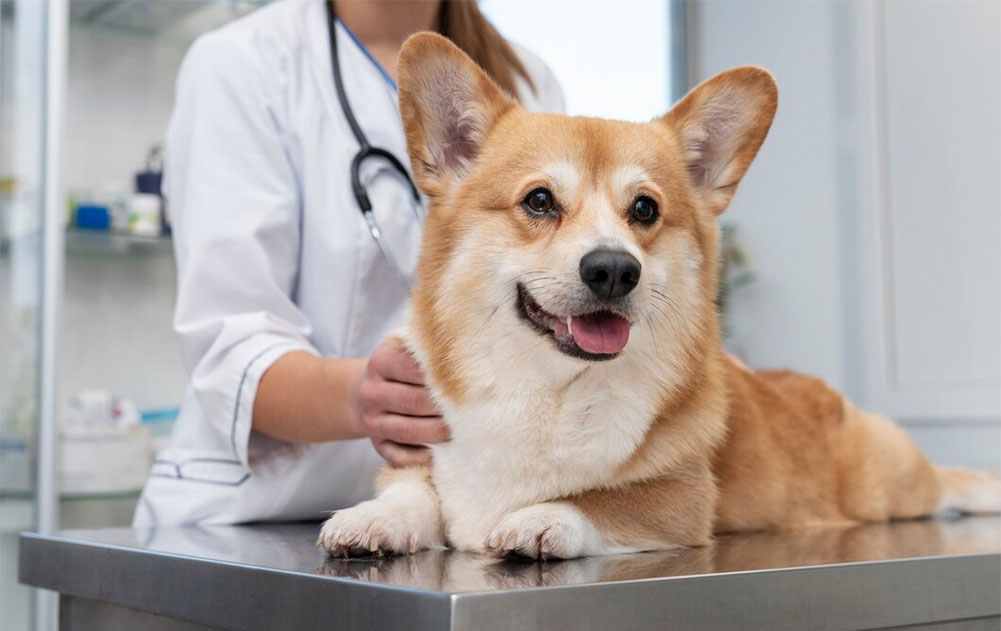
Overall, Corgis are healthy and robust dogs, but like most other breeds, they do have their share of health issues.
At the genetic level, if breeding work is not properly organized, representatives of the breed may inherit:
- hip dysplasia;
- cystinuria;
- epilepsy;
- von Willebrand disease.
This is why it is important to buy a puppy from professional breeders or kennels that conduct genetic testing on their dogs and strictly ensure that no animals with hereditary diseases or defects are bred.
Throughout the life of a pet, Corgi owners may encounter the following problems:
- diseases of the musculoskeletal system (in particular, the breed is prone to intervertebral disc diseases, like Dachshunds and other breeds with elongated bodies);
- eye diseases (entropion, cataract, glaucoma, retinal atrophy);
- obesity (as a result of low physical activity and an improperly composed diet);
- hypothyroidism;
- various injuries.
The key to your pet's long and happy life is timely vaccination against a wide range of dangerous infectious diseases, as well as helminthiasis prevention and treatment for parasites that can transmit dangerous diseases and weaken the dog's immune system.
Video about the breed
Read also:


Add a comment