
Dog Eats Its Own Poop: Why and What to Do
The habit of eating feces is called coprophagia. According to statistics, about 15% of dogs do it regularly, while about 80% do it only occasionally. This behavior is most common in females and neutered males. It's very rare for only one breed—the miniature poodle—to engage in this behavior. So why do dogs eat cat feces or their own?
Content
Causes of coprophagia
After extensive observation of dogs, cynologists have been unable to determine the exact causes of canine coprophagia. However, they have discovered that the development of this harmful habit can be triggered by the following factors:
- Imitation. During the first month of life, a mother dog eats her puppies' excrement, but after the introduction of solid foods, she practically stops doing this, occasionally eating "poops." Seeing this, puppies may imitate their mother's behavior, so this behavior should be discouraged to prevent it from recurring in adulthood.
- An imbalance in intestinal microflora caused by an improper diet (feeding predominantly porridge or, conversely, meat, bones, cheap pet food, salty and fatty foods, etc.). To improve digestion, wild dogs in the wild eat manure, which contains bacteria and enzymes to break down heavy food and speed up digestion. However, in urban environments, domesticated dogs act instinctively and try to find an alternative to manure.
- Diseases associated with gastrointestinal disorders. They may go unnoticed in the early stages, only to manifest themselves when the pet's health is significantly compromised. Stress, hunger, or overfeeding can cause problems with bowel movements, flatulence, and other discomfort in the pet, and by eating feces, the pet is simply trying to alleviate its discomfort.
- Hunger. If an animal is extremely hungry, it will try to fill its stomach with anything it can find that can be eaten.
- Attempting to attract the owner's attention. Sometimes, by eating its own or a cat's feces, a dog tries to elicit a reaction from its owner, and the subsequent punishment is perceived as additional attention. Another scenario is when a dog eagerly grabs the feces and runs away from the owner, who chases after it and scolds them. As a result, the pet views this behavior as a fun game.
- Natural instincts. Since the canine family's ancestors included animals that fed on carrion, some dogs retain an instinctive craving for slightly spoiled food with a characteristic odor, which could include human feces.
- Jealousy. Animals perceive feces as a way to mark territory, so if a dog lives in a house with other pets (such as cats), she may eat the cat's feces. This way, she "frees" her territory from the markings and scent of her rival.
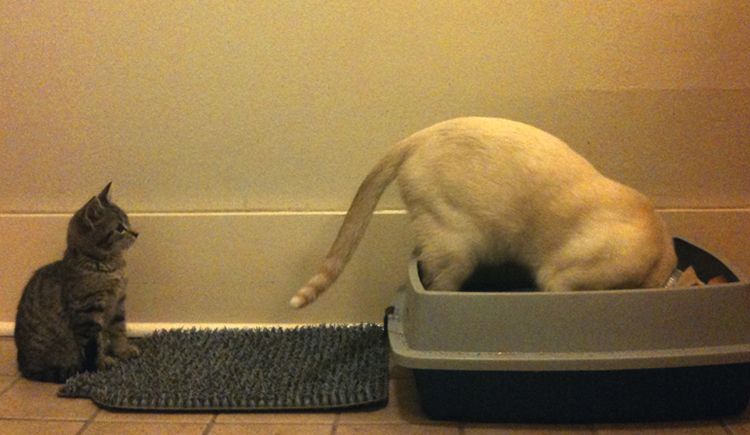
Note: According to veterinarians, another reason for eating cat feces is that, like cat food, feces contain a high amount of protein, whereas dog food contains virtually no protein. This is because excess protein is dangerous for a dog's body: it can trigger kidney disease.
- Fear of punishment. Dogs may eat not only cat feces but also their own excrement. This behavior can occur in pets that have previously been harshly punished for leaving their poop in inappropriate places. To avoid further punishment, the dog immediately tries to cover its tracks by eating its own feces.
Some dogs not only eat but also roll in feces. This is usually an attempt to disguise their scent, either as a result of their hunting instinct or as a result of stress and fear, when they're trying to camouflage themselves from a source of danger.
What are the dangers of coprophagia?
-
Infectious risks: feces contain many bacteria, viruses and parasites, which can lead to gastrointestinal diseases.
-
Toxicity: possible toxins and hazardous substances (especially when eating other people's droppings).
-
Potential infection with worms and protozoa- especially dangerous when in contact with the excrement of other animals.
What to do
Since there's no clear cause for this negative habit, there's no definitive algorithm for what an owner can do to stop a dog from eating feces. A comprehensive approach is the most effective in this situation.
Find and eliminate the cause
To do this you need:
- review the dog's diet;
- give your pet enough attention (take it for walks more often, play actively);
- to engage in education and training;
- consult a veterinarian about your dog's nutrition and health, and check for helminths;
- If necessary, undergo treatment prescribed by a veterinarian.
Abandon punishments
To break this unpleasant habit, don't resort to forceful methods. If you notice your dog about to eat another batch of feces during a walk, you should:
- attract the dog's attention and call it to you;
- reward him with a treat when he comes;
- switch your attention to another activity (jogging, playing with a ball or stick, etc.).
Approximate action plan
-
Diagnosis by a veterinarian (tests, exclusion of diseases).
-
Formulation of a new diet with the addition of complex vitamins/enzymes.
-
Change the feeding schedule: more frequent and smaller portions.
-
Removing feces immediately after defecation.
-
Training: command "No" + immediate reward for refusing to eliminate feces.
-
Substitution of activities: games, walks, toys.
-
Recheck with your veterinarian in 2-4 weeks.
Prevention recommendations
-
Regular health checkups
-
Keeping areas where your dog usually walks clean
-
Maintaining interest in life – new walking routes, attention, games
-
Monitor your emotional state: avoid stressful situations and strong punishment
Eating one's own feces (coprophagia) is an unpleasant but often treatable problem. It's sometimes temporary, especially in puppies, but if the behavior is persistent, it's important to investigate. The key steps are to rule out medical causes, optimize nutrition, correct the behavior through training, and strengthen the emotional bond between you and your pet. This comprehensive approach will help restore your dog's healthy habit and reduce the risk to their health.
When going for a walk, don't forget your pet's favorite toys and treats. While outdoors, don't leave your pet to his own devices. Instead, give him maximum attention, train him daily, and teach him to obey commands. The most important thing for a dog is to receive attention and love from his owner. Positive emotions and reinforcing obedience with treats and games will be much more effective than yelling and harsh punishment.
Read also:


Add a comment