
When do kittens change their teeth?
When do kittens lose their teeth? Sometimes, animals are adopted by new owners very early. It's important to know a lot about their development, body characteristics, and care to raise a beautiful and healthy animal. This includes, of course, being aware of the process of kittens losing their baby teeth—at what age this occurs and what symptoms they exhibit. We'll cover that today.
A cat's teeth are a formidable weapon of their wild ancestor and a "tool" for the quality nutrition of the modern domestic cat. Owners who care for their pet (or pet, if it's a male cat) should monitor their teeth from the moment the cat arrives. And not just monitor them, but care for them, as dentists say, "their oral cavity!"
Content
- 1 Characteristics of teeth growth in kittens
- 2 Mechanisms of the process of tooth replacement
- 3 When do cats change their teeth?
- 4 Delayed tooth change and its diagnosis
- 5 Special cases and variations
- 6 Oral diseases in cats
- 7 Caring for kittens during teething
- 8 Nutrition and supplement recommendations during teething
- 9 Maintaining comfort and relieving discomfort
- 10 Monitoring and control deadlines
Characteristics of teeth growth in kittens
U adult A healthy cat has three dozen permanent teeth (kittens have four fewer, a total of 26) – 12 incisors on the upper and lower jaws, four canines, three molars on the upper jaw, and four on the lower jaw. All of these teeth should be white or cream-colored, strong, and free of inflammation and decay. The gums should be pink. Much depends on the quality of the animal's diet, but it's also important to consider when and how the kitten's teeth were replaced and the care provided by its owners during this period.
Mechanisms of the process of tooth replacement
When we talk about kittens changing teeth, it is useful to know:how exactlyThis happens at the tissue and structural level - not just "baby teeth fall out, permanent teeth grow in," but through what stages and processes.
-
During the period of change, milk teeth (temporary) are subject toroot resorption— special osteoclast cells destroy part of the root, which leads to weakening of the tooth and its loss.
-
In this case, the crown of the baby tooth is preserved until the permanent tooth puts pressure on the socket.
-
Permanent teeth develop in the bone tissue beneath the baby teeth, and when they reach the desired stage, the bone and gums begin to restructure, paving the way for them to emerge.
-
Sometimes teeth do not erupt perfectly vertically; there may be deviations in their trajectory—this slightly increases the risk of delayed replacement or retention.
When do cats change their teeth?
Owners who recently adopted a small cat or kitten are constantly asking veterinarians and online forums: When do kittens lose their teeth? Meanwhile, owners are the first to know when their pet's incisors, canines, premolars, and molars are starting to grow. And you don't even have to look inside their pet's mouth to see it.
A kitten whose teeth are changing dramatically changes its behavior. It becomes restless, meowing loudly and frequently, signaling discomfort to its owners. The little cat also begins chewing on everything in sight. Slippers—slippers—cords—cords—the owner's hands—hands, and even feet! Anything can end up in a cat's itchy mouth. Clothes, toys, books (especially thick ones with appealingly voluminous spines), pencils, and computer mice… Keep an eye on them!
In general, during the period when kittens are teething, owners are required to pay close attention and monitor their pet's behavior. This also requires competent, well-thought-out care, from nutrition to thorough oral hygiene. This is essential to ensure that the cat's permanent teeth grow in strong and properly, and that the gums and mucous membranes remain free of inflammation.
Kittens are born completely toothless, and their teeth begin to emerge only at two weeks of age. During this period, kittens—just like little children—are very restless and will try to scratch their gums on anything, from their own paws and the fluffy tails of littermates to the edges of a basket or bed.
At 3, 4, or even 5 months of age (much depends on the breed and the individual's development), cats begin to change their teeth. This happens gradually, in stages, so to speak: first the incisors, then the canines, and then the premolars and molars. By seven months, this "dental exchange" is complete for almost all domestic felines.
Of course, anyone who gets a cat must be aware of kitten teething—when and how it happens—in order to provide their pet with special, nutritious nutrition during this period. In general, during this difficult period, the animal requires special care and maximum attention from its owner.
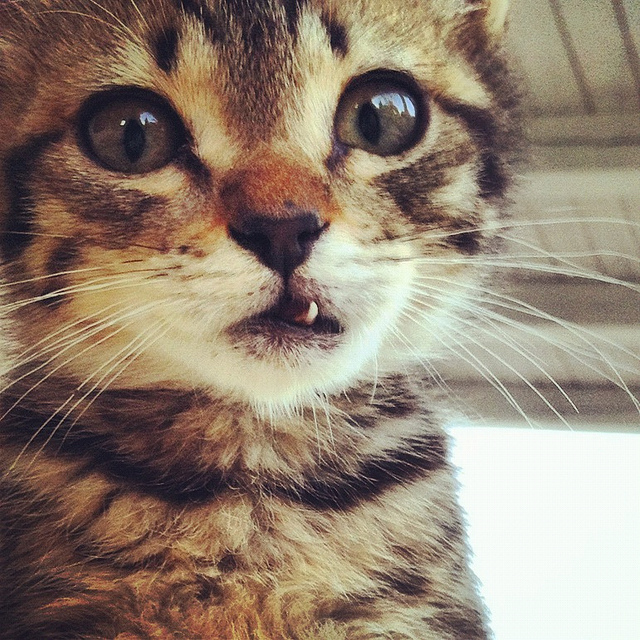
Do kittens lose their baby teeth?
Yes, kittens are just like little kids. And their tiny, sharp teeth change the same way—they fall out. dairy, permanent teeth grow in. Therefore, the question that many owners ask: do kittens lose baby teeth? The answer is a resounding yes. Moreover, if for some reason not all of the kitten's temporary teeth fall out, they will need to be removed by a veterinarian.
Why remove them? Because excess teeth in a pet's mouth can lead to injury to the soft gums, causing wounds and ulcers on the mucous membrane. Furthermore, more serious problems with the bite and even with the cat's jaw bone tissue can arise. And such a "minor" problem as periodontal disease is a sure thing for a pet.
Delayed tooth change and its diagnosis
Sometimes kittens don't follow the normal pattern of teething: baby teeth stay longer, or permanent teeth don't erupt on time. This phenomenon is often calledretention of baby teethordelay in replacement.
Signs of delayed tooth change:
-
A baby tooth remains next to an already erupted permanent tooth, resulting in a “double tooth”
-
The permanent tooth is erupting from the side, not in its previous position
-
Malocclusion: crowding, crookedness
-
Chewing dysfunction, discomfort in a kitten
-
Inflammation and damage to the gums or adjacent teeth are possible.
For diagnostics the following are used:
-
Visual inspection - presence of double teeth or baby teeth next to permanent teeth
-
Palpation - feeling of tense areas, resistance
-
Targeted radiography of the jaws - allows you to see the rudiments, the position of the roots, the presence of permanent teeth, the degree of resorption of the roots of milk teeth
If a delay is confirmed, the veterinarian may decide to intervene - remove the baby tooth, adjust the position of the permanent tooth, or wait and observe the situation.
Special cases and variations
Kittens' teething cycles can vary, especially depending on breed, genetics, and individual characteristics. Here are some possible variations:
-
Slow change in large breeds— In cats of large breeds (or hybrids), teeth may take a little longer to form, since the jaw and bones are larger.
-
Unusual shift sequence— sometimes premolars change earlier or later than “according to the plan”, especially if there is a displacement of the rudiments.
-
Absence of a permanent tooth(agenia) - in rare cases, one of the permanent teeth is not laid down embryonically at all, and the baby tooth remains in this position forever (unless it is removed).
-
Ankylosis of a baby tooth— a baby tooth can fuse with the alveolar bone, which prevents it from falling out naturally.
-
Retention of a permanent tooth— when the rudiment of a permanent tooth is present, but it does not erupt and remains intraosseous.
It is important to consider and discuss such variations with your veterinarian, especially if the timing of the change is significantly delayed.
Oral diseases in cats
For some reason, many owners are convinced that kittens and adult cats are immune to dental problems. After all, animals don't smoke, drink coffee, or eat sweets, so how could they develop inflammatory and destructive processes in their mouths? But it turns out—anything can happen!
One of the most serious problems in a cat's mouth is tartar. It tends to accumulate where the gums aren't tightly attached to the teeth, or where there are healed wounds or ulcers. Therefore, even if kittens' baby teeth don't fall out on time, they need to be removed. This is a simple procedure, performed in a veterinarian's office and in just a few minutes. This will make things easier for both the kittens and the owners. This includes the future of their pet. Read on to learn more. How to remove tartar from cats on our website.
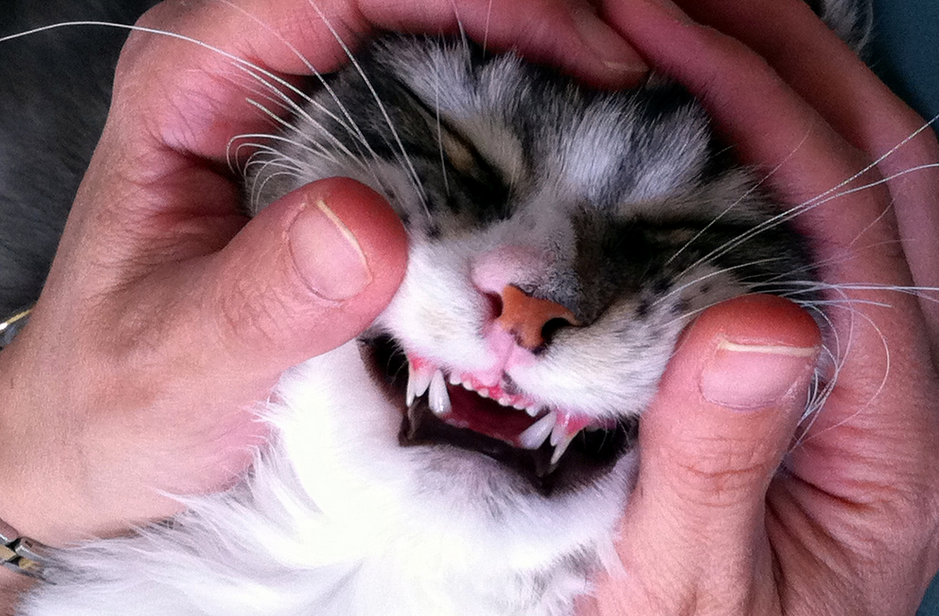
Caring for kittens during teething
Kittens who are teething require special care, as sometimes this process does not go as planned.
Proper nutrition
Kittens need to be cared for properly during their teething period. First and foremost, it's important to consider their nutrition during this challenging period. During teething, a pet's diet must contain essential nutrients such as calcium and phosphorus. A deficiency of these nutrients can lead to softening of the growing permanent teeth and subsequent decay. Furthermore, a cat's teeth may develop unevenly, which can further impact the chewing ability and complicate digestion.
If a kitten's daily diet is poor in the vitamins and microelements it needs, owners should consider purchasing special vitamin and mineral supplements.
Don't be surprised if your puppy suddenly refuses to eat during this period. They may experience discomfort in their mouth and have difficulty chewing. However, if the refusal to eat lasts for more than a day, it's important to consult a veterinarian to rule out more serious health issues than teething.
The fact is that cats, no matter how domesticated they've been for centuries, remain carnivores with unique digestive systems. And prolonged fasting (more than two days) has a profoundly negative impact on their gastrointestinal tract. It's important to know that a healthy kitten, not burdened by anything other than teething, will never refuse its food bowl more than once. It will eat even despite some pain in its mouth. Only much more serious illnesses can stop it from eating.
Raising a kitten is the key to its future health.
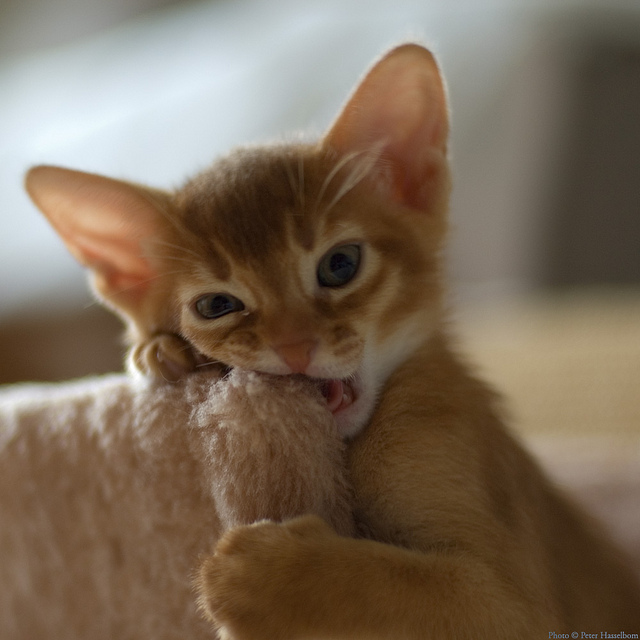
Caring for kittens during teething also requires maximum attention from owners and mandatory behavioral correction. Don't let your kitten chew on anything. Wires, scraps of fabric, rubber, and plastic from toys are very bad for a cat's stomach, leading to intestinal or bowel obstruction, which can lead to complex and expensive veterinary surgery, potentially deciding the difference between life and death.
You should also avoid letting your kitten chew on your owner's hands and feet during play or just for fun. While this won't lead to any serious consequences, it can develop a bad habit that will be extremely difficult to break. Even later, an adult cat with fully formed, strong, and sharp teeth will still enjoy playfully sinking its incisors and canines into human limbs. You might get used to it, but guests, for example, are unlikely to appreciate it.
Nutrition and supplement recommendations during teething
While many articles mention the soft diet, it's helpful to go deeper:
-
During the period of teeth shifting, it is recommended to increase the intake of calcium and phosphorus (with natural feeding) - they participate in the mineralization of bone tissue and support the growth of teeth
-
Supplements of vitamin D and trace minerals (magnesium citrate, zinc) may be helpful, but only after consultation with a veterinarian to avoid excess.
-
The food should be soft enough, but with elements that the kitten can chew, so that the incentive for chewing remains
-
Introducing slightly chilled foods into the diet (for example, a piece of carrot, a refrigerated teether) helps reduce itching and soreness of the gums
-
It is important to avoid too hard pieces that can injure the gums or interfere with proper changing.
Maintaining comfort and relieving discomfort
To make it easier for your kitten to cope with the period of teething, you can take some measures:
-
Provide chilled chew toys or soft teethers
-
Gently massage your gums with a clean finger or gauze (carefully!)
-
In case of severe discomfort, painkillers/anti-inflammatory drugs are prescribed as directed by a doctor.
-
Immune support – vitamins, balanced diet
-
Behavior control - do not allow chewing on prohibited objects (wires, furniture, etc.)
Monitoring and control deadlines
To ensure that teeth are changing normally, it's helpful to keep a checklist of sorts. Here's an example:
| Period | Action | What to check |
|---|---|---|
| Every 2-3 weeks | Visual examination of the mouth | The presence of erupting permanent teeth, loose milk teeth |
| If a delay occurs | See a veterinarian | X-ray examination, assessment of the position of the rudiments |
| At the age of ~7–8 months | Final assessment | A complete set of permanent teeth, bite, position of teeth |
This approach helps to notice deviations in time and intervene in a timely manner.
Kitten Oral Hygiene
Furthermore, oral hygiene is an important part of caring for a kitten during teething. It's important to acclimate your kitten to oral hygiene from an early age to avoid the hassle of dealing with adult teeth. It's best to start with play—let the kitten get used to a special pet toothbrush and lose its fear of it. They'll also be happy to grab the bristly head, especially if their gums itch as they shed their baby teeth and expose their permanent teeth.
The key is to do this regularly, as this will help your pet get used to the hygiene procedure and allow it to be performed. This will help prevent future complications such as tartar (and associated gum inflammation) and periodontitis (tissue inflammation and associated destruction of the alveolar bone).
Any questions? You can ask our website's staff veterinarian in the comments below, who will answer them as quickly as possible.
Read also:
- Brushing a cat's teeth
- Gingivitis in Cats: Symptoms and Treatment
- My cat has a toothache: what to do


27 comments
Tatiana
Good evening, my 10-month-old cat, Stepan, has stopped eating. If he takes a bite, he starts screaming, apparently in pain. I looked in his mouth and saw a swelling near his canine tooth, hanging like a bag. How can I help our little one?
Daria is a veterinarian
Hello! There are several possibilities. It could be gingivitis—inflammation of the gums (possibly from an injury caused by hard food or a bone, if your cat eats natural food)—or an abscess (again, due to an injury or an infection caused by teething). It's also possible that your cat has developed tartar, which could have triggered further gum inflammation. It's best to visit a veterinarian so they can carefully open the cavity, determine what exactly is inside, flush it, clean it, and prescribe a course of antibiotics.
Kira
Hello, my 5-month-old kitten is currently teething. The tips of the new teeth are already protruding, and the gum tissue around each one is red, but not very swollen. His mouth has an unpleasant odor. My question is: should I treat his gums with anything to prevent inflammation? For example, chlorhexidine, peroxide, etc. He usually eats high-quality wet food in the morning and evening, and dry food during the day. Should I avoid giving him dry food for now to avoid further trauma?
Daria is a veterinarian
Hello! Hydrogen peroxide and chlorhexidine are not recommended, as there's a high risk of accidental ingestion. It's best to apply Metragyl Denta ointment and add antibiotics to suppress pathogenic microflora, which could only worsen the situation. Indeed, it's best to limit the food to soft foods for now, so that hard particles don't further damage the mucous membrane. However, it's a good idea to see a veterinarian to rule out gingivitis, stomatitis, and periodontitis. Otherwise, if left untreated, tooth loss will occur and the inflammatory process will spread deeper into the jaw.
Tatiana
Good afternoon. My Bengal is 4 months old. Can I ask if canines are always supposed to double when they change? My lower canine fell out today, and there's no sign of a molar yet. Thank you.
Daria is a veterinarian
Hello! Not necessarily. It's individual. A new tooth should gradually emerge over the next couple of weeks (it will rise slowly). It's possible the kitten chewed on something hard, which accelerated the loss of the loose tooth. But don't worry. The new one will come out, too, where else can it go? =)
Elena
Good evening!
Please tell me, we got a 2.5-month-old bobtail kitten three weeks ago. The breeder fed him Whiskas for kittens. We continued with Whiskas for a week, then started feeding him Royal Canin for kittens. From the very beginning, his breath has smelled terrible. Is it the food that's causing it, and will the smell go away over time, or is there another reason? He has a good appetite and is playful.
Thanks in advance.
Daria is a veterinarian
Hello! Well, first of all, I (and most practicing veterinarians) don't trust a breeder who feeds her pets (especially growing kittens) Whiskas. The animal now needs to be taken in for a checkup (to rule out gastritis, especially considering the bad breath). What kind of smell is coming from the mouth? Is it rotten or is it the food (maybe it has a fishy taste, hence the specific smell)? Is it an original European food or a Russian-made one? Observe your pet. And remember, the transition to a different food should be gradual.
Elena
Royal Canin Russian food.
The smell from the mouth is definitely not food.
It might be because their teeth are starting to change. What food do you recommend?
Daria is a veterinarian
Hello! Russian Royal Canin is the same as KitKat and Whiskas (they're essentially the same manufacturer). Buy European food (France, Austria, Great Britain, Germany, Spain, Italy); there are some good ones from Canada. Just look for a good store. Check the food certificates once to make sure the food is truly European. Switch to the Gastrointestinalis series (for animals with gastrointestinal diseases) for 2-3 months. There won't be any odor when teeth are being replaced. The problem is either with the oral cavity or the stomach. Gastritis can cause bad breath. Tartar also creates odors.
Rashid
Hello! I'm not sure how old the kitten is, but about a week ago, he lost his second lower canine tooth. His appetite is normal. He sleeps most of the day and plays, too. However, a clear liquid is leaking from his nose (intermittently). Could this be related to his teething? Or is there something more serious going on? I found him by accident in my house. He must have been hiding from the cold when the door was open.
Daria is a veterinarian
Hello! Teething, like in children, can be accompanied by a slight runny nose and fever, as the immune system is weakened. Any exposure to cold or drafts can lead to a cold. Monitor your pet closely (especially if they haven't been vaccinated against infectious diseases). If the discharge becomes purulent, or the body temperature rises, a cough, or other symptoms develop, contact the vet. In the meantime, improve your pet's diet and add vitamins to restore their energy and give them the strength to fight back.
Galina
The kitten is 4.5 months old, a mixed-breed Siamese. His back fangs are yellowish, his gums bleed on one side when pressed, they are swollen and red on top, and his mouth smells rotten. He plays, isn't losing weight, and eats everything we give him, mostly liverwurst. He has a 100% appetite.
Daria is a veterinarian
Hello! Your pet appears to have gingivitis—an inflammation of the gums. It's important to see a veterinarian to confirm the diagnosis. Check to see if tartar has formed at the root of the tooth (under the gum) and needs to be removed. In any case, your pet needs treatment, otherwise she'll lose her teeth.
Catherine
Hello, my kitten isn't eating well (not like usual, but he's not refusing food). He's lethargic and has occasional difficulty breathing (a slight whistling sound and a noise in his nose). What could this be? My kitten is 4 months old. He eats homemade food—boiled vegetables, oats, buckwheat (without additives), chicken, baby meat puree, cottage cheese, and cat grass. He doesn't drink milk. A month ago, he was diagnosed with a fractured femur and is taking capsules of Caforsen as prescribed by his veterinarian.
Daria is a veterinarian
Hello! You mentioned nutrition, but nothing about vaccinations or deworming. Has your cat's temperature been taken? Could he have caught a cold (maybe he was in a draft, sitting on a windowsill, running outside, or lying on a cold floor or tile)? Are his eyes watery? Are he sneezing? Is he coughing? Is his nose runny or just stuffy? How long have these symptoms been present?
Hope
Will the baby teeth fall out on their own? There's no qualified veterinarian within 100 km. I'm too old to travel. The lower canines have been replaced correctly, but I've developed a problem with the upper ones: the new ones are already half the size of the baby teeth, and the baby teeth aren't even loose.
Dasha is a veterinarian
Good afternoon! If your permanent teeth are halfway out, and your baby teeth aren't even loose, they definitely need to be removed. Otherwise, the permanent teeth will simply grow crookedly, and your bite will change. They can even start to push other teeth into each other, causing gaps or overlapping teeth. The problem isn't so much aesthetics, but rather that a misaligned bite will make it more difficult for your pet to eat. If you can't do it yourself, ask a family member, friend, or neighbor to take your pet into town. Have you tried giving them special chew toys or hard treats made of connective tissue to loosen the baby teeth?
Alena
Good evening, I ask you to help my Scottish fold, he is 6 months old, his lower jaw is deformed, the vet filed down the lower molar, after which on the second day a flux formed on his upper lip, and now everything is inflamed, on that side, teeth are cutting, profuse salivation, the flux was pierced, blood came out, but it remained swollen, everything does not eat anything, only drinks, they say it is because of the change of teeth, and they also say that there are signs of herpes, today I found an ulcer on my tongue, and something similar on my upper lip, too, the lymph node is enlarged, he prescribed injections of anflurane, placevit, trifuzol, sea buckthorn and Metrogil, please tell me what it could be!??? Chamomile, and wipe with mumiyo
Dasha is a veterinarian
Hello! Where is the molar? And who pierced the lump: a veterinarian or you at home? Give your pet immunostimulants and antiviral medications for 5-7 days. Examine the animal, get tests done, and treat according to the veterinarian's prescription. Teething in animals isn't as painful as in children. Look for the underlying cause of the problem. Rule out calicivirus, herpes infection, and other infectious diseases (PCR diagnostics).
Taisiya
Hello, can teething be accompanied by cramps and abdominal pain?
Dasha is a veterinarian
Hello! No. The teething process itself often occurs without any symptoms in pets. Abdominal problems are related to something else. It's important to find the underlying cause. Have you had your pet dewormed lately? What are you feeding them? How did you realize they were having abdominal cramps? Have you seen a vet? Have you given them anything?
Alla
Hello! Could you tell me why my 3.5-month-old kitten is periodically salivating excessively at night? The kitten is completely wet with saliva. Is this due to teething or something else?
Dasha is a veterinarian
Hello! It could be teething, or it could be an inflammation in the mouth (stomatitis, for example, causes excessive salivation). Stomatitis will definitely cause a fever, a decreased appetite (if not completely lost), and ulcers on the gums, cheeks, and under the tongue. Examine the kitten's mouth and take its temperature. Check for an abnormal bite. Has your kitten started chewing on objects or you (hands, feet)? Have you noticed any other symptoms or behavioral changes?
Adema
People, please advise me, I am suffering from joint pain, I would like to find out the causes and treatment
Dasha is a veterinarian
Hello! What type of animal is it? What's its age? What's its diet like? Any previous illnesses? How long ago did it start? What exactly is affected? What other symptoms are there? Are there any injuries? Have you taken your pet to the vet?
Nina
Yes, it's clear that chewing is prohibited without an article, but it would be better if they wrote that chewing is allowed... The stores are full of "chew" toys for puppies and nothing for kittens.
Add a comment