
Sloughi (Arabian greyhound)
The Sloughi (Arabian Greyhound) is an ancient dog breed that originated in North Africa. For centuries, it was used by Bedouins to hunt various game. Slender and long-legged, Sloughi are capable of long, fast runs. They have a strong hunting instinct and a passion for the chase. They are calm and independent by nature. They form strong bonds with their family members and, if necessary, can become protective of loved ones.
Content
 History of origin
The Arabian greyhound is believed to have a very ancient origin. The sloughi's ancestors came to North Africa (Morocco, Algeria, Tunisia, Egypt, and Libya) from the Middle East. The breed's history is subsequently inextricably linked with that of the nomadic Bedouins. They had a significant influence on the development of these dogs' hunting qualities and character. In turn, nature provided for their well-being. exterior and good health.
France's colonial possessions in the 19th and 20th centuries included Algeria, Tunisia, and Morocco. It's no surprise that the first European to describe the breed was a French general named Melchior Doma (1830-1871). In the mid-19th century, the first Sloughi were exported to France from Algeria. In the early 20th century, sighthounds from Tunisia and Algeria reached Germany and Holland. French breeders published the first official standard in 1925.
In the post-war period, many breeds in Europe were on the brink of extinction. Sloughi were no exception. In North Africa, purebred sighthounds were also virtually extinct. Due to the ban on hunting in French territories, sloughi were primarily used to guard herds, and local populations largely abandoned their purity. In the 1970s, there were just over 200 purebred dogs left. Consequently, the governments of Morocco and Algeria restricted their export. In Europe, interest in the breed revived in the 1960s, but due to the impossibility of importing them from Africa, breeders were forced to work with what remained. Thus, in Europe, the United States, and North Africa, the breed developed almost independently from the existing stock.
The breed was finally recognized by the Fédération Cynologique Internationale in 1989. At the time of recognition, the majority of the Sloughi population was concentrated in Morocco, which is why this country is recognized as the FCI's patron country for the breed.
Purpose
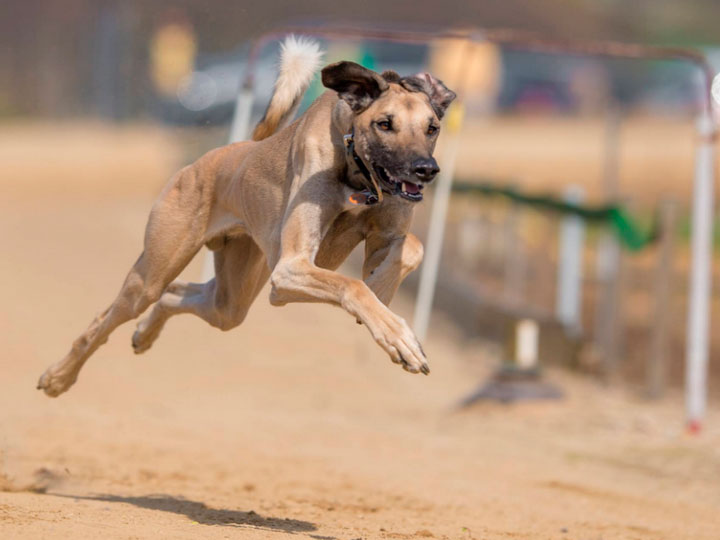
For centuries, sloughi were the Bedouins' primary weapon for hunting large and small game, including fennec foxes, hares, wild boars, and gazelles. Like other sighthounds, they have excellent eyesight, helping them spot game from a distance. When chasing prey, they can reach high speeds (averaging 45 km/h) and maintain this speed for extended periods. Arabian greyhounds are very resilient and will pursue their prey to the very end. Sloughi are also excellent guardians of homes and livestock.
Today, greyhounds are rarely used for their intended purpose, but they can become outstanding athletes or simply companions. The most suitable disciplines are coursing and greyhound racing.
Appearance
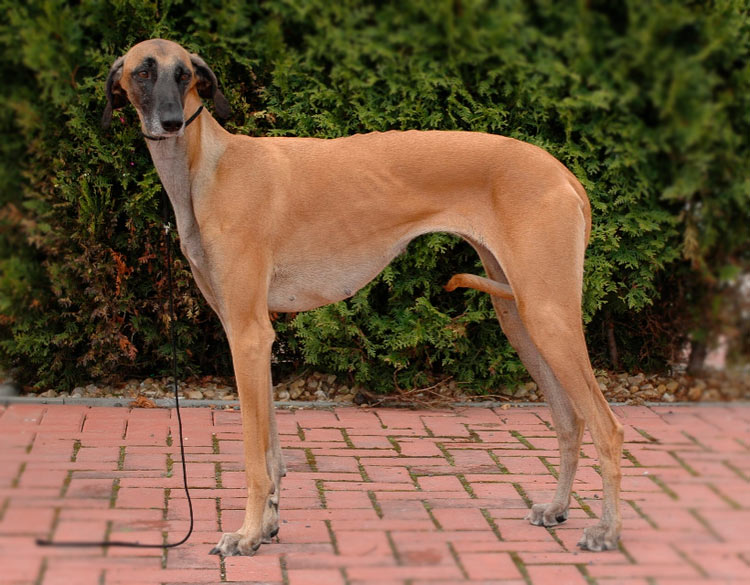
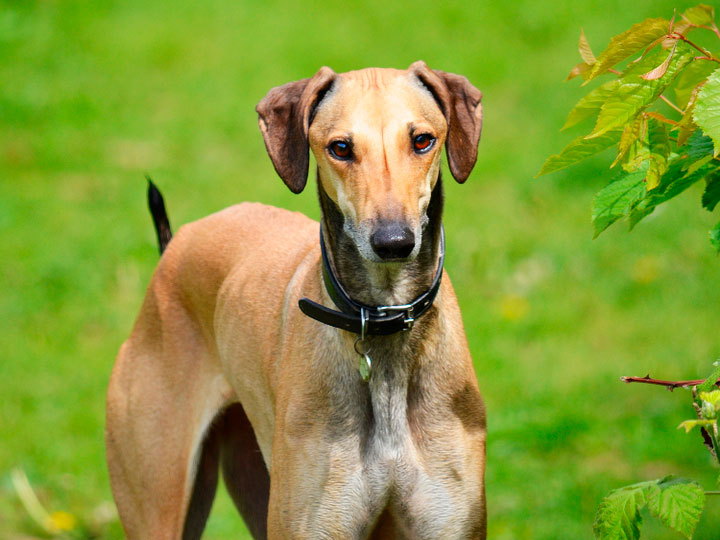
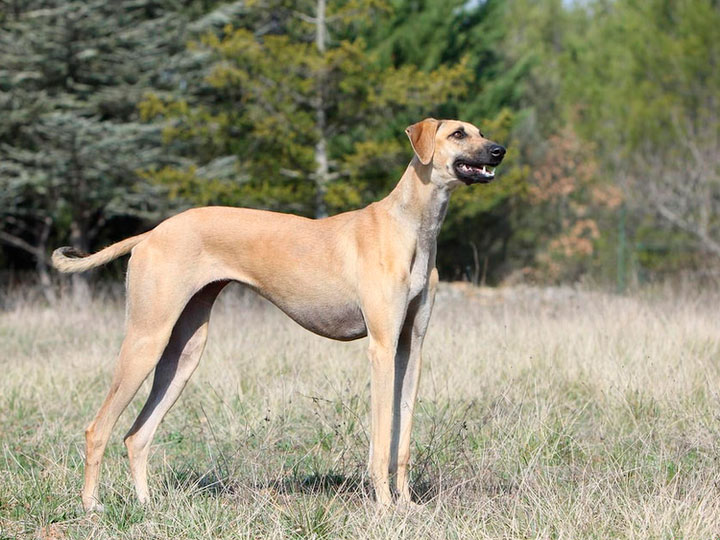
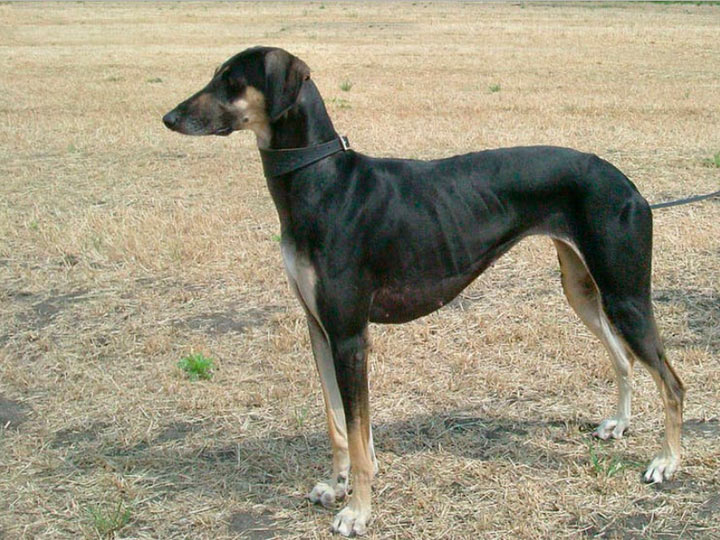
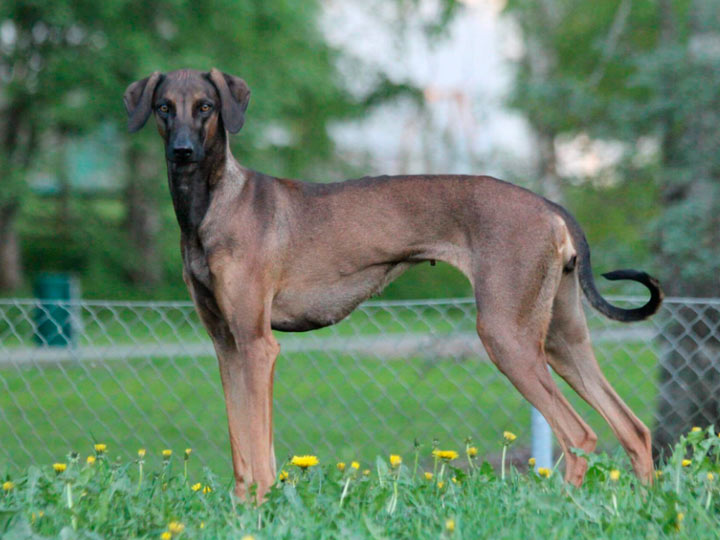
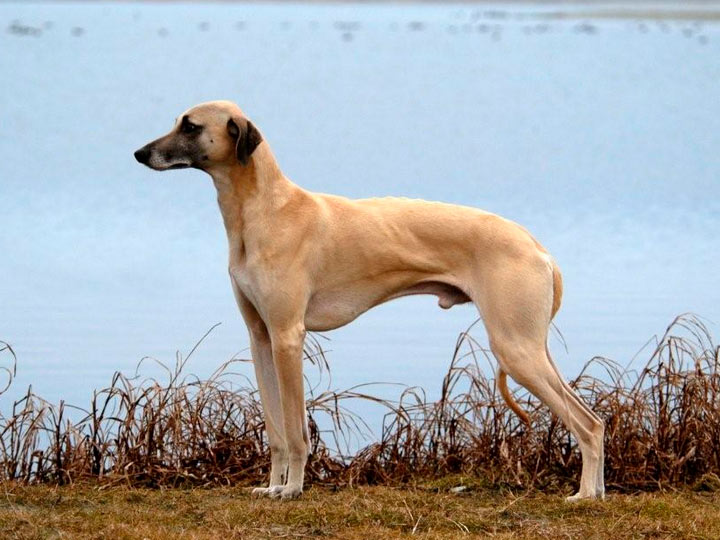
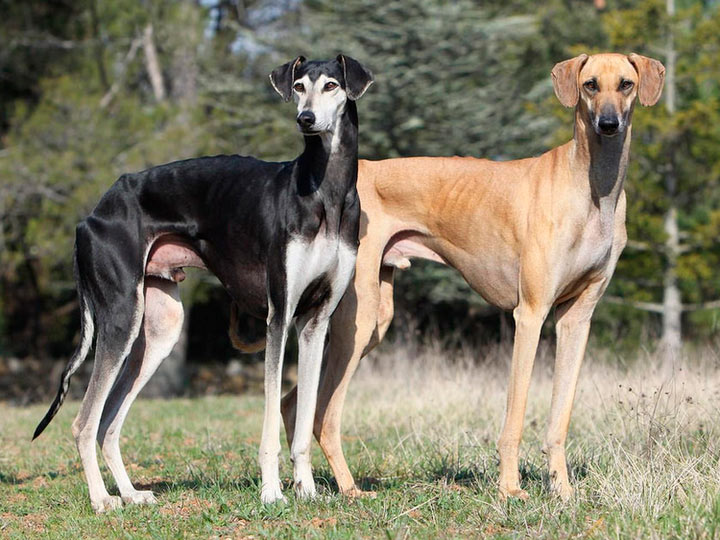
The Sloughi is tall, muscular, and strongly boned, yet relatively light. Its appearance evokes majesty and grace. Gender is clearly differentiated.
- The height at the withers of males is about 70 cm, weight is 25-30 kg;
- The height of females is about 65 cm, weight is 16-23 kg.
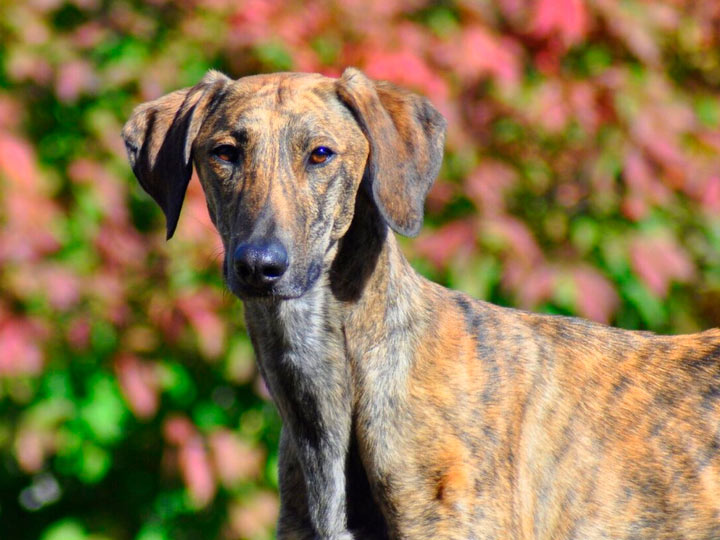
The head is wedge-shaped, long, and slightly pointed. The jaws are powerful. The ears are drooping, triangular, with rounded tips. The eyes are oval, large, and dark in color. The expression is slightly sad.
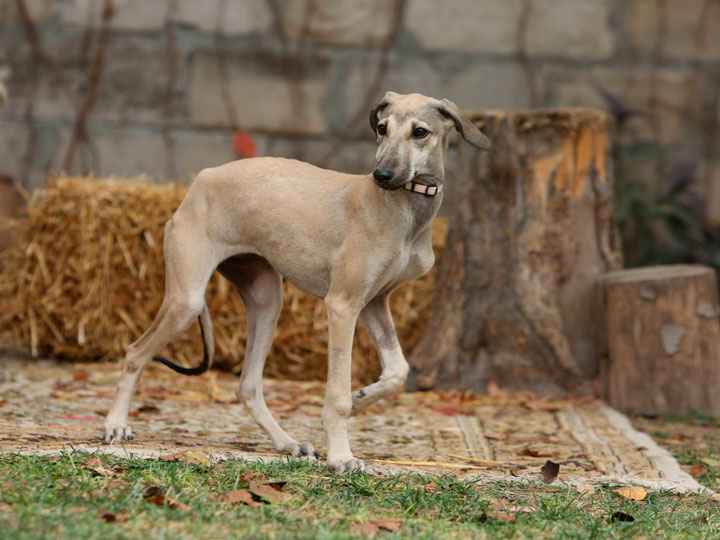
The neck is free of dewlap, gracefully arched, and slender. The chest is not broad. The back is level. The belly is strongly tucked up. The tail is a natural extension of the topline, very thin, and curls into a ring at the end. When moving, it does not rise above the back. The limbs are very long, vertical, and parallel.
The Sloughi is adapted to the rapid pursuit of game in open terrain, possessing fantastic endurance and the ability to maneuver at high speed.
The coat is smooth, short, and fine, lying close to the body without obscuring the definition of the muscles and skeleton. It is virtually absent on the belly and lower chest. The coat is red in any shade. Black may appear as a mask on the muzzle, or may be present in the form of a thick saddle, brindle, or veil. A small white spot on the chest is permitted.
The Sloughi's external appearance is similar to other Arabian hounds: Azawakh And Saluki, however, genetic studies have shown that these are different breeds, each with individual characteristics.
Character and behavior
The Sloughi standard describes its character as noble and haughty, yet the dog forms a strong bond with its owner and will defend them if necessary. Arabian Greyhounds are extremely wary of strangers. They greet acquaintances and friends with enthusiasm and get along well with older children, who value their privacy. They are tolerant of small children with proper socialization, but are not playmates. Sloughis are calm and appreciate the comforts of home. They prefer to lie on soft blankets and carpets. Walks reveal that the dog is capable of running fast and has the stamina for long periods of work.
Sloughis are tolerant of other pets if raised with them, but this does not apply to strangers. Arabian greyhounds may view a neighbor's cat or a small dog wandering in the park as prey. Almost any animal can awaken their hunting instinct. Sloughis exhibit varying degrees of dominance. They enjoy playing with other dogs, especially those of their own kind.
Sloughis are very unique dogs. They are intelligent and quick-witted, but their low obedience makes such conclusions sometimes difficult. They are stubborn and slow to obey commands, appearing disobedient or stupid. In reality, they are selective. They will only do what they believe is right and what suits their nature.
Education and training
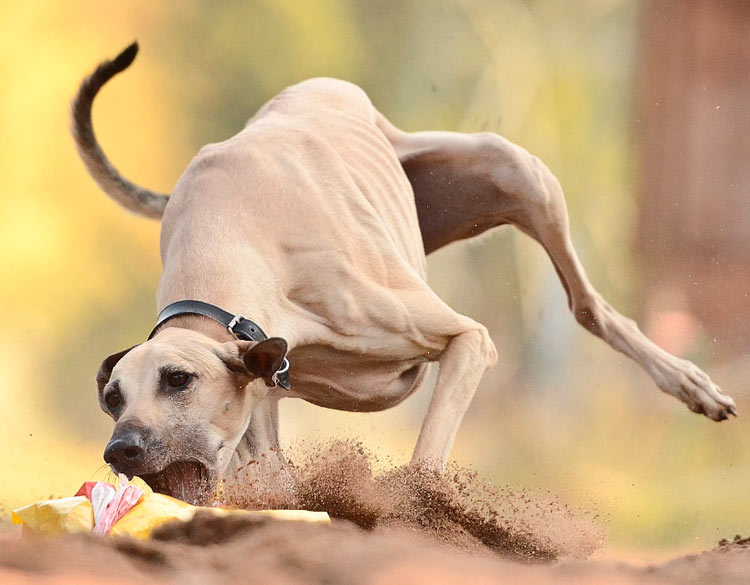
Sloughis are not a trainable breed. They cannot be expected to exhibit high levels of obedience or perform circus commands on demand, only respond to requests in everyday life. The owner's primary responsibility is to train and socialize the dog well from puppyhood. Gentle and fair training methods are appropriate. They are very sensitive and do not respond well to raised voices or physical punishment. It is also important for the dog to see its owner as a leader and mentor.
Content Features
In climates colder than those found in North Africa, Sloughis can only live indoors. They are very heat-loving and do not tolerate cold well. They are suitable for both large private homes and small apartments. A comfortable, soft bed is essential; they will not enjoy resting on a cold, hard floor.
Sloughis need long daily walks. Chasing a bicycle or car won't replace the dog's ability to run fast in open terrain, but it can be a way to prepare for competitions, such as racing. In open terrain, a Sloughi will try to keep its owner within sight and will always return after each chase.
Due to their strong pursuit instinct, Sloughis should never be walked off-leash in potentially dangerous areas, such as near roadways.In cold and damp weather, the Sloughi requires adequate insulation. When choosing clothing and equipment, consider models designed for sighthounds. Collars should be wide and loose enough. Warm clothing often has a collar and hood to protect the dog's neck and ears.
Care
Sloughis don't require complex grooming. Their coat only needs occasional brushing to remove mature hairs and minimize shedding. Bathing is recommended as needed. Typically, the dog is thoroughly washed with shampoo every 2-3 months. During colder months, less frequent bathing may be necessary, while in summer and during periods of intense exercise, more frequent bathing may be necessary. Shedding is moderate.
Sloughi wool, when not wet, is virtually odorless and self-cleaning. Dirt falls off on its own as the hair dries.
Other hygiene procedures include: examining and cleaning the ears, wiping the eyes, brushing the teeth and trimming the nails as needed.
Health and life expectancy
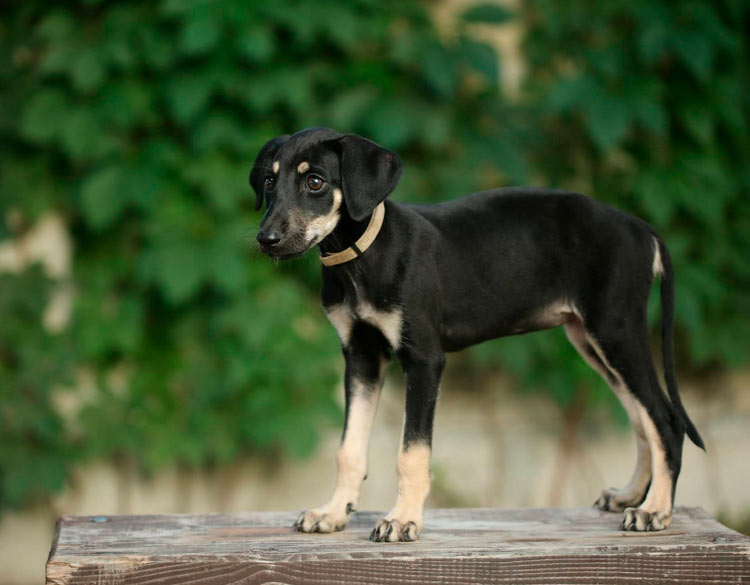
Sloughis have remained virtually unchanged since ancient times and retained robust genetic health. Life expectancy is 10-15 years. Progressive retinal atrophy is relatively rare in the breed, and isolated cases of autoimmune diseases have been reported (more often in inbred lines):
- Addison's disease;
- Atrophy of the large intestine.
Many sloughis have been shown to have increased sensitivity to anesthesia, vaccines, antiparasitic drugs and some other medications.
Where to buy a Sloughi puppy
A Sloughi puppy should only be obtained from a reputable breeder or kennel with a professional approach to breeding. Genetic testing of the litter's parents for common breed-specific diseases is recommended.
The largest number of Sloughis are found in North African countries: Morocco, Algeria, and Tunisia. Purchasing puppies there can be quite problematic due to restrictive laws. Several large kennels exist in France, the United States, and Canada. In Russia, there are several representatives of the breed, both imported and domestically bred. There are no single-breed kennels, but there are multi-breed sighthound kennels that also have a few Sloughis. One such kennel is located in St. Petersburg.
Price
In Russia and the CIS, the price of Sloughi puppies is usually determined by breeders individually. On average, the price ranges from 40,000 to 70,000 rubles.
Photos and videos
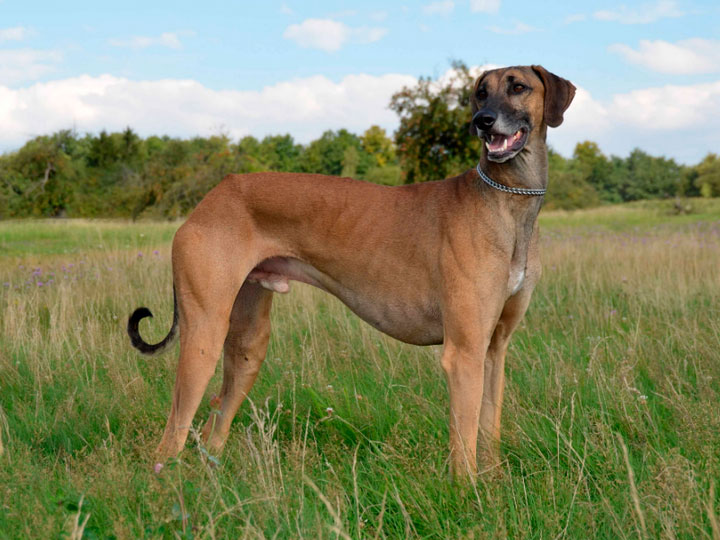
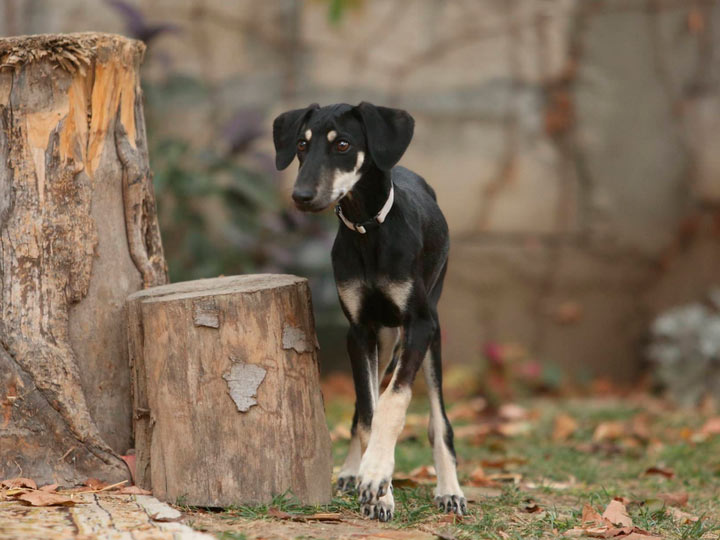
The gallery features photographs of Sloughi dogs. The photos feature Arabian greyhounds of varying genders, ages, and colors.
Video about the Sloughi (Arabian Greyhound) dog breed
Read also:


Add a comment