
Scottish Straight (Scottish Straight cat)
Scottish Straight or Scottish Straight cat The Straight is a very young breed with a beautiful plush coat, a rounded muzzle, and a balanced character. Semi-longhaired specimens of the breed are also available. Many consider Straights to be the epitome of domestic cats; they are quiet, intelligent, calm, moderately playful, and unpretentious.
Content
Breed characteristics
- original title – Scottish Straight;
- WCF breed code – SFS71;
- origin - Scotland;
- weight – Cats (4-5 kg), Cats (3-3.5 kg);
- life expectancy – from 12 to 15 years;
- character - calm, easy-going, stress-resistant.
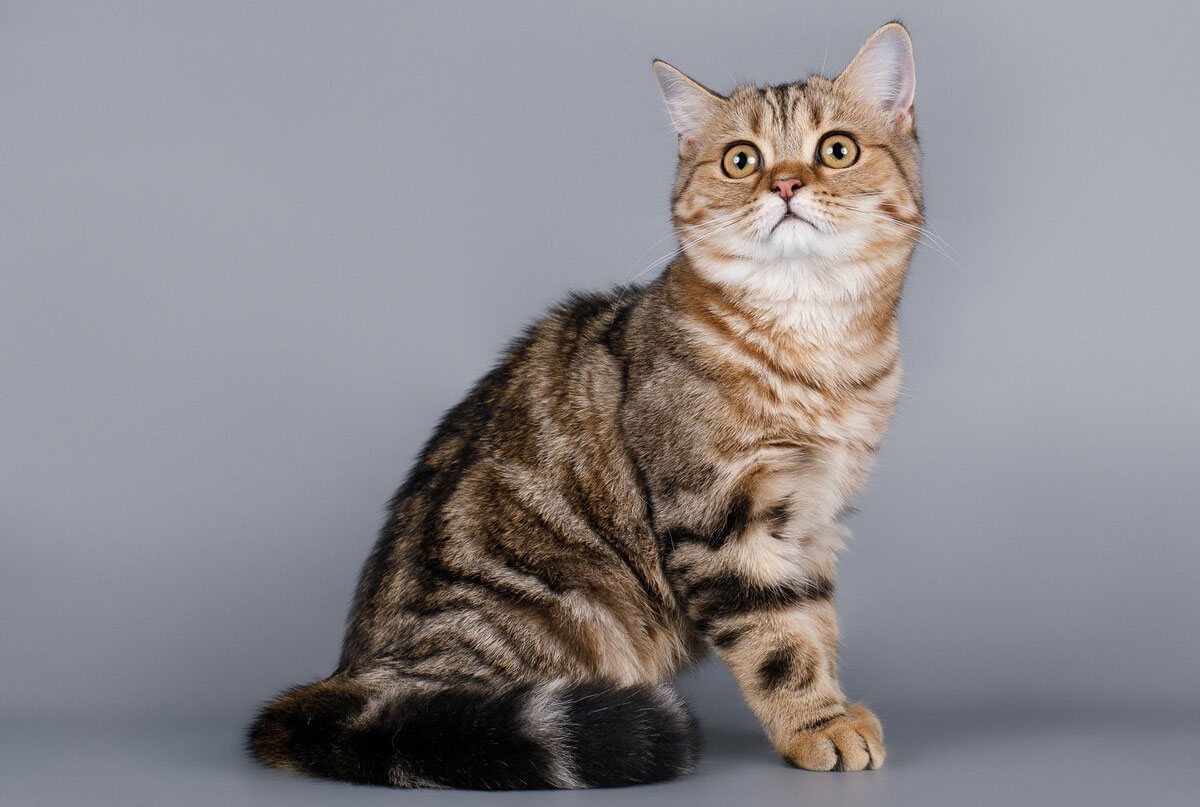
Based on feedback from Scottish Straight cat owners, we've compiled a detailed description of the breed in a convenient table format:
|
Low level |
Intermediate level |
Above average |
High level |
|
activity |
playfulness difficulty of care molting |
intelligence health affection sociability |
friendliness compatibility with other pets
|


History of the breed's origin
The history of the Scottish Straight breed is closely linked to British Shorthairs and Scottish Folds, also known as Scottish Folds. It began around 1961 in Tayside, Scotland.
On a farm near the town of Coupar Angus, an unusual kitten with floppy ears was born. They named her Susie. Two years later, she gave birth to a litter of two fold-eared kittens.
Further crossbreeding showed that breeding two fold-eared cats is impossible due to the severe mutations and bone abnormalities that appear in the offspring. However, if one parent has erect ears and the other has drooping ears, this trait can be preserved. Half the offspring will resemble the mother, and the other half will resemble the father.
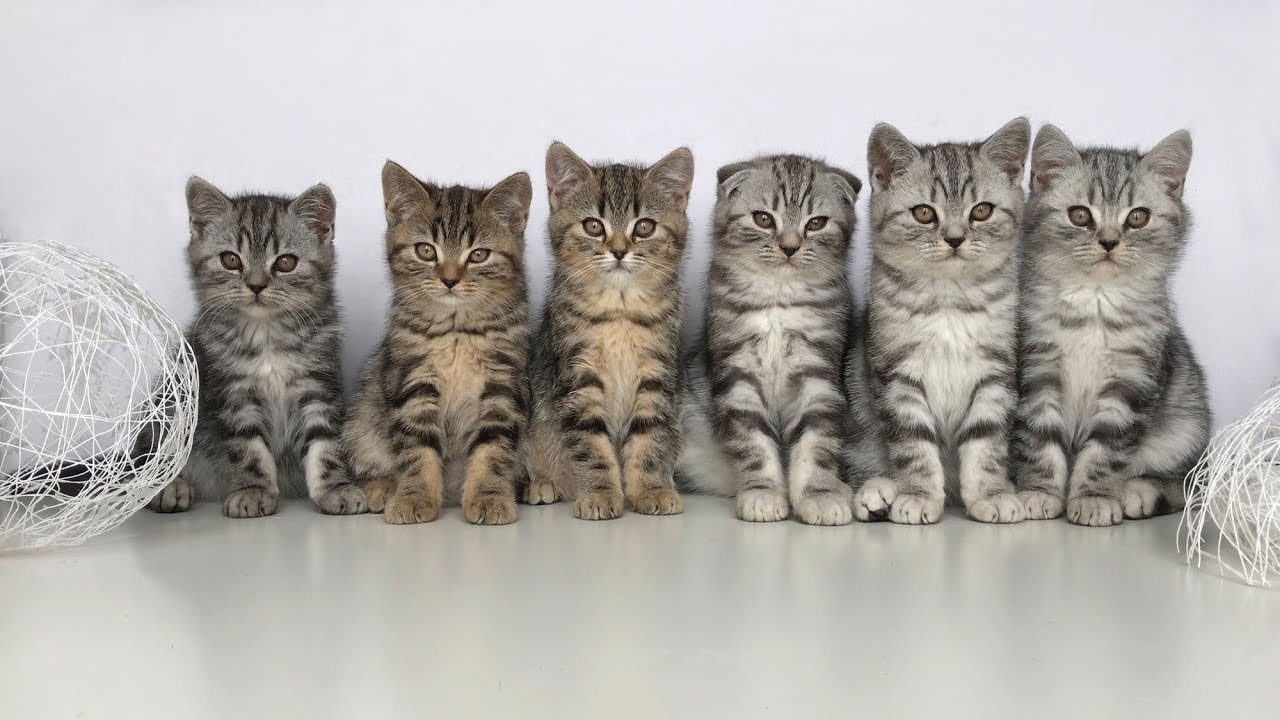
At first, crossbreeding was also allowed between by the British and Scottish Folds. Kittens with straight ears were considered British, but this only harmed both breeds, so felinologists decided to set the record straight. All straight-eared cats with folded ears in their ancestry were called Scottish, thus creating the distinction between "straights" and "folds." British cats, however, remained unaffected, and to this day, they are only allowed to breed with each other.
For decades, Scottish Straight cats, which, by the way, do not carry the fold-ear gene, were overshadowed by their mutant relatives and were regarded merely as a means of producing lop-eared offspring. But in the early 21st century, the situation changed, and the Straights were finally given their due. In 2004-2005, some felinological organizations officially registered the breed as an independent and completely self-sufficient one, especially since Folds are not needed to breed Scottish Straight cats..
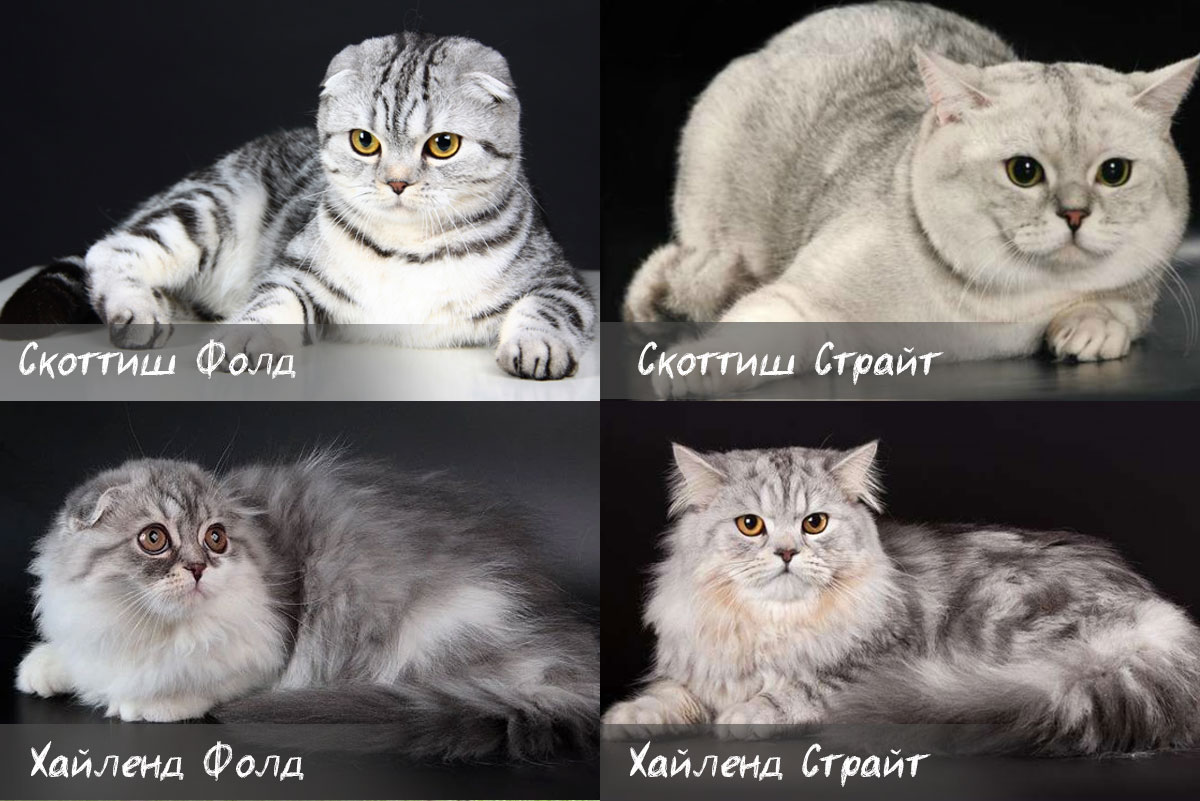
Currently, the Scottish cat is represented in the international breed classification in four varieties:
- Scottish Fold (SFS) – fold-eared shorthair;
- Scottish Straight (SFS71) – straight-eared shorthair;
- Highland Fold (SFL) – semi-longhaired fold;
- Highland Straight (SFL71) – straight-eared semi-longhaired.
Exterior (external data)
Scottish Straights are medium-sized cats with moderately long hair and elegant, rounded contours. They have a muscular build and strong limbs. Females are slightly smaller than males, weighing an average of 3-3.5 kg. Males typically weigh up to 5 kg, but large specimens weighing up to 6 kg are occasionally seen.
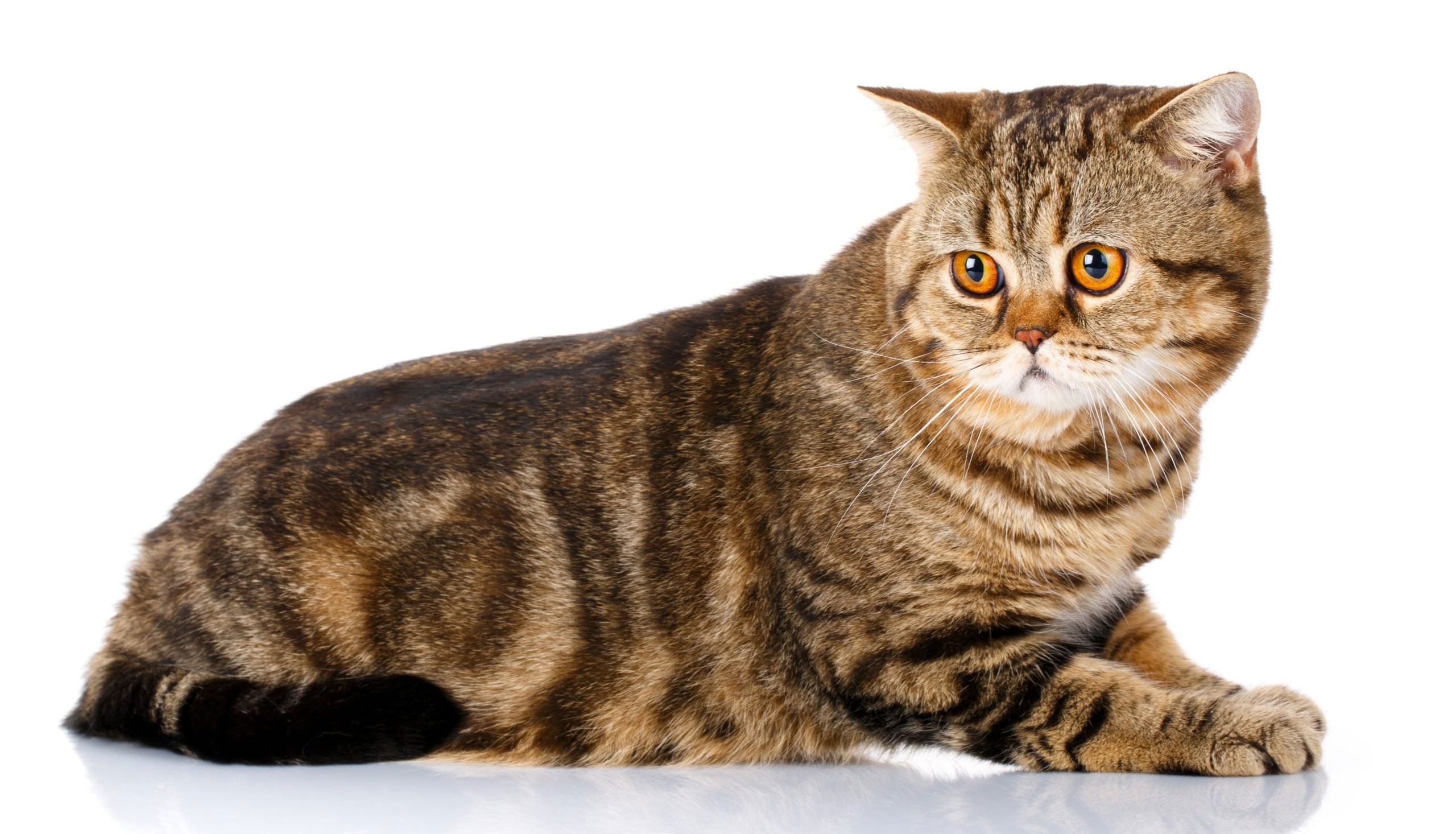
The official Scottish Straight breed standard sets the following parameters that an adult Scottish Straight cat must meet:
|
Size |
average |
|
Scull |
rounded |
|
Forehead |
convex |
|
Cheeks |
convex, significantly larger in male cats than in female cats |
|
Chin |
hard, rounded, not protruding forward |
|
Vibrissae pads |
regular oval shape, with a characteristic "swelling" |
|
Nose |
short, wide, with a slight bend, almost no stop |
|
Eyes |
large, round, set wide apart |
|
Ears |
small, erect, with a wide base, with rounded tips facing forward |
|
Neck |
muscular, short |
|
Frame |
muscular, broad, moderately long |
|
Silhouette line |
soft, rounded |
|
Paws |
moderately long, proportionate to the body |
|
Tail |
medium or long |
|
Wool |
short, plush, double |
|
Undercoat |
thick, well developed |
A detailed description of the animal according to the standard is presented in the following format
XXX.xx.NN.NN.NN.(NN)
Where:
- XXX.xx. – breed code according to the classifier;
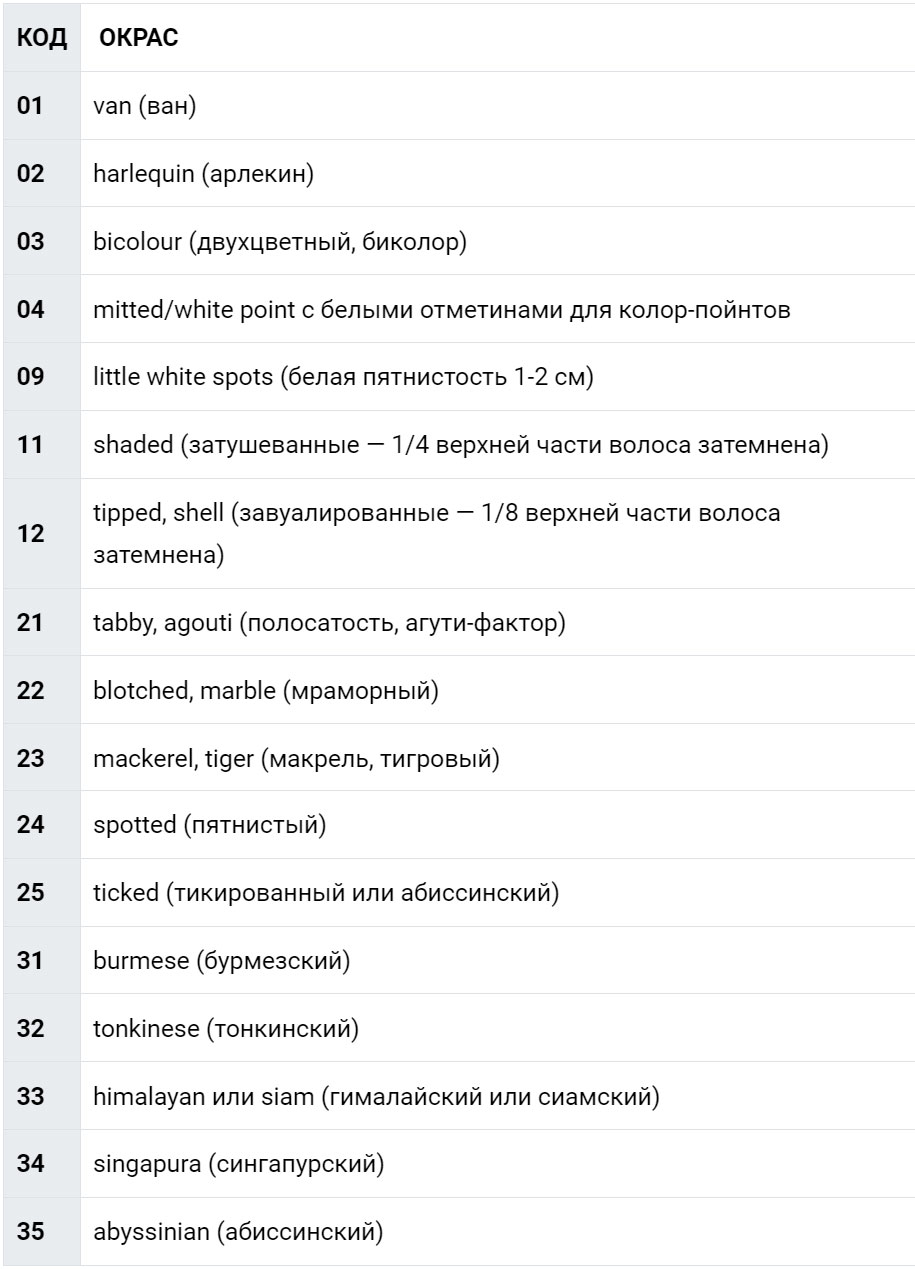
- NN.NN.NN. – color and its features;
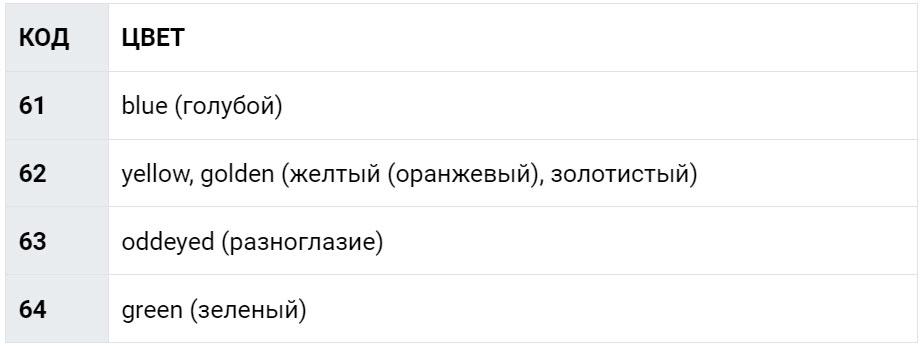
- (NN) - eye color.
Scottish Straight cats come in a wide variety of coat colors. There are 18 different coat colors:
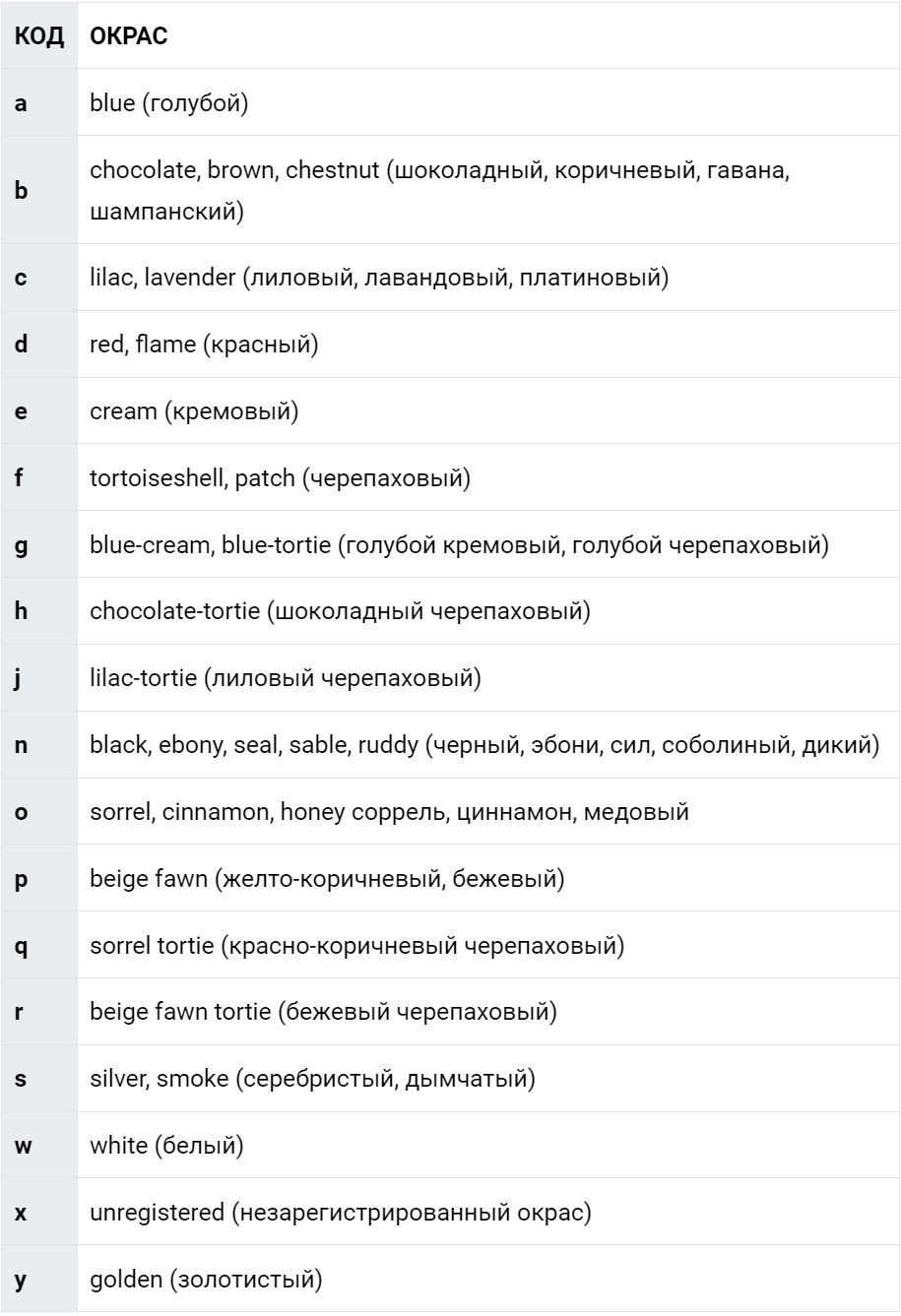
Moreover, a wide variety of shade combinations are possible, which are represented in the description of a breed representative by a combination of two numbers:
The eye color of the Scottish Straight depends on the coat color and can be green, blue or yellow (sometimes closer to orange).
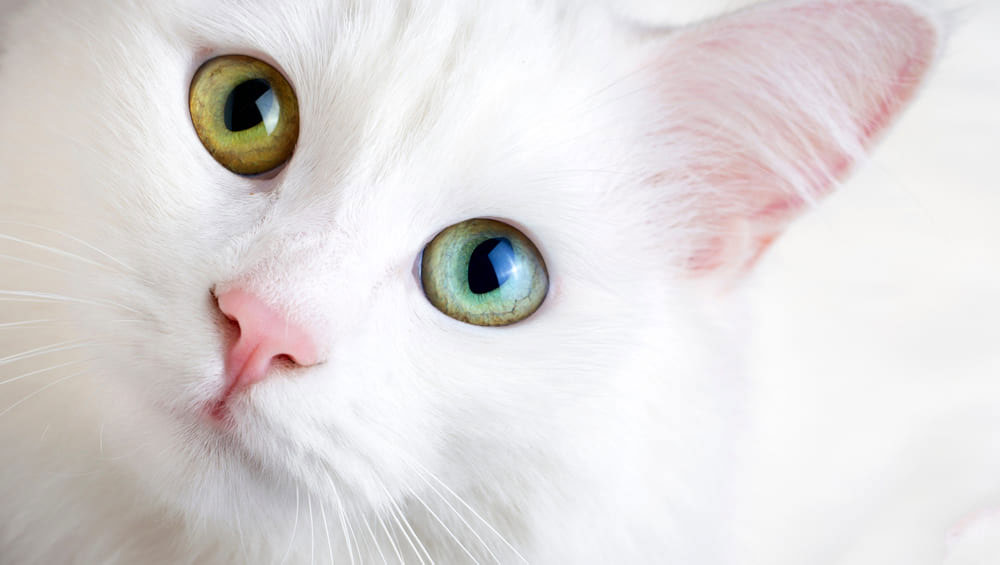
There are also straight-eared Scottish Folds with eyes of different shades. This trait is genetic and always accompanies a pure white coat. Unfortunately, animals with heterochromia are often diagnosed with complete or partial hearing loss.
Character and behavior
Scottish Straight cats are highly intelligent, yet they have a docile, gentle nature and are moderately clingy. They become very attached to their home and family, but often prefer one owner. Like other breeds in the Scottish Straight family, they enjoy being close to people or being held. They adapt very easily to new environments and people. They are not at all aggressive and are even somewhat unflappable, affectionate with children. They generally get along well with other pets and often get along with rodents and birds.
Scottish Straights tolerate short periods of solitude well, as long as they have food and favorite toys. They also thrive in noisy company. However, some will simply retreat to a quieter spot. You'll only hear a Scottish Straight in rare cases, when they desperately need something from their owner—most likely food.
One of the distinctive features of Scottish Fold cats is their unusual voice. It's quiet, unlike the usual meow. Scottish Fold cats aren't very talkative, but if they need something, they'll politely let you know.
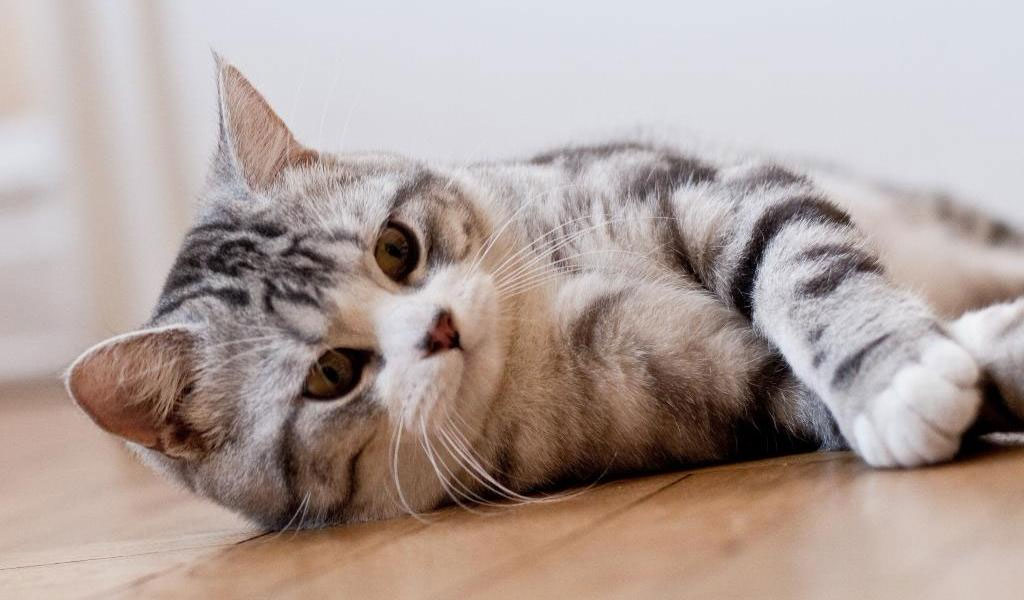
Training Straights is rarely difficult. They are obedient, intelligent animals who know what is allowed and what is not, and rarely destroy things or trash the apartment. They are quickly trained to use a litter box or scratching post.
Scottish Straight cats are an excellent choice for any family. They also have highly developed intuition. They closely monitor the mood of their owner and other family members, and are able to adapt to the various emotional states of the people and animals around them.
Scottish Straight cats are almost never aggressive, petty or vindictive.
The only thing owners should keep in mind is that this breed does not tolerate coercion, so don't try to hold them by force. Instead, be content with their cuddling and snuggling close to your thigh, happily allowing you to pet them. These sweet cats, blissfully close their eyes and purr loudly, lifting their heads and offering their necks in anticipation of a scratch. If you roughly "push" a Scottish Straight, they will never respond with aggression, attempting to bite or scratch you like other cats, but will quietly move to another spot.
Many Scottish Folds are well-trained. If the owner can engage the pet, they'll quickly learn simple commands and sometimes even tricks.
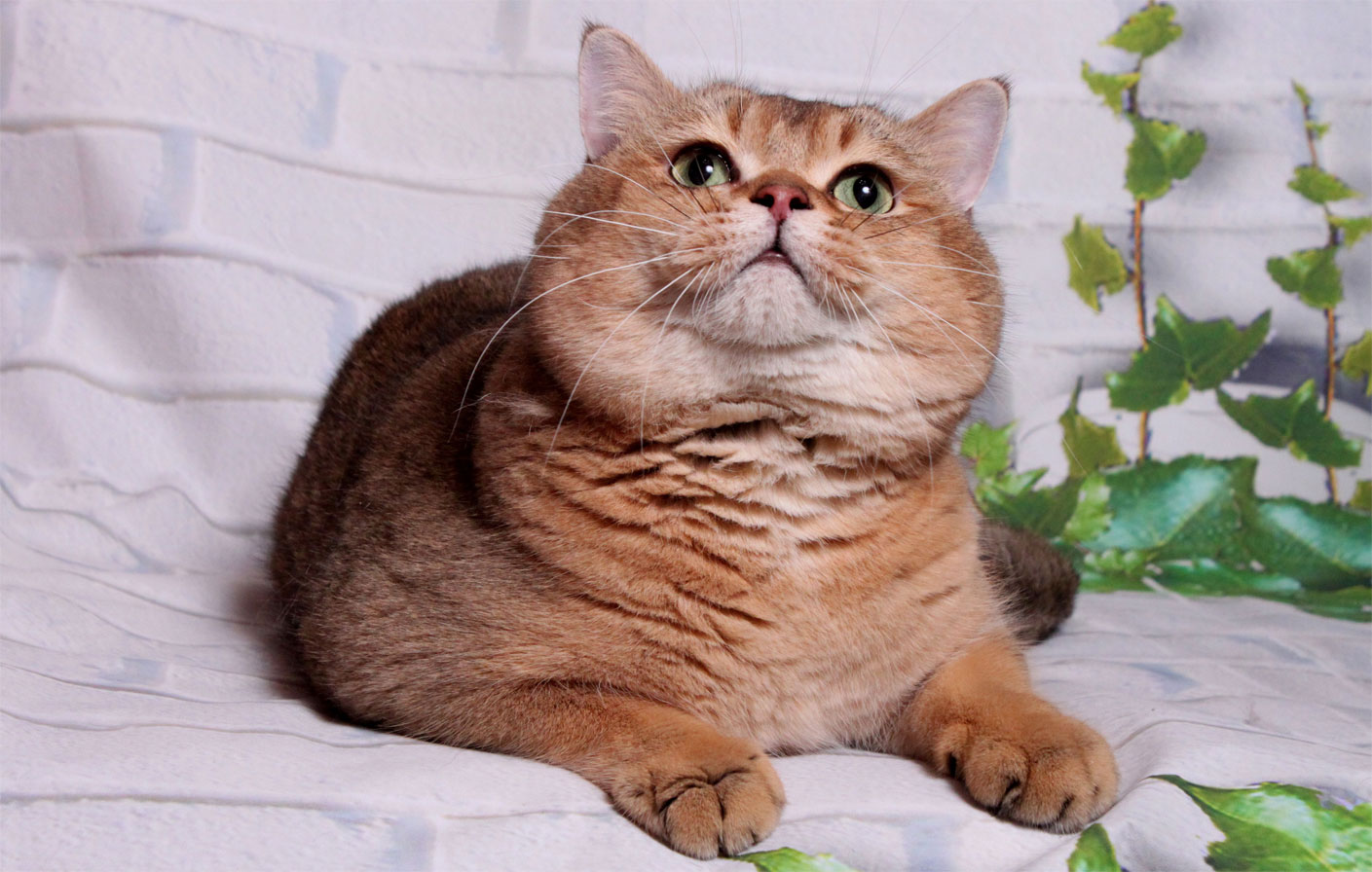
Maintenance and care
Straights aren't overly active; they won't run around the apartment for hours or jump from the chandelier to the curtains, but they certainly don't mind playing from time to time. Owners should consider toys and exercise equipment, either purchased or homemade. Exercise will help maintain a healthy spirit and good shape throughout their pet's life, which is especially important for indoor-only cats.
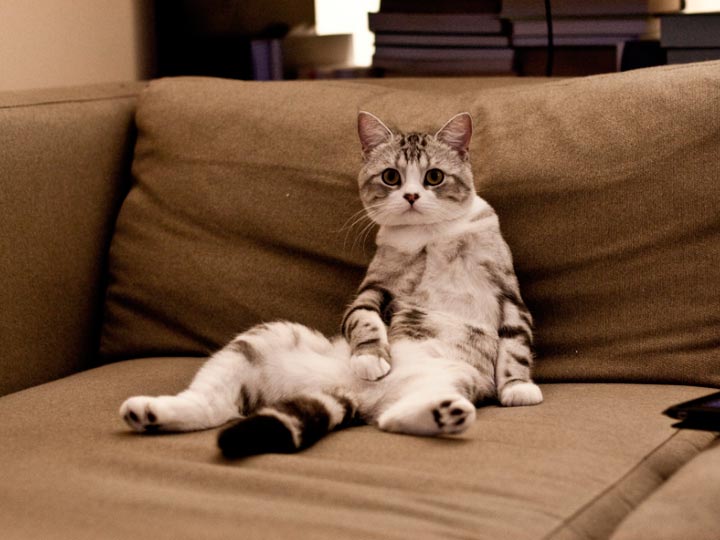
Another characteristic of Scottish Folds is their penchant for unusual positions. Many of them enjoy sleeping on their backs or "sitting on their bottoms." Without experiencing any discomfort, they can stand upright for long periods of time, begging for food or a toy.
In a private home, Scottish Fold cats enjoy strolling in the garden. Here, they can bask in the sun and chase flies to their heart's content. Female cats typically don't wander far, but unneutered male cats can easily disappear for several days. It's dangerous to let an untrained cat out of an apartment. It might get scared, run away, and get lost.
The Scottish Straight is a strictly indoor cat and doesn't require frequent walks. However, if you provide them with outdoor activities and games, they will be grateful, regardless of age.
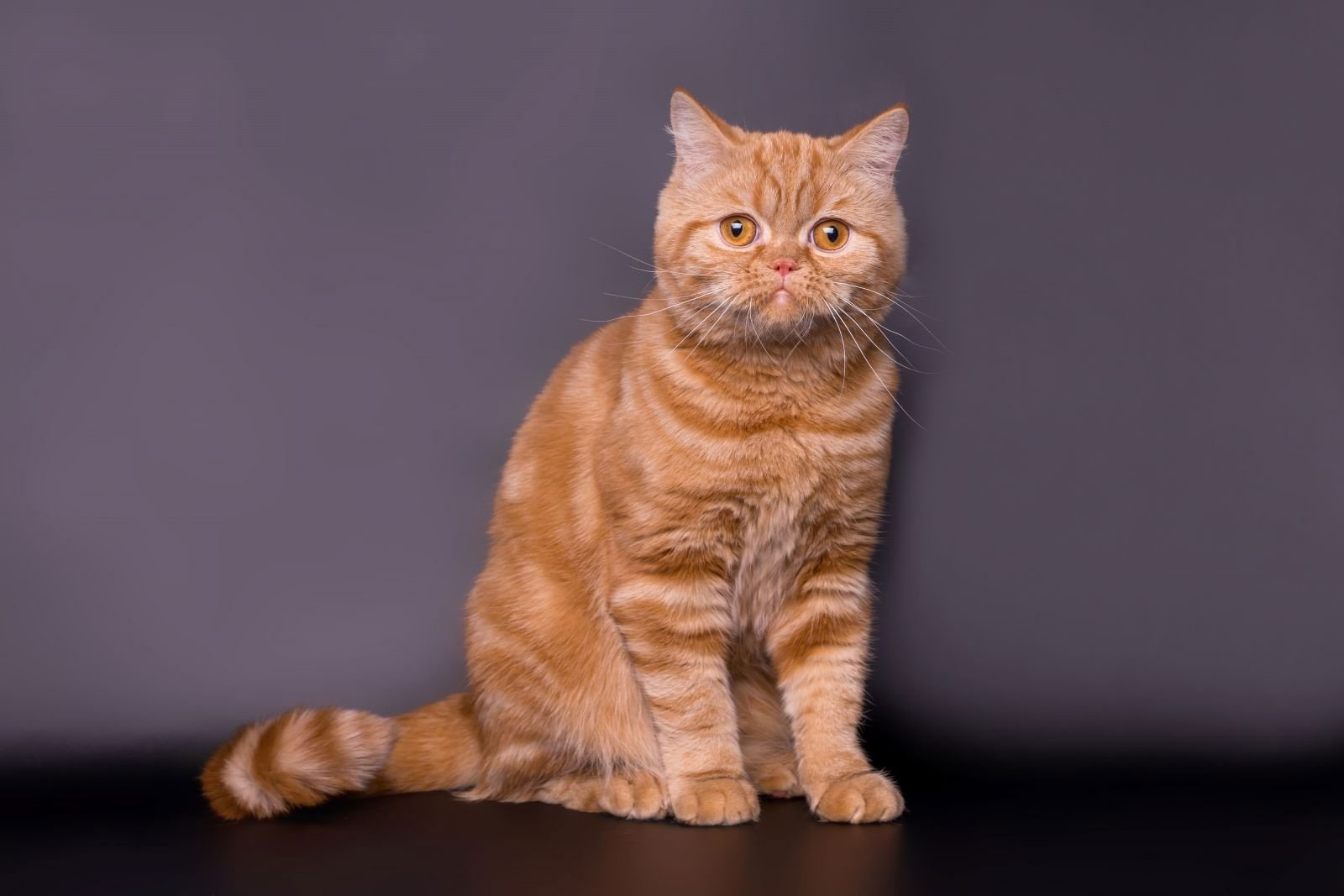
This animal possesses a rare quality among cats: stress resistance. Thanks to this, Scottish Straights cope with relocations, long trips, and changes in their familiar surroundings quite easily. They usually adapt to unfamiliar conditions quickly and smoothly, and get used to new faces.
Care
Grooming a plush cat is simple. Brush them once or twice a week, paying attention to the areas behind the ears, on the belly, and on the backs of the paws. Make sure to trim their claws regularly, wipe their eyes, and clean their ears when necessary.
Scottish Straights are calm and even enjoy any hygiene procedures, especially those they've been used to since puppyhood. Owners of this breed often note that their pets not only aren't afraid of water, but are drawn to it, loving to play with the trickle or drink from the faucet. Bathing them should only be done in extreme cases: when heavily soiled, after shedding, or before a show.
It's important to remember that plush fur is very difficult to remove from the stomach. To avoid blockages and associated problems, kittens should be introduced to special hair removal pastes as early as six months of age.
If the plush coat isn't brushed regularly, shedding will be noticeable. Heavy seasonal shedding occurs twice a year, lasting several weeks; the rest of the year, shedding is light to moderate.
Nutrition
Scottish Fold cats can be fed commercial, dry, or in-bracket food. The diet is selected based on their age and physiological condition. Natural foods are also available. It's best to develop a diet with a specialist, veterinarian, or breeder.
Carefully ensure your pet's diet contains as few high-fat and salty foods as possible. Regular consumption of these foods will lead to obesity, and they will gradually become lethargic and inactive.
It's important that the food meets all of your pet's needs and is healthy and balanced. Mixed feeding is possible, but not recommended. If you need to add commercial food to natural food, it's best to feed wet food, as their digestive system is already adapted to it. Any changes in feeding should be gradual. Your pet should have free access to clean water, even if they prefer to drink from the tap or an aquarium.
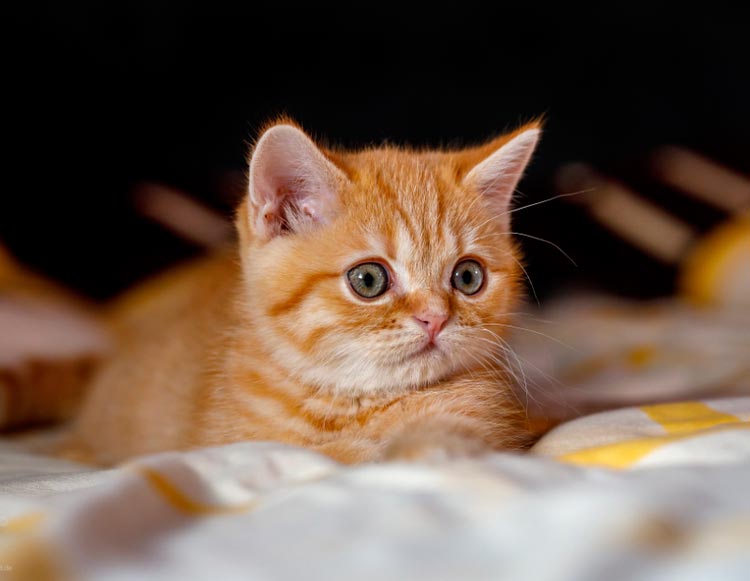
Health and life expectancy
In general, Scottish Straight cats are generally healthy and have good genetics, unlike their fold-eared relatives. No serious genetic diseases or defects have been identified. With proper care, nutrition, timely vaccinations, and deworming, the first serious illnesses appear only in adulthood. Among the most frequently diagnosed acquired diseases in Scottish Straight cats are:
- obesity;
- arthrosis;
- arthritis;
- diseases of the genitourinary system;
- diseases of the digestive tract.
Life expectancy is 13-15 years.
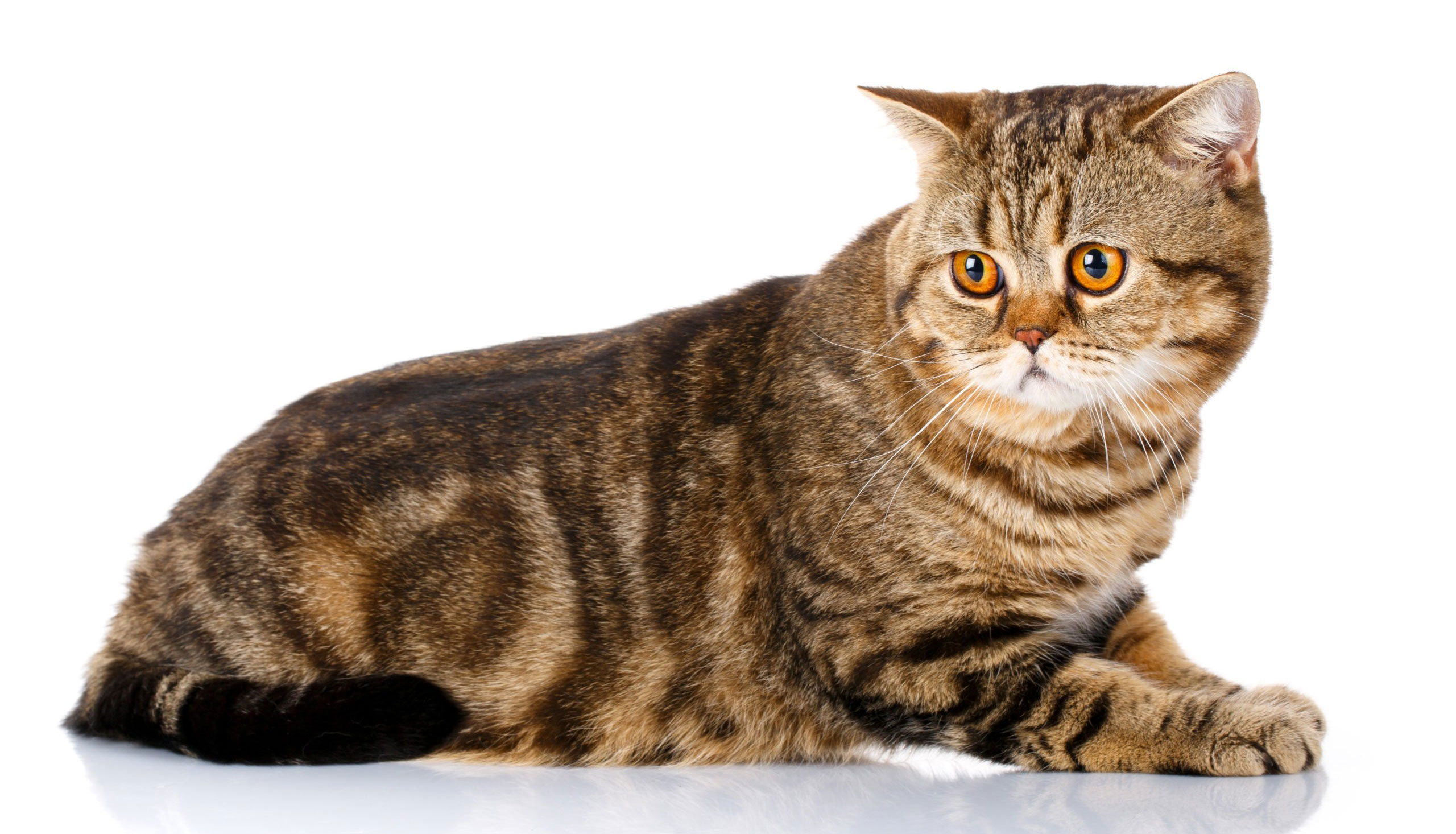
The Scottish Straight breed, like other Scottish Folds, is genetically predisposed to a number of health conditions. To minimize the risk of these conditions, kittens should be planned according to the genetic makeup of both parents. Genetically determined conditions include:
- osteochondrodysplasia;
- brachycephalic syndrome;
- hypertrophic cardiomyopathy;
- polycystic kidney disease;
- deafness.
To ensure you acquire a kitten free of genetic defects and one that will mature into an adult with a breed-standard appearance, you should purchase kittens from catteries or specialized clubs.
Choosing a Scottish Straight kitten
Today, Scottish Fold cats are bred by anyone and everyone, as the breed is incredibly popular and in demand. Many lines suffer from poor health due to improper mating, and it's also common for kittens to fail to grow up with the distinctive breed characteristics expected of them. Therefore, choosing a kitten should be taken seriously.
Before buying a Scottish Straight, it's worth looking at kittens from top catteries in person or at least in photos. If you're not planning on buying a high-quality kitten, this will help you compare a quality kitten with other options and significantly narrow your search.
Breeder recommendations
We recommend following these basic rules:
- Availability of documents (this is the only way you can be sure that you are buying a real Scottish Straight baby).
- Verified seller (It's good if you contacted a nursery, but if you liked a puppy from a regular breeder, then it's worth asking about reviews or making inquiries at the club).
- Personal meeting (Never buy kittens from photos "with delivery", because only in person will you be able to evaluate the baby's exterior, activity level, and development level).
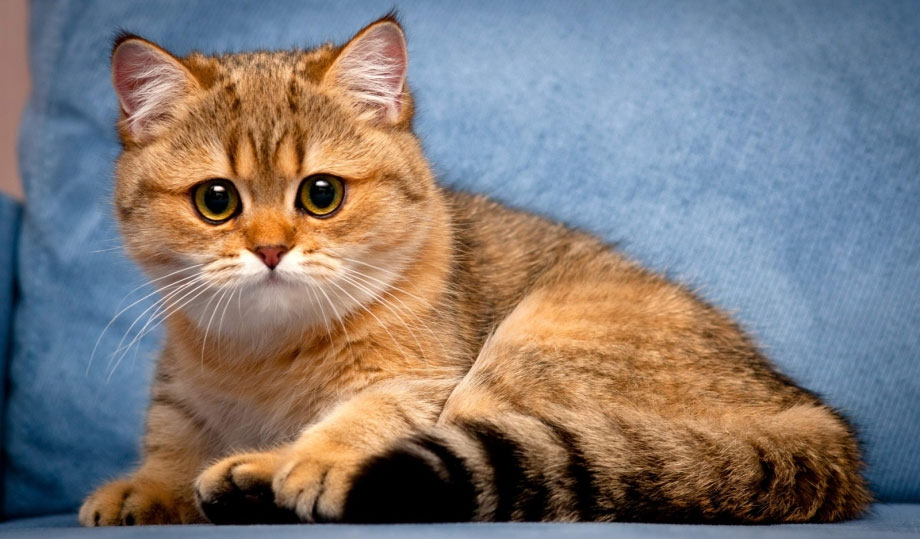
With the right coat, kittens should look round and soft, almost plush. Their heads are rounded, their ears are firm and set wide apart, with the tips pointing slightly outward. The tail should be quite full at the base, and their paws are strong. Health is also important to consider. The kitten should show no signs of illness. It should be clean, with shiny fur, clear eyes, and a moderately rounded belly. Personality is also important to consider. An overly active, timid, or aggressive kitten will be very difficult to manage, while an overly calm kitten is unlikely to please an active person. Kittens that are overly intimidated or reserved are unlikely to grow into courageous adults.
It's important to decide in advance on the ultimate purpose of the purchase: for shows, a pet, or breeding. However, it's worth noting that suitability for shows, as well as for breeding, can only be reliably assessed in adult males and females. No one can guarantee that a kitten will grow up to be a perfect example. This can only be estimated by an experienced eye. Breed class means that the male or female possesses very good breed characteristics that they can pass on to their offspring. But how can this be confirmed in a two-month-old kitten?
First and foremost, you need to get a healthy, purebred kitten. If for some reason it can't be shown or bred, it should remain wanted and loved.
Colors vary widely; it's a matter of taste. It's also difficult to say for sure which gender is best. Each option has its pros and cons. If you don't have personal experience, it's worth reading up on these separately. You can pick up a kitten at 2.5 to 3 months of age. By this time, it's already weaned from its mother's milk and care, and its growing curiosity and desire to explore the world around it will help it adapt more quickly to its new home. The new owner should receive a veterinary passport with the first vaccination records and a birth certificate, which can then be exchanged for a pedigree.
Price
Scottish Fold kittens vary greatly in quality, hence the price difference. Good Straights aren't cheap, but they're not as sought-after as Scottish Folds, so their prices are usually slightly lower. Furthermore, the kitten's class, the cattery's status, the parents' achievements, and the location of the kitten also influence the price.
Pet-class kittens are worth 15-25 thousand rubles (The need for their subsequent castration/sterilization is usually specified in the purchase agreement). For exhibitions and breeding from 40,000 rubles.
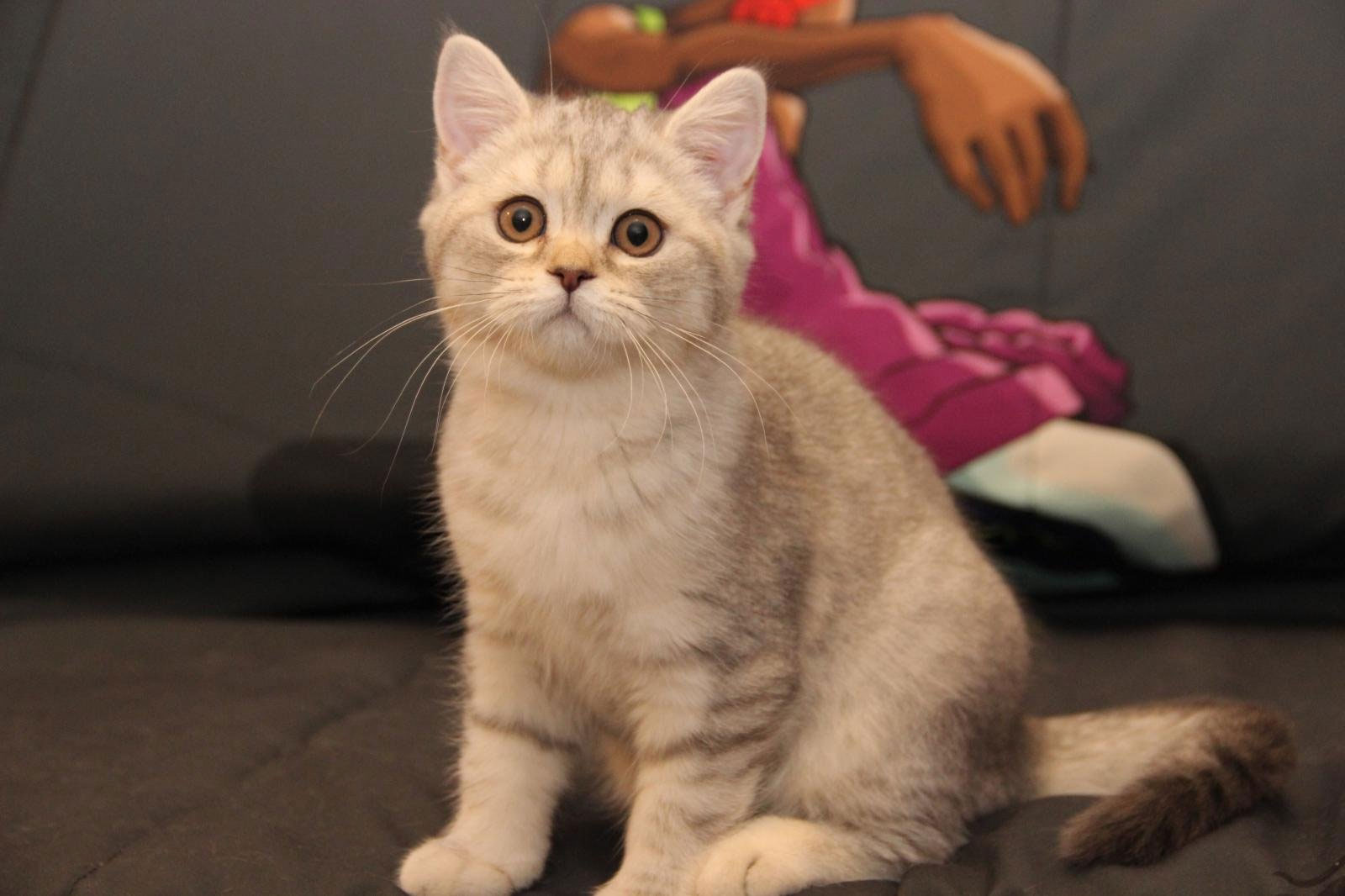
If we're talking about kittens without papers, the price ranges from 1,000 to 10,000 rubles, but no one can guarantee that the father of the offspring wasn't the neighbor's cat.
Scottish Straight nurseries in Russia
Today, you can buy a healthy, strong Scottish Straight kitten in many regions of Russia, including Moscow, St. Petersburg, Saratov, and Lipetsk.
|
Nursery |
System |
City |
|
Good Tale |
WCF |
Moscow |
|
Color Richness |
WCF |
Moscow |
|
White Rose |
WCF |
Moscow |
|
Maxel |
WCF |
Moscow |
|
Ru-Star Fold |
WCF |
Moscow |
|
INTENSITY |
WCF |
St. Petersburg |
|
KAMELIA MON AMI |
WCF |
St. Petersburg |
|
SNOW CITY |
WCF |
St. Petersburg |
|
Mouse Nightmare |
WCF |
Novorossiysk |
|
Freya |
WCF |
Omsk |
|
Artis |
WCF |
Tolyatti |
|
TILANA-M |
WCF |
Maykop (Adygea) |
|
NAVADAL |
WCF |
Ulyanovsk |
|
Melody Soul |
WCF |
Kazan |
|
Dawn of Ilanga |
IFA and WCF |
Perm |
|
Sly Face |
WCF |
Perm |
|
OSTROV”OK |
WCF |
Nizhny Tagil |
|
LENIS ANIMAL |
WCF |
Klin |
|
Lesser Lion |
WCF |
Lipetsk |
|
Foldlandia |
WCF |
Saratov |
Photos of Scottish Straights
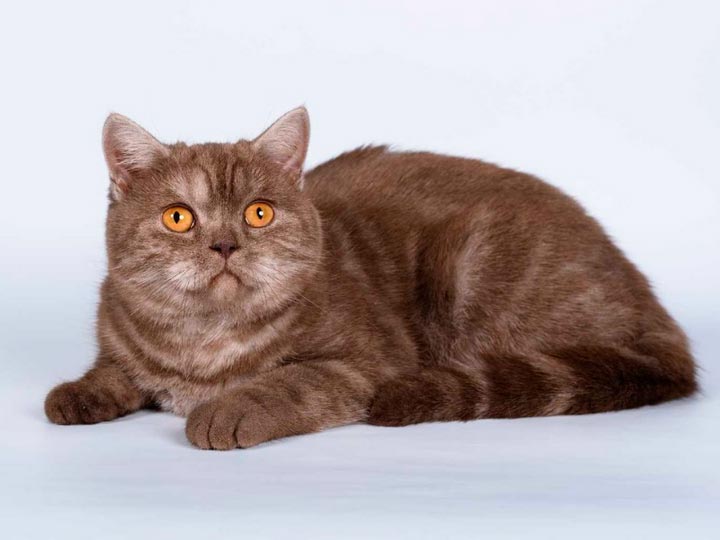
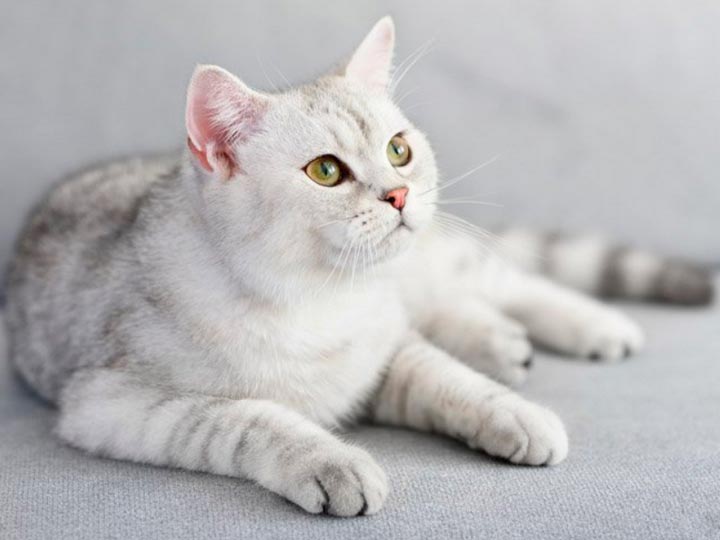
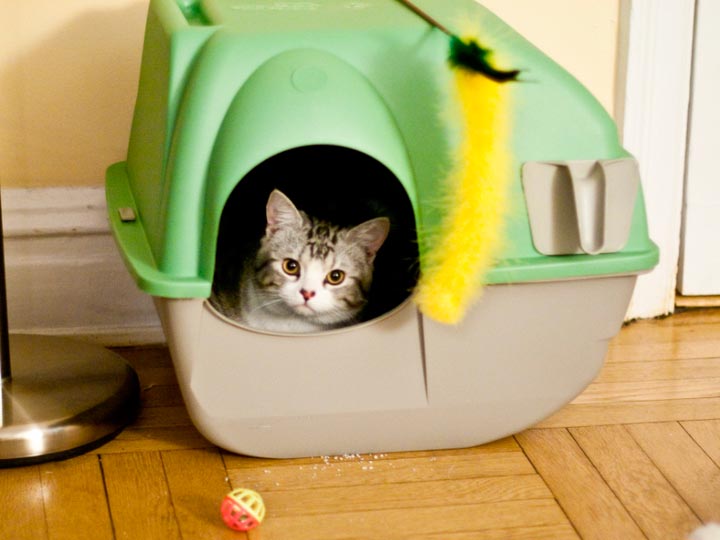
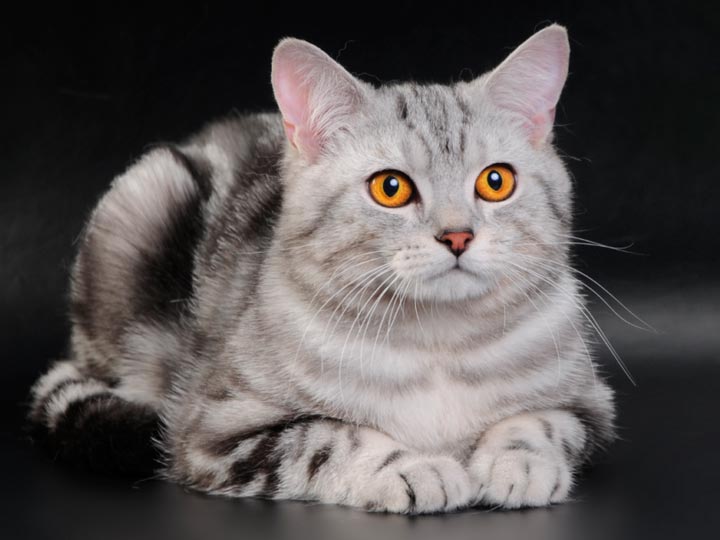
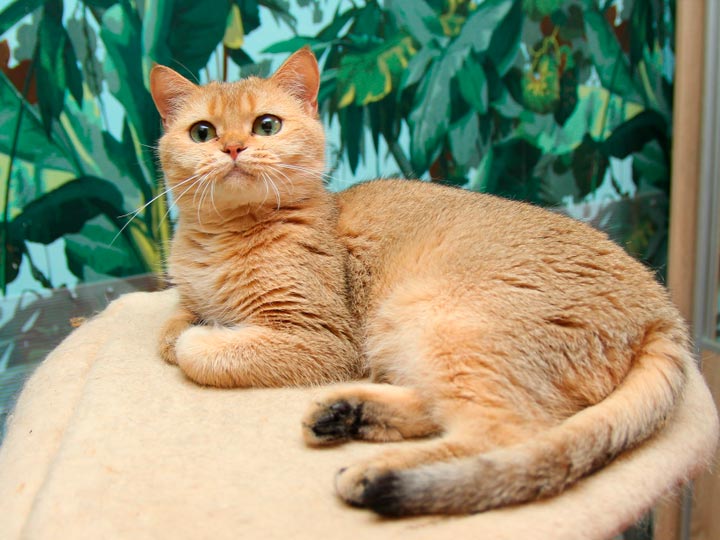
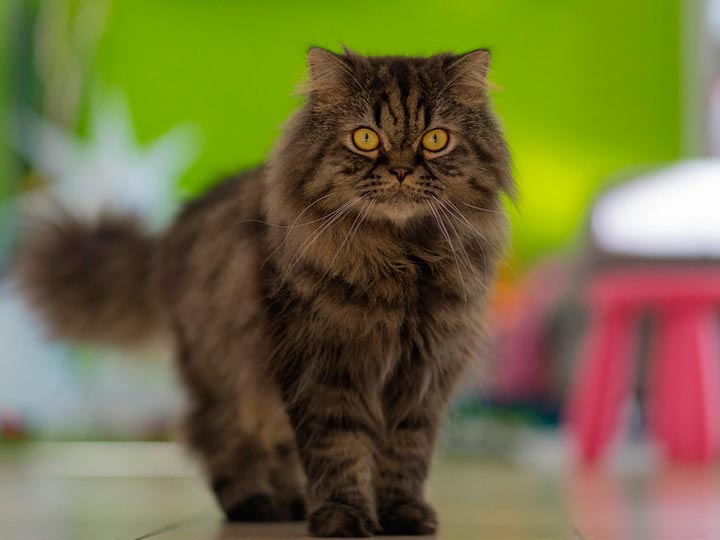
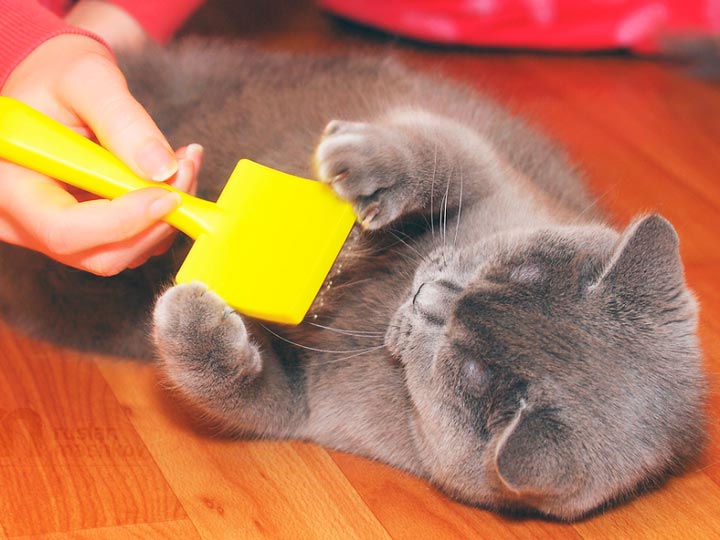
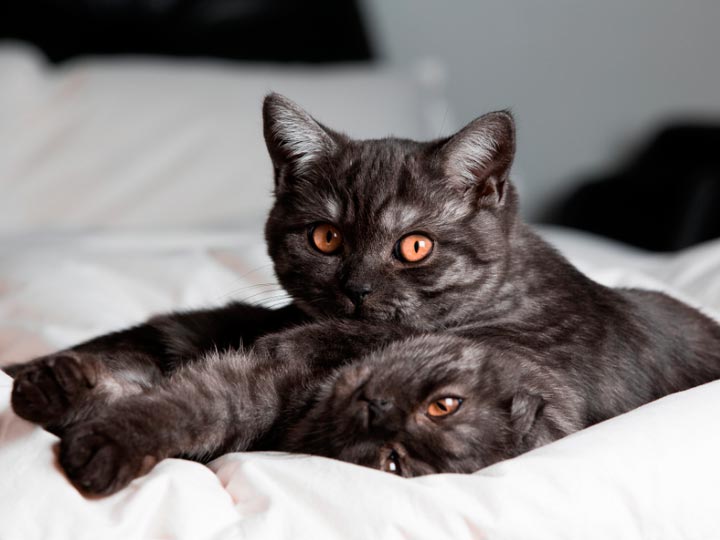
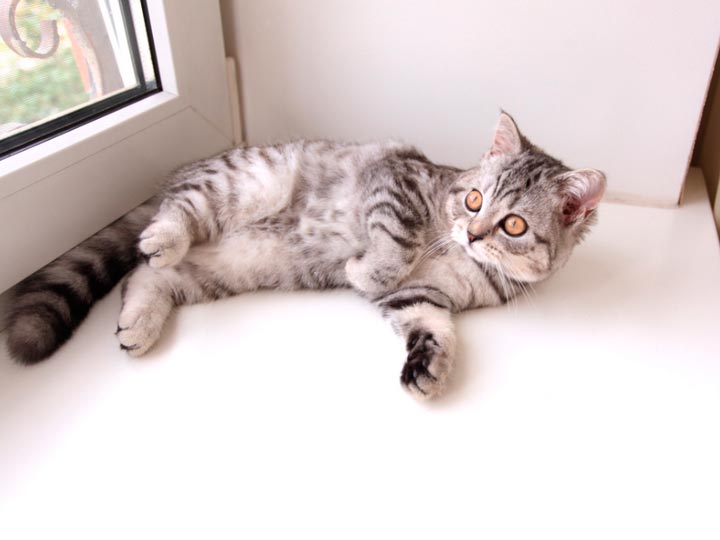
In the gallery you can see more photos of Scottish Straight cats, male cats, and kittens.
Video about the Scottish Straight cat breed
Read also:
- American Curl: Cats and Tomcats
- The difference between British and Scottish cats
- Scottish Fold cat weight by month: table


Add a comment