
How many teeth does an adult cat have?
A pet's teeth are a good indicator of its health and development. Their condition can be used to assess the presence of certain diseases and determine the animal's age, which is important, for example, when adopting a stray cat. Therefore, it's important not only to know how many teeth an adult cat has but also to monitor their condition.
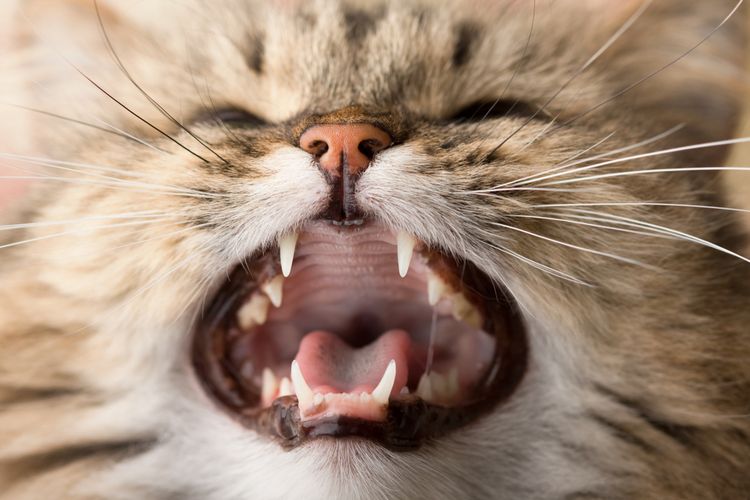
Content
How the jaw is formed
Like humans, kittens are born toothless. However, their bite develops much faster than in children. The first teeth begin to emerge within 2-4 weeks, and within a few months, the process is complete.
Surprisingly, the order in which teeth appear corresponds to their eruption in children: the incisors appear first, followed by the canines and premolars. The molars are the last to emerge. By three months, a kitten should have 26 teeth (14 on top and 12 on the bottom). But the process of jaw formation isn't complete—almost immediately, the molars begin to replace the teeth. dairy into constants, which occurs in the sequence of their appearance.
Normally, by puberty, a cat's oral cavity is similar to that of an adult cat—that is, by 8-10 months, the animal's jaws are fully formed. During this period, it's advisable to feed the kitten food rich in phosphorus, calcium, and other minerals, which facilitate the eruption of permanent teeth and ensure their health.
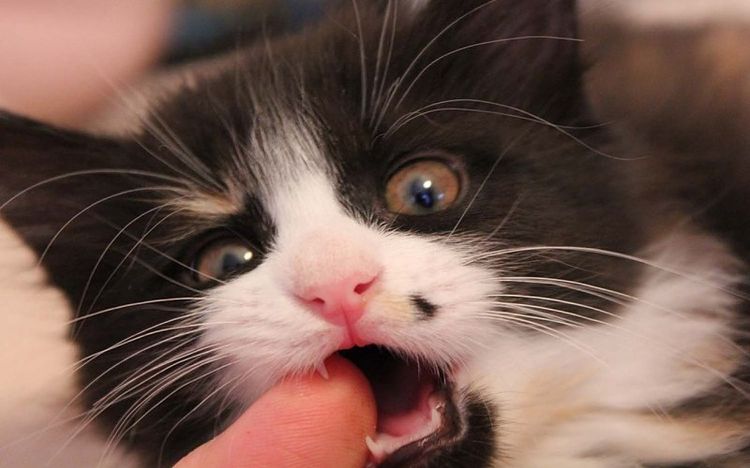
How many teeth does an adult cat have?
If the animal's development proceeds normally and without injury, by 6-7 months, it will have 30 teeth. Since the order of their eruption is the same for all breeds, a cat's age can be accurately determined by the number of teeth it has:
- If they are not there, the animal is less than 3 months old.
- If there are only incisors - 3-4 months.
- Canines emerge at 4-5 months, immediately after the incisors.
- Permanent molars indicate that the kitten is already six months old.
Even when the entire oral cavity is already filled with teeth, changes do not stop - incisors, canines, and molars change under the influence of external factors and the quality of nutrition, so specialists can easily determine the age of an individual with an accuracy of up to six months.
How to determine age
Feline specialists can easily determine a furry pet's age based on the number of teeth and the condition of the incisors and canines. A special technique has been developed for this purpose, allowing them to determine an animal's age with an accuracy of up to six months. Key indicators:
- 30 even, snow-white teeth indicate that the animal is just one year old.
- If the teeth are slightly yellowed, then the cat is about 1.5 years old.
- By age two, the lower incisors wear down slightly. A distinct yellowing can be seen on the remaining teeth.
- The front incisors that have begun to wear down indicate that the animal is approaching the three-year mark.

- Canines begin to change shape by the age of five. By this age, they'll likely have developed a distinct dark yellow coating.
- After five years, the surface of the incisors begins to deteriorate, which is especially noticeable at 7-8 years of age.
- By the age of ten, the gums weaken, so the teeth begin to fall out (first the lower, then the upper incisors).
- If there are no more incisors in the cat's mouth, it means it's 12-14 years old. This is quite an advanced age for an animal.
- The lost fangs indicate that the cat is about 15 years old.
How many teeth a cat retains depends on its lifestyle and the quality of its diet. Much also depends on the person—lack of proper care can accelerate the loss process.
Care tips
Dental problems inevitably lead to digestive problems and other health issues. The most common pathologies caused by oral diseases are flatulence, dysbiosis, and impaired peristalsis. Veterinarians recommend:
- Ensure adequate nutrition—deficiencies in phosphorus, calcium, and certain other micronutrients can accelerate tooth decay. Therefore, it's important to ensure your cat's diet includes sufficient dairy products.
- Giving cartilage, flat spongy bones, and raw meat from time to time strengthens the gums and helps clean teeth from dirt.
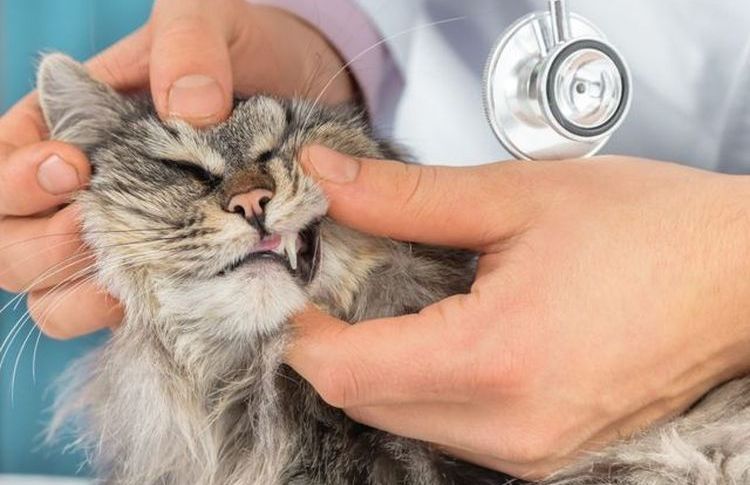
- Visit your veterinarian regularly for oral examinations. Treat any problems that arise, if necessary.
- Buy special bone treats. Alternatively, you can offer chicken cartilage—all of these are effective in eliminating tartar and raid.
A kitten's diet plays a significant role when its first incisors begin to emerge. During this time, it's important to ensure a balanced diet and, if possible, purchase specialized foods that contain the necessary micronutrients for healthy growth and development. Also, try to remember how many teeth your cat should have so you can consult a specialist promptly.
Many owners even neglect oral hygiene. Specifically, even newly erupted teeth should be cleaned with a special toothbrush and fragrance-free cleaning powder. However, be aware that cats are extremely averse to such procedures. If desired, you can visit a veterinary clinic, where they can perform a cleaning using a variety of methods: chemical, ultrasonic, or mechanical. The animal will fall asleep under the influence of a sedative, while the necessary procedures are performed.
Read also:


Add a comment