
How many teeth does a dog have?
Like humans, cats and dogs shed teeth. And they have more permanent teeth than baby teeth. However, not everyone knows how many teeth a dog has. In this article, we'll explore not only the normal number but also whether the number depends on the animal's breed and age.
Content
- 1 First teeth
- 2 When do dogs change teeth?
- 3 How many teeth does a dog normally have?
- 4 Number of teeth in different breeds
- 5 What to do if you have fewer or more teeth
- 6 How to determine how many teeth a dog has without a vet examination
- 7 Comparison of the number of teeth in dogs and other animals
- 8 Problems and care
First teeth
As puppies, dogs don't yet need a full set of teeth. Initially, they feed exclusively on milk, later on porridge and other foods that don't require much chewing. They don't have to fend for themselves, as their mother will always stand up for them. Therefore, the first teeth usually begin to appear in puppies at 3-4 weeks of age, although in toy breeds this occurs much later, at 6-7 weeks of age.
The canines are the first teeth to emerge. They're essential for tearing food, and for predators in the wild, they're a primary necessity. Next, the incisors emerge from the gums, followed by the premolars (also known as "false molars"). The dental formula for puppies looks like this:
- Upper jaw: 2 canines and six incisors and premolars.
- Lower jaw: complete match with the upper jaw.
As children grow older, baby teeth are replaced by permanent teeth (with roots).
When do dogs change teeth?
Changing teeth in puppies It begins at 3 months of age and usually ends by 6-7 months. If the teeth haven't completely replaced by 7 months, the bite is malformed, or you notice other abnormalities, you should consult a veterinarian.
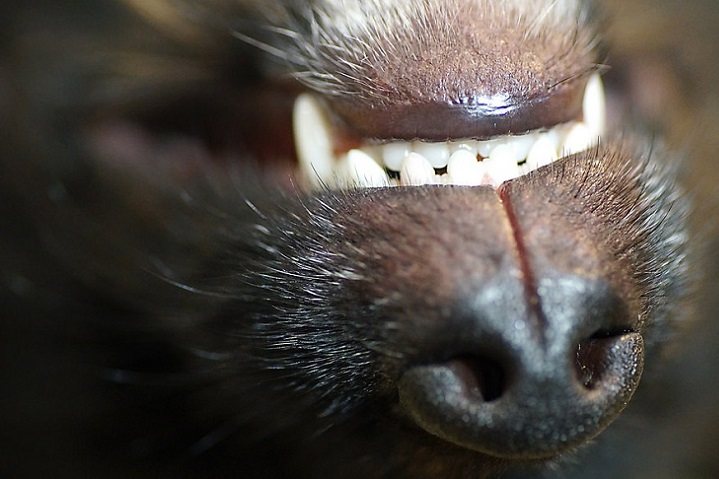
Therefore, try to avoid feeding young puppies with teeth that are too hard, as they can damage their gums and spoil their bite. Bones are also prohibited.
If a baby tooth is loose but won't fall out, you can give it a rubber toy or a special connective tissue "bone" to chew on (pet stores are full of these). Puppies may start biting and damaging furniture and shoes.
The incisors are the first to fall out, followed by the premolars. What should you pay attention to when your dog's teeth are changing? Make sure that no baby teeth remain when the permanent canines emerge. If you notice a permanent tooth emerging from the gums but the baby tooth hasn't fallen out yet, be sure to extract it (if you can't do it yourself, consult a veterinarian who can perform surgical removal). If you leave this situation untreated, there's a high risk that your dog will develop a malocclusion in the future.
This can be assessed by carefully examining the dog's jaw when it is closed. The following signs indicate the development of a normal bite:
- the teeth of the upper and lower rows do not touch (the permissible gap is 1-3 mm);
- the upper canines, when positioned correctly, protrude slightly forward, covering the lower ones;
- each of the lower canines fits into the free space between the corresponding upper canine and the outermost upper incisor.
Thus, most dogs have a scissor bite. The exception is boxers, bulldogs, pugs, and Pekingese, which have a pike bite due to a genetically shortened lower jaw.
How many teeth does a dog normally have?
Normally, a dog has 28 baby teeth (14 on each jaw) and 42 permanent teeth: 20 on the upper jaw, and 2 more on the lower jaw - 22.
This knowledge will help you monitor your dog's oral health. If there are not enough teeth or, conversely, more than the norm (milk and root are in the mouth at the same time), then this will be a reason to contact a veterinarian.
When examining the upper jaw of an adult dog, you'll normally count 3 incisors, 1 canine, 4 premolars, and 2 molars on the left and the same on the right (a total of 20). The lower jaw, however, has one more molar on each side: 3 incisors, 1 canine, 4 premolars, and 3 molars on the right, and the same on the left (hence the total of 22).
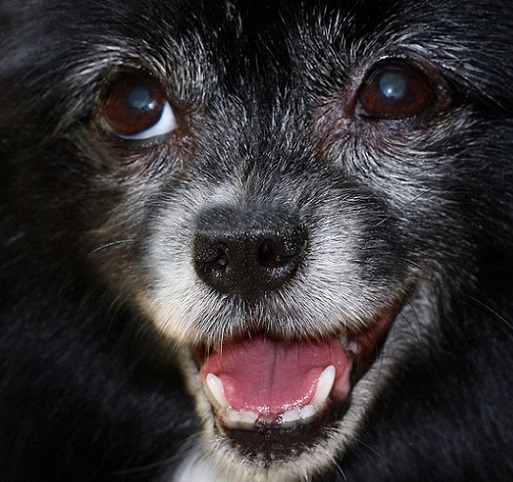
Many owners of toy breeds are interested in how many teeth a Chihuahua or Yorkshire Terrier has. In fact, they normally have the same number of teeth as other breeds—42. However, the absence of the last molars on the lower jaw is permissible, as they are very small and hardly contribute to chewing. With this "deviation," these miniature canines are allowed to participate in dog shows.
Number of teeth in different breeds
Depending on the breed and size of the dog, there may be differences:
| Dog category | Number of teeth (average) | Peculiarities |
|---|---|---|
| Miniature (toy terriers, chihuahuas) | 40–42 | sometimes there is a delay in the replacement of baby teeth |
| Medium (spaniels, beagles) | 42 | standard number of teeth |
| Large (shepherds, Labradors) | 42 | strong bite, missing teeth are rare |
| Brachycephalic (pugs, bulldogs) | 40–41 | Due to the shortened jaw, premolars are often missing |
Such differences do not affect the health of the bite if the teeth are positioned correctly and the animal does not experience discomfort.
What to do if you have fewer or more teeth
Sometimes owners notice their dog has fewer teeth than expected, or develop "extra" teeth. This may be due to:
-
abnormal development of the jaw, especially in decorative breeds
-
injuries and tooth loss
-
congenital features
If your dog has fewer teeth than normal and is having difficulty grasping food or toys, consult a veterinarian. Excessive teeth are also undesirable, as they can interfere with the bite and cause mucosal injury.
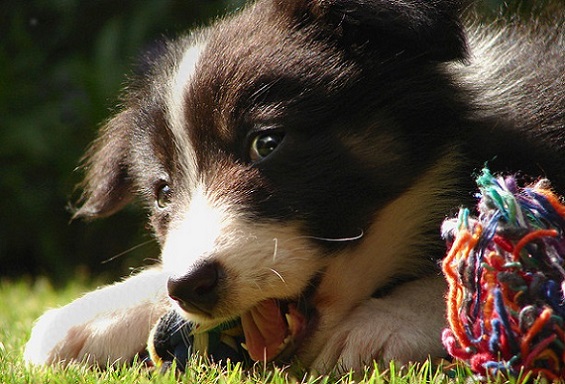
How to determine how many teeth a dog has without a vet examination
To count your pet's teeth yourself, you need to know their location:
-
There are 20 teeth in the upper jaw (6 incisors, 2 canines, 8 premolars, 4 molars)
-
There are 22 teeth on the lower jaw (6 incisors, 2 canines, 8 premolars, 6 molars)
Ask the dog to lie on its side, gently pull back its lip, and support its muzzle with your hand. If the animal is restless, it's best to count with two people, with one person holding the dog steady and the other counting.
Comparison of the number of teeth in dogs and other animals
To understand the structural features, you can compare the dog's dentition with that of other mammals:
| Animal species | Number of teeth | Peculiarities |
|---|---|---|
| Dog | 42 | adapted to tearing and chewing meat |
| Cat | 30 | shorter teeth, fewer premolars |
| Human | 32 | developed chewing apparatus, flat molars |
| Horse | 40–44 | a significant number of molars for grinding herbs |
This clearly shows that the dog is a carnivorous animal and has a set of teeth adapted to a meat diet.
Problems and care
Like humans, dogs can experience dental problems, including tooth loss, yellowing, and toothache. Signs of toothache include a refusal to eat, restlessness while chewing, and attempts to reach for the mouth with a paw. Pain can be associated with gum inflammation, cavities, a fractured tooth, or an exposed nerve. To determine the exact cause and receive treatment, schedule a checkup with your veterinarian.
Another common dental problem for dogs, regardless of age, is plaque, which, if not removed promptly, turns into tartar and can subsequently lead to gingivitis or periodontitis. Plaque buildup is believed to be caused by a lack of hard foods (apples, carrots, crackers, special seeds, or cookies) in the daily diet that promote natural enamel cleansing, or by digestive problems (an imbalance of the gastrointestinal tract's acid-base balance). Experienced dog owners can easily remove tartar on your own Using a special hook, after securing the pet's muzzle. If you're inexperienced, it's best to seek professional help from a vet.
You can minimize potential dental problems by accustoming your pet to regular brushing from an early age. For most breeds, weekly cleanings are sufficient. Pet stores sell special soft-bristled brushes and tooth gels for this purpose. In some cases, a child's finger-style toothbrush is convenient. Regular grooming and other owner-initiated care largely determine how many teeth a dog will retain by adulthood.
Read also:


Add a comment