
How many whiskers do cats have?
The long, coarse hairs located on both sides of a cat's muzzle—called whiskers—are different from regular fur in both structure and purpose. Now let's take a closer look at how many whiskers a cat has, their color and length, and why they even exist.
Content
- 1 What are vibrissae?
- 2 Why do cats have whiskers?
- 3 Due to the extreme sensitivity of the whisker hairs, a cat may experience discomfort and even pain if they are pressed against the cheeks for a long time or constantly caught on something. Therefore, felinologists recommend feeding and watering cats from wide, shallow bowls. Whisker renewal
What are vibrissae?
Whiskers are a type of vibrissae, thread-like horny appendages of the epidermis that act as special sensory organs. Vibrissae Whiskers are formed in cats during fetal development and are located on the chin, cheeks, and tips of the ears. A cat has 24 whiskers, 12 on each side.
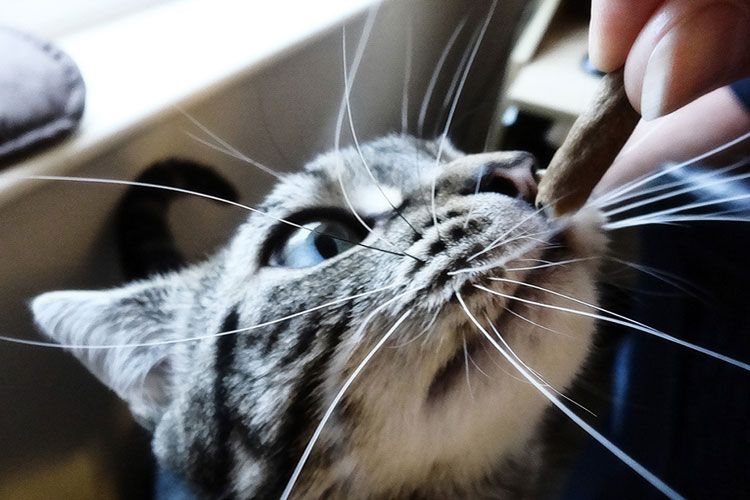
Cats' whiskers are usually white. This is because the whisker loses its coloring pigment, melanin, as it grows and extends upward. Some cats retain this pigment, in which case their whiskers may be black or "highlighted," black and white. With age, however, they will turn gray and become colorless.
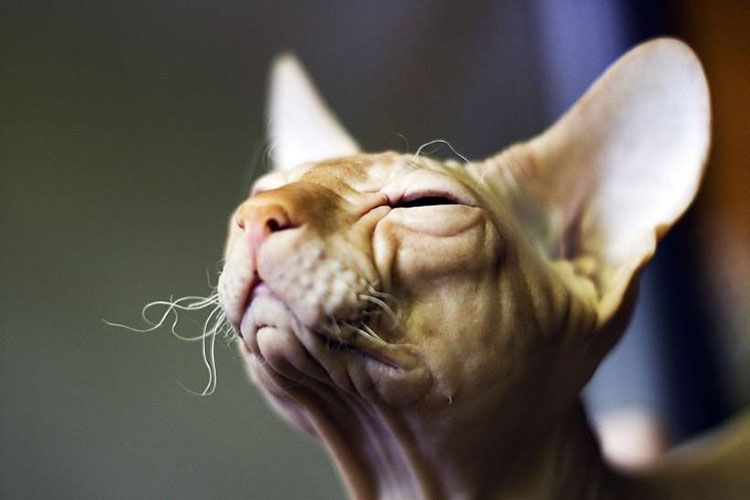
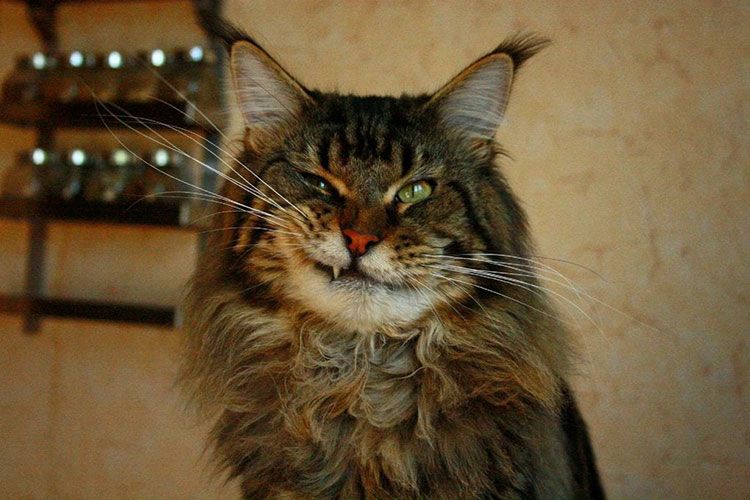
The whiskers on the muzzle are much thicker and longer than the fur, and are held more firmly. Male cats typically have thicker whiskers than females. A cat's whiskers are typically 6-7 cm long, but in some breeds, such as Maine Coons, they can reach up to 16-18 cm, and in Sphynx cats, Cornish Rexes And Devon Rexes The moustache is curled like a hussar's.
Why do cats have whiskers?
The structure of a cat's whiskers, or vibrissae, is quite complex. Each whisker has a hair follicle deep beneath the skin, but unlike the hair follicle of a regular hair, the vibrissa's follicle is surrounded by a large number of muscle and nerve fibers. The nerve endings are connected to the trigeminal nerve located on the scalp.
A cat's whiskers act like antennas, capturing and transmitting signals from the outside world to the brain. Each hair transmits information to a specific area of the brain, where all these signals are processed and systematized, creating a three-dimensional picture of the world.
Cats use their whiskers to "feel" nearby objects by detecting air currents reflected off them. The muscles surrounding the whiskers allow the animal to position them correctly. This allows cats to navigate in near-total darkness, using their whiskers to determine not only the distance but also the shape of objects. Cats also use their whiskers to detect, determine the consistency, and determine the freshness of food.
This unique organ even acts as a cat's glasses. The fact is that all cats are farsighted and practically cannot see what's right in front of their noses. In this case, whiskers (vibrissae) come to the aid of a cat's eyes, allowing them to "see" food or water placed nearby. This can be demonstrated by observing how a cat usually touches the food bowl with its whiskers a couple of times before eating.
Whiskers also serve as a means of communication for cats—for communicating with their relatives, other animals, and humans—and the position of the whiskers can reveal information about their emotions:
- If a cat's whiskers are fluffed up, its owner is clearly in a good, friendly mood.
- If the whiskers are directed forward, it means that the cat is interested in something.
- Whiskers directed backwards and pressed against the muzzle indicate aggression or fear of the animal, a desire to intimidate.
Due to the extreme sensitivity of their whiskers, cats may experience discomfort and even pain if they are pressed against their cheeks for long periods of time or become caught on something. Therefore, felinologists recommend feeding and watering cats from wide, shallow bowls.Renewal of whiskers
From time to time, individual whiskers fall out and are replaced by new ones. So, if you find a cat's whisker falling out on the carpet or sofa, it's not a cause for concern. However, it's more dangerous if your cat's whiskers are falling out en masse; in that case, you should consult a veterinarian to determine the cause.
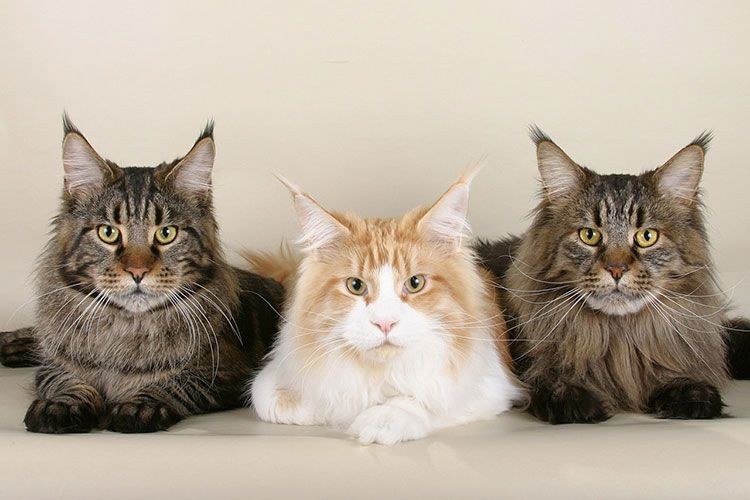
Vibrissae perform important functions in a cat's body, and their loss will complicate the animal's life, partially depriving it of its ability to navigate in space.
Read also:
- Why is a cat a nocturnal animal?
- How cats are called in different countries around the world
- Why do cats purr?


Add a comment