
How much does a raccoon cost?
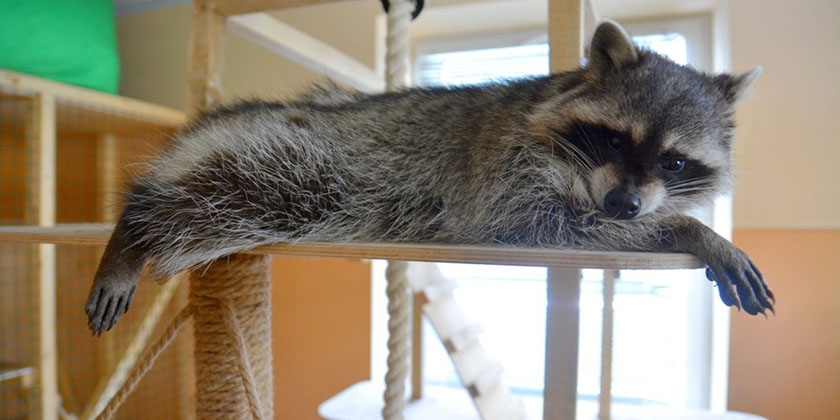
Exotic animals are popular among pet lovers today. Among them are raccoons, furry creatures with a bushy black-and-white tail and dark "glasses" around their eyes. Those interested in acquiring such a charming pet are interested in how much a raccoon costs and where to buy one.
Content
The raccoon family, raccoon species, breed standards
The raccoon (Procyon) belongs to the canine family and is genetically distantly related to the bear. Other raccoon species, found in North and South America, include the cacomistl, coati, kinkajou, and olingo. These animals are smaller than the Procyon, but similar in appearance and build—they share the same climbing paws and striped tails, like a traffic cop's baton.
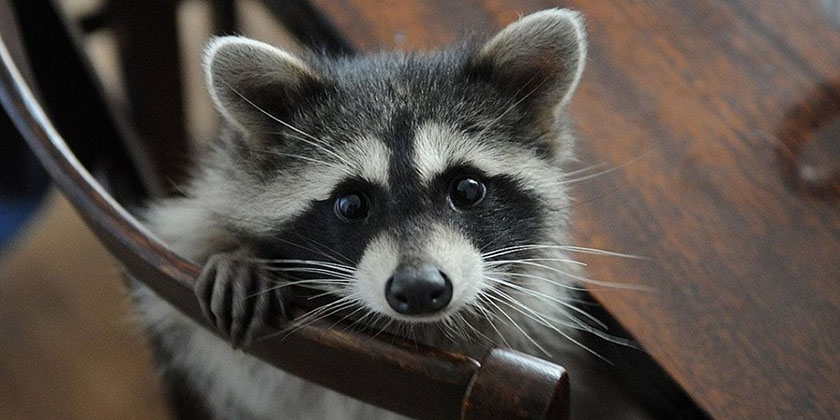
Raccoons are divided into four species: the common raccoon, the common raccoon, the Cozumel raccoon, and the Guadalupe raccoon. The most numerous species is the common raccoon. Characteristics common to all species include:
- the body is dense, the height at the withers is 30-35 cm, the length is from 45 to 70 cm, the weight is from 5 to 12 kg;
- the head is broad, with a short, sharp muzzle;
- ears are erect, rounded, medium-sized;
- around the eyes - dark circles in the form of glasses;
- the front paws are small with well-developed toes, the hind paws are able to rotate at the wrists 180 degrees;
- the coat is thick, with a powerful undercoat;
- the tail is long, fluffy, with alternating light and dark stripes;
- Standard colors are black-silver, gray-silver, yellow-gray, beige and red are also allowed (a white raccoon is an albino animal).
Selection criteria
The price of a raccoon depends directly on how many generations its ancestors have lived alongside humans. This is entirely justified: a wild animal will likely not thrive in a home, as it will behave aggressively and pose a danger to children and adults, and its inherent physical activity will manifest itself in destructive behavior. There's even a special classification that divides raccoons into four categories based on their degree of domestication.
Wild
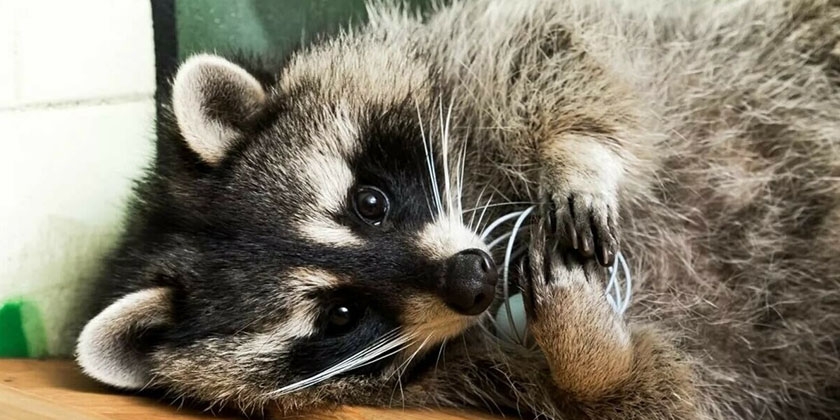
These animals are imported to Russia en masse from the Caucasus. Poachers capture them and sell them for relatively little money, as if they were farmed. Purchasing wild raccoons as pets is not recommended: they are unsociable and aggressive, and will bite and scratch when someone tries to take something they've captured or discipline them, and breaking an adult raccoon of this habit is virtually impossible.
To keep such an animal in the house, you need a separate room with an enclosure; keeping them in a common room is not possible: in addition to the constant noise at night (these predators are nocturnal), they are not trained to relieve themselves in a litter box.
Aviary
Acquired at an early age, these raccoons can easily adapt to life near humans, and in some cases, can even live in an apartment. However, this will require considerable time and effort from the owner—captive raccoons sleep during the day and are awake at night, and they view other animals as competition. Furthermore, "fake breeders" (actually poachers) often sell wild raccoons under the guise of captive raccoons.
Home
There are only a few breeders in Russia where you can buy a raccoon from a domestic parent. These animals quickly acclimate to a home and easily change their daily cycle, sleeping at night and being awake during the day. They are quite sociable, able to peacefully coexist with other animals, and can control the force of their bite if they don't want to injure others.
However, this animal's "living space" should be isolated: a spacious cage with play and eating areas, and a private pool (or at least a large water bowl). If you plan to periodically let your pet out of the cage and into the room, all belongings and food should be locked or stored in inaccessible places.
Manual
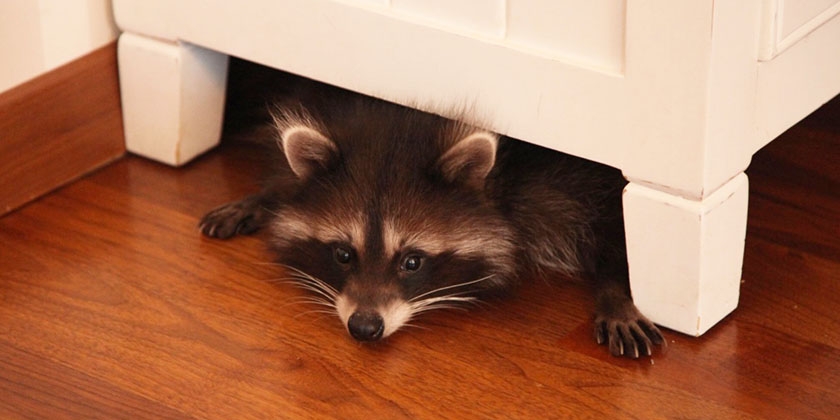
Raccoons with at least three generations of domesticated ancestors are considered tame, as are those that were "hand-fed" as infants and bottle-fed. These animals are non-aggressive, have a calm disposition, and are well-adapted to life alongside humans.
Read also about various things on our website Interesting facts about raccoons.
Prices
You can buy a raccoon from a nursery, a private zoo, a breeder, or even from someone else. When purchasing, ask the seller for the following documents:
- An extract from the studbook. This contains information about the pedigree for four generations. The certificate is signed by the seller and the specialist maintaining the studbook.
- Litter certificate (extract from the litter register, document certifying that the animal was not caught in the forest).
- Passport (veterinary certificate, Form No. 1). This document allows the animal to be transported within the country and abroad. It also contains vaccination information.
The price of an adult raccoon in Moscow ranges from 3,000 to 80,000 rubles. However, for 3,000 to 5,000 rubles, you'll either find a wild animal or an abandoned one whose previous owner couldn't handle it. A domestic raccoon with a good pedigree costs several times more.

So, a raccoon puppy aged 1.5-3 months, depending on the degree of domestication, costs:
|
Wild |
From 3 to 10 thousand rubles |
|
Aviary |
From 30 to 35 thousand rubles |
|
Home |
From 35 to 40 thousand rubles |
|
Manual |
From 40 to 80 thousand rubles |
The most expensive raccoons are exotic species, which are primarily purchased for private zoos. Their prices in Russia are approximately as follows:
- Cozumel - 340,000 rubles;
- cancer beetle - 1,500,000 rubles,
- Guadeloupean - 15,000,000 rubles.
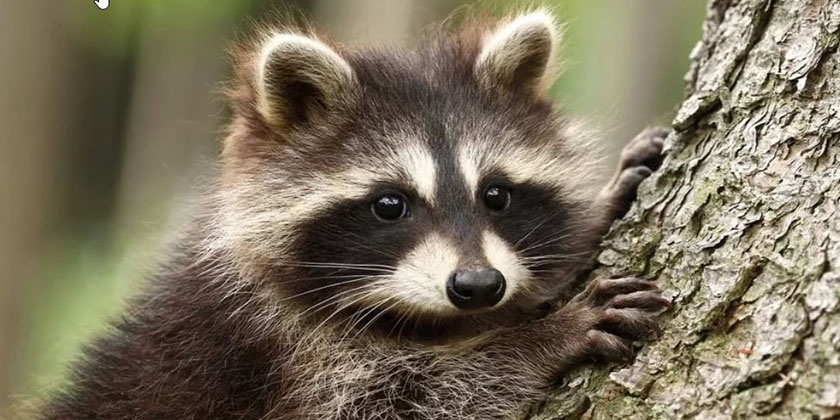
The price of a raccoon also depends on its color. A silver-gray raccoon, whether a captive breed or a domestic one, costs 5,000-7,000 rubles less than a predominantly black one.
Read also:
- What is the difference between a raccoon and a raccoon dog?
- How to draw a raccoon
- Why is the raccoon called that?


Add a comment