
How many nipples does a cat have?
Owners may be concerned about the number of nipples for several reasons: pregnancy and the upcoming nursing period, culling specimens with abnormal characteristics, discovering asymmetrical placement of these organs, etc. Most often, specialists who have been breeding cats for a long time don't have such questions, but for those who have not previously encountered the anatomy of the feline reproductive organs, this issue can cause confusion.
To understand how many nipples are normal, which abnormalities don't affect breastfeeding, and which should prompt a visit to a veterinary clinic for a specialist consultation, it's worth taking a closer look at the general anatomy of cats.

Content
Normal location and quantity
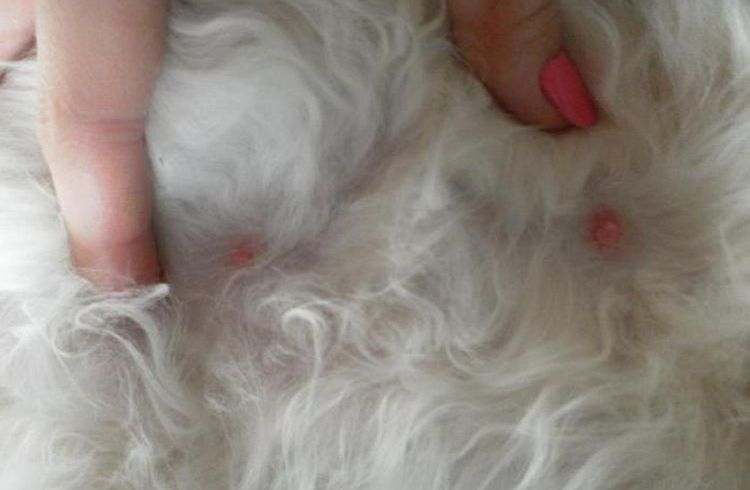
In veterinary medicine, it is considered normal for a cat to have eight paired nipples on the lower part of the body. They are arranged in the following pairs:
- 1 pair in the thoracic region (can be felt near the front legs);
- 2 pairs in the abdominal region (can be located at equal or uneven intervals);
- 1 pair in the inguinal region (located in the depressions near the hind limbs).
An interesting fact is that innervation and nutrition are not provided in pairs, but in vertical rows (on one side of the body, lymphatic drainage, blood vessels, and nerves sequentially connect the right nipples, and on the other, the left). This is why pathologies and dysfunctions most often occur on one side.
In breeds with thick hair, nipples are difficult to find, but thinning of the hair around them is common, which is not abnormal. During pregnancy and subsequent nursing, these structures swell and increase in size, sometimes five to six times. After the first nursing, they do not return to their original size, but they do shrink slightly between pregnancies.
Variants of the norm
Don't panic if you discover too many or too few nipples in your cat: this doesn't necessarily mean the animal is sick and needs help. In addition to changes in number, you may also notice the following abnormalities:
- asymmetry of arrangement in vertical rows or in pairs;
- partial or complete absence of certain pairs;
- placement along the midline of the abdomen;
- different sizes of nipples in one cat;
- different skin pigmentation on these organs.
All of these factors are unrelated to breed; the only difference is that in hairless breeds, the nipples are immediately visible due to the lack of hair. A difference in the number of nipples does not affect the kitten's appearance and is not sufficient grounds for culling.
What does the number of nipples affect?
As a rule, the number of nipples is not the determining factor, but how many of them can perform their function during lactation. Sometimes, even with a full supply, milk does not flow through any duct, so the kittens must be bottle-fed. Conversely, sometimes one pair is sufficient to fully feed the entire litter.
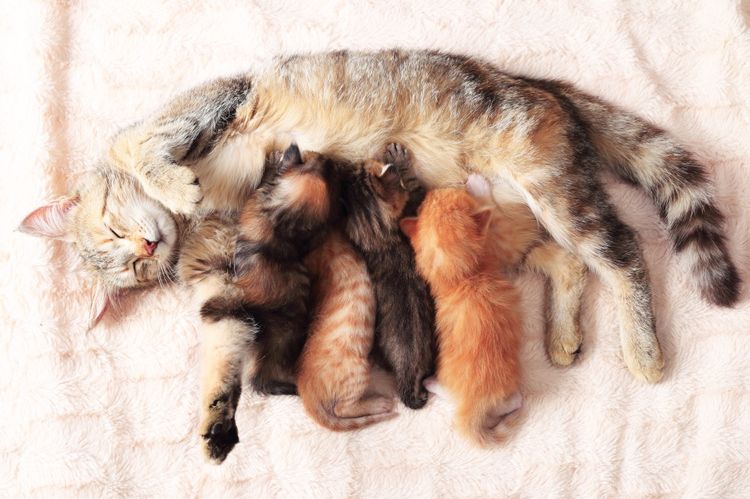
Until the baby is born, it's impossible to determine how many of the existing nipples will be fully functional. Those that don't produce milk during suckling are most often underdeveloped during embryonic development and lack a duct from the gland to the skin surface.
The number of nipples does not change with age: they cannot be added, but they also cannot disappear over time.
A cat's nipples
Some people are surprised that nipples can be found on male cats, as they don't need to nurse their young. Inexperienced owners should be aware that trying to determine a kitten's sex using this feature will be unsuccessful.
The presence of these structures in cats is due to the fact that during the embryonic period, they are formed at the same time in both males and females, but they reach their final development under the influence of sex hormones after the animal becomes pregnant. In females, these sex hormones begin to be produced after successful fertilization, while in males, they can only be released as a result of an endocrine disorder.
Read also:


Add a comment