
How many toes does a dog have?
Dogs are digitigrade animals. This means that when they move, their heels and wrists do not touch the ground, and their toes bear most of the weight, giving them the appearance of walking on tiptoes. This characteristic allows them to abruptly change direction, jump to the side, and perform other maneuvers. Compared to humans, dogs' toes are very short and cannot wiggle them. Because the space between their toes is minimal, they retain only some mobility.
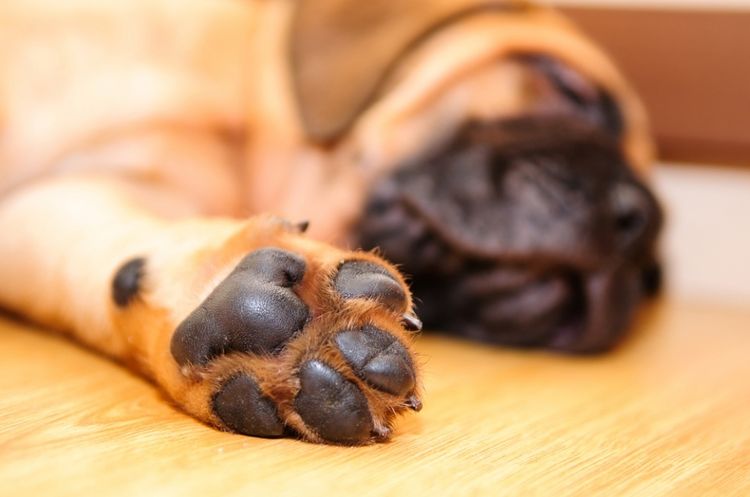
Number of toes on a dog's paws
It's generally accepted that dogs, regardless of gender, age, or breed, have five toes on their front paws (four primary toes and a fifth extra toe) and four on their hind paws. However, some dogs also have five toes on their hind legs. These extra toes are called dewclaws or wolf claws, and their appearance is an atavism (a feature that was present in distant ancestors but lost its function over time).
Note! A dog's dewclaws can be used when chewing bones or toys, as they help grip and hold the object better. They are also believed to provide better traction, allowing the animal to maintain stability while moving at high speeds on rough and uneven surfaces.
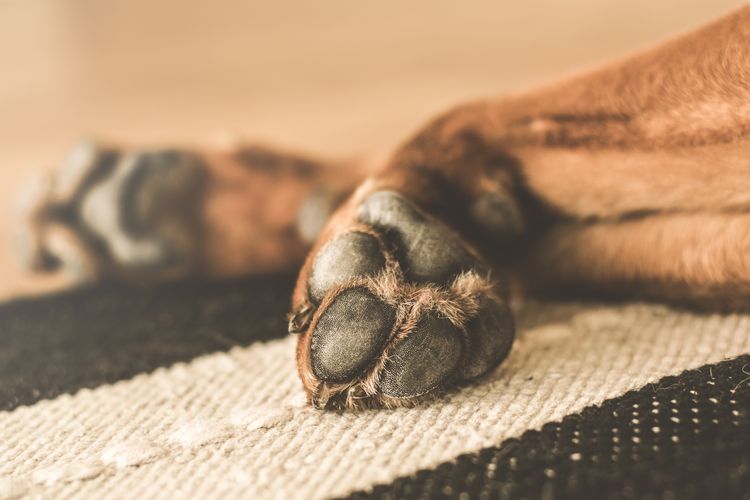
Experts can't definitively determine why some puppies develop dewclaws while others don't. Some believe that a suppressor gene is responsible for the extra dewclaw, so when a female with a normal dewclaw is bred to a male with a dewclaw, the puppies usually have the same paws as their father.
Exceptions to the rules
For most breeds, the presence of such a toe on the hind legs is considered a fault, so such animals may be disqualified from participating in shows. However, for certain breeds, five-toed hind legs are an essential proof of the breed's purity and quality, as stipulated in the standards. If a judge detects a deficiency during a show, the animal may simply be removed from the ring. Such breeds include:
- Nenets Laika (reindeer herding spitz);
- Briard (French Shepherd);
- Pyrenean Mastiff (Great Pyrenees Mountain Dog);
- Beauceron (French Shepherd);
- Catalan Shepherd.
For all other breeds, experts often recommend removing dewclaws on the hind legs early in puppyhood (between 3 and 6 days). They serve no useful purpose during locomotion, but can become caught on something or even torn off during play, training, and other activities. This is especially true for owners who enjoy hunting: the presence of an extra appendage on the hind legs can present additional challenges. When hunting, dogs need to move much faster than they normally would, and an extra appendage on the paws will hinder movement through thickets and get caught on mud or branches.
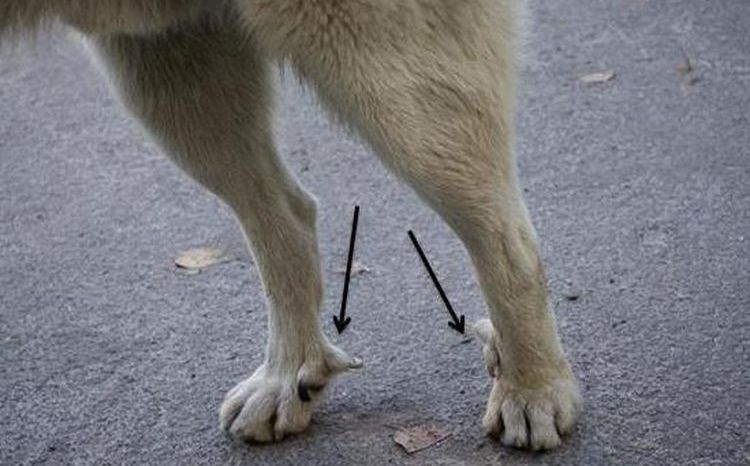
The number of toes a dog has isn't an indicator of health, and the presence of a "fifth element" isn't considered a pathology. Proper and thorough paw care is crucial for health. Regular washing, starting in puppyhood, will help prevent unpleasant odor and fungal infections, and paw massage between the pads will improve blood circulation and promote relaxation of the limbs.
Read also:
- How to properly trim your dog's nails at home
- Until what age do dogs grow?
- Where is the withers on a dog?


Add a comment