
How many toes does a cat have?
Cats can be considered perfect creations of nature, as they are unmatched in the diversity of their physical abilities. They can jump expertly, balance on thin tree branches, move slowly, react with lightning speed, and reach their desired destination silently. Their toes help them achieve all this. But not everyone, even those with pets, can immediately answer how many toes a cat has.
Standard norms
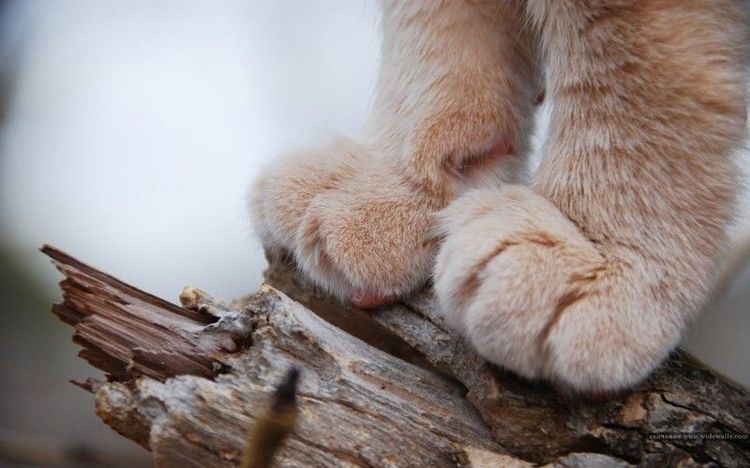
First of all, it's worth noting that pets, like people, sometimes exhibit various abnormalities. But how many toes should a cat have? It's generally accepted that there should be 18. This number is the standard established by international feline organizations. Moreover,
- The front paws have 5 toes, 4 of which are located next to each other and touch the ground while walking, and 5 are considered vestigial and are located slightly higher, used only when moving on inclined and vertical surfaces.
- There are 4 toes on the hind legs.
Each toe has a soft, hairless pad and a sharp, sickle-shaped claw, which allows cats to nimbly climb trees, defend themselves from attacks by other animals, and firmly grasp prey. Cats' claws are retractable: muscles and tendons pull them into a kind of skin sheath, preventing them from interfering with movement. However, when the need arises to grasp something, the animal extends its toes and releases its dangerous "weapon."

The toes are essential for walking and running; their flexibility and mobility allow cats to move their limbs in any direction. This paw structure allows them to maintain balance even on the narrowest surfaces, as well as move quickly and virtually silently, which is essential for predators, which include domestic cats. The rapid contraction and relaxation of the toe flexors allows these animals to leap impressively high.
Deviations from the norm
Some animals are born with more digits than normal. This condition is called polydactyly (from the Greek "poly" meaning many, and "daktylos" meaning digits) and is caused by a specific gene. If one parent has this gene, there's a 60% chance that polydactyly will also appear in their offspring.
The record holder in this area, according to the 2002 Guinness Book of Records, is a Canadian cat named Jake, who was endowed by nature with 28 toes (7 on each paw).
Important! Polydactyly does not cause any discomfort to cats, does not affect their health, and is considered a characteristic, not a genetic deformity. buildings, which is only important for compliance with exhibition standards.
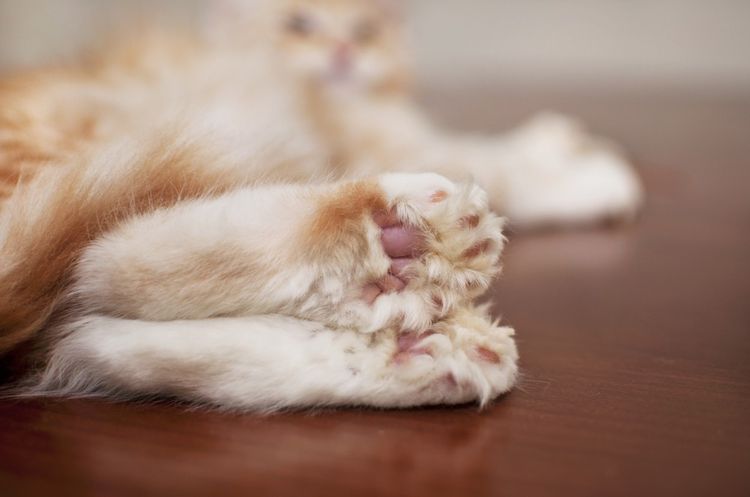
An abnormal number of toes occurs in both male and female cats. There are two types of polydactyly:
- Postaxial, where the toes are aligned with the other four. These paws are called "snowshoes" because they provide additional stability for the animal when moving through loose snow and prevent it from sinking.
- Preaxial, when the extra toes are located on the inside of the paw and are spaced apart from the rest, similar to the human thumbs. This type of paw is called "mitten" paw.
This condition most often occurs on the front paws, or both the front and back paws, but cases of polydactyly on the hind limbs are very rare. The claws that grow on extra toes typically grow much faster than the rest, so they require more attention and regular grooming.
Note! In ancient times, polydactyl cats were called ship's cats, and their presence on a ship was considered a good omen. This is because the special structure of their paws allowed them to better maintain a grip on the deck during storms or other inclement weather. Furthermore, their presence on a ship was considered a symbol of good luck.
Regardless of how many toes a domestic cat has, it needs regular paw care, especially clawsWhen kept indoors, claws do not have time to wear down naturally, so they should be trimmed periodically.
Read also:
- The most unusual animals in the world
- How many days does a cat walk?
- Life expectancy of cats and male cats


Add a comment