
How many kittens does a cat give birth to for the first time?
When the cat gives birth When breeders first litter, they wonder how many kittens they can expect. Why do some kittens only have one, while others have five or six? What's a normal number of kittens?
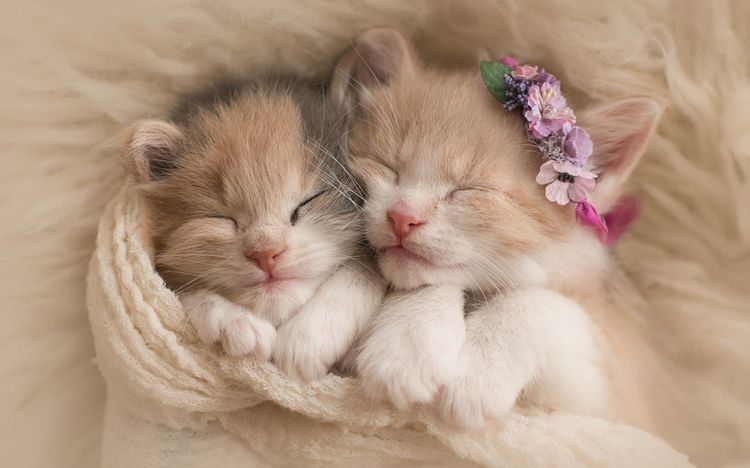
What is the norm?
Knowing in advance how many kittens will be born, especially if it's the first litter, is not only a matter of convenience but also of safety for the animal. The owner will be able to prepare and provide assistance if a large litter is expected. Furthermore, it's possible to find new homes for the kittens in advance, and breeders can calculate the profit from selling club kittens.
It's difficult to predict the exact number of kittens. Statistics can be used to draw conclusions. Typically, 4 to 6 kittens are born. However, there have been cases of more than 10 healthy kittens being born.
Fact! In 1970, a cat named Antigone gave birth to 19 kittens. A mother named Bellflower from South Africa gave birth to 14, and all of them survived.
Breeders sometimes use this method to determine the number of litters: look at how many nipples a cat has. Subtract two from the total. The resulting figure is an approximate number. This method is certainly not exact, but it can be used as a guide. Read more on our website about: How long does it take for a cat to give birth?.
Physiologically, the offspring's fertility depends on how many fertilized eggs attach to the uterine wall. Veterinarians recommend checking the litter with an ultrasound a week before birth.
Important! Do not touch a pregnant cat's belly with your hands. This can cause stress for the expectant mother and harm the kittens.
Young and old cats give birth to fewer kittens, while middle-aged cats give birth to the largest number. Furthermore, indoor cats living in comfortable surroundings have fewer kittens than stray cats. Scientists explain this by the need to reproduce in unfavorable conditions, where not all newborns can survive.
When a record number of babies are born, this often leads to high mortality rates, especially among stray animals. They are born very small, and the mother often doesn't have enough milk to feed them all.
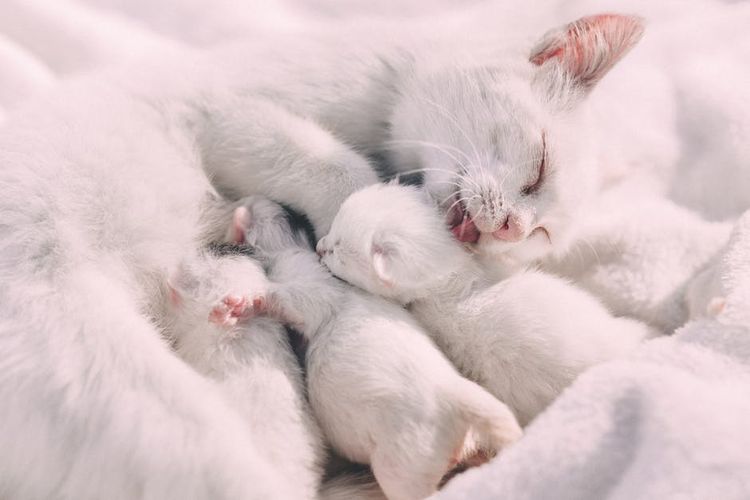
What influences the number of offspring?
A cat's lifestyle and care also influence her future offspring. The following factors influence how many puppies she can produce:
- Age. The most fertile period is from 3 to 6 years. Before and after this period, you shouldn't expect a mother to have more than 3 pups.
- Heredity. If an animal's family has a history of females with a record number of babies born, then one can expect a large number of offspring.
- Hormonal balance. Sometimes, due to a disruption in egg production, pregnancies become less frequent and are not multiple.
- Weight. Emaciated or obese animals produce fewer offspring.
- The activity and quality of a cat's sperm. The fact is that a cat ovulates during mating, and this is influenced by the male's behavior.
- Taking contraceptives in animals reduces future fertility.
Apart from all the objective reasons, a small number of offspring may simply be an individual characteristic of the mother.
Features of childbirth
Veterinarians have identified interesting characteristics associated with childbirth in different cats:
- Longhaired breeds reach reproductive age later and have a longer gestation period.
- British and Scottish cats give birth to large kittens, especially first-time mothers, often requiring additional assistance during labor. The length of pregnancy also influences the size of the fetus. This typically lasts 72 days, during which time the kittens gain significant weight.
- Multiple pregnancies are shorter. This is nature's way of protecting the expectant mother from exhaustion. The offspring are smaller in size than those with only one or two siblings. But they develop faster and soon catch up in size and skills.
- The more often a cat becomes pregnant, the faster her body becomes depleted. This is especially important for breeders. By the age of 5-6, the mother's body can become so worn out that she will produce weak and unhealthy litter.
- After the female reaches 7 years of age, pathologies in kittens are more common. It's not advisable to force the animal to give birth repeatedly. This not only has a detrimental effect on the kittens but also leads to the mother's early death.
Childbirth in cats is a complex process. The health of both the mother and her kittens depends on how it goes. The owner should ensure the process is comfortable and be prepared to provide assistance, especially if this is the first birth.
Read also:
- How many kittens can a cat give birth to?
- Why can't a cat give birth?
- How to help a cat give birth at home


Add a comment