
How much water should cats drink per day?
Are you wondering for the first time how much water a cat should drink per day? We'll answer it fully, taking into account all possible circumstances. This question is truly relevant, as a lack of fluid can lead to negative consequences:
- the skin and mucous membranes dry out;
- the fur becomes brittle;
- the functioning of internal organs is disrupted;
- problems with metabolism appear.
- the temperature rises and the cat's general condition worsens.
No less dangerous is the condition when a pet drinks too much water for no apparent reason.
Content
How much water should a cat drink per day?
-
Classic formula taking into account weight + reserve
Approximately:20–40 ml of water per 1 kg of weight + 70 ml of fixed “insurance”.
Example: adult cat 4 kg → 4×(20–40) + 70 =150–230 ml per day.
(On dry food, closer to the upper limit; on wet food, closer to the lower limit.) -
Dietary approach
-
Dry food: the need mayincrease by 2–3 timescompared to dry food only.
-
Wet food (~70–80% water): basic drinking requirement candecrease to 20 ml/kg.
-
-
Binding to energy
For every 100 kcal of feed value – up to150 ml of water, especially for active or large cats. -
Simplified calculation for kittens and seniors
-
Kittens (< 1 year):50–60 ml/kg, i.e. 2× the base rate.
-
Older cats (> 10 years): basic rate 30–40 ml/kg, but may require assistance (fountain, wet food, drinking bowls).
-
During the hot summer months, cats' water needs increase. It's also important to consider your cat's feeding habits. If you feed your cat a dry diet, you shouldn't be surprised if their water intake is quite high. However, if your pet eats dry food but drinks very little water, this is a sign to worry. There's no immediate cause for alarm. However, if time passes and your cat still isn't drinking much, it might be wise to offer wet food first.
There's no need to worry about how much water a cat should drink per day if she's nursing her kittens. During this period, an increased need for water is considered normal, and there's no reason to worry. For kittens close to their mother, a lack of desire to drink is also normal. After all, they receive all their daily fluid intake from their mother's milk. The kitten will begin drinking water on its own as it gets used to adult food.
One of the most important responsibilities for owners is ensuring free access to a water bowl. It's also important to remember that, regardless of your pet's preferred food, there should always be plenty of water. Also, make sure the water is fresh. Ideally, you should change it several times a day. If these conditions aren't met, it's no wonder your cat refuses to drink.
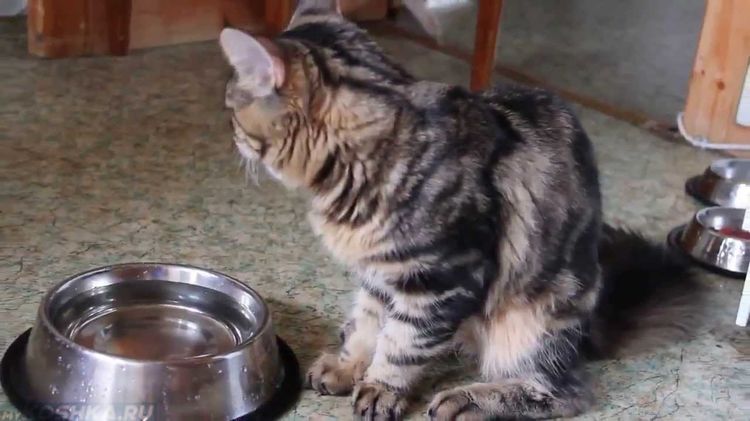
An equally important aspect is the choice of drinking cup. It's clear that it must be clean. Bowl Water with foreign odors is a possible reason why a cat refuses to drink water. The best materials for choosing drinking vessels:
- glass;
- metal;
- ceramics.
It's best to avoid plastic dishes. Plastic absorbs and retains odors well, and some plastic products can also release harmful chemicals. All of this combined is undesirable for pets.
Age, physiological condition and breed
-
Kittens They are growing rapidly: their metabolism is higher, their weight is relatively small - they require more water per 1 kg.
-
Adults: normally 20–40 ml/kg depending on diet and activity.
-
Elderly: often suffer from diseases (kidneys, liver, diabetes) - it is possible and necessary to stimulate drinking, especially if the diet is dry.
-
Pregnant/breastfeeding women: need increase by 20–30% from its norm - compensation for the need for milk.
-
BreedsLarge cats (Maine Coons, Bengals) drink more in absolute quantities, but less in ml/kg. Small cats, on the other hand, drink less.
How to tell if your cat is drinking enough water daily
A pet owner may wonder how much water a cat should drink per day if they notice their pet's indifference to their bowl. This question has long been settled. A cat needs 100 grams of water per kilogram of body weight. Therefore, to determine if they're drinking enough, they need to weigh them and perform simple mathematical calculations. If their refusal to drink becomes persistent, they should be taken to the veterinarian. After all, dehydration can lead to high blood pressure and affect the functioning of their internal organs.
If you notice your pet's indifference to the bowl, consider whether they're quenching their thirst elsewhere. For example, some cats enjoy drinking tap water. Even the most unafraid pets will happily lap up water from the toilet. Cats also enjoy large containers. Therefore, it's quite possible your cat can't live without water in the bathtub or a bucket.
Signs of dehydration and overhydration
Dehydration:
-
Dry oral mucosa, sticky saliva.
-
“Shifted” skin when lightly pinched (turgor test).
-
Cloudy/concentrated urine, infrequent urination.
-
Lethargy, loss of appetite, weight loss.
Excess:
-
Frequent drinking + urination (polyuria).
-
Rapid fatigue, possible diabetes or kidney disease.
-
If the water consumption has increased by ≥1.5× within a week, there is reason to contact a veterinarian.
How to track consumption
To find out for sure,How much water does a cat drink?:
-
Pour the exact amount of water (measuring cup).
-
After 24 hours, measure the remainder + added portions.
-
Divide by days (3–7 days) to get the average for the period.
It is useful to keep a table:
| Date | Poured, ml | Residue, ml | Drinks, ml | Comments |
|---|---|---|---|---|
| June 1, 2025 | 250 | 50 | 200 | After a fun walk in the heat |
| June 2, 2025 | 250 | 20 | 230 | Temperature +3°C, drinks more |
| … | … | … | … |
Water quality and delivery methods
-
Filtered / bottled– the preferred choice.
-
Do not boil: boiled water loses minerals and can cause urolithiasis.
-
Not distilled, not mineralized: the first one is deprived of microelements, the second one has an excess of salts.
-
Bowl material: optimally - glass, ceramics or stainless steel;avoid plastic- the smell lingers and can cause reluctance to drink.
This is interesting: many cats prefermoving water– show an active interest in fountains.
Locations and stimulation of drinking
-
Place itseveral bowls of waterin quiet corners of the house - in the kitchen, in the bedroom, near your favorite bed.
-
Usefountainsto draw attention to the water.
-
Change the water2 times a dayand wash the bowls with hot water without aggressive detergents - so that there is no smell left.
-
Experiment: Wide bowls without sharp edges can help cats with sensitive whiskers.
When to see a veterinarian
-
Changes in drinking behavior ≥ 1.5 × from the usual norm.
-
Signs of dehydration or overhydration.
-
In case of chronic diseases (renal failure, diabetes, urolithiasis), monitoring of drinking is mandatory.
How long can a cat live without water?
Water is a major component of a cat's body. The animal is almost entirely composed of fluid—70% of it. Any extreme situation involving water or food deprivation can have a tragic impact on the pet's condition. However, if a cat loses all its fat and even 50% of its protein, it can be nursed back to health. However, if the animal loses 10% of its body fluid, death is almost inevitable. So how long can a cat survive without water?
There's no single answer to this question, as each case requires consideration of various factors. One example is the time of year. If you leave a cat without water during the hot summer months, it only takes one day to completely dehydrate the pet.
Diet is another important factor. If your cat eats exclusively dry food, their diet is deficient in liquids and they'll need more water to quench their thirst. If they eat a variety of foods, they'll get some of their moisture from their food.
How long a cat can go without water also depends on its breed. For example, British Fold and Scottish Fold cats drink much less water than other breeds of the same weight. However, this is the exception rather than the rule.
Based on average data, a complete lack of water can kill a cat in just two days.
You can provide your pet with excellent nutrition and supplements. However, if the water quality is poor, you can't expect your cat to thrive. Clean, high-quality water is one of the most important aspects of your pet's health.
Final recommendations
-
Water norm:20–40 ml/kg + ~70 ml— but is adjusted according to diet, activity and physiological state.
-
Kittens: 50–60 ml/kg,elderly and nursing- from 40 to 60 ml/kg.
-
Observation, quality water, comfortable bowls and a stimulating position are key factors in maintaining water balance.
-
Changes in drinking behavior require attention - it may be worth consulting a veterinarian.
Any questions? You can ask our website's staff veterinarian in the comments below, who will answer them as quickly as possible.
Read also:
- How do cats drink?
- Why does a cat drink a lot of water?
- What to do if your cat is marking in your apartment


3 comments
Natalia
Hello. I read that a cat needs 100 ml of water per 1 kg of weight. My cat weighs 5 kg. Does he really need half a liter of water a day?
Anastasia
Good evening! Our cat is 7 months old, and I've noticed he's started peeing once a day (previously it was 2...3 max). He seems to be drinking water, but sometimes from a bowl, sometimes from the bathroom tap. We did a urine test, which showed 4 large struvites and 1 mg of protein. They're diagnosing a kidney stone. He eats Hill's kitten food. He only eats dry food. He hasn't been neutered yet.
What would you advise in this case?
Thank you.
Daria is a veterinarian
Hello! I recommend switching your pet to a food formulated for animals with urolithiasis and beginning treatment for this nasty condition before it's too late. It's best to feed wet food, as it contains more moisture, and you won't have to worry about your pet drinking enough. With urolithiasis, it's crucial to get plenty of fluids. This will help the bladder clear out struvites (wash out the sand with urine), lower the urine concentration, and reduce bladder irritation. Spasms will decrease, and the bladder will empty more easily. Your treatment plan should have been prescribed based on your test results.
Add a comment