
How long does it take for a cat to recover from anesthesia after sterilization?
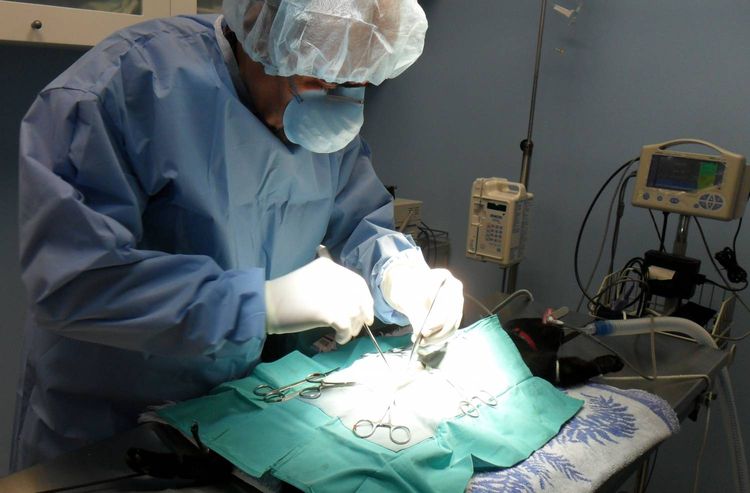
Owners uninterested in producing offspring from their domestic cats usually take a more drastic approach: spaying their pets. Without delving into the details of the procedure, they ask how long it takes for a cat to recover from anesthesia after spaying and how to monitor her after the surgery. The answer to this question depends on the type of surgery.
Content
Types of operations
To sterilize an animal, one of these methods can be chosen:
- Ovariectomy, in which only the ovaries are surgically removed, leaving the uterus in the peritoneum (opponents of this method cite the fact that the cat may subsequently develop inflammation of the organ that was not removed, but is no longer needed, and will require further surgery).
- Ovariohysterectomy – not only the ovaries are removed, but also the uterus itself, i.e., all reproductive organs.
- Tubal ligation (the advantage of this method is that the cat can be mated without any risk of pregnancy; the disadvantage is that problems may arise with the present but "blocked" organs).
Post-operative behavior and care of a cat
When a cat recovers from anesthesia after spaying, she may struggle to control her movements. After getting up from her bedding and taking a few steps, she may collapse. Carefully place her in her bed and ensure she doesn't have to walk far. Place a litter box nearby and limit her space. Remove anything that could impede her movements, such as wires or objects, to prevent her from getting tangled or tripping, which could cause further pain. Avoid placing your pet on high surfaces (such as a sofa or bed) as this could cause her to fall and injure herself, which could lead to premature incision rupture.
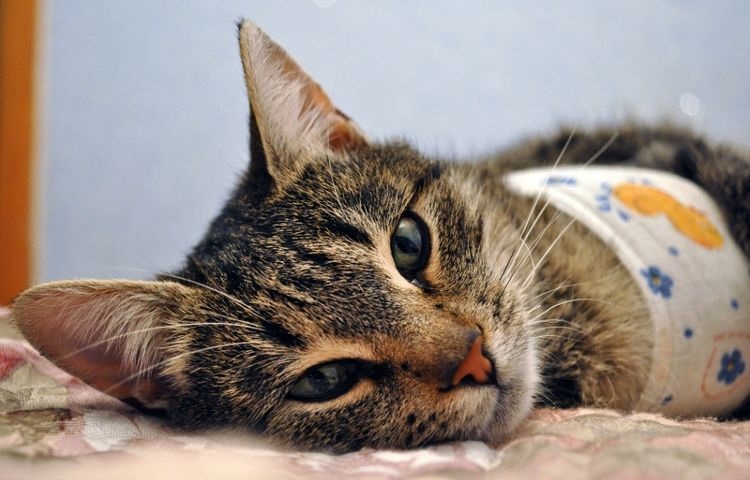
After anesthesia, a cat may remain drowsy for several hours and react erratically. However, don't be alarmed if she occasionally jumps up and tries to run, or meows loudly and protractedly—this is a completely normal reaction. Just be careful not to let her accidentally rip off her post-op blanket or tear her incision.
It's a good idea to try to calm your pet by gently petting and talking to her. It's also important to ensure your cat doesn't roll over onto her left side, which can put stress on her heart after surgery. It's recommended that she lie on her right side only.
Read also on our website about How to make a cat bandage after sterilization with your own hands.
Cat emerging from anesthesia
Naturally, owners are concerned and want to know in advance how long it takes for a cat to recover from anesthesia after spaying, so they can monitor their pet's condition and, if anything goes wrong, seek advice promptly. Let's be clear: there's no need to worry too much about the upcoming anesthesia, as the use of modern medications rarely causes complications, especially if your cat is completely healthy and has been examined for any possible pathologies the day before.
If your pet is crawling, bumping into obstacles, or falling over every step, don't worry—this is temporary disorientation. Your pet may behave this way for 2-3 hours, after which they begin to walk, slightly unsteadily. However, sometimes recovery from anesthesia can take up to 12 hours. This is cause for alarm. If your pet continues to exhibit unusual behavior, or if they make plaintive meowing sounds, you should consult a specialist.
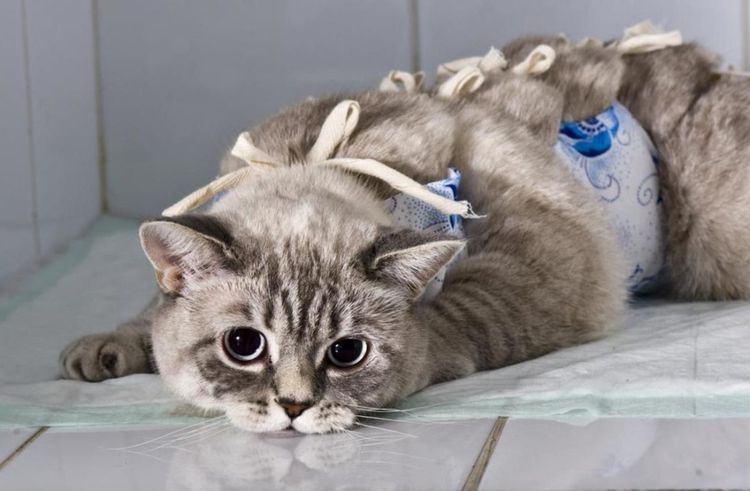
If breathing difficulties occur, the mucous membranes turn blue, and the pulse weakens, immediately take the animal back to the clinic.
Lethargy and drowsiness may persist for up to two days after surgery. These are side effects of anesthesia that accompany the animal as it recovers from it.
Prolonged recovery from anesthesia
If your cat takes a long time to recover from anesthesia after spaying, she may have developed post-operative complications and requires urgent medical attention. These may include:
- Post-anesthetic hypothermia is when the cat lies motionless for a long time, its paws and ears are cold to the touch, and the temperature measured rectally (through the anus) is below 37 degrees and warming with heating pads does not help.
- Post-anesthesia hyperthermia – a temperature above 39 degrees Celsius that persists for more than 3 days after sterilization.
- Internal bleeding. This is indicated by blood oozing from the cat's surgical incision, as well as lethargy and apathy, abdominal tenderness, and marked pallor of the mucous membranes.
- Redness and postoperative swelling around the incision site. If these symptoms persist for more than 5 days after surgery and the swelling does not subside, a veterinary examination is necessary.
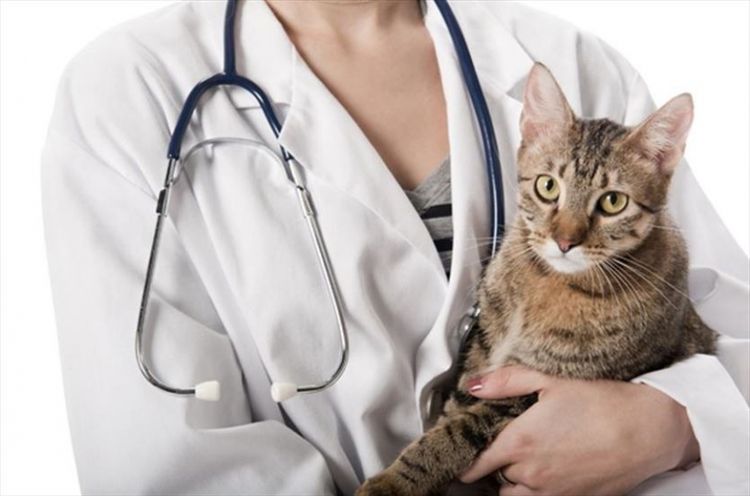
In any case, if you are concerned about your pet's physical condition or its strange behavior, and there is no noticeable improvement, consult a specialist who will tell you how you can help your cat.
Read also:
- Sterilization of a cat
- The cat is shaking after sterilization
- DIY cat blanket for post-operative use


Add a comment