
How many days does a cat's pregnancy last?
If you have a cat, you're likely concerned about her pregnancy. Even the most attentive owners strive to learn as much as possible about their furry beauty's pregnancy so they can carefully monitor her health.
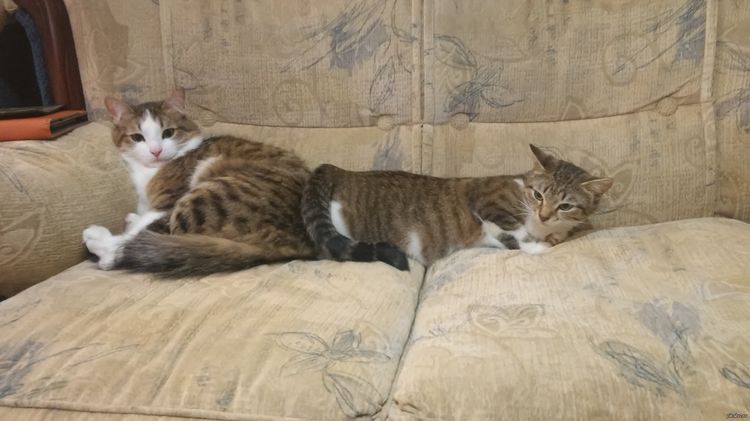
First of all, it's important to know that a cat can become a mother for the first time between five and nine months of age. However, this timeframe can vary depending on the cat's weight, health, and even breed.
If a cat becomes cranky, loses her appetite, and demands increased attention, she's likely ready to mate. Often, the cat will roll around on the floor, arching her back and purring.
Content
Gestation period in cats
Typically, a cat's pregnancy lasts about nine weeks, or approximately 57-65 days. However, the gestation period can also depend on several factors, such as the cat's breed and the number of kittens she is giving birth to. For example, a Siamese cat can carry her kittens for longer than nine weeks. Multiple pregnancies, however, can last shorter.
There's no need to worry if pregnancy extends beyond seven days. If labor doesn't begin after this time, your pet should be examined by a veterinarian. However, if labor begins much earlier than expected, the kittens may not survive. The overall physical condition of the pet can also affect the gestation period.
Domestic cats can produce kittens up to three times a year, but this can negatively impact their health. Experts believe that a cat should normally give birth to kittens no more than once a year.
How to tell if a cat is pregnant or not
Some signs will help you find out:
- In the early stages of pregnancy, the cat’s character and habits may change: she becomes more affectionate and lazy;
- During the first days of pregnancy, cats may eat and sleep more;
- After three weeks, the cat's nipples become clearly visible;
- At 3-4 weeks the animal may suffer from toxicosis;
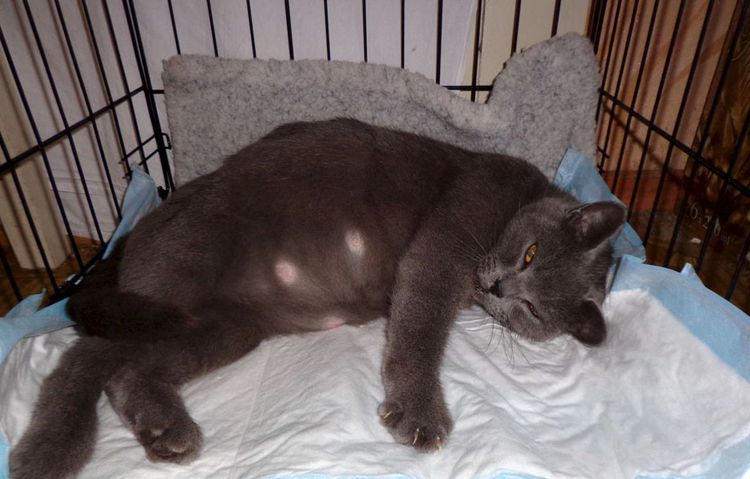
- The 5th week is characterized by noticeable weight gain and the appearance of a belly;
- At the sixth week the cat becomes sedentary, sleeps a lot, does not pay attention to cats.
How to care for a pregnant cat
First of all, it's important to provide your cat with a complete and balanced diet. If your cat eats cat food, you can purchase special food for pregnant cats. Your cat's diet should also include meat, eggs, and dairy products.
It is better for the cat to spend as much time as possible at home to avoid negative situations outside that could be dangerous for her.
During pregnancy, you need to provide the cat with complete rest: do not disturb her unnecessarily and do not cuddle her.
You should not give your cat any medications, even the most seemingly harmless ones, as they can be dangerous for the offspring.
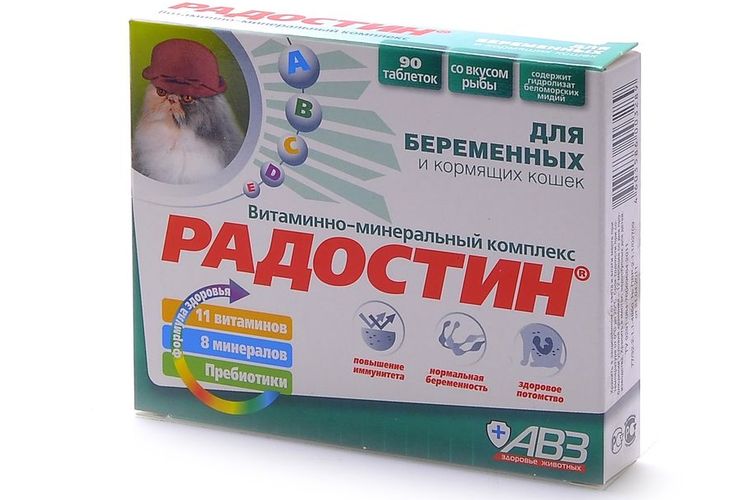
You can support the expectant mother with special vitamins for pregnant cats.
Before labor begins, it's important to provide the mother with a cozy, calm nest for the birth and future nursing of her kittens. A cardboard box lined with a soft blanket works well for this purpose.
At the end of pregnancy, it is better not to leave the cat alone, as labor can begin at any moment.
How to determine if a cat is about to give birth
Before labor begins, the cat becomes restless, refuses to eat, and breathes heavily. She then settles into her nest and remains there until the end of labor. After labor, the cat may also go without food for a while, but she should have access to water. It's best not to handle newborn kittens immediately, as this can be unnerving to the mother.
Important! If anything goes wrong during labor, it's best to call your veterinarian immediately.
Read also:
- How many kittens can a cat give birth to?
- How to tell if a cat is giving birth: key signs
- Peculiarities of cat birth at home


Add a comment