
How long do contractions last in cats?
During labor, a cat generally doesn't require human assistance. She can handle this challenging task on her own. However, owners should be aware of how long a cat's contractions last so they can respond promptly and take the necessary steps to preserve the health of the mother and newborn kittens.
Content
Organization of a "family nest"
On average, a cat's pregnancy lasts 65 days, but can range from 60 to 70 days. Childbirth Before and after this period, labor may be caused by pathologies (abnormal pregnancy, fetal death, etc.) and may be accompanied by complications. Therefore, it is important to closely monitor the animal's condition during pregnancy, especially in the later stages. After the 60th day of pregnancy, it is important not to leave the cat alone for extended periods of time to avoid missing the onset of labor.
Childbirth is a natural process. Sometimes, it can be even more stressful for the owner than for the cat itself. A cat's instincts will allow her to perform all necessary procedures, but a human should monitor the process and intervene only when necessary.
Before labor begins, it's important to provide the cat with a suitable place. A cat will naturally seek out a secluded spot and spend a lot of time there. Sometimes, the cat will retreat to the farthest, darkest corners, inaccessible, and in an emergency, it will be impossible to quickly provide assistance. Therefore, it's best to create the "birthing nest" yourself. For this purpose, it's recommended to use special cat baskets or a cardboard box. Cut off one side of the box so the cat can easily enter. The remaining side should act as a barrier to prevent the kittens from crawling out.
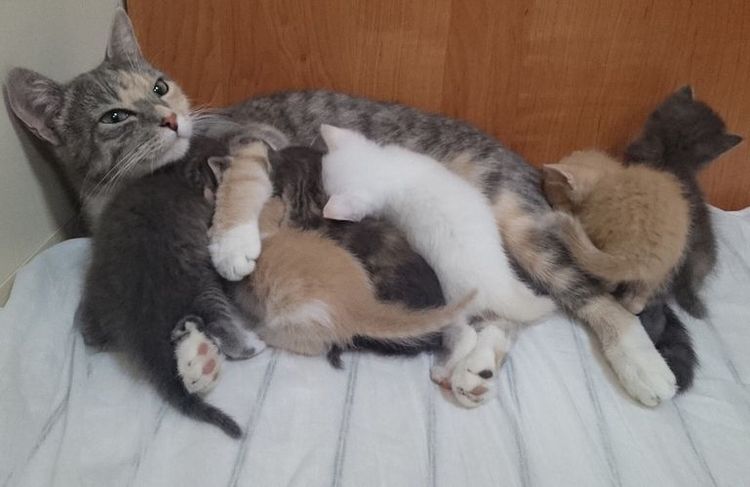
The location should be cozy, spacious, and located in a quiet and peaceful part of the house. Keep in mind that the mother and her offspring will spend the next few weeks here and should not be disturbed at first.
Signs of the onset of labor
It can be difficult for an inexperienced owner to understand that a cat is going into labor. quite difficultIt's especially important to remember that contractions can be false. During the final days of pregnancy, the cat's behavior will change, signaling the owner of the impending event. Clear signs that labor is beginning include:
- enlargement and redness of the mammary glands;
- swelling of the genitals;
- the belly drops and becomes pear-shaped;
- intensive licking of the genitals (this should not be discharge);
- frequent urination;
- loss of appetite;
- lethargic behavior, excessive attachment to the owner.
While the water is breaking, the cat will lick itself intensively.
A few hours before labor, a cat may become restless, meow loudly, and be restless. She may also begin arching her back, as if she's having contractions. These uterine contractions aren't contractions per se. However, they are a precursor to labor. If a cat exhibits this behavior, expect her to give birth within a relatively short time.
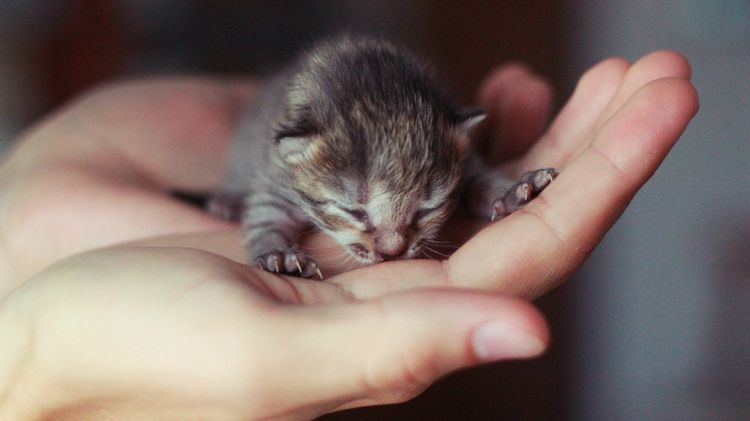
False contractions often occur several days or even weeks before the expected onset of labor. In this case, it's important to closely monitor your pet's behavior. If false contractions cause significant discomfort, vaginal discharge (especially with an unpleasant odor), or if your pet becomes excessively lethargic or completely refuses to eat or drink, you should take her to the veterinarian.
Contractions and the birth of kittens
The process of kitten birth can be divided into two stages:
- Labor begins. The uterus begins to contract, and the first mild muscle contractions appear. At this time, the kittens prepare to emerge and line up to pass through the birth canal. At first, it's not always possible to recognize contractions. They are invisible and don't cause significant pain, so the cat won't react strongly to them. Contractions typically occur at intervals of 30-40 minutes. Gradually, the intervals will shorten, and the duration of the contractions will increase. This period can last 8-10 hours.
- Walkthrough generic The contractions intensify, and the interval between them shortens to 1 minute. Muscle contractions become distinct and easily visible to the naked eye. The final contractions—prolonged muscle contractions, also known as pushing—push the kitten through the birth canal. As the contractions increase in intensity, the fetuses begin to emerge.
It can take up to 12 hours from the onset of the first contractions until the kittens are born. If the kittens are not born within a longer period, seek veterinary attention. During prolonged, inactive labor, the fetus may experience hypoxia—oxygen deprivation—which can negatively impact its health and may even lead to death.
How long does labor last for a cat?
On average, labor lasts approximately 24 hours. This will depend on the number of kittens, the cat's health, and external factors. Kittens may be born one after another, with intervals of 15-30 minutes (sometimes up to an hour). During this time, the cat will continue to have contractions, with short breaks between contractions. First-time mothers may experience longer contractions than those who have already given birth. However, this is not a given. First-time mothers can handle the birth of their kittens just as successfully as experienced mothers. However, complications are possible with second and third births. It is important to always monitor the process, as assistance may be needed at any time.
The following signs indicate the end of labor:
- contractions no longer occur or have been absent for more than 3 hours;
- the stomach has become soft, the muscles are not tense, and the fetus cannot be felt in it;
- The cat is behaving calmly and resting.
To know exactly how many kittens should be born, it is recommended to do an ultrasound scan beforehand.
Birth of the fetus
As soon as the kitten emerges, it is covered in a membrane. The mother should carefully tear the membrane and cut off the umbilical cord. The mother begins to lick the kitten vigorously, which helps clear mucus from its airways. The kitten should squeak—this is a sign that it is breathing. After or along with the kitten, the placenta is expelled, which the mother can consume. If the litter is large, she should not be allowed to consume more than three placentas.
It's important to ensure that all placentas have been expelled. Their number should correspond to the number of fetuses. A retained placenta can cause serious inflammatory diseases.
Between births, it's important to ensure the mother doesn't lie on the newborn kitten. Due to pain and discomfort, she may not notice it and accidentally crush it.
Once all the kittens are born, it's important to provide the family with complete peace and quiet. The mother will be grooming and feeding her babies, so don't disturb them unnecessarily. If the mother ingested the afterbirth, she may not eat for several hours after birth. Provide her with water and a litter box nearby to ensure she doesn't wander too far from her kittens.
Actions in case of complicated labor
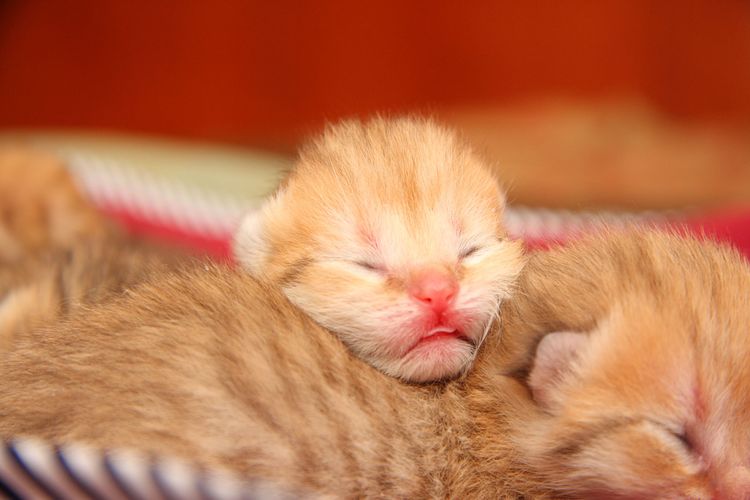
If the owner notices something is wrong during the birth, they should immediately intervene and provide first aid. Alternatively, they should urgently contact a veterinary clinic. It's best to have several veterinarians' phone numbers handy for remote consultations.
Signs of developing complications are:
- The cat's contractions stopped. If contractions stop while the fetus is passing through the birth canal, lubricate the genitals with Vaseline to facilitate its exit (wear sterile rubber gloves). Stroke the abdomen toward the vulva. If labor has stopped and the fetuses are still clearly felt in the abdomen, administer 0.2 ml of oxytocin (a hormone that stimulates uterine contractions) into the withers. It is recommended to seek veterinary assistance, as retaining the fetus can cause the death of the animal.
- There is mucous discharge with an unpleasant odor, or bleeding. You should immediately go to a veterinary hospital, since inflammatory processes (indicated by discharge) or uterine bleeding without appropriate treatment will lead to the death of the animal.
- Suspected eclampsia (critical decrease in calcium levels), accompanied by seizures. Calcium gluconate injections at a dose of 1 ml will be required for 3 days.
- Preservation of the placenta in the womb. It is necessary to inject oxytocin and go to a veterinary clinic if the placenta does not come out after the injection.
- Frozen pregnancy. In this case, the animal will require a cesarean section. This is most often performed using a radical procedure involving complete removal of the uterus.
A newborn kitten may also require assistance. If the mother refuses to perform all the necessary procedures for any reason, a human should perform these procedures. The mother may refuse to lick the kitten and release it from the sac. In this case, carefully cut the sac with sterile scissors and wipe the kitten with a clean, soft towel. The airway should be cleared of mucus using a small bulb enema. The umbilical cord is tied with sterile thread 4 cm from the abdomen and then cut with scissors. The cut edge is treated with an antiseptic.
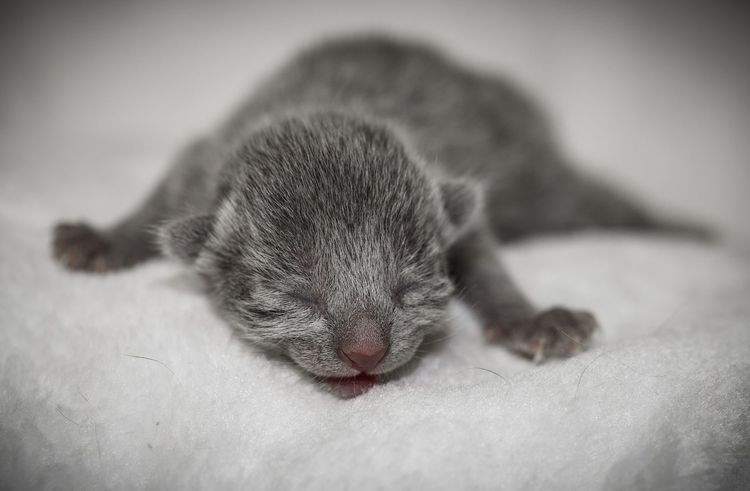
A newborn kitten should be placed with its mother. If she ignores it, its owner will be responsible for its care. From then on, the kitten needs to be kept warm and safe. These kittens are fed with a special formula for newborns using a dropper.
Read also:
- How does a cat behave before giving birth?
- Can a cat eat her kittens?
- How long after giving birth can a cat become pregnant?


1 comment
Nikolay
Signs of labor in a cat. How long does a first labor last? Organizing a birthing area for the kittens. Assisting a cat in labor at home. Complications and discharge before labor. If you're a happy cat owner, even without spaying, your pet will sooner or later give birth to a litter of beautiful kittens. It's best to plan this event so your cat receives the nutrition, care, and attention she needs during pregnancy. This way, the cat's labor will proceed under the close supervision of the owner or veterinarian, which will help manage any complications.
Add a comment