
How long does pregnancy last in dogs?
Those who have no experience caring for a pregnant dog need to gain some knowledge on the matter. After all, this period is crucial not only for the dog but also for the future of her offspring. How long does pregnancy last in dogs? What signs can be observed in the early stages? Are there differences in the duration and progression of pregnancy in different breeds? These and other questions will be discussed in this article.
Content
Pregnancy in dogs, features
Pregnancy (polykyesia) in dogs occurs in the first five days after mating. During this period, sperm are most viable in the female's reproductive tract and fertilize ovulated eggs.
The average pregnancy in dogs lasts 63 days, with variations ranging from 56 to 73 days. Puppies born within these gestation periods are considered viable. A prolonged pregnancy, exceeding 73 days, is a compelling reason to seek veterinary care, as serious complications may arise.

So, how long are dogs of any breed pregnant? On average, they carry their puppies for about two months. It's worth noting that accurately determining pregnancy is quite difficult for the uninitiated. But there are a number of simple signs every owner can look for.
Signs of pregnancy in a female include morphological and behavioral changes:
- Enlargement of the nipples and adjacent tissues.
- Increased appetite, or, conversely, lack of appetite and selective feeding.
- Physical lethargy.
- Cautious behavior and less sociability. In other cases, females seek companionship and affection from their owners.
- Signs of abdominal enlargement appear.
- More frequent urination and mucous, clear vaginal discharge.
In veterinary medicine, there are three types of pregnancy in dogs:
- Physiological.
- Pathological.
- False.
Read also about on our website A detailed breakdown of a dog's pregnancy by day — features of each period.
Physiological
This is a completely normal condition for a pregnant female, in which the gestation of puppies occurs without any pathological changes in the health of either the mother or the future offspring.
Pathological
During this period, the female's natural physiological processes and health are disrupted. These include toxicosis of varying severity, fever, and refusal to eat. These symptoms, as well as any discharge from the female's genitals, should alert the owner, as they could indicate a serious complication: an ectopic pregnancy.
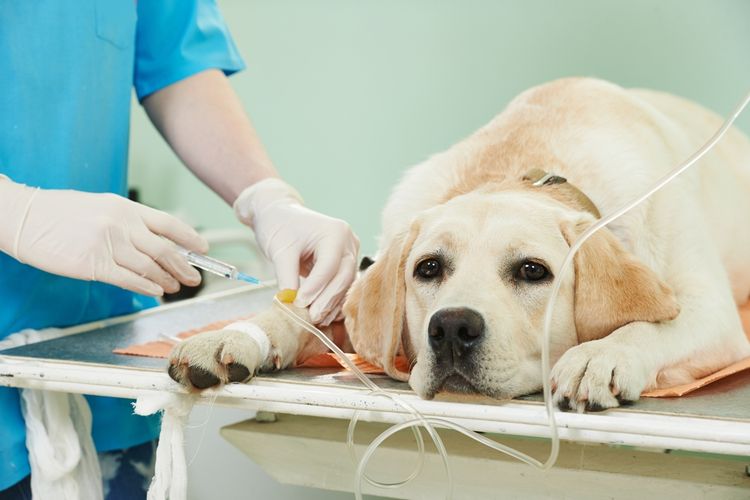
If your dog exhibits these symptoms, you should immediately contact your veterinarian.
False
The symptoms resemble physiological ones. The female's behavior and external appearance suggest a normal pregnancy. Experts consider this condition to be a physiological characteristic rather than a pathology. It develops after an unsuccessful mating or due to hormonal imbalances in the female. The animal's body begins to produce hormones characteristic of pregnancy. Signs of polycystic gestation appear:
- Swelling and pigmentation of the nipples.
- Colostrum secretion.
- Changes in behavior.
- Finding a place to give birth.
- Increased interest in toys that resemble puppies.
In most cases of false polychesis, the symptoms resolve spontaneously within two weeks. The dog needs adequate reassurance that its behavior is illogical.
A false pregnancy can be complicated by developing mastitis. If the dog's behavior and condition persist, veterinary attention is needed.

Generally, the gestation period is similar for dogs of all breeds. There are some differences depending on the dog's size.
Duration of pregnancy in small breeds
Polycystic gestation in small-breed dogs lasts up to 62 days. Since the uterus puts pressure on the intestines and stomach during multiple pregnancies, the mother's feeding schedule should be adjusted. Feeding should be smaller and more caloric. Of course, overfeeding should be avoided, as this can lead to complications during labor. A mandatory requirement for caring for a pregnant dog is free access to clean drinking water. It is also essential to provide the dog with vitamins and microelements specifically formulated for the breed.
Small breed dogs are generally more sensitive to temperature fluctuations. Since a dog's body temperature drops by 1-2 degrees during pregnancy, it's important to provide a warm place to rest and sleep. For short-haired small breed dogs, you can turn on additional heating or dress them in warm clothing.
Duration of pregnancy in large breeds
The gestation period in dogs can range from 55 to 72 days. With a large number of developing embryos, the polycystic period is shortened. If a dog is carrying one or two puppies, the pregnancy may be prolonged. Typically, large breeds carry fewer puppies, and the pregnancy lasts up to 72 days.

Due to the importance of accurately determining a dog's pregnancy status, its owner can conduct specialized tests at a veterinary clinic. Pregnancy diagnosis in dogs helps accurately determine the polycystic gestation period, calculate the dog's pregnancy calendar, rule out any pathologies, and determine a strategy for the future birth.
Diagnostics
In veterinary medicine, the following diagnostic methods are used:
- Medical examination.
- Ultrasound.
- X-ray.
- Relaxin laboratory test.
A medical examination and palpation are effective in the early stages. The doctor will examine the animal to determine the presence of enlarged mammary glands, swelling of the paws and abdominal walls, and the presence of embryos in the uterus.
A more accurate diagnostic method for detecting polycystic gestation is an ultrasound scan. This will not only determine the gestational age but also determine the number of embryos and their developmental status.
Radiography can be effective after day 42 of embryonic development, when calcium appears in the developing organisms. Radiography allows one to see the location, number, and size of the puppies in the abdominal cavity.
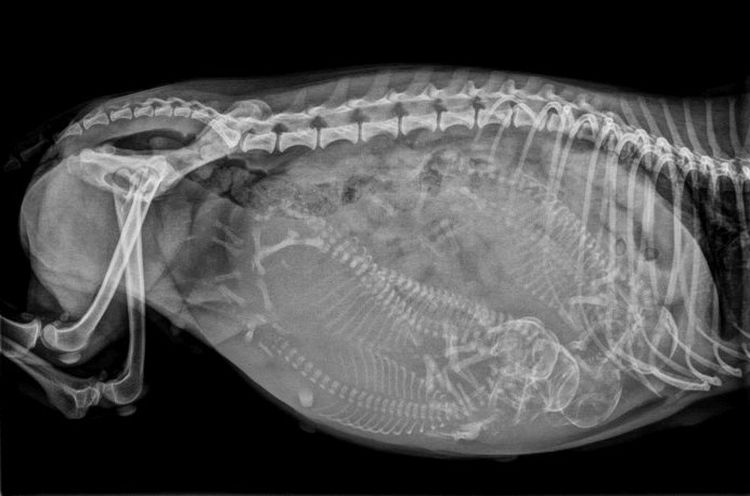
A laboratory blood test for relaxin helps accurately determine the presence of polycystic kidney disease. This specific hormone is produced by the embryos of a pregnant female.
Pregnancy calendar
The calendar indicates the development of embryos over the course of 2 months, and the features of the formation of organs and systems.
- Days 1-14, counted from the first mating. The embryos actively attach to the uterine walls, and each one develops a placenta.
- Days 15-20. Formation of organs, the nervous system, and the spinal column. During this period, medications and insecticides should not be used, as such exposure to the embryos may trigger miscarriage.
- Days 21-29. An ultrasound scan is recommended during this period.
- Day 30-40. Individual embryos are easily palpated.
- Day 40-45. The embryos' internal organs have formed and they are actively growing. During this period, the female needs high-quality, calorie-dense food, preferably in small portions.
- Days 45-50. The puppies are clearly palpable through the abdominal wall. At this point, X-rays are taken, revealing well-developed fetuses. The puppies' skin is covered with fur.
- Days 51-58. The female produces colostrum. She is preparing for labor.
- Days 59-64. The female is clearly restless, searching for a place to give birth. Her body temperature drops sharply to 36 degrees Celsius. The puppies are ready for the birthing process.
What does a pregnancy calendar offer the owner of a pregnant dog? It can help them adjust their pet's care and feeding schedule and create the necessary conditions for the upcoming birth.
For example, 10 days before the expected birth, you should eliminate certain protein-rich foods from your diet or reduce their intake. Five days before birth, it is recommended to eliminate protein foods completely.
In the second half of pregnancy, you should feed more frequently, but in smaller portions. This will help prevent overfeeding, obesity, and problems during labor.
The calendar also helps compare normal morphological changes with pathological ones. If they deviate from the normal range, it's worth seeking help from a veterinary professional.
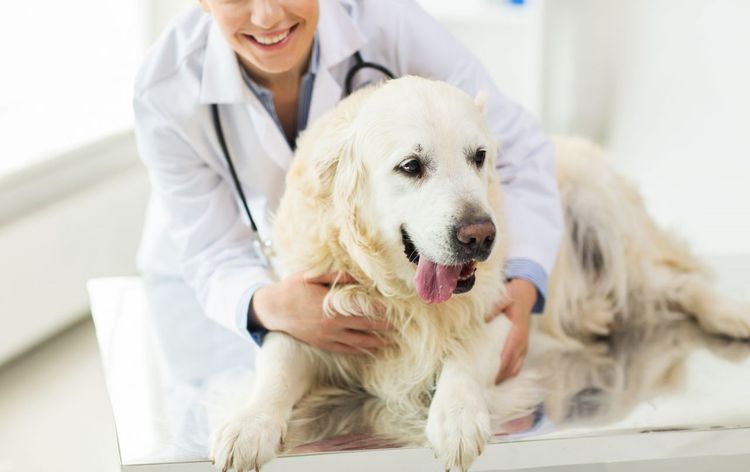
For example, the female's vagina should be dry throughout pregnancy. Mucous discharge of normal color and odor is acceptable. However, if it has an unpleasant odor, is thick or thin, or has a bloody or purulent tinge, these are signs of serious complications.
Thus, knowing the duration of pregnancy in dogs and the characteristics of its normal course, you can provide your pet with proper care during this crucial period and reduce the risk of unwanted complications.
Read also:






2 comments
Evgeniya
I don't understand why they need an X-ray to determine pregnancy? It clearly won't benefit either the mother or the puppies, and it will have a detrimental effect on the milk supply.
Dasha is a veterinarian
An ultrasound doesn't always provide a clear picture of how many puppies there are and how they are positioned. In small breeds, an X-ray often provides a clear picture of the future litter. And if the veterinarian sees a large litter, large fetuses, or abnormal fetal positioning (one puppy may "block" the others), the results of this examination can lead to a decision about whether the expectant mother needs a Caesarean section. X-rays are rarely prescribed for pregnant bitches (only in extreme cases, when the ultrasound is uninformative, or when there are suspicions that cannot be confirmed or refuted in any other way). The veterinarian always evaluates the benefits and harms of any procedure and decides which has the lowest risk of harming the animal. Believe me, many antibiotics are also dangerous to use, but you understand that without them, the animal will be much worse off. And so you take the risk...
Add a comment