
How many hours a day do cats sleep?
Cats are rightfully considered true sleepers—an axiom that requires no proof. It seems these pets are ready to spend days in a semi-asleep state. Let's calculate how many hours a day cats sleep and whether it's harmful to their health.
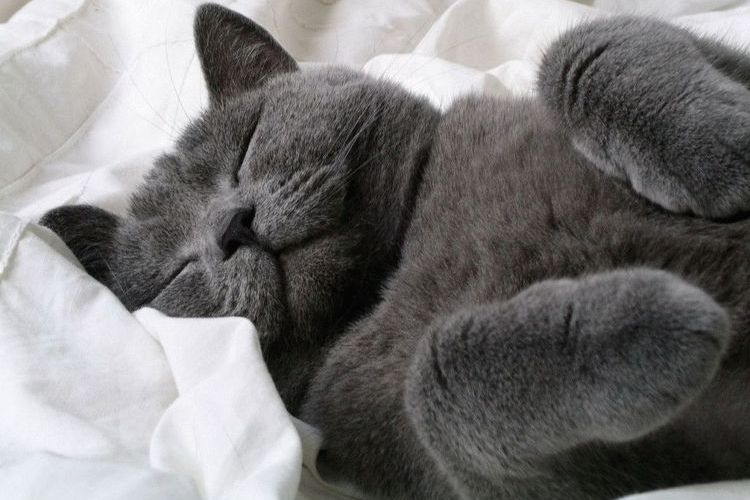
Content
Sleep patterns in cats
Many owners are surprised by how much time cats spend sleeping. However, excessive sleepiness doesn't necessarily indicate laziness or health problems. For these animals, sleep is a natural recovery mechanism, allowing them to replenish the energy expended during periods of activity.
Adequate rest plays a key role in maintaining both a cat's physical and mental well-being. While a pet sleeps, its body relaxes, and its nervous system processes the impressions and signals it received during waking hours. Felines instinctively perceive night and early morning as the safest times, so they are most active during these hours, preferring extended periods of rest during the day.
This biorhythm rarely aligns with a human's schedule: while the owner is busy, the cat rests, and in the evening and night, it becomes alert and playful. This is no cause for alarm—daytime sleep is normal and an important part of the pet's "nocturnal lifestyle." If you want more interaction, you can gradually adjust the cat's schedule by giving it attention and playtime during the day, creating a habit of resting at night and staying awake with the owner.
Why do cats sleep a lot?
Many people know that cats spend most of their lives sleeping. Scientists have calculated how many hours a day they spend sleeping. are sleeping cats. On average, our smaller brothers are willing to spend on their favorite activity from 16 to 20 hours a day, which is almost 80% of the time.
Moreover, there are no gender differences in this preference—cats sleep just as much as males. Only opossums and bats can rival them in their penchant for prolonged passive rest.
The development of this behavior is directly linked to the unique physiological characteristics of cats. All felines, regardless of their degree of domestication, remain predators by nature. Although many behavioral instincts have become less acute during evolution, the ability to conserve and store energy has been fully preserved. Cats are active when hungry and become calm and sedentary once satiated.
These animals are most active at dawn and dusk—it's during this twilight time that hunting occurs in the wild. In a short period of time, a cat expends a significant amount of energy pursuing and capturing prey. After such an energy surge, the body requires a long rest to recover and prepare for the next period of activity.
Boredom is an additional factor influencing prolonged daytime naps. Cats are highly intelligent and inquisitive, requiring new experiences and variety. In a home environment, where the environment rarely changes, the incentives for activity become fewer. As a result, napping becomes a way to pass the time and compensate for the lack of external stimuli.
 But as soon as the cat senses a sound that interests him, he is able to jump up at any moment, as if he had not slept at all, in order to take a direct part in the action.
How much sleep should a kitten get?
Newborn kittens sleep practically day and night. They wake only to feed heavily on their mother's milk. A deep sleep is a sign of a full stomach. The easiest way to determine whether the kittens are getting enough food is by their behavior:
- If the furry creatures fall asleep peacefully after eating, there is no need to worry;
- If they crawl to the sides and squeak, there is not enough milk.
Observing kittens, you'll notice that they fall asleep immediately after feeding, right next to their mother's warm belly. The main reason is the kittens' comfortable temperature. The warmer the kittens are, the faster they fall asleep. And since energy loss is minimal in this situation, the kittens can afford to sleep peacefully and soundly.
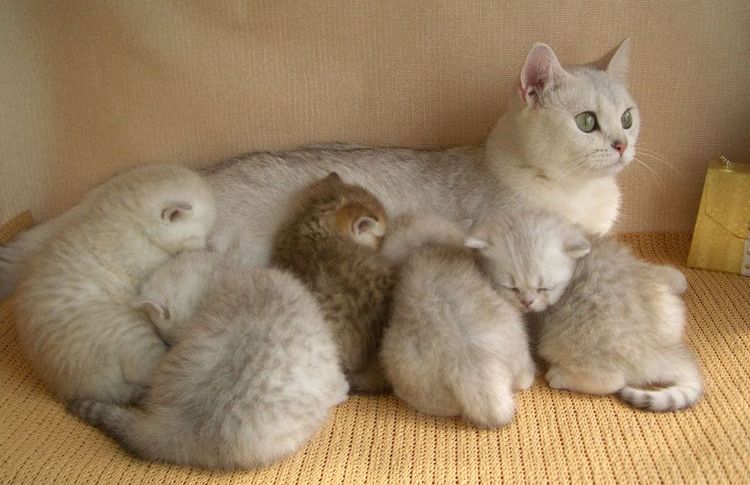
As they approach their first month of life, kittens become more active: they happily play and explore their surroundings. During this period, they sleep a few hours less. By the age of 4-5 months, the kittens, having matured, reach the same level of activity as their adult siblings.
Resting hours of an adult cat
The older a cat gets, the longer its sleep periods become. Adult cats sleep for at least 16 hours a day. Some sleepyheads can even devote up to 20 hours a day to this pleasant pastime.
The "old men" actually fall into the infant stage: they sleep almost the entire day, waking up only to have a snack.
Cats, like humans, have two stages of sleep: light sleep and deep sleep. During the deep sleep phase, animals can even dream. This is confirmed by involuntary meowing and paw twitching.
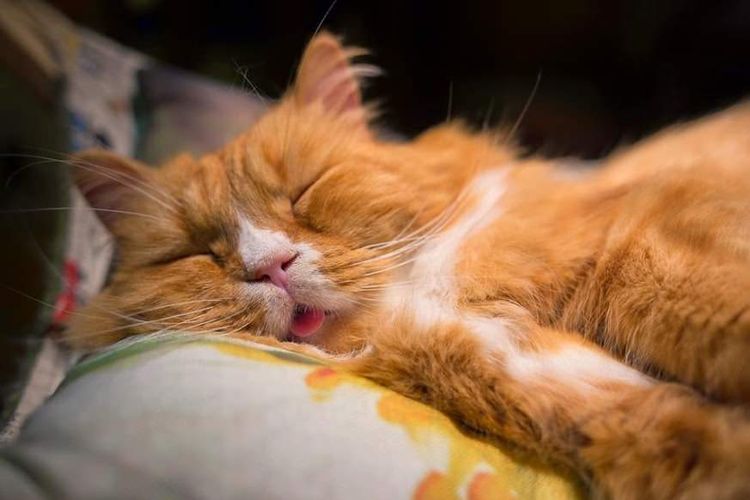
Healthy sleep indicates a pet's peace of mind. If a pet sleeps little and is constantly on edge, it indicates stress. A tense home environment can trigger restless, shallow sleep. Often, cats are simply afraid to fall asleep while the rest of the household is awake.
The owner's job is to create all the conditions for their pet to fully rest. Otherwise, the animal becomes nervous, loses its appetite, and loses weight. The best solution is to establish a bond with your four-legged friend and create a safe haven for them, like a house, within whose walls they will feel safe.
Cool video about the strange positions our cats can sleep in:
Read also:


Add a comment