
Swimmer's Syndrome in Puppies: Symptoms, Causes, and Treatment
Carnivorous mammals, members of the canine family, are susceptible to a number of congenital anatomical anomalies. Some of these can be corrected with timely treatment, including swimmer syndrome (also known as turtle chest or flat chest syndrome, also known as swimmer puppy syndrome). In this article, we will examine swimmer syndrome in dogs, its main causes, and treatment options.

Content
Signs of "swimmer's syndrome"
This rare neurological disorder (also known as lying dog syndrome or swimming posture) affects the development and coordination of puppies. It manifests itself physically within the first hours of life, and its signs are clearly visible in the photo below.
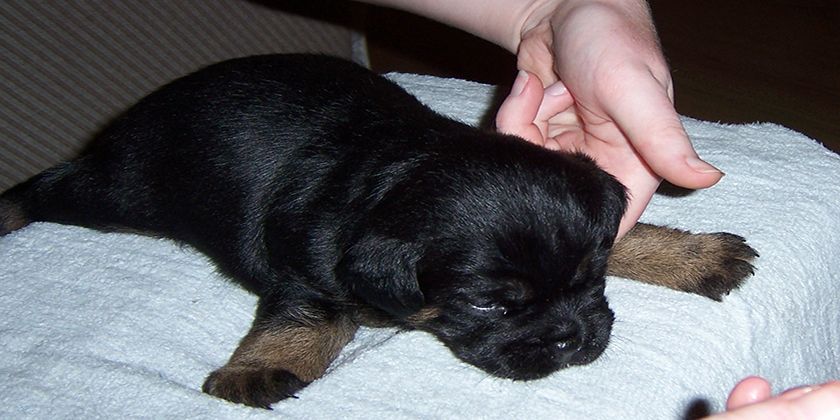
The puppy has a flat chest, an asymmetrical, elongated body axis, outward-facing leg joints, and atrophied muscles. He is unable to stand; when attempting to lay him on his side, he rolls onto his tummy. His front and hind legs are not tucked in, but extended out to the sides, so when attempting to move, the puppy paddles along the floor with his paws, a motion reminiscent of a turtle or a swimmer.
Puppies born very large are at risk. The risk of developing this syndrome is also higher in puppies born prematurely or in cases of multiple pregnancies.
Causes of the development of "flat chest syndrome"
There are several theories about the development of this pathology. The main ones are:
- Genetic predisposition to physical defects. Certain breeds are at higher risk of developing this syndrome due to their unique anatomy (short and wide forelimbs, which place additional strain on the spine and back): French bulldogs, pit bulls, pugs, dachshunds, corgis, Lhasa Apsos, and cocker spaniels.
- Early weaning. Lack of sufficient socialization can affect muscle and nervous system development and lead to floating puppy syndrome.
- Metabolic disorders. This may be due to a deficiency of vitamins (retinol, calciferol, tocopherol) and trace elements (potassium, selenium) essential for bone and muscle development.
- Viral or bacterial infections suffered by a pregnant dog.
- Improper nutrition of the mother during pregnancy.
- Living conditions. "Lying dog syndrome" can be triggered by a nest (box) that is too cramped, forcing the puppies to lie still, or by improper temperature control in the room where the newborns are kept.
- Trauma or injury. This physical condition can also develop if a puppy sustains damage to nerves, muscles, or bones in the limbs as a result of a fall.
Treatment
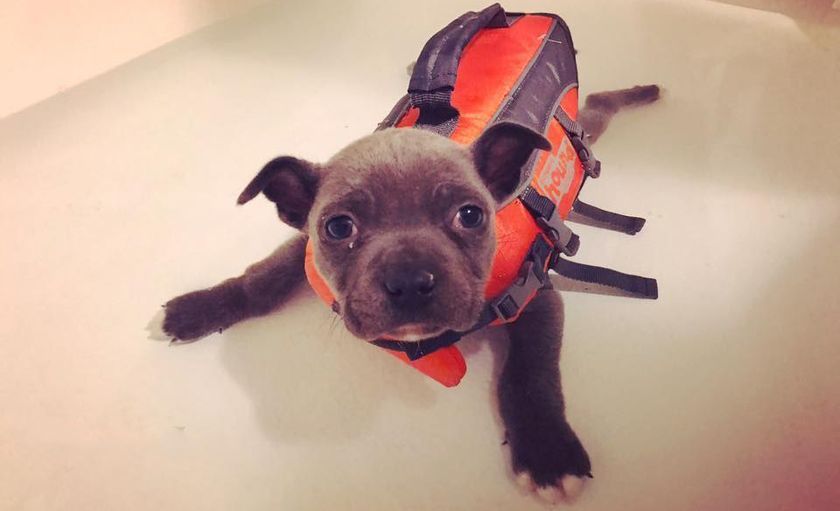
A dog with swimmer's syndrome has a chance of partial or complete recovery if its joints, muscles, and ribcage have not undergone significant anatomical changes. Treatment can be lengthy and requires patience and consistency, with results depending on the severity of the condition.
The primary treatment methods involve physiotherapy—restoring and strengthening atrophied muscles and supporting limbs in the desired position. This may include hydrotherapy (water treatment), therapeutic exercises, and the use of specialized equipment. Treatments are performed under the supervision and guidance of an experienced veterinarian or rehabilitation specialist.
Here are some methods that can be applied:
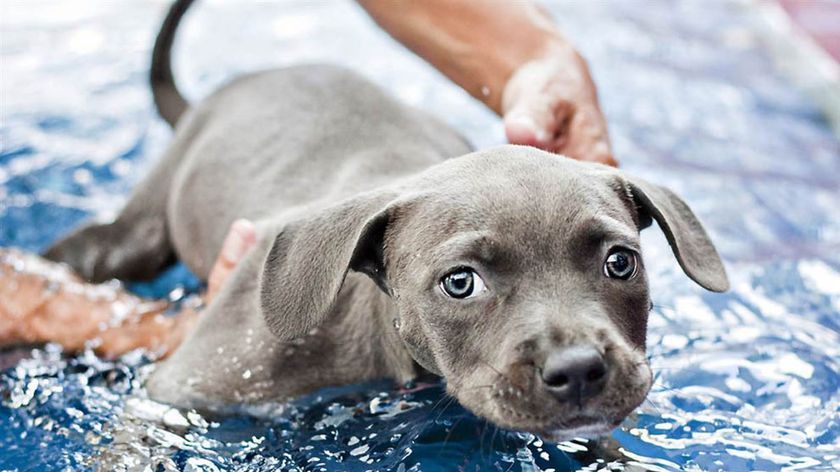
- Swimming. Puppies with "swimmer's syndrome" move their paws correctly when in the water—downward, not splayed out. Swimming can be done at home. During the procedure, support the puppy under the chest with your hands or with a towel placed under the belly to prevent swallowing. You can use a special puppy pool or a regular bathtub; the water temperature should be 26-28°C.
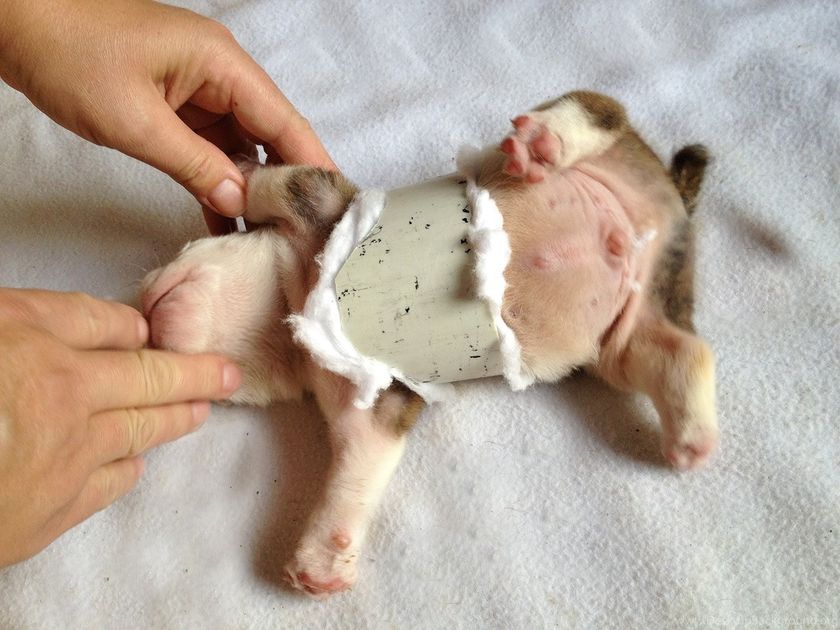
- Limb support. Puppies with swimmer's syndrome may require specialized braces to support and align their limbs, as well as a walker or stroller to aid mobility.
- The "ring" technique. The puppy, like a circus gymnast, is suspended by a special harness or a towel threaded under its belly and chest. During this exercise, it actively works its paws, lightly touching the floor. This exercise helps develop muscles and encourage proper paw positioning.
- A training corridor. A passageway is constructed on the way to the birthing "nest," where mother or tasty food awaits. The width of the passageway is slightly greater than the puppies' bodies. Crawling through such a narrow tunnel with splayed limbs is impossible, so to reach the nest, the puppy must stand on its paws, at least briefly.
- Massage the muscles and joints of the legs and chest. This is performed several times a day for 3-4 weeks. Each session lasts approximately 15 minutes. Massage movements are performed from the spine along the ribs toward the abdomen and chest. Gentle, circular movements help improve circulation and strengthen muscles and ligaments. Massage should begin as early as possible.
Video: Corrective massage
In addition to physical therapy, a veterinarian may recommend a diet supplemented with vitamins and minerals to treat a puppy with swimmer's syndrome. In some cases, medication may be required, including medications to relieve pain, improve muscle function, or reduce inflammation.
Surgery to restore proper limb position and function is necessary in relatively rare cases—when conservative treatment fails to improve or the dog already has anatomical abnormalities. Surgical intervention may involve ligament reconstruction or implantation of necessary structural elements.
Prevention
The measures recommended by experts can help prevent the development of "swimmer puppy" syndrome, especially in dog breeds that are more predisposed.
Proper nutrition
It's important to carefully formulate a mother's diet during pregnancy and lactation. During pregnancy, a dog's nutritional needs double, and vitamin and mineral supplements are essential. A mother's diet rich in vitamins and minerals, especially calcium and vitamin D, helps ensure proper muscle and skeletal development in the puppies during their prenatal development and subsequent lactation.
Stimulation of motor activity
It's important to provide puppies with sufficient physical activity during their growth and development. Providing them with ample space to roam freely is recommended to strengthen their muscles and develop coordination. As they grow, puppies should have ample space to play.

Conditions of detention
For bedding in the newborn puppies' nest, it's recommended to use shredded egg cartons covered in fabric, pieces of polystyrene foam, or twisted pieces of paper. This type of bedding can be changed frequently without much expense. A straw mattress can be used once the puppies are toilet trained. A non-slip, dry surface helps prevent the development of this condition: it keeps muscles toned and encourages the puppies to try to stand on their paws.
Regular visits to the veterinarian
Routine preventive examinations play a crucial role in the early detection of swimmer's syndrome in puppies—your veterinarian will take immediate action if they notice any signs of the condition in your pet. Females of breeds predisposed to swimmer's syndrome may have a higher risk of passing the condition on to their offspring. Therefore, it is recommended to consult with the breeder or veterinarian before planning a breeding program.
Read also:
- What and how to feed a puppy correctly?
- Dog pregnancy in detail, day by day
- Peculiarities of dog mating


Add a comment