
Cushing's syndrome in dogs
Cushing's syndrome is an endocrine disorder in dogs associated with elevated cortisol levels. Hormonal imbalances can lead to serious, irreversible health problems. Prompt veterinary attention and appropriate treatment can prolong your pet's life without compromising its quality.

Content
General description
Cortisol is a steroid hormone produced by the adrenal glands. Their proper function and the level of the hormone itself are controlled by the pituitary gland through the synthesis of adrenocorticotropic hormone (ACTH). Under normal conditions, cortisol regulates blood pressure, promotes blood clotting, and reduces inflammation. However, its main function is to quickly mobilize the body's energy in stressful situations by instantly increasing blood pressure and glucose levels (the body's primary energy source).
In Cushing's syndrome, the pituitary gland no longer controls cortisol synthesis, leading to a dramatic increase in its blood concentration. As a result, the body is constantly on alert for adverse effects that are not actually present. Over time, this leads to rapid depletion of energy reserves, wear and tear on organs and systems, and premature aging.
Forms of the disease
The condition is caused by excessive production of the hormone cortisol over a long period of time. The disorder may be due to one of the following causes, depending on which form develops:
- Cushing's disease (pituitary hyperadrenocorticism) develops from a pituitary tumor (hyperplasia, adenoma), which causes excessive ACTH production. Simultaneously, the adrenal glands increase cortisol production. The tumor itself often develops over a long period of time and remains undetected for years. This form is diagnosed in 80% of affected animals.
- Cushing's syndrome (glucosteroma) occurs when a tumor (often malignant) develops in the adrenal cortex, triggered by a malfunction. This causes the glandular tissue to grow, triggering excessive cortisol production. This condition occurs in 10-15% of cases.
- Iatrogenic hyperadrenocorticism is a reaction to excessive external hormone intake during long-term treatment of other diseases with corticosteroid drugs (prednisolone, dexamethasone). This is an acquired pathology, but its symptoms often disappear after discontinuing the medication.
Important! If Cushing's disease develops while taking hormonal medications, do not stop taking them abruptly. Gradually reduce the daily dosage until symptoms completely resolve.
Risk group
Cushing's syndrome can develop in any dog, regardless of gender, age, or breed. However, the following breeds are believed to be more susceptible to the disease:
- dachshunds;
- boxers;
- poodles;
- beagles;
- group of terriers.
Furthermore, it most often affects middle-aged and older pets. The average age of dogs affected by the disease is 7-10 years.
Symptoms of the disease
Cushing's syndrome is characterized by quite pronounced symptoms, the appearance of which is highly likely to indicate the presence of this condition. Dog owners should be alert to the following signs and symptoms:
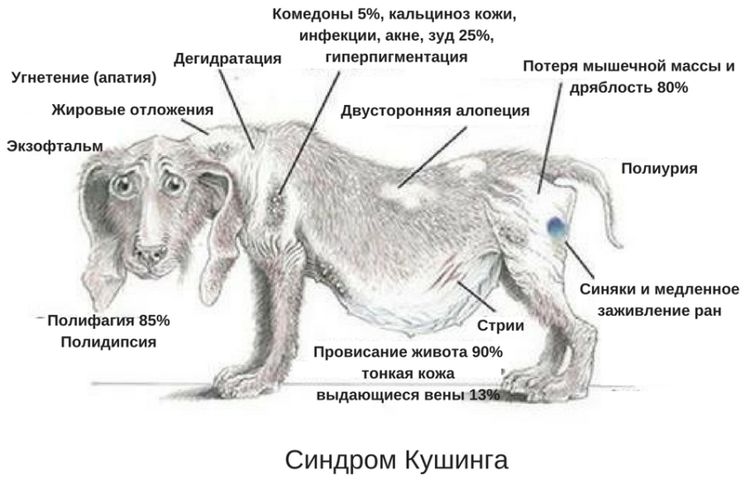
- pathological thirst;
- enhanced urination, sometimes in combination with urinary incontinence;
- increased appetite;
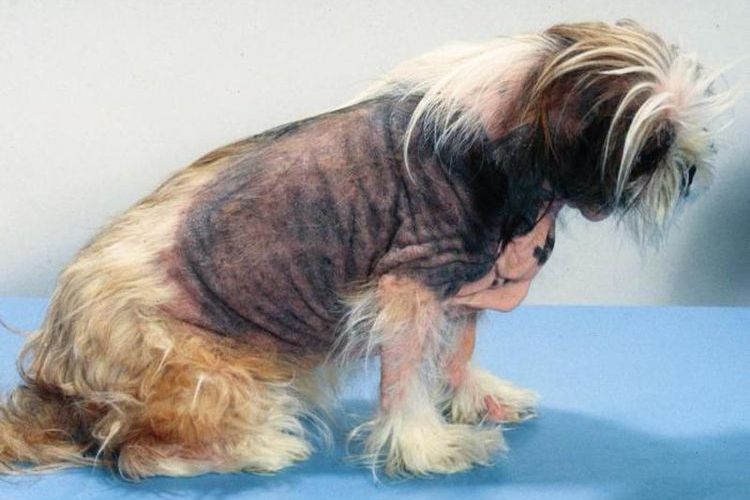
- deterioration of the coat condition with subsequent development of symmetrical bald spots in the kidney area, back, neck, and tail;
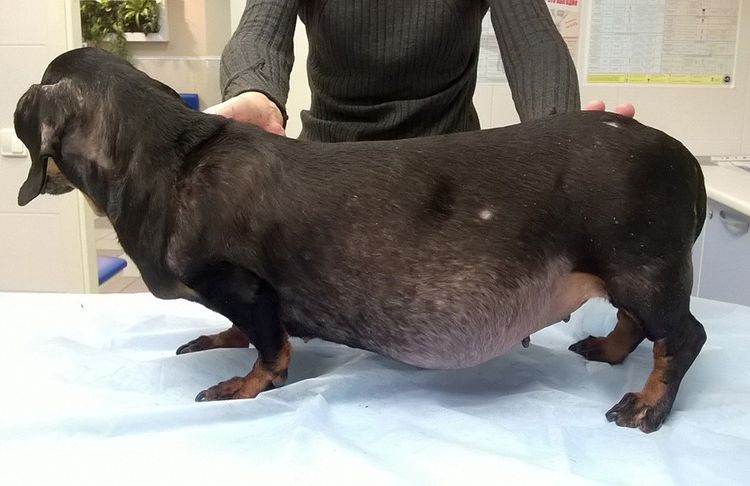
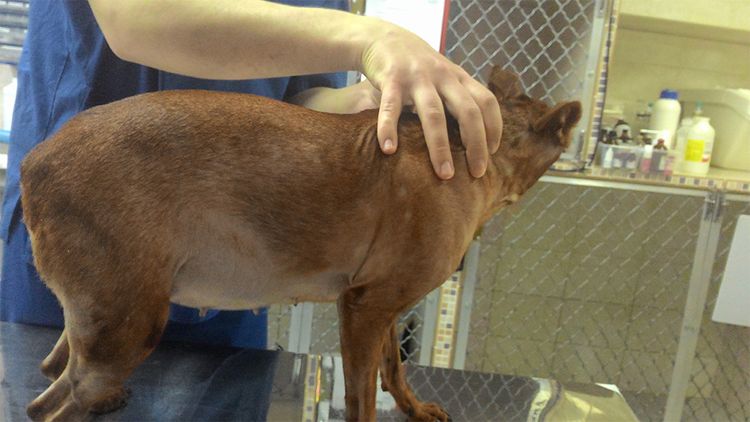
- weakening of the abdominal muscles, which causes the abdomen to enlarge and sag;
- apathetic behavior;
- excess weight gain with fat localized on the back, chest, neck and tail area;
- sudden changes in mood and behavior.
Cortisol affects all body systems, so Cushing's syndrome affects the immune, nervous, cardiovascular, musculoskeletal, genitourinary, and reproductive systems. It also disrupts the normal synthesis of hormones by other glands. Additional symptoms and complications include:
- hyperpigmentation of the skin;
- fluctuations in blood pressure;
- impaired coordination of movements;
- osteoporosis and possible fractures;
- diabetes mellitus;
- disturbance of the sexual cycle (in females);
- testicular atrophy (in males).
Diagnostic procedures
To confirm Cushing's disease, in addition to a visual examination of the dog, a number of diagnostic procedures are used:
- clinical and biochemical blood tests;
- urine test for cortisol to creatinine ratio;
- tests with the introduction of dexamethasone and ACTH, the response to which is used to assess the function of the adrenal glands.
One of the important stages of diagnosis is determining the causes and source of the disease, for which the following is carried out:
- An abdominal ultrasound shows the structure of the organs, allows you to compare the sizes of the two adrenal glands, and detect neoplasms.
- Radiography allows us to identify the liver enlargement characteristic of the disease and bone tissue damage due to osteoporosis, and to assess the mineralization of organs.
- MRI and CT are performed if pituitary tumors are suspected.
Treatment methods
Treatment for Cushing's syndrome is determined based on the affected organ, the results of the examinations, and the dog's general condition.
Surgical intervention
In both forms of the disease, the intervention involves the removal of the adrenal glands: the affected one (if it appears tumors and the absence of metastases in the lungs and liver), or both (in the case of a pituitary tumor). In the latter case, the animal is prescribed hormonal therapy with glucocorticoids and mineralocorticoids for life.
Pituitary tumors are not surgically treated in Russia due to the high mortality rate in dogs and serious complications following surgery. In such cases, only medications are used to normalize hormonal levels. Large tumors (over 1 cm) can cause neurological impairment, requiring radiation therapy.
Surgical treatment is not suitable for all cases. Before intervention, the veterinarian must weigh the risk of complications against the benefits of the surgery. Since Cushing's syndrome often affects older animals, other conditions may develop at this age that limit the possibility of surgical treatment.

Drug therapy
Treatment for Cushing's syndrome primarily involves medications aimed at normalizing cortisol production. Additionally, additional medications may be prescribed to regulate bone metabolism and normalize cardiovascular function.
Note! One of the main obstacles to drug treatment of Cushing's syndrome in Russia is the high cost of medications that inhibit cortisol synthesis and their limited availability on the market, which means they must be ordered from abroad.
Among the prescribed drugs:
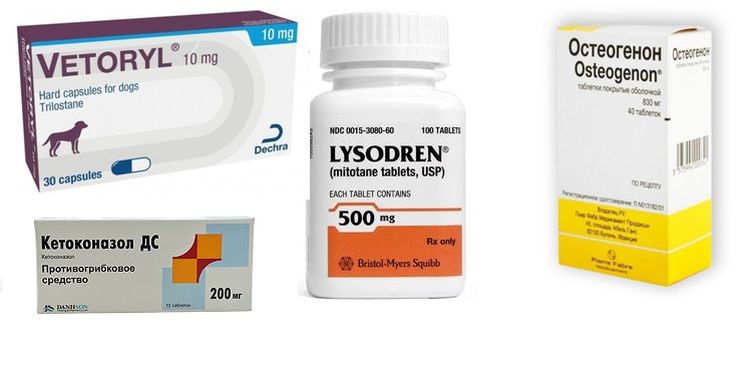
- Mitotane (Lysodren) is used to treat pituitary tumors. It destroys adrenal cells, thereby controlling cortisol levels.
Important! Mitotane can cause a number of serious side effects, so your pet must be monitored closely by a veterinarian.
- Trilostane – the action is similar to Mitotane, but the drug itself is indicated for adrenal tumors.
- L-deprenyl is promoted as a treatment for Cushing's syndrome, but there is no data on its efficacy and safety in Russia.
- Ketoconazole is especially indicated for the concomitant development of fungal skin lesions, but does not affect hormone levels.
- Osein (osteogenon) or Tridin – stimulates the absorption of calcium in the intestine, which helps normalize metabolic processes in the bones.
Important! A veterinarian should determine the exact dosage and medications based on each animal's clinical presentation. Avoid self-medication and risk your dog's life.
The main indicator of properly selected medications is the disappearance of the animal's abnormal thirst, as well as an improvement in its general condition. A worsening of the condition during treatment is often associated with complications of the disease. To identify these complications, repeat tests and instrumental examinations are performed.
Life expectancy
Cushing's syndrome negatively impacts a dog's overall health, increasing its susceptibility to bacterial infections and parasites. If the disease develops in an older dog, its symptoms are often perceived as signs of aging.
A complete cure for this disease is impossible. Life expectancy with this diagnosis averages 1.5 to 3 years. Early detection and appropriate treatment can help alleviate the pet's condition and prolong its life for several more years. Therefore, it's important to monitor your dog's health, consult a veterinarian promptly at the slightest sign of trouble, and take appropriate measures.
More about Cushing's syndrome in dogs: video
Read also:


Add a comment