
Silicone nail caps for cats: which are the best?
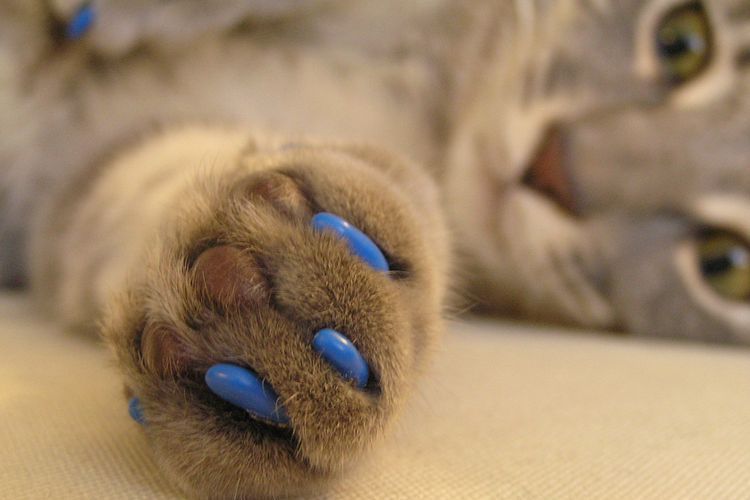
Silicone declaws are a relatively recent invention, devised by American veterinarian Toby Wexler as an alternative to declawing cats. The main goal is to protect your home from scratches and damage without causing physical harm to the animal.
Content
When overlays are necessary
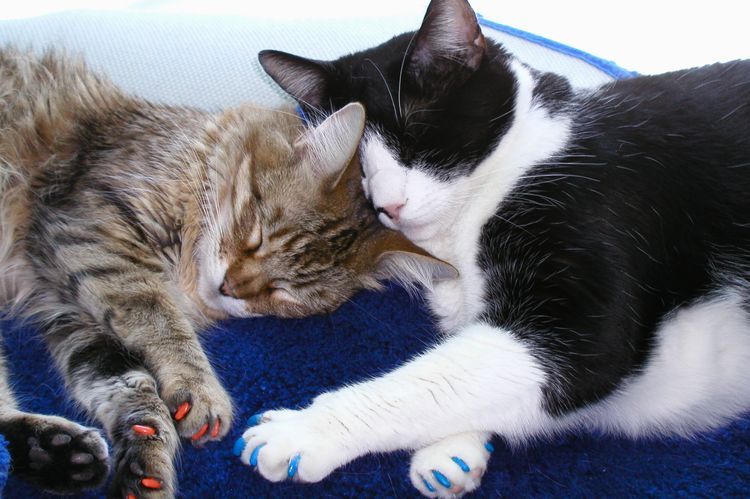
Anti-scratch caps (also known as anti-scratch caps) are oblong caps made of soft plastic or silicone. They conform to the shape of the nail and are secured with a special medical adhesive. It's hypoallergenic and suitable for most cats without causing any discomfort.
While not all owners and veterinarians support the idea of wearing these pads, there are several reasons why it might be worthwhile to purchase one and train your pet to use it.
- Little children. Children love to play with cats, cuddling, pulling their tails, pinching, and showing affection in other "unconventional" ways. Not all animals tolerate abuse and react calmly. Some may use their claws defensively and inadvertently injure a child's skin. In such cases, scratch guards are absolutely necessary.
- Protection of household items. Not only sofa upholstery, wallpaper, and doorframes, but also curtains, carpets, children's toys, and clothing are often damaged by cats' tenacious claws. To protect your home and wardrobe items from damage (often irreversible), you'll need to use protective pads.
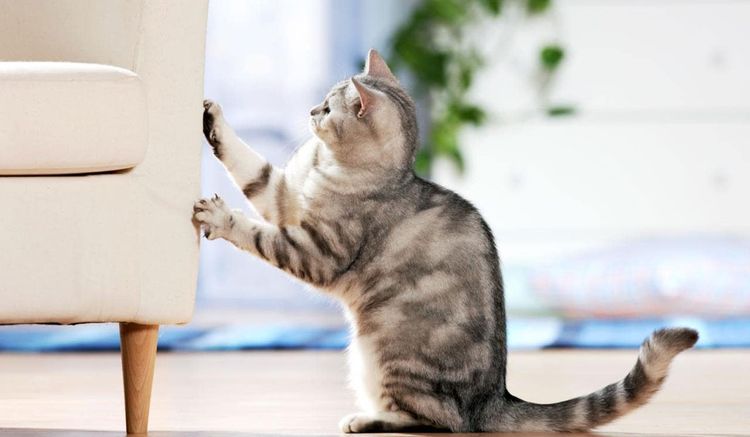
- Character traits. Cats sometimes resist retraining or become aggressive toward their owners, guests, children, etc. They may attack perceived offenders, scratch, struggle, and behave nervously and inappropriately. They may also harm other pets in their territory. Using caps can reduce the risk of injury and somewhat tame their cat's temperament.
- Safety of household members. This is a potential health risk. Claws harbor germs, and if there are deep scratches, they can enter the wound, causing inflammation. In the worst case, blood poisoning can occur. People with a weak immune system, poor blood clotting, or a predisposition to various allergic reactions should be wary of this injury.
Selection rules
There are many available on the market models anti-scratch Not only in different colors, but also in different sizes. They are all roughly divided into the following groups:
- XS (supermini) — for kittens from 6 months.
- S (mini) — weight 2-4 kg.
- M (average) — weight 4-7 kg.
- L (big) — weight from 8 kg and more.
As for price, the average cost of a kit (40 pieces + glue + instructions) is between 300 and 700 rubles. You can buy it at a pet store, veterinary clinic, or specialized online marketplace.
When overlays are not needed
It's not always necessary to use silicone caps on cats. In some cases, they can be either useless or even harmful to the animal. The following individuals should not wear anti-scratch caps:
- Kittens. The nail plate takes about six months to develop, so it's recommended not to do anything to their claws during this period. It's better to focus on teaching kittens to use a scratching post.
- Elderly cats. As animals get older, their activity level decreases. They stop frolicking, running around the apartment, scratching furniture, and doing other mischief. Therefore, there's no point in stressing their nervous system further or torturing them with a new procedure.
- Sick cats. If for any reason your pet is feeling unwell or is in the acute phase of an illness, it's best to postpone the manicure until they've fully recovered. This also applies to cases of dermatological issues affecting their paws.
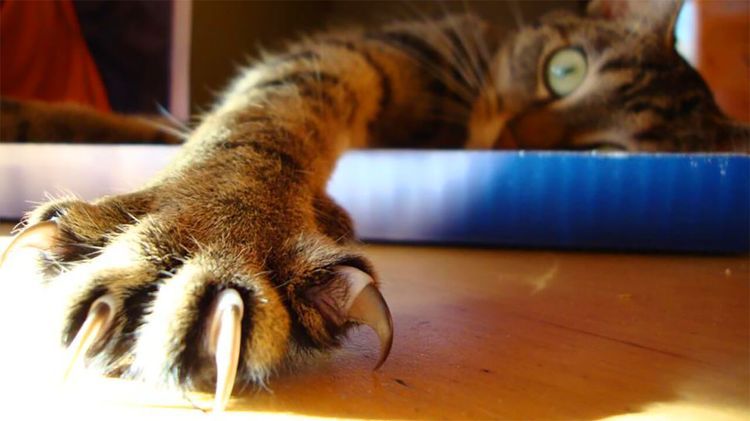
- Street cats. Unlike their domestic counterparts, who don't need to constantly maintain their survival instincts, climb trees, and forage for food, wild animals with claws simply won't survive. Their claws serve as a means of defense and coordination.
Helpful Tips
To ensure your cat is comfortable wearing a false cap, veterinarians recommend following a number of guidelines:
- Before the procedure, trim the nails approximately 1 mm from the edge to avoid cutting blood vessels and causing pain to the animal. Trimmed edges allow the nail guards to fit more securely and are therefore less likely to fall off.
- Be sure to follow the sizing chart and select a set that's exactly right for your cat's size. The cap should not touch the skin, but should still completely cover the nail. If the size is incorrect and exchanging the caps is not possible, they can be carefully trimmed at the base.
- Typically, scratch guards are only applied to the front claws, as cats don't sharpen their back claws. They chew them themselves without the help of external "helpers." Moreover, it's not necessary to cover all five claws; the side claw can be omitted—it's rarely used, and it doesn't peel off easily. As an experiment, you can try capping it first and then leaving it bare.
- The silicone falls off as the top horny layer of the nail grows. This natural shedding occurs approximately every two months, so there's no need to remove the nail extensions. In fact, they may fall off on their own if they were the wrong size or if your cat has chewed them off.
Regularly inspecting your cat's paws can help prevent many problems, such as inflammation due to improper use of scratch guards or allergies caused by a reaction to silicone or glue.
How to glue overlays: instructions
The procedure involves not only mechanical actions but also a corresponding psychological component. It's important to remember that any violation of an animal's freedom is extremely stressful.
- Place the cat on your lap, stroke it, talk to it in a calm voice, affectionately, without pressure.
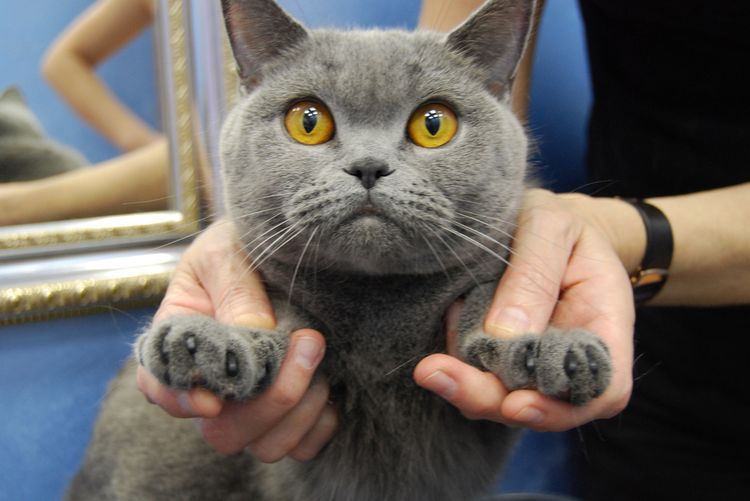
- Take one paw and press on the pad to expose the nail. Try the cap on to ensure it fits. If necessary, trim it to the desired length at the end of the hole through which it is inserted.
- Apply the adhesive from the kit to the inside of the overlay. The silicone surface should be no more than 1/3 covered.
- Using a sliding motion, put on the nozzle and press on both sides for about 3-5 seconds until the glue sets.
- After 10 minutes, check how well the anti-scratch pads have been fixed and make adjustments if necessary.
- Praise the cat for its patience and treat it with a tasty treat.
Key questions when purchasing
When faced with the choice of whether to purchase such devices for your pet or stick with the traditional claw sharpening/surgery, a number of related questions arise. For example:
- What happens if an animal swallows the cap? Nothing serious will happen. The caps are made of non-toxic material, have a smooth surface, and, if ingested, will pass unimpeded through the gastrointestinal tract and be eliminated naturally.
- How quickly will a cat adjust to a new environment? It varies from person to person. Typically, the adaptation process takes 2-5 days, during which time they may be nervous, try to chew on or remove the annoying accessory, but eventually they get used to it and resign themselves to it.
- Does the habit of sharpening claws disappear? No, the instinct remains; the animal will still release its claws, but it simply won't be able to damage furniture, walls, wallpaper, or people.
- Which manufacturer is best? The best brands with a proven track record in this field are: Soft Paws Nail Caps For Cats (USA), Cliny, Crazy Liberty (Russia), and Barbos (Russia).
Reviews
Marina, the owner of the British:
"I bought colored nail extensions, but Caesar had a hard time getting used to them. The first couple of times he'd demonstratively chew off two or three at a time, and I had to re-glue them. Then he apparently got tired of struggling and resigned himself. Now he has no problems. The glue holds well, though sometimes it gets stuck on my fingers, which I can remove with regular nail polish remover."
Alexander, owner of a Maine Coon:
"We have a unique, handsome dog, spirited and full of character. The problem wasn't with getting used to him, as I'd read in many reviews, but with choosing the right size. Few fit his claws well, as his paws are very strong. We tried several brands and settled on a domestic one—it was both the right size and the right price."
Olga, two Siamese cats:
"We decided not to torture ours. They scratch the furniture occasionally, but they've gotten used to it and have given over the sofa in the living room to be torn apart. I think the animals suffer from such experiments; let them live without attachments. I'm against it."
Read also:


Add a comment