
Silica gel cat litter: what is it and which is best?
Silica gel cat litter is a popular hygienic solution for pets. It absorbs moisture well and eliminates unpleasant odors. It's quite economical and helps keep the litter box clean. tray within 3-4 weeks. Manufacturers produce a wide variety of mixtures with different properties. This article will help you decide what types of litter there are and which one is best for your pet.
Content
General characteristics
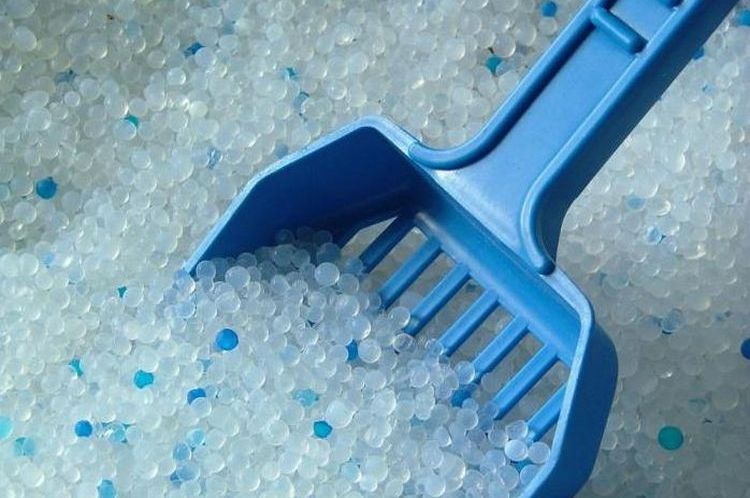
Silica gel cat litter is a dry, solid granule made from silicic acid. It can be shaped like beads or crystals, most often white. To enhance its aesthetic appeal, manufacturers can dye the granules in various shades (blue, red, green, etc.).
The mixture has excellent hydrophilic properties. When urine comes into contact with the granules, it is completely absorbed, leaving no unpleasant odor. Fragrances can also be added to the litter, which are activated when exposed to moisture.
The following main types of silica gel are distinguished:
- antibacterial;
- flavored;
- multi-colored;
- hypoallergenic.
Positive aspects
Silica gel litter is deservedly one of the most popular cat litter options. Its advantages include:
- cost-effectiveness: a standard package of about two kilograms is enough for about a month (of course, there are also larger packages that are designed for a longer period);
- no dirt: the mixture does not create dust and practically does not stick to the animal’s paws;
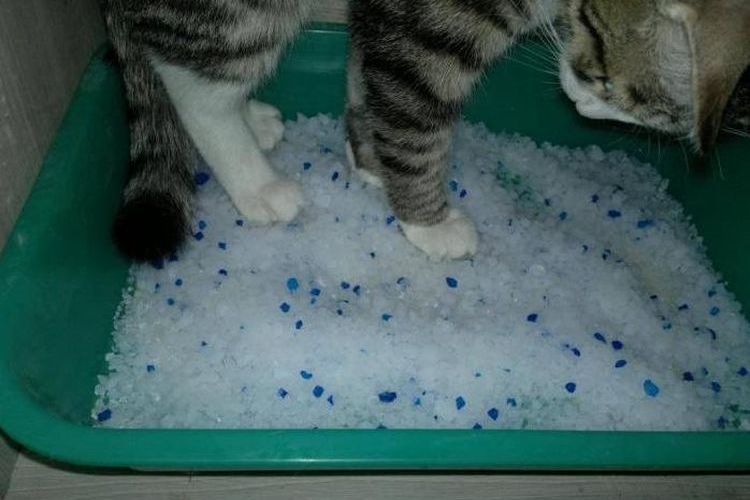
- Absorbs moisture well: silica gel absorbs not only the liquid that comes into contact with it, but also moisture in the air, so it can be used to remove excess moisture in the bathroom or toilet.
Flaws
Of course, there are some downsides to using this product, like any other remedy:
- quite high price (there are other cheaper cat litter products on the market, but if silica gel filler is used according to the instructions, it will last a long time);
- When liquid comes into contact with the granules, a characteristic hissing sound appears, which frightens some cats;
- Granules in the form of crystals or small fractions can be unpleasant for your pet when he steps on them;
- The mixture is not suitable for animals that like to taste everything.
Silica gel should not be eaten. If ingested, it can cause serious problems due to its strong hydrophilic properties.
Important! It is not recommended to use the filler for kittens, because if the kitten will eat some granules, this will lead to serious consequences, including the death of the animal.
If a cat ate silica gel
Some pets, out of curiosity, eat inedible items. Such predilections are rare in adults; this behavior is more common in kittens. In the case of silica gel, this situation can be very dangerous.
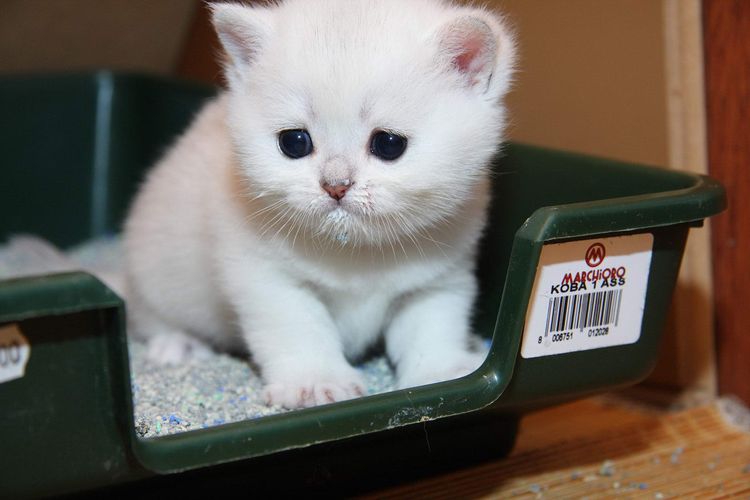
The substance is hygroscopic and expands as it absorbs moisture. Therefore, it can cause intestinal obstruction and other gastrointestinal tract problems. Furthermore, the mixture, albeit in small doses, contains toxic elements that can cause serious poisoning in kittens.
If your animal has eaten silica gel, it is best to seek immediate professional help, as surgery may be required.
Recommendations for use
Each cat litter package comes with instructions that should be followed to ensure optimal results. Follow a few simple rules to ensure silica gel is effective and doesn't cause problems:
- Pour a sufficient amount of the mixture into the litter tray (the manufacturer specifies the exact amount on the packaging). This will ensure the silica gel performs its intended function: absorbing liquid and preventing odor.
- To make the hygiene product last longer, it needs to be stirred periodically.
- After the cat has defecated, scoop out the feces with a shovel and add a little more formula if needed. If pellets are stuck to the feces, it's best not to flush them down the toilet.
- Dispose of the litter with solid waste. Do not pour it down the toilet, as it may swell and clog the drain.
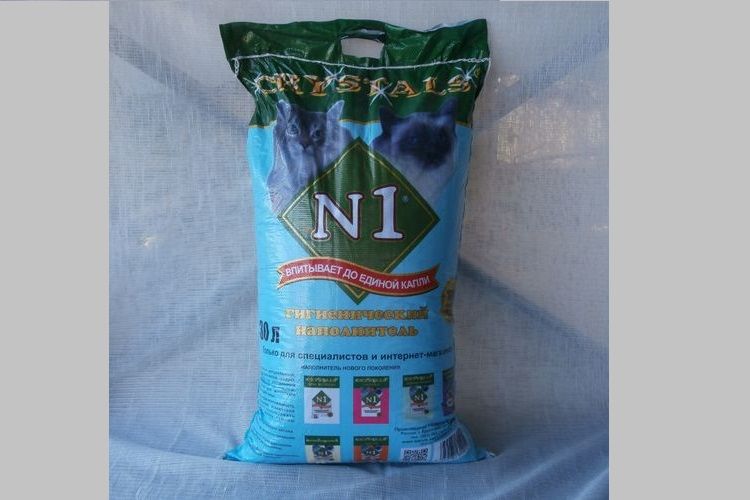
No. 1 Crystals
This is one of the most popular silica gel cat litters. It's made in Russia. This hygienic product performs its functions perfectly, absorbing liquid and neutralizing fecal odor. The granules are conveniently shaped to prevent them from getting stuck in paws or tangled in fur. This ensures that the mixture stays in the litter box and doesn't spread throughout the house.
Varieties:
- Crystals No. 1 (classic).
- For Girls pink.
- Antibacterial.
- For Kittens.
- Lavender.
- Sakura.
Approximate price:
- 5 l – 500 rubles;
- 12.5 l – 1500 rubles;
- 30 l – 2500 rubles.
Siberian cat
"Siberian Cat" is a cat litter product manufactured in Russia. The brand produces a variety of pet products, including several types of hygienic mixtures (including silica gel).
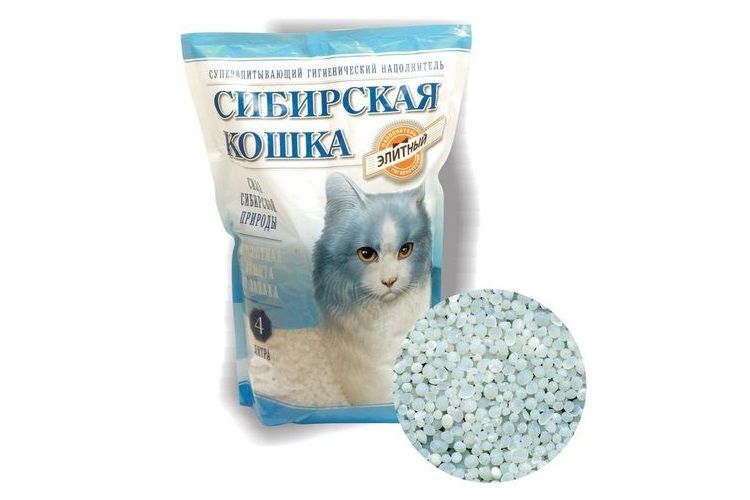
Silica gel granules are round, finely grained, and transparent or translucent in color. They absorb liquids and vapors well. Their surface always remains dry, so your pet won't experience discomfort each time they use the litter box.
Varieties:
- silica gel filler "Elite";
- Elite IVF.
Approximate price:
- 1.8 kg – 500 rubles;
- 3.7 kg – 800 rubles;
- 7.3 kg – 1600 rubles.
Cat Step
This silica gel cat litter is produced by AMMA, a Russian company that manufactures pet products. This hygienic product helps keep your cat's litter box clean for long periods of time. For 2-3 weeks, you don't need to worry about deep cleaning, as the mixture effectively absorbs feces and prevents unpleasant odors.
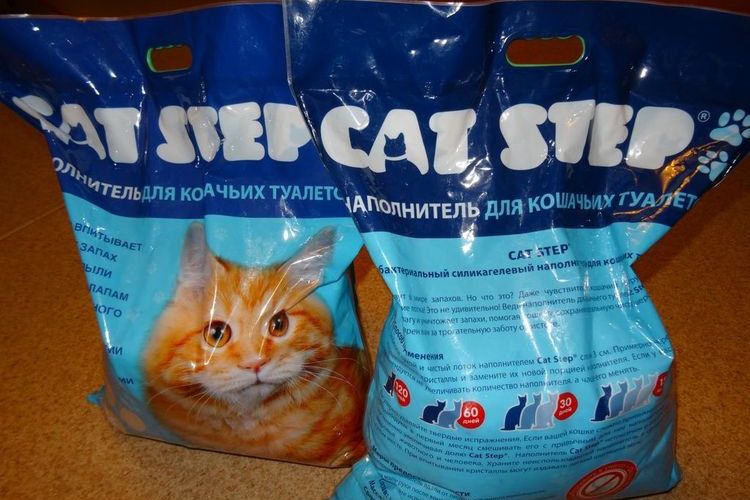
Varieties:
- silica gel filler for cats Cat Step (classic);
- Laguna (without fragrance, granules are colored blue, white and pink);
- Sacura (no flavoring, granules are colored white and pink);
- with strawberry aroma;
- with lavender aroma.
Approximate price:
- 3.8 l – 400 RUR;
- 7.6 l – 850 RUR;
- 15.2 l – 1600 RUR
Reviews
Lyudmila Sergeevna, owner of two cats:
"I've been using silica gel litter for a long time. I always use Crystals No. 1 unscented (I tried the lavender scented one once, but I didn't like it). It's a good mixture and lasts a long time. My furry friends love the way the granules rustle, so they'll dig in there for half an hour. They also scatter the mixture around the litter box (it's their game). The granules don't stick to their paws much, so they don't spread around the apartment much. My only gripe with the litter is that it creates a lot of dust when you pour it into the litter box. I have to cover their nose and mouth with a cloth, otherwise it leaves an unpleasant aftertaste and causes coughing. Overall, my pets and I are happy."
Ekaterina Semenova, the sphinx's owner:
"I bought the Siberian Cat Elite ECO silica gel litter and was dissatisfied, so I'm writing a negative review. It was supposed to be made from natural ingredients or at least recycled sustainably, but that's not the case. I still don't understand why it's labeled ECO. The relatively low price was attractive, as these types of litters aren't cheap. The granules stick to their paws, causing them to scatter all over the room. It doesn't perform its basic functions properly—the smell lingers for an hour, and a large amount of moisture constantly accumulates at the bottom (no matter how you stir it). Therefore, the litter box has to be changed frequently and topped up with fresh litter, making the purchase very uneconomical."
Margarita Mishchenko, owner of a British shorthair:
"I use Cat Step Laguna for the litter box: the price is reasonable and the appearance is pleasing (the colorful granules are a nice touch). It does its job well: it absorbs liquids and leaves no odors. The only time I have to clean the litter box and completely change it is when the scent is overwhelming—it's enough to make my nose droop. But special bags that fit in the bottom of the litter box can be very helpful, significantly reducing the time it takes to clean. My cat loves the mixture; nothing bothers him, and he goes "do his business" regularly without complaint."
Read also:
- Types and features of cat litter
- Cat litter: which is best?
- Possible reasons why a cat has stopped using the litter box


Add a comment