
Sealyham Terrier
The Sealyham Terrier is a Welsh dog breed. In the past, it was widely used for hunting burrowing animals and exterminating rodents. Today, it has proven itself as a companion dog. The Sealyham is bold, courageous, loyal, and obedient, good with children, and makes a good sporting companion. Its coarse, wiry, light-colored coat requires careful grooming and regular trimming.
Content
History of origin
The Sealyham Terrier was developed by Captain John Owen Edwards and took its name from the Sealyham estate in Pembrokeshire, Wales. In developing his own breed, Edwards crossed white English terriers, West Highlands, Dandie Dinmont Terriers, Welsh Corgi, cardigans, And fox terriersThe offspring were selected based on the desired qualities: strong hunting instincts, anger towards animals, white, coarse fur, short stature, endurance, courage, and others.
The breed gets its name from its place of origin: Sealyham Estate in Pembrokeshire.
The first Sealyham Terrier breed club was founded in 1908, and by 1910 the breed was officially recognized by the English Kennel Club. After badger hunting was banned, interest in terriers waned, and the breed was on the brink of extinction.
After World War I, interest in the breed grew, largely due to Sealyhams accompanying several Hollywood stars, including Alfred Hitchcock, and members of the British royal family. In 1954, the Sealyham Terrier was officially recognized by the Fédération Cynologique Internationale (FCI). Standard No. 74 was published for the breed. Their numbers then declined again. The lowest birth rate was recorded in 2008, with only 43 puppies in the entire United Kingdom. Today, the breed is considered rare and scarce. In Russia, the population numbers just over 100 individuals.
Video about the Sealyham Terrier dog breed:
Appearance
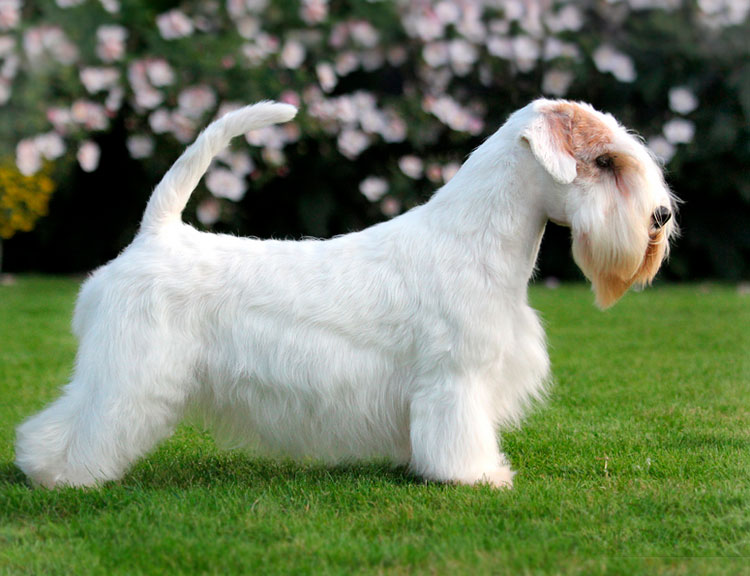
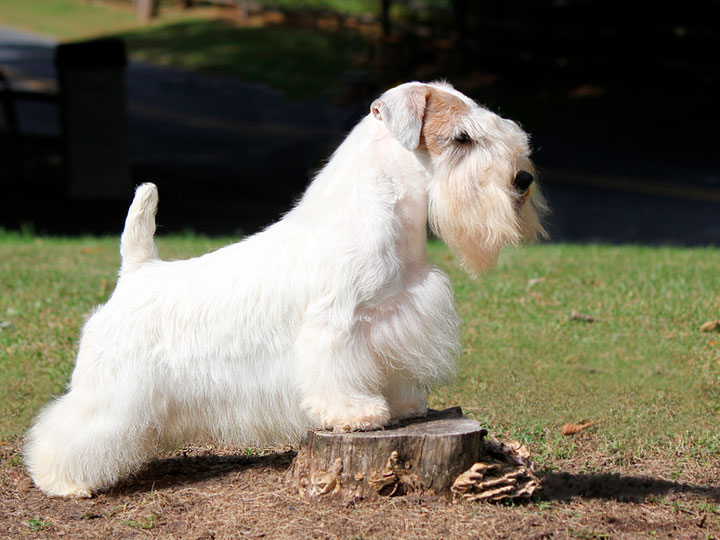
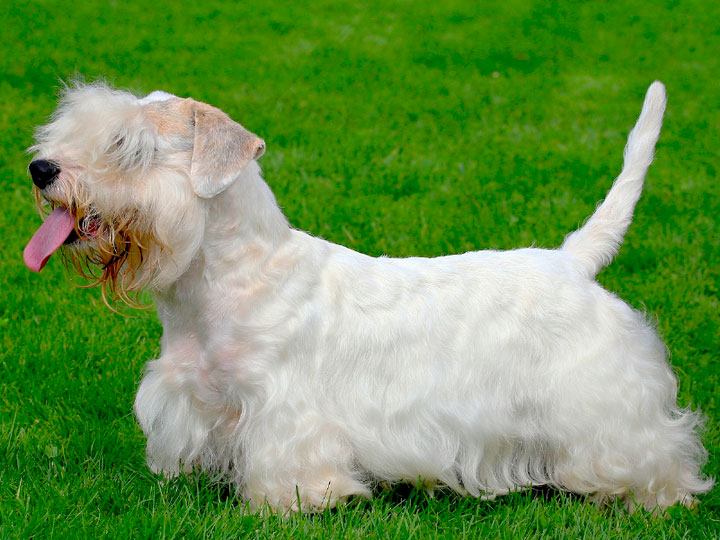
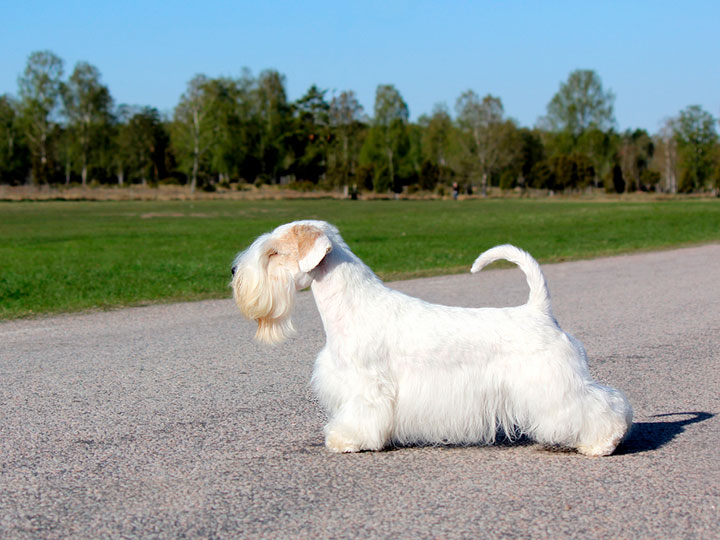
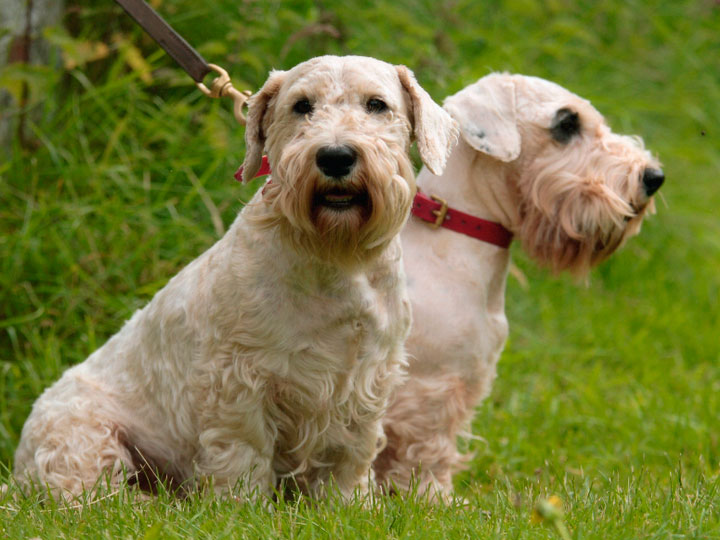
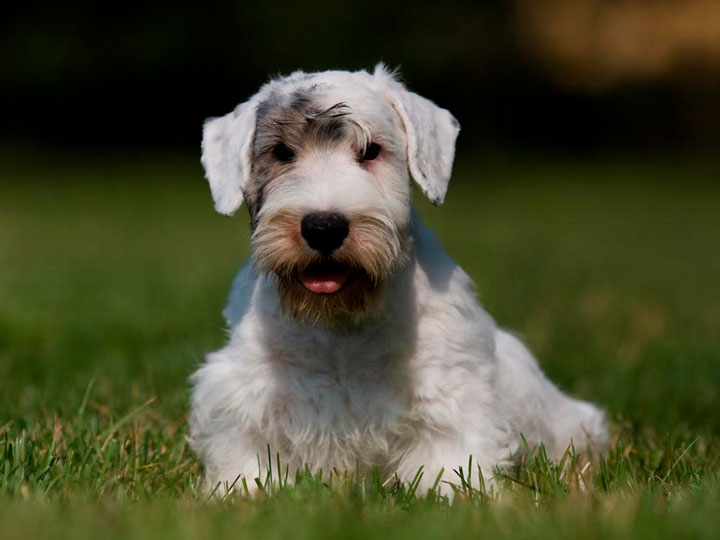
The Sealyham Terrier is a sturdy, well-balanced dog of small stature with a white, wiry coat. Its appearance gives the impression of great strength contained in a small body. Its body is elongated. The height at the withers is no more than 31 cm. Males weigh approximately 9 kg, and females approximately 8 kg.
Sealyham Terrier and Scottish Terrier gave rise to another breed of dog ― Cesky Terrier.The skull is slightly domed, wide between the ears. The muzzle is square, long, and powerful, with a heavy jaw. The nose is black. The teeth are even and strong, with a scissor bite. The cheekbones are not prominent. The eyes are deep-set, round, medium in size, and dark in color. The ears, with rounded tips, are medium in size, and hang loosely, close to the cheekbones.
The neck is long, muscular, and thick. The body is flexible and of medium length. The back is strong and level. The chest is deep and broad, well let down between the forelegs. The ribs are well sprung. The tail is set high and carried vertically. It can be docked to medium length and is thick with a rounded tip. In its natural state, the tail is thick at the base, tapering to a tip, and of medium length. The forelegs are short, well-boned, and as level as possible. The hind legs are powerful relative to the terrier's size. The paws are rounded with thick pads and point straight forward.
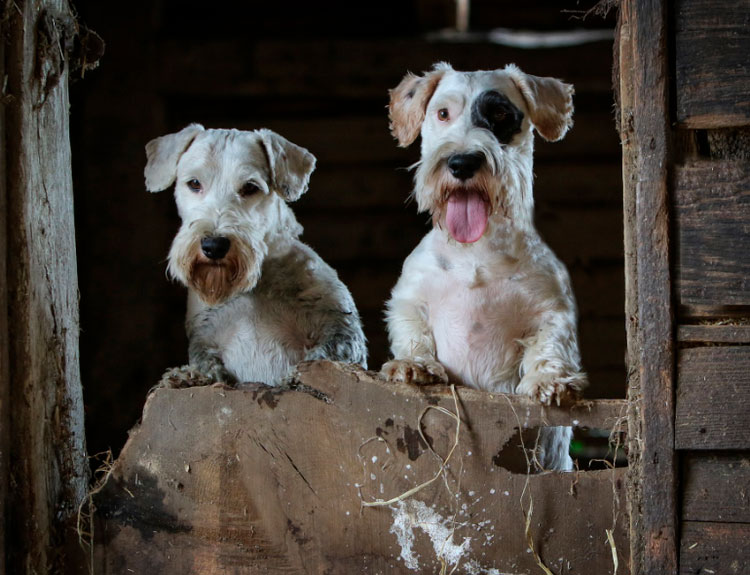
The coat is hard, wiry, and long. The undercoat is well developed. The coat is white or white with spots on the head and ears that can be light red, fawn, brown, or blue.
Character and behavior
The Sealyham Terrier is alert, fearless, somewhat self-assured, and stubborn, yet friendly and sociable among family members. Very playful and outgoing, it forms strong bonds with its owner and other family members. It gets along well with children, and is patient and affectionate with small children. For older children, it is a tireless companion in games and all sorts of fun.
The Sealyham Terrier is a bold and courageous dog with a balanced personality. He can be serious when needed, but otherwise cheerful and playful, always lively and energetic. He is wary of strangers and makes a good watchdog. He gets along well with other dogs of a similar size and personality. He learns to coexist peacefully with house cats, but will likely chase neighbors' cats with his characteristic terrier enthusiasm. He views small animals as potential prey.
Sealys, as their owners affectionately call them, are wonderful family dogs, intelligent and loving. They are vigilant and courageous guard dogs that also double as rodent control dogs. Many Sealyhams retain their hunting instincts and are adept at catching rodents. In England, there is still a club exclusively for working Sealyhams, where people go hunting.
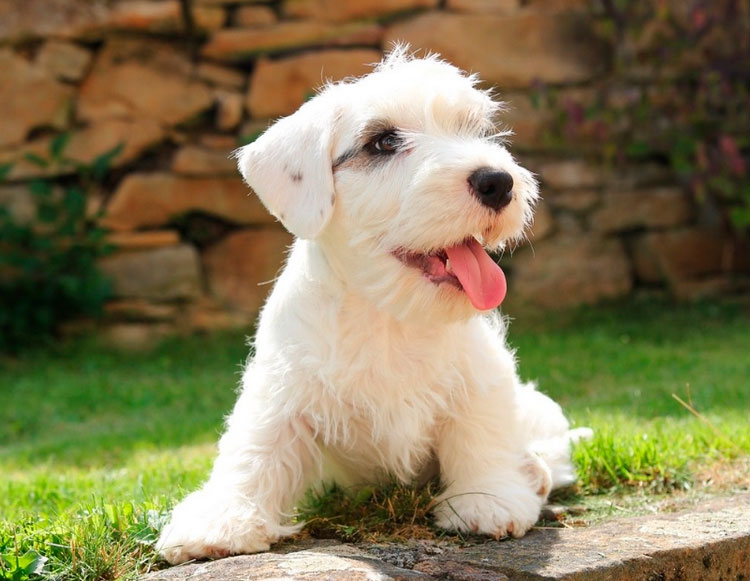
As a puppy, the Sealyham Terrier is very lively, curious, and affectionate. As they mature, they become more serious, but retain the cheerfulness and playfulness of a puppy into old age. They possess an unwavering hunter's spirit. On walks, the Sealyham Terrier loves to stalk small prey, chase crows, pigeons, and cats, and hunt butterflies and beetles. In some situations, the Sealyham Terrier can be somewhat stubborn. They have a strong sense of self-worth and appreciate having their personal space respected. They form strong bonds with others and enjoy being at the center of things, but are never overly intrusive. They quickly adapt to the rhythm of family life and their owner's habits. For this reason, the Sealyham Terrier is suitable for both young and old people, and for families with small and older children.
Education and training
The Sealyham Terrier is an intelligent and smart dog, moderately independent and a bit stubborn, so training a puppy should begin early. It's important to establish the dog's rules of behavior in the house and teach them to the puppy in everyday life. Be firm but gentle, with plenty of praise, avoiding yelling and, especially, physical punishment, which can provoke resentment and a reluctance to obey. A young Sealy is very energetic and easily distracted by external stimuli, so training sessions should be as interesting and short as possible. Socialization of the puppy should be a significant part of the training.
Sealyhams' participation in various sports, such as agility and obedience, proves that with regular training, excellent obedience results can be achieved. The key is for both owner and dog to be interested in the process and enjoy working together.
Content Features
The Sealyham is a typical terrier, once a purely working dog but re-purposed as a companion. It's not suitable for those looking for a lap dog. It requires regular long walks and mental exercise. The Sealyham adapts well to both house and apartment life, and is theoretically suitable for outdoor living or a spacious enclosure, but will suffer greatly if left without attention and work for long periods.
The Sealyham Terrier requires moderate exercise. It thrives on daily walks, playing games with its owner, and various tasks, such as fetching. If the dog lives in an apartment, walks should last at least 30-40 minutes per day. Dogs living in a private home should be regularly taken outside their own territory.
Care
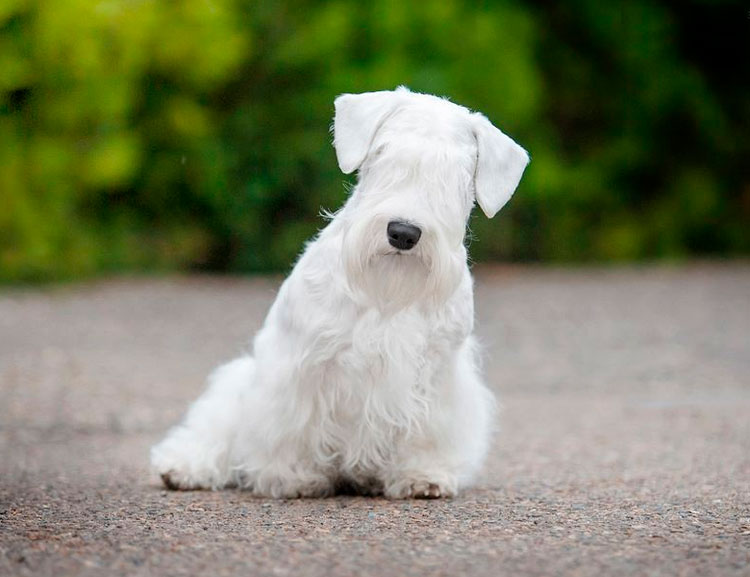
The wire-haired white Sealy requires regular grooming. Its coat is virtually non-shedding and self-cleansing, but it requires more frequent bathing than other similar dark-colored dogs. Brushing should be done 1-3 times a week, with occasional trimming and plucking of overgrown hair. The fur on the face and paws, if not bleached, will turn a reddish-brown. This is normal, but it spoils the dog's appearance. Special products are used regularly to lighten the coat. Bathing is as needed, usually once a month. The paws and belly should be washed more frequently. Ears should also be cleaned regularly, and eyes should be wiped. If feeding a natural diet, the face should also be washed after each meal. Teeth are not a weak point for Sealy dogs, but regular brushing can significantly delay the inevitable dental problems that occur in adulthood. Nails should be trimmed every 3-4 weeks.
The Sealyham Terrier's coat is waterproof, consisting of a dense undercoat and a stiff, wiry outer coat. Seasonal shedding is moderate. During the rest of the year, with regular grooming, the dog sheds virtually nothing and has no distinctive odor.
Nutrition
The owner chooses how and what to feed their Sealyham Terrier, but it's important to note that the dog's health and vitality depend entirely on its nutrition. Feeding can be natural, commercial, or mixed; the third option is not recommended by many breeders and veterinarians. Homemade food should be balanced. A medium-sized Sealyham Terrier eats about 600 g of food per day. A third of the diet should be meat and meat products, the rest should be grains, vegetables, and fruits. Low-fat dairy products and eggs are also given once or twice a week. Vitamin and mineral supplements are essential, administered in courses as recommended by a veterinarian or breeder. As for food, premium-class diets for small dogs are suitable for Sealyham Terriers. The food should be appropriate for their age and exercise level. Sealyham Terriers are prone to weight gain, so it's important for owners to monitor their calorie intake and the number of treats they provide.
Health and life expectancy
Sealyham Terriers often suffer from allergies. Furthermore, several hereditary eye diseases (keratoconjunctivitis sicca, primary lens luxation, and progressive retinal atrophy) have been identified in the breed. Non-genetic ophthalmological problems, such as corneal damage or infectious diseases, can arise from irritation from long eyebrows. Degenerative myelopathy and congenital deafness are rare. Life expectancy is usually 11-13 years.
The Selyhem's short legs limit its ability to run and jump. For this reason, it is not recommended to play with Frisbee or use it as a jogging companion. Female dogs often experience complications during labor, caused by delays in labor for various reasons. Their floppy ears are prone to ear infections and should be kept dry and clean at all times. Also important for maintaining health are timely vaccinations and parasite treatment, a nutritious diet, and good care. A full medical examination is recommended annually.
Choosing a Sealyham Terrier Puppy
The Sealyham Terrier is a rare breed, but not so rare that you need to travel abroad to find a puppy. Domestic stock is generally of good quality. If you have special requirements for dogs—for example, you need a Sealy for show or breeding, a certain color, or a certain personality—you may have to wait a long time for a puppy. If you're simply looking for a pet, finding a kennel or breeder with available puppies or a planned litter is easy.
Prospective owners must ensure that the puppies' parents possess the desired characteristics, including a breed-appropriate temperament and appearance. Testing for common breed-specific diseases is encouraged. The puppies must be absolutely healthy in appearance and behavior. Attention is paid to the quality of the puppies' nutrition and the nursing mother's appearance. Puppies are examined for compliance with the standard, including bite, coat quality, color, ear and tail placement, and other parameters. Each puppy must have a tattoo, a puppy card, and an individual veterinary passport with vaccination records.
Price
In Russia, a Sealyham Terrier puppy with papers from good parents costs from 50,000 rubles. In rare cases, it's possible to find a puppy for significantly less. These are usually puppies born from unplanned matings or so-called breeding defects, dogs with abnormal coloring, malocclusions, kinked tails, atypical coats, and other deviations from the standard.
Photos
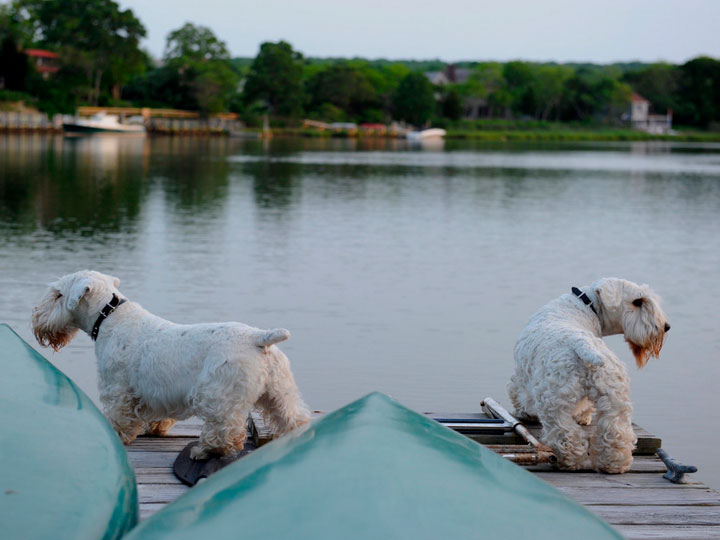
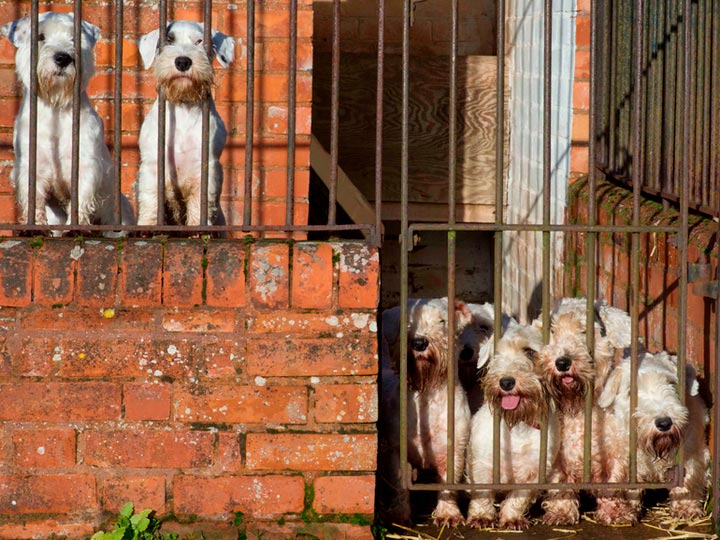
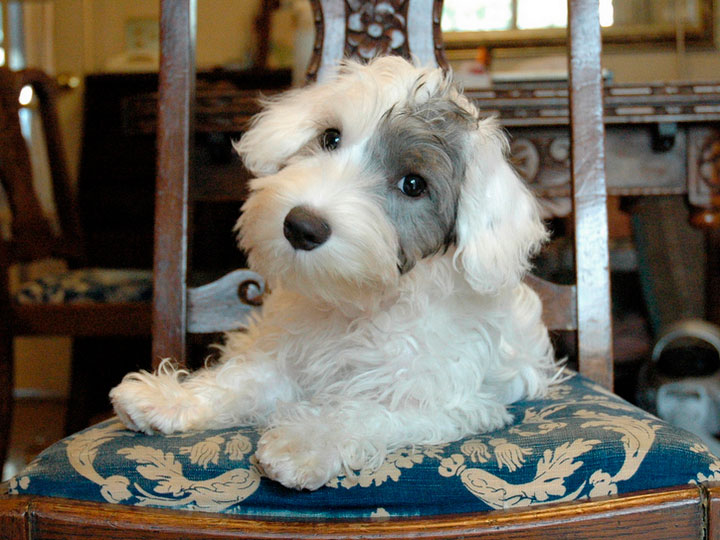
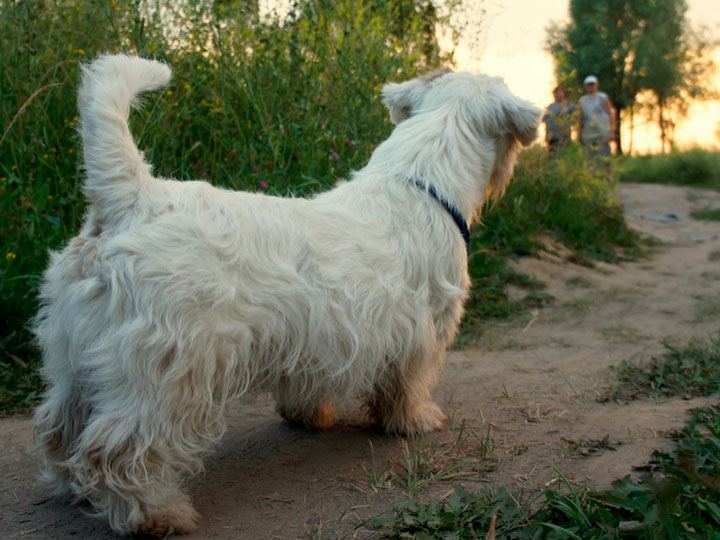
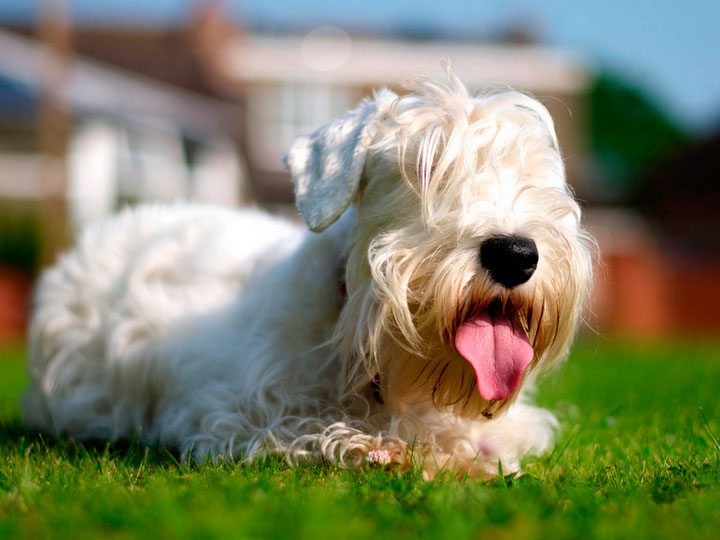
The gallery contains photographs of adult Sealyham Terrier dogs and puppies.
Read also:


Add a comment