
Shikoku (shikoku, kochi-inu, kochi-ken)
The Shikoku is one of six native Japanese breeds that are considered national treasures and protected by the state. This medium-sized hunting dog is very similar in appearance to its more popular cousins, the Akita Inu and Shiba Inu, but has its own distinctive features that have earned it its place as a distinct breed.
Content
History of origin
Many cynologists believe that the Shikoku is a descendant of the now-extinct Japanese wolf, while others categorically deny this. It is certain that the breed was developed for hunting large game in the mountainous regions of Kochi Prefecture. Therefore, it is sometimes called the Kochi-ken ("ken" is the Japanese word for "dog"). In 1937, it was designated a natural monument. The Shikoku's closest relative is the Kochi-ken. Shiba Inu He also leads a group of aboriginal Japanese dogs protected by Nippo.
In the past, dogs were primarily kept by hunters in the northern and western regions of Shikoku. The mountainous terrain of these areas limited crossbreeding, resulting in the development of distinct, highly pure lines in different areas. In the 20th century, remote areas became more accessible, and the obvious differences between the lines faded, some even disappearing altogether. After World War II, the breed was rebuilt virtually from scratch. In 1982, the Shikoku breed was officially recognized by the FCI.
The breed is quite rare even in Japan. The population fluctuates between 5,000 and 7,000 individuals, with over 500 puppies being born annually.
Video about the Shikoku dog breed:
Appearance
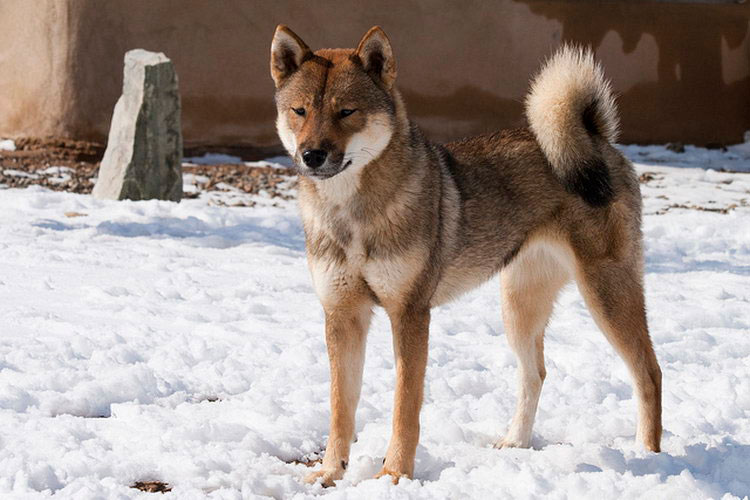
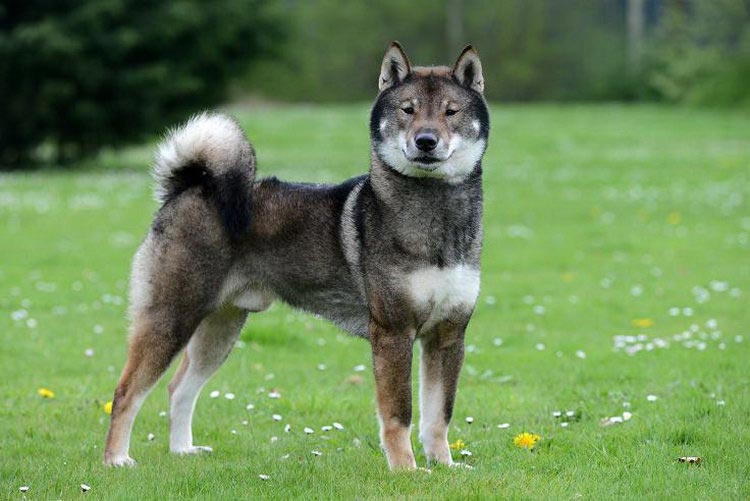
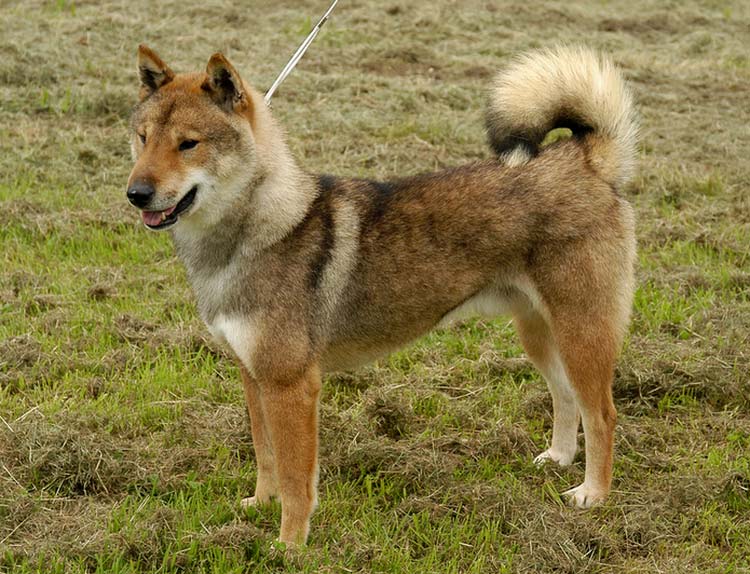
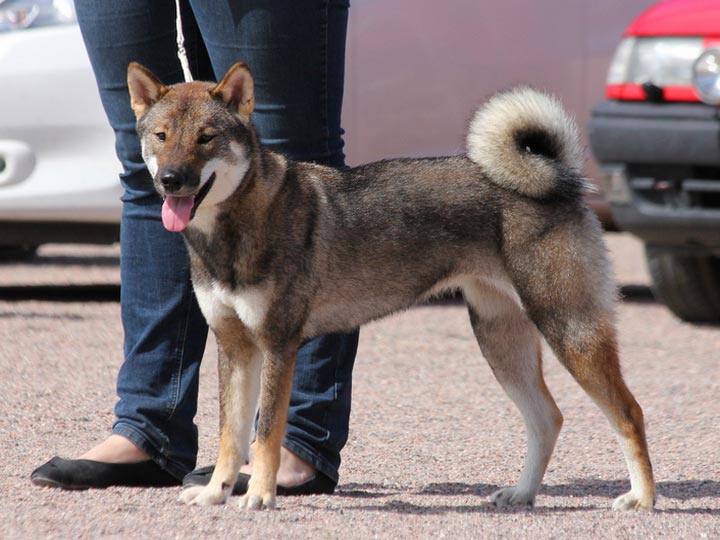
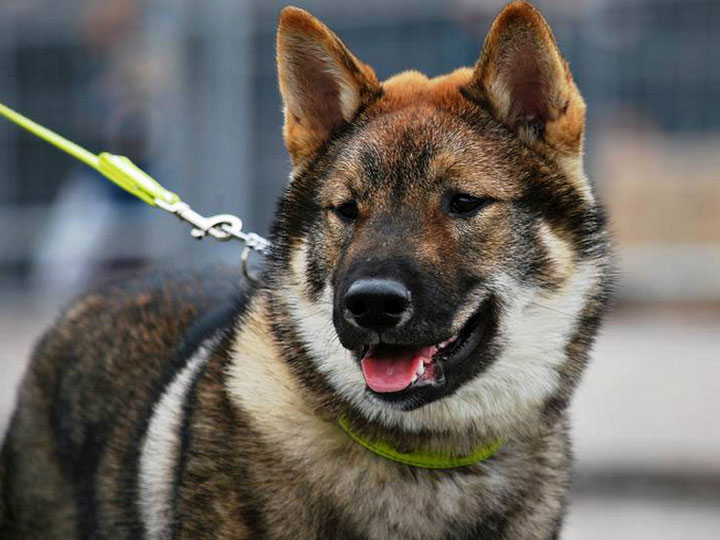
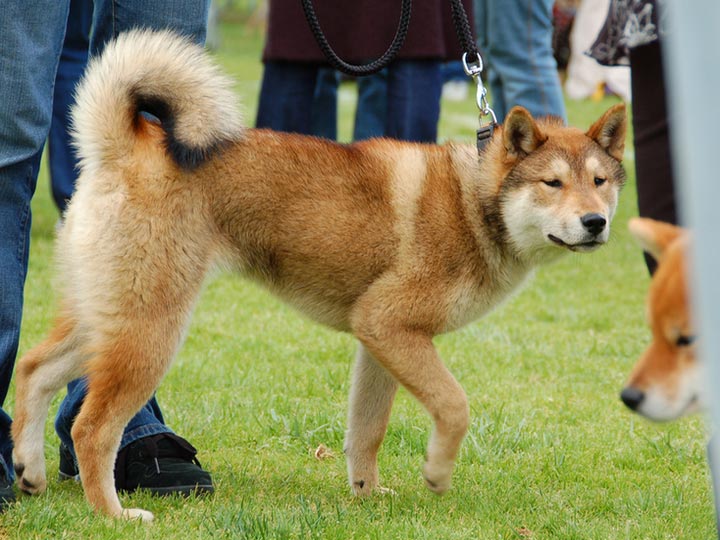
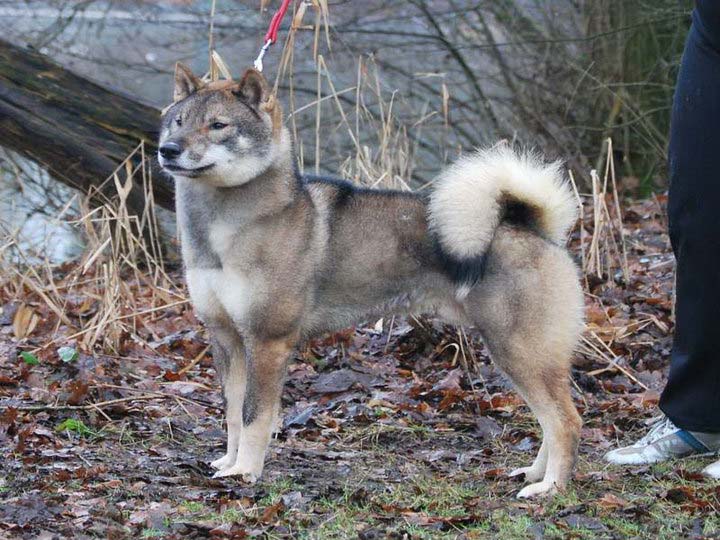
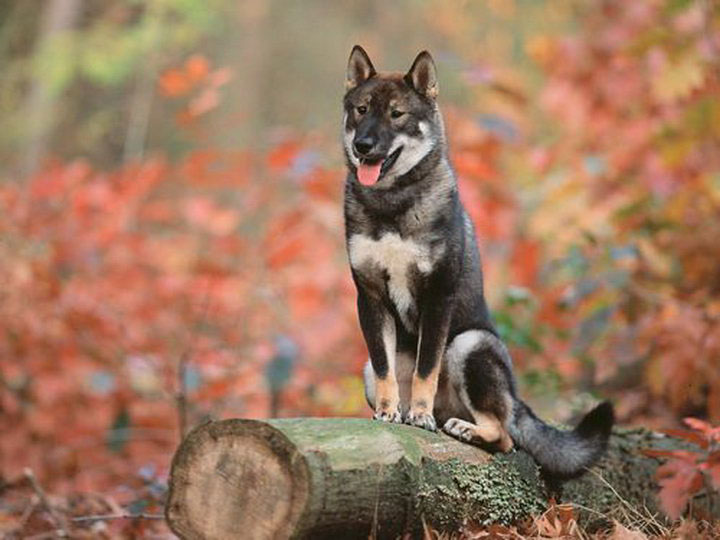
The Shikoku has a typical Japanese breed appearance: a fluffy tail curled over the back, a plush coat that feels loosely curled, erect triangular ears, small expressive eyes, and, of course, a distinctive smile. The Shikoku is medium-sized, standing 42-55 cm at the withers and weighing 20-25 kg.
The native Japanese breeds are very similar in appearance; even experienced dog handlers can have a hard time distinguishing them from photographs, let alone amateur dog owners.
The head is proportionate to the body. The muzzle is slightly elongated, the stop is weak, and the forehead is broad. The bridge of the nose is straight, and the tip of the nose is black. The lips are dry and well-tight. The bite is correct. The eyes are small, wide-set, triangular in shape, and dark in color. The ears are small, erect, pointed, and triangular in shape. When viewed from the side, they are slightly tilted forward.
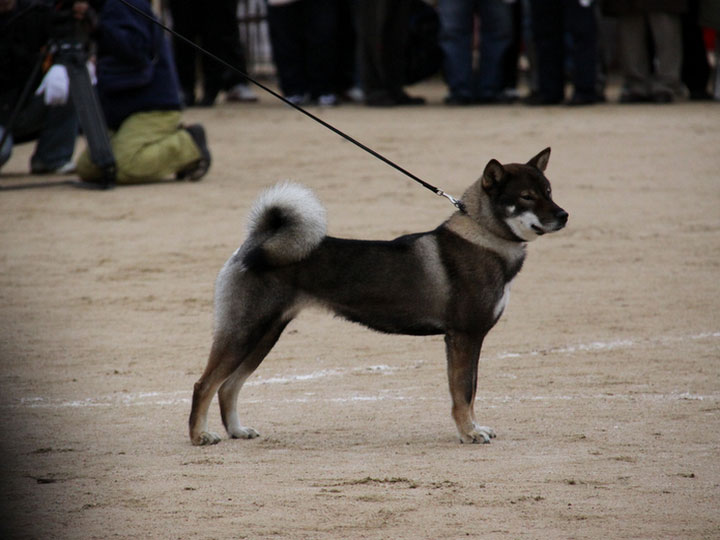
The body is compact. Muscles are well developed, and the bones are strong. The height-to-length ratio is 10/11. The neck is strong and thick. The back is straight. The chest is deep, and the ribs are well sprung. The belly is tucked up. The tail is set high and thick, curved like a sickle or lying like a ring on the back. The legs are strong with strong joints. The paws are well-knit. The pads are dense and elastic. The claws are dark and strong. The movement is light, quick, and agile. The stride is confident, short rather than long.
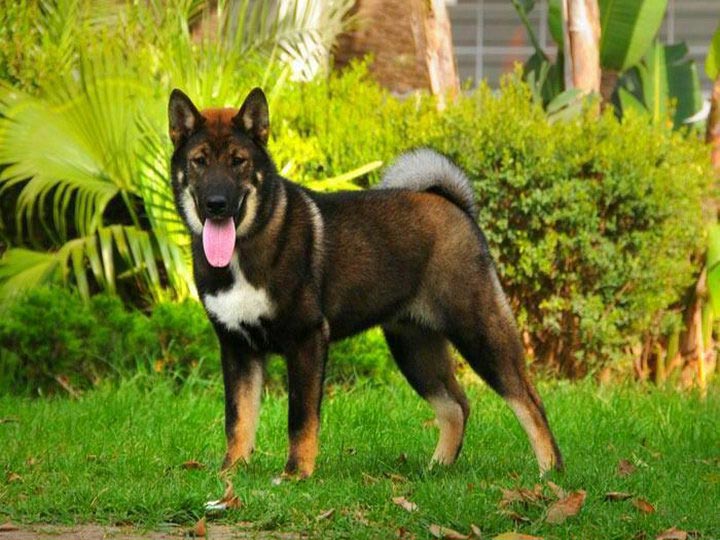
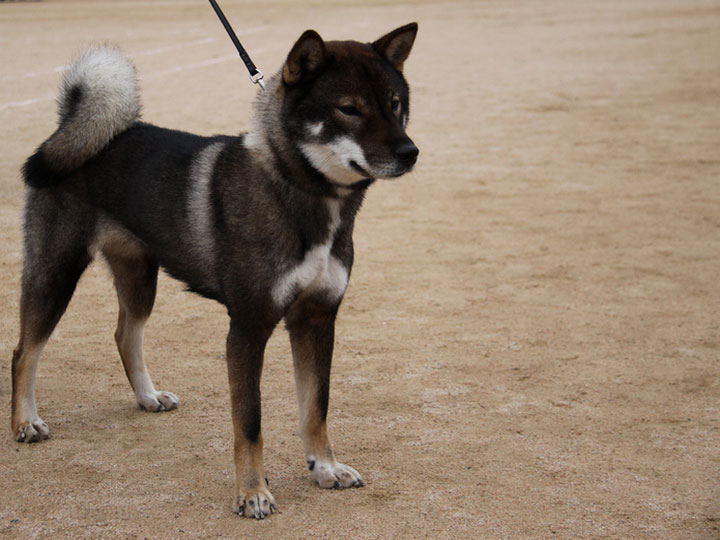
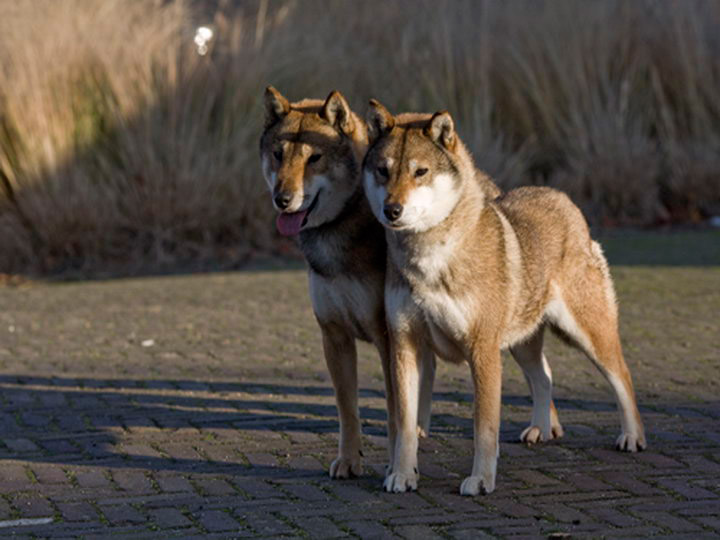
The coat is double, consisting of a short, fairly coarse, straight topcoat and a short, soft, dense undercoat. The hair on the tail is longer. The coat color is sesame, black, or red. Sesame is not a color, but a type of coloring in which tan markings of several lighter shades are added to the base color. In this case, the base color is red or black.
Character and psychological portrait
Shikoku dogs are passionate and enthusiastic. Their steadfastness and composure, combined with their boundless energy and playful nature, make them excellent hunters. These qualities allowed the Japanese to use Shikoku dogs to hunt large game, such as wild boar and deer. They are also very observant and curious.
Shikokus are dogs with a strong, firm, and balanced character. By nature, they are very alert, loyal, and devoted to their owners. They make good watchdogs, but are not true guard dogs or protection dogs. If for some reason an adult dog is left without an owner, it may never accept another.
When defining the individuality of the Shikoku, the Japanese use three concepts: good character (good nature, obedience, devotion to the owner), energetic calm (boldness combined with vigilance and understanding of what is happening), and simplicity (sincerity and simplicity).
A hunting instinct and aggression toward other dogs are innate qualities of this breed. However, a well-trained and socialized Shikoku usually gets along well with other pets in the house. They are very wary of strangers and will bite without warning if they feel the need. Shikokus are very bold and easily excitable. They get along very well with older children who treat them respectfully. If you try to restrict or annoy a Shikoku, they won't care whether it's an adult or a child and may snap.
Shikoku is not as independent as, for example, AkitasThey listen to their owners, always trying to be nearby, always trying to please and help, making them easier to train and more obedient. However, their inherent independence often causes the dog to ignore commands, especially when it's on a scent. It's important for Shikoku owners to build a trusting relationship with the dog from the start, where the owner acts as both friend and mentor.
Features of care and maintenance
Shikokus are well-adapted to outdoor life. In Japan, they are typically kept in enclosures with a fairly spacious kennel. The recommended size is about 3 square meters, but the climate there is, of course, much milder. Shikokus are also suitable for city living; they do well in apartments, provided they are well-walked. Shikokus shed quite heavily, but regular brushing will minimize this.
Physical exercise is essential. Walks twice a day for at least an hour are recommended. A lack of adequate physical and mental stimulation will stress the Shikoku, causing restless and unruly behavior.
Care
Shikoku grooming is easy, especially since their thick, wiry coat is self-cleaning. Brushing is recommended once a week, using combs of varying tooth lengths and thicknesses. During the shedding season, the soft undercoat falls out in clumps and is easily combed out. Bathe the dog no more than once every 2-3 months. Clean the ears and trim the fast-growing nails as needed. Brush the teeth at least once a week.
Diet
In Japan, many breeders and owners have switched to commercial dog food, while some continue to feed natural food. However, it's important to note that natural food in this country differs slightly from ours. For example, dogs get most of their protein from seafood and poultry. Fish contains substances that prevent the development of dementia. Commercial dog food lacks these substances. Furthermore, in other countries, natural diets lack the necessary amount of fish, which can lead to dementia in older dogs. An unbalanced diet can also cause digestive and cardiovascular problems, so when buying a Shikoku, special attention should be paid to feeding.
Health and life expectancy
Shikokus are strong, healthy dogs, hardy, and adapt well to a variety of living conditions. They rarely get sick, but some common health problems include:
- Allergic dermatitis;
- Neuralgia;
- Hip and elbow dysplasia;
The average lifespan of a Shikoku with good care is 10-13 years.
Choosing a Shikoku puppy and its price
The breed is quite rare even in its homeland. Other countries are reluctant to breed Shikoku. The different mentality from Japan prevents the full appreciation of these dogs' qualities, as is done in the Land of the Rising Sun. There are several kennels in Europe, one of the largest being in Estonia. There are a few representatives of the breed in Russia, but no one is seriously involved in breeding them.
If you need to acquire an excellent representative of the breed, then it is better to think about buying a dog from its historical homeland.
However, in this case, there may be problems with obtaining export documents. Without them, in Russia, you can obtain a registered pedigree for dogs, also known as a "null" (zero) certificate, but this option is not suitable for everyone. The average market price for a Shikoku puppy in Japan is 100,000-200,000 yen, or approximately 6,000-12,000 dollars.
Photos
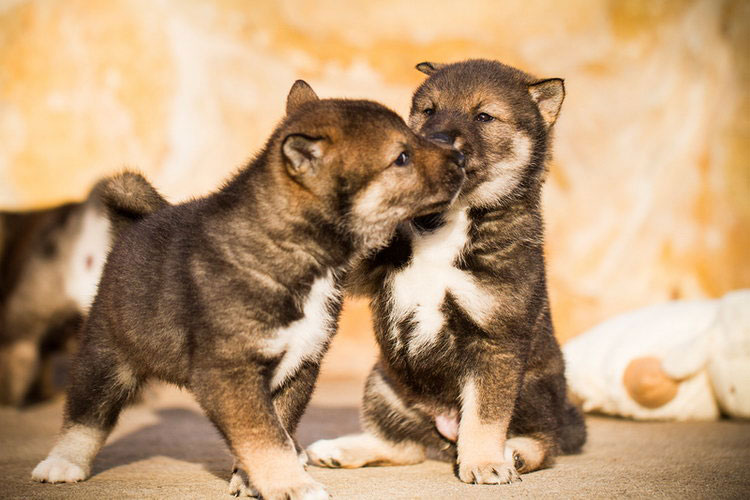
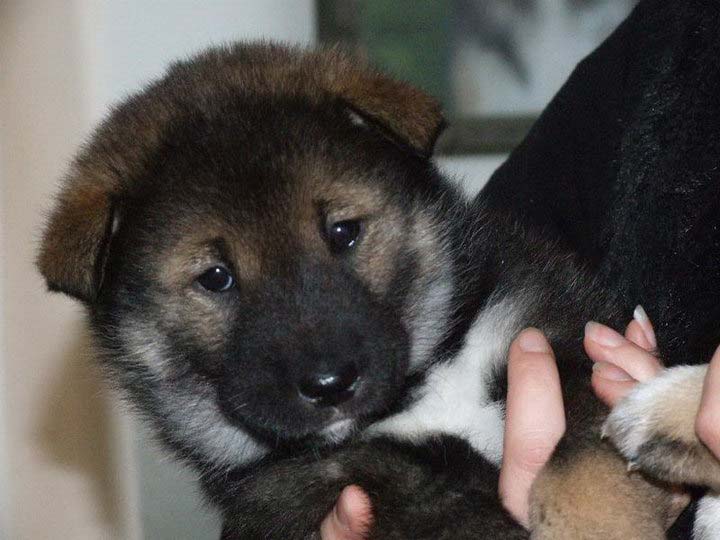
The gallery contains photos of dogs of various ages and colors of the Shikoku breed, also known as Shikoku or Kochi-ken:
Read also:


Add a comment