
Siamese cat
Siamese cat The Siamese is an amazing pet with a striking appearance and a spirited yet incredibly loyal nature. In this article, we'll tell you where these unusual cats originated, how the different branches of the breed differ, how to care for a Siamese, and how much such an unusual pedigree kitten costs.
Content
General characteristics of the breed
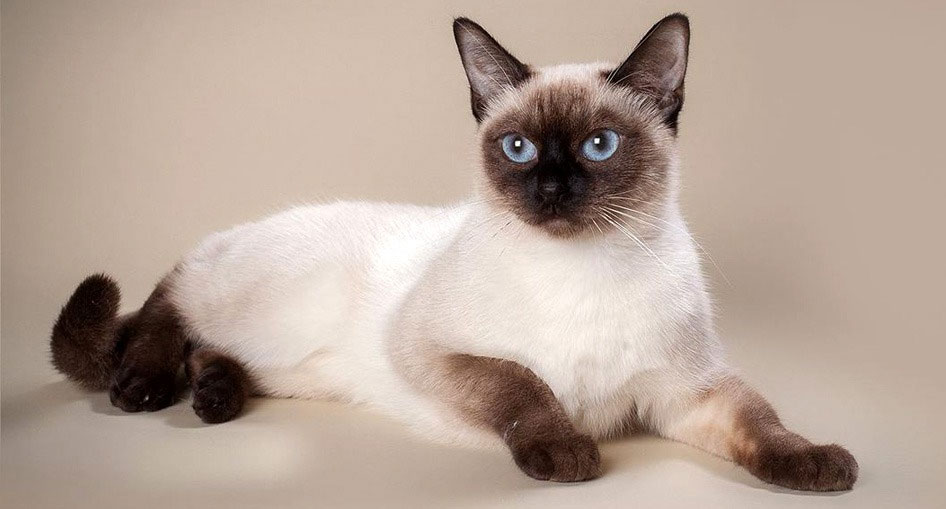
A triangular muzzle, long legs and tail, smooth fur, unusual coloring and stunning blue eyes are what immediately catches your eye when you meet a Siamese cat.
|
International name |
Siamese cat |
|
Country of origin |
Thailand |
|
The first mention of the breed |
1960s |
|
Weight |
4-8 kg |
|
Life expectancy |
12-20 years |
Some feline organizations, such as TICA, WCF, and LOOF, distinguish between the classic (traditional Thai) and Western (modern) types of Siamese cats. However, the FIFe and CFA classifications Thai variety It is not recognized as a separate breed, but is classified as a Siamese breed.
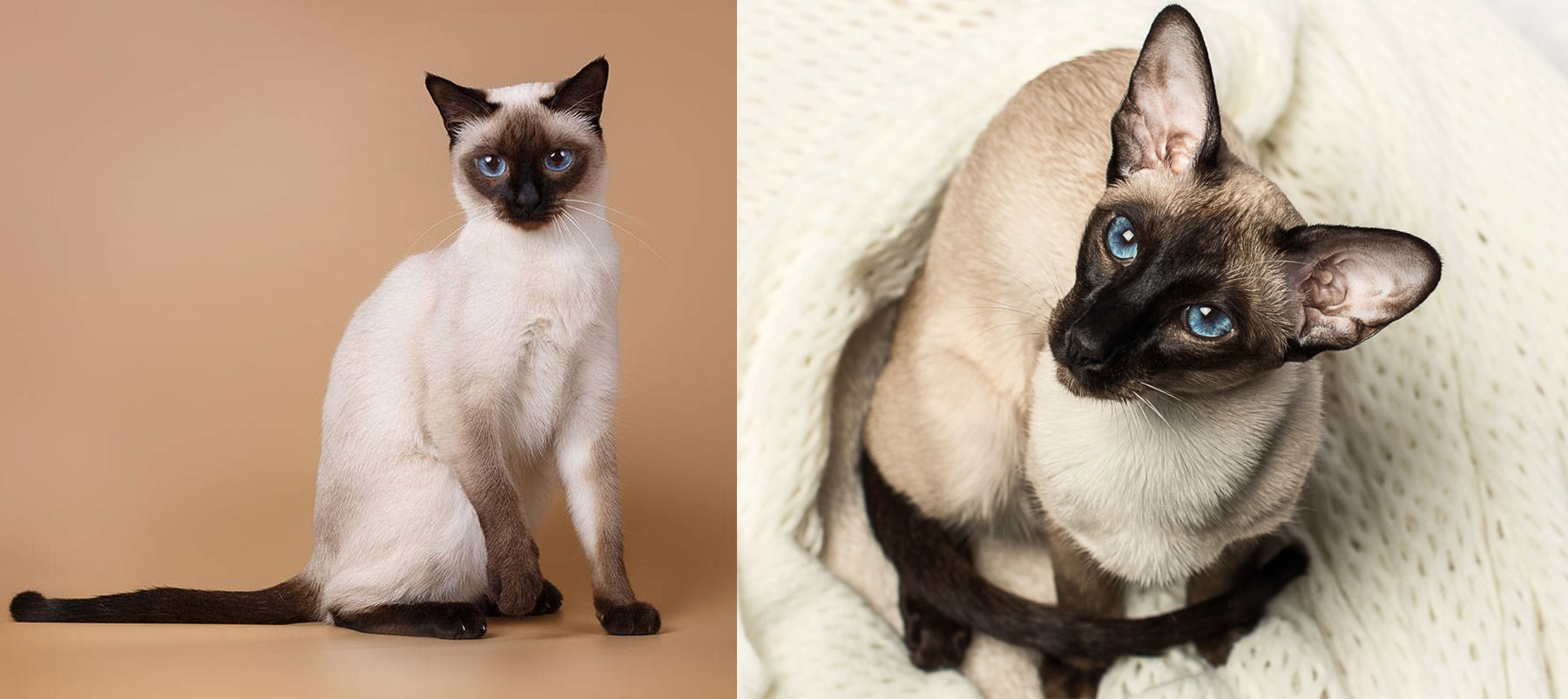
Based on feedback from breeders and veterinarians, we've compiled a table detailing the characteristics of the Siamese cat breed:
|
Activity |
|
5/5 |
|
Playfulness |
|
4/5 |
|
Friendliness |
|
4/5 |
|
Intelligence |
|
4/5 |
|
Sociability |
|
5/5 |
|
Health |
|
3/5 |
|
Molting |
|
2/5 |
|
Need for care |
|
1/5 |
|
Cost of maintenance |
|
3/5 |





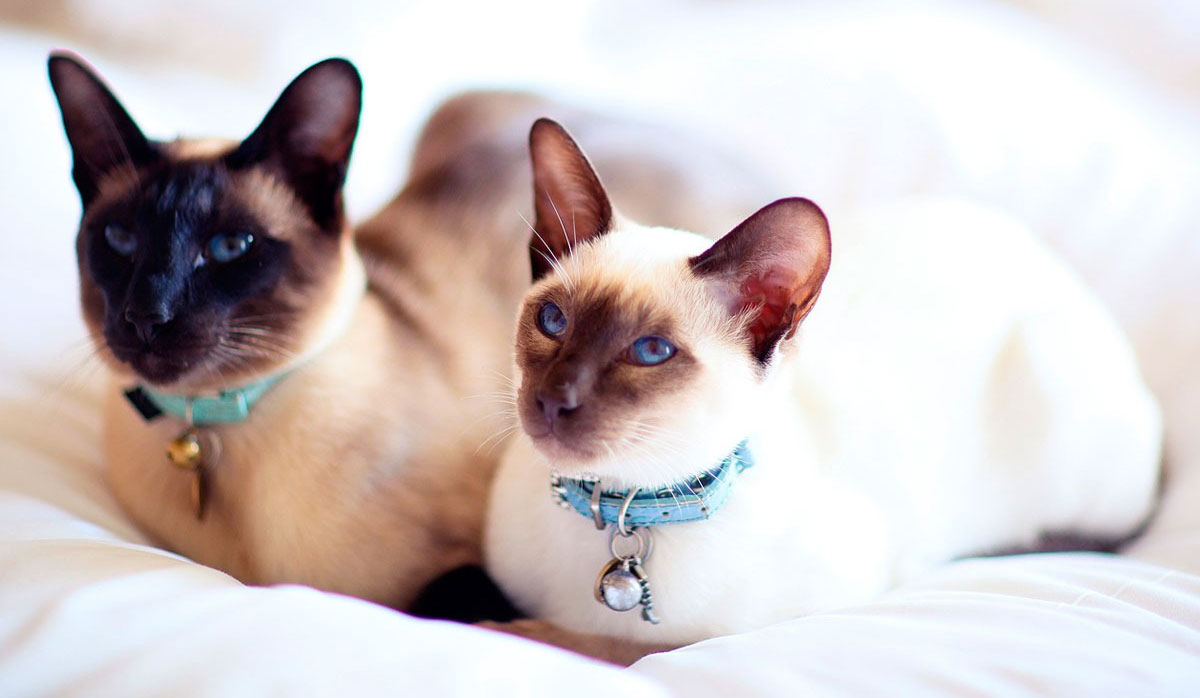
Interesting fact! The Siamese cat isn't the only one with the seal point coloring (cream body, chocolate face, paws, and tail) and blue eyes. This coloring is also found in Sphynx cats, Persian cats, Sacred Birmans, the new line of British and Scottish Folds, Neva Masquerade cats, Mekong Bobtails, and some others.
History of origin
The first description of the special graceful blue-eyed cats, which in the Kingdom of Ayutthaya were exclusively reserved for royals, was in the poetic treatise "Tamra Maew." Scholars believe the original of this work, which has not survived, was written between 1351 and 1767.
For centuries, these unique cats inhabited the palaces and temples of Siam (modern-day Thailand). In their homeland, the breed earned the unusual name "moon diamonds."
The first representatives of the breed were brought outside the country only in the late 19th century, gaining incredible popularity in the United States and Europe. Initially, attitudes toward the new breed were mixed. Some experts were intrigued by their unusual appearance, while others found them ugly. However, increased interest in the Siamese among aristocrats contributed to the breed's growth.
Interesting fact! Famous Siamese cat fans include Jimmy Carter, Vivien Leigh, John Lennon, Syd Barrett, and Gary Oldman.
Exterior of the breed representatives
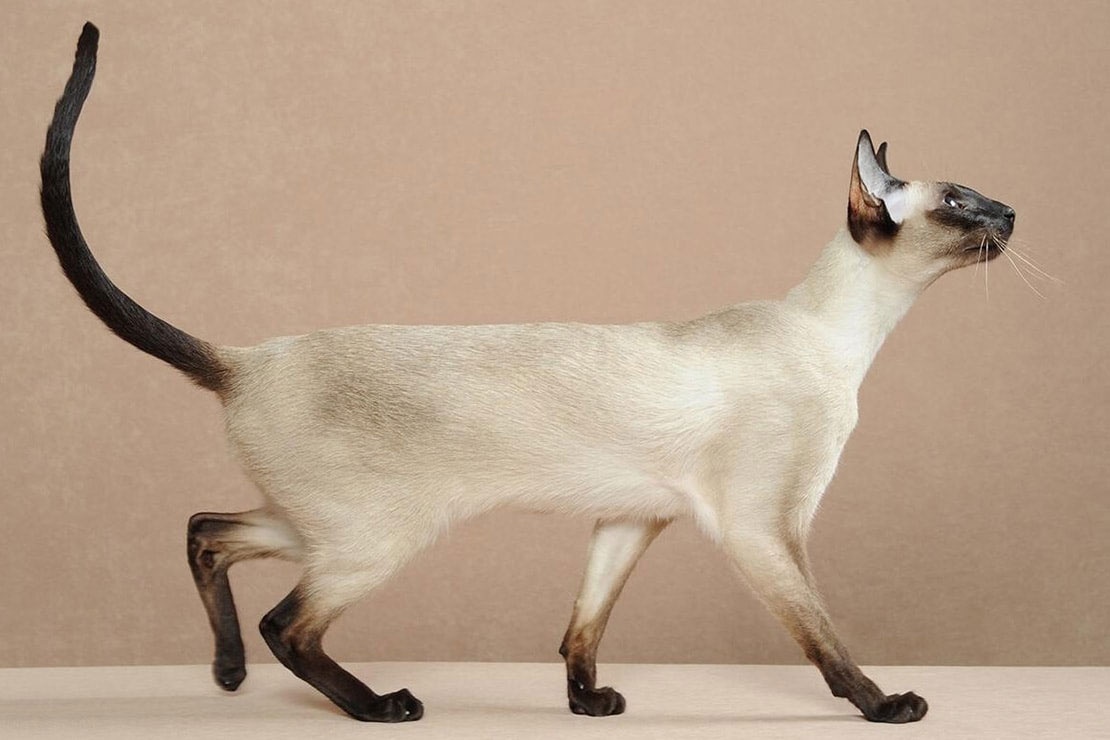
The standard provides the following description of the Siamese cat breed:
|
Body |
muscular, flexible, slightly elongated |
|
Head |
long, wedge-shaped, tapering from the ears to the nose, forming a triangle |
|
Eyes |
always blue, almond-shaped, slightly slanted |
|
Ears |
fairly large, set wide apart, triangular in shape |
|
Tail |
thin, long |
|
Paws |
long, thin, graceful (the back ones are higher than the front ones) |
|
Wool |
thin, short |
Only four colors are recognized by the CFA Association:
- Seal point (the body is covered with sandy or cream-colored fur, and on the paws, muzzle, ears and host there are areas with contrasting brown fur);
- Chocolate Point (body is ivory, mask is rich chocolate color);)
- Blue Point (the body is covered with grey-miney or white-blue fur, and the mask has a slate-grey tint);
- Lilac point (the body fur is white, contrasting areas can be highlighted with a pinkish-brown shade, the nose and pads of the llamas are pink).
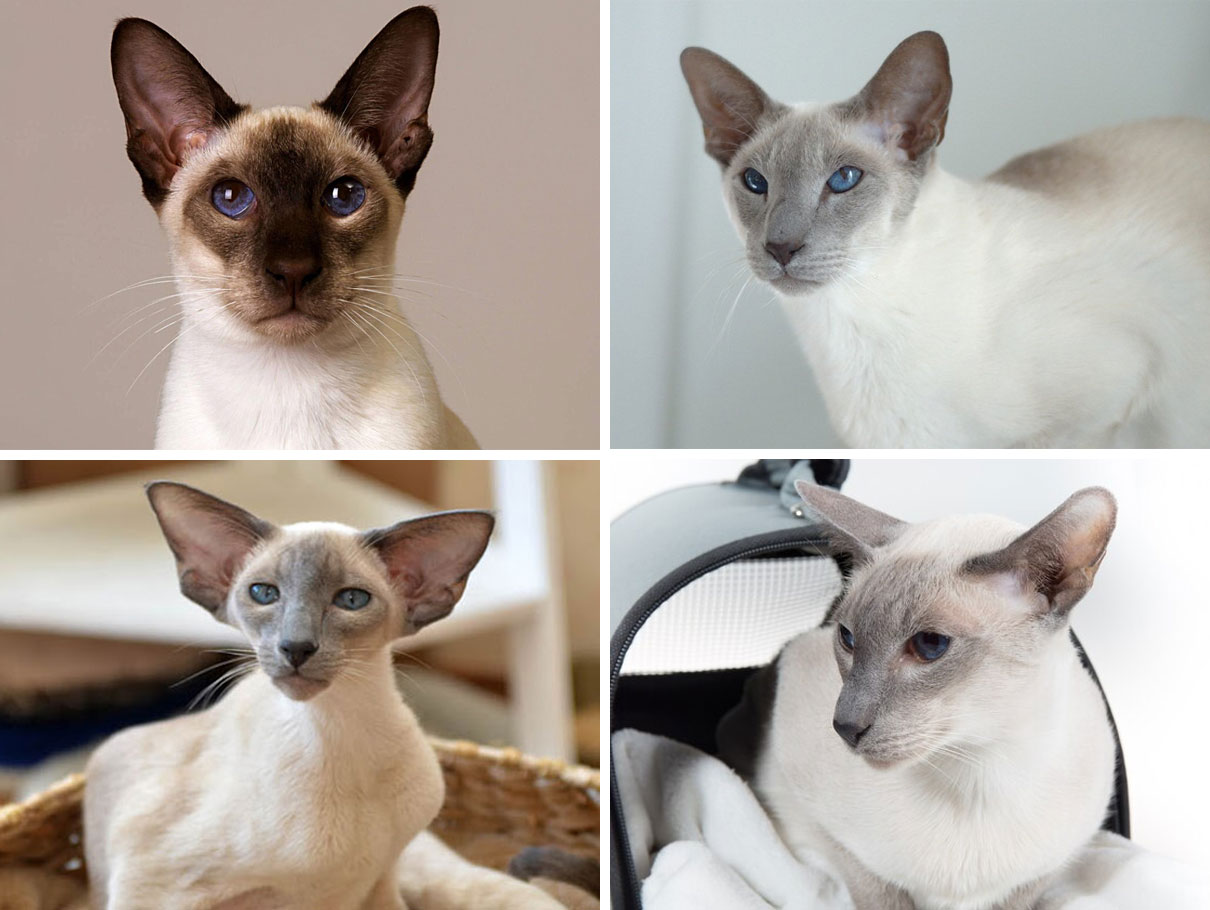
However, TICA also recognizes other colors: cream point, red point, tortoiseshell point, and pointed tabby.
Traditional Thai cats, also known as "Old Siamese" or "Thai" cats, differ from the Siamese standard in several ways. Thai cats have:
- round head;
- classic ears of medium size;
- short body (like a normal cat);
- thicker paws.
Character
Siamese cats are freedom-loving, emotional and willful, but at the same time they are extremely people-oriented and need constant love, attention and care.
Siamese cats are often accused of being unstable, aggressive, jealous, and vindictive. Experienced breeders agree that most behavioral problems are the result of improper training or abuse by their owners.
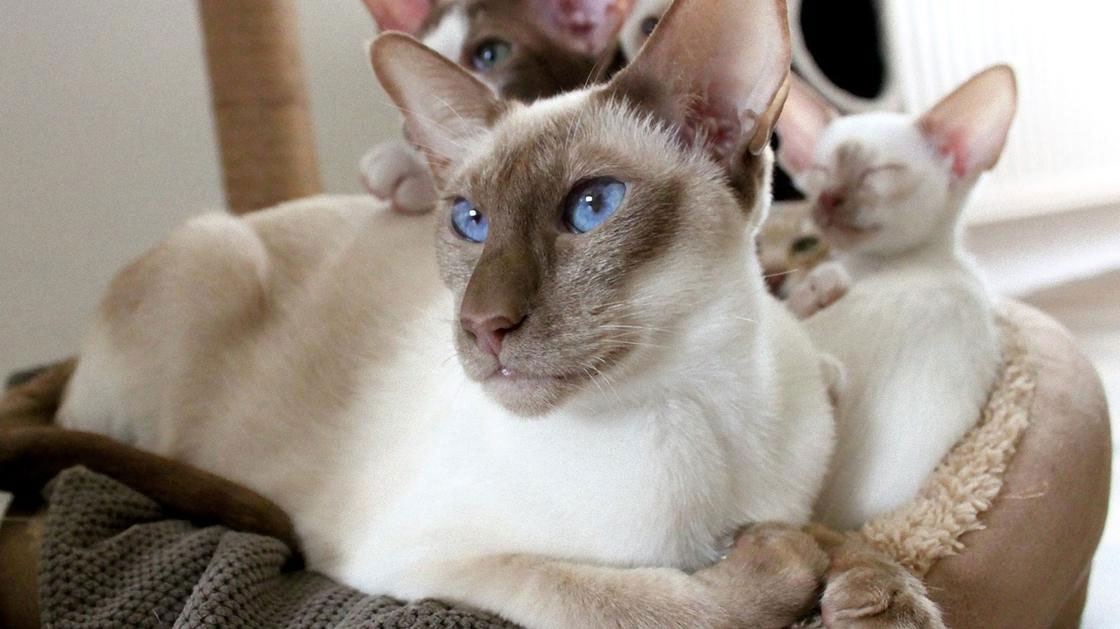
This breed craves companionship and does not tolerate prolonged loneliness well. Upon return, they may follow their owner for hours, persistently demanding their share of affection and play.
These cats often establish normal relationships with all family members, not favoring any one owner. However, relationships with small children, who are unable to maintain distance, can be intrusive, and cause discomfort to the cat. Feeling that they can defend their owl's right to freedom, the cat may become aggressive toward the child.
Siamese cats get along well with other animals if they move into a home with adult cats or dogs. Don't be surprised, this breed can befriend dogs and even feel part of a pack. However, an older Siamese cat is unlikely to be thrilled by the arrival of a new pet; prolonged conflicts are quite likely.
As for vindictiveness, this trait is not inherent in cats at all, as planning revenge is too complex an emotional process, while cats are guided by more primitive natural instincts. Most often, what inexperienced owners perceive as "revenge" is the result of the animal's misunderstanding of its owner's demands due to improper upbringing, the result of severe stress from abuse, or a natural "call of nature" caused by hormonal changes in the animal's body.
Before adopting a Siamese cat, consider carefully whether you can handle this charming but spirited individual. This breed is not recommended as a first pet, for families with small children, or for people who are unwilling to devote a lot of time to raising a pet.
How much does a Siamese kitten cost?
If you're interested in a Siamese cat, be aware that the price of a pet can vary wildly. You can adopt a cat for free (in good homes) or pay a fortune if the kitten's parents are recognized champions.
The price of a Siamese cat can depend on the purpose of purchasing it. If you're buying a cat from an experienced breeder for breeding, they'll naturally charge a reasonable price. If you're buying a Siamese cat for a pet, you'll be given a healthy, sterilized cat for a modest price. Typically, the cheapest kittens are those with minor deviations from the standard, which preclude them from showing or breeding. However, these pets often look just as good as their elite counterparts and are capable of bringing their owner maximum warmth and joy.
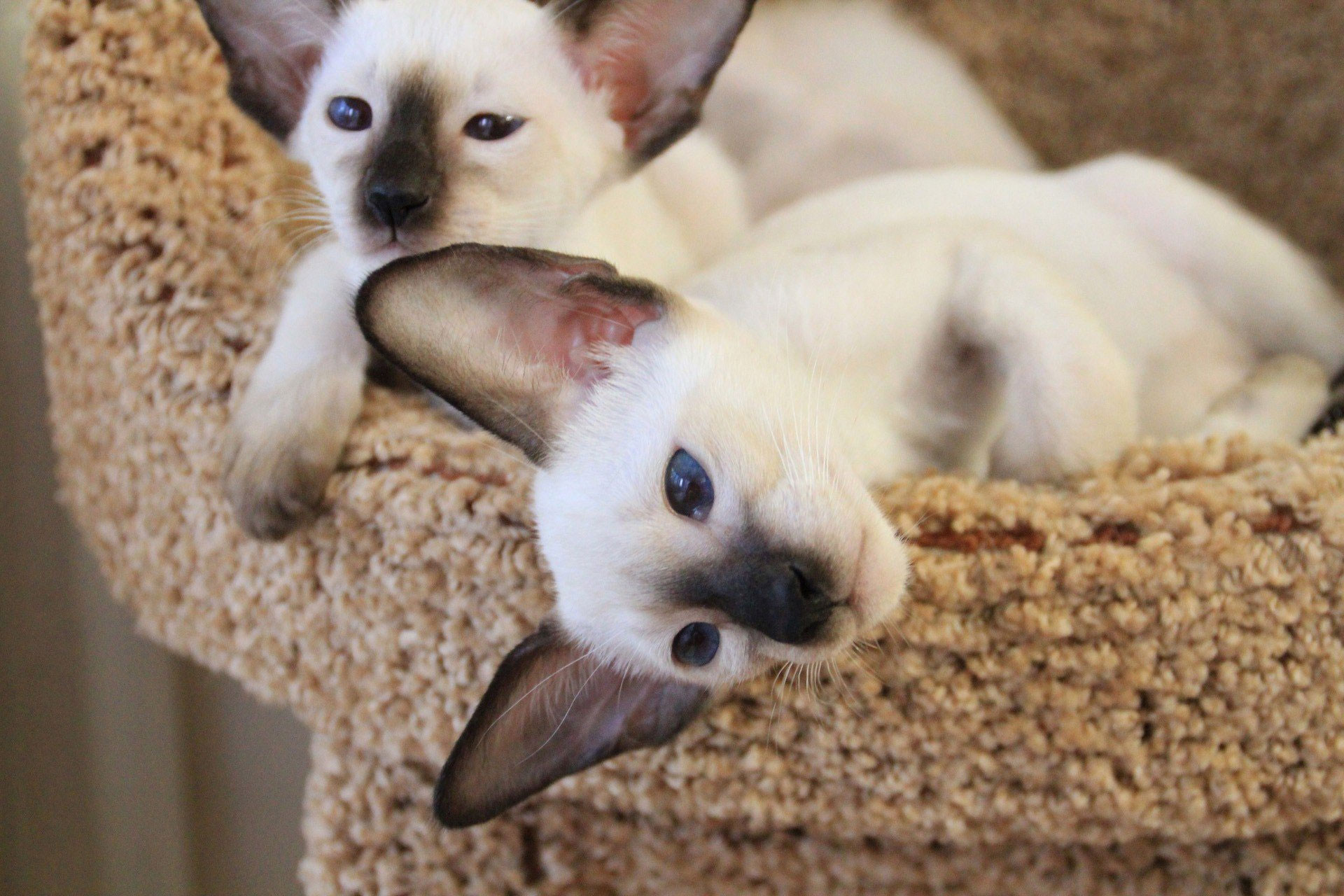
The same applies to other nuances, such as pedigree and the reputation of the owners. Based on the average cost of a Siamese cat, the average price range is as follows:
- babies not for breeding will cost from 6 to 25,000 rubles depending on the exterior and color;
- Promising kittens (for breeding and exhibitions) - from 25,000 to 40,000 rubles and more.
What to feed a Siamese cat
A cat's nutrition is crucial, and first and foremost, it's its health and longevity. You want your Siamese cat to always be healthy, happy, energetic, and active, and to live a long, fulfilling life, right? In that case, there's one principle you should follow: learn what to feed your Siamese cat from the moment it arrives. I'll help you with this rather simple question.
As soon as your Siamese cat comes into your home, try to diversify its diet. For example, it shouldn't be just meat and fish, but also foods containing grains, vegetables, and dairy. Siamese cats are very conservative when it comes to food, and if you don't accustom your cat to a varied diet from an early age, expect the same behavior toward new foods.
A Siamese cat needs simple things:
- fats;
- proteins;
- carbohydrates;
- vitamins;
- mineral substances.
A balanced diet for each of these components is key to a Siamese cat's well-being. But more than anything else, this cat loves protein. It's not even a love, but a necessity. Protein is essential for proper growth and development. A lack of protein will lead to gradual muscle atrophy and deteriorating blood quality. Regarding protein in food, the following product lines can be highlighted:
- bird eggs;
- liver, kidneys;
- meat, fish, poultry;
- dairy products.
In addition to animal protein, Siamese cats need plant protein. To fulfill this requirement, feed them soy and yeast products.
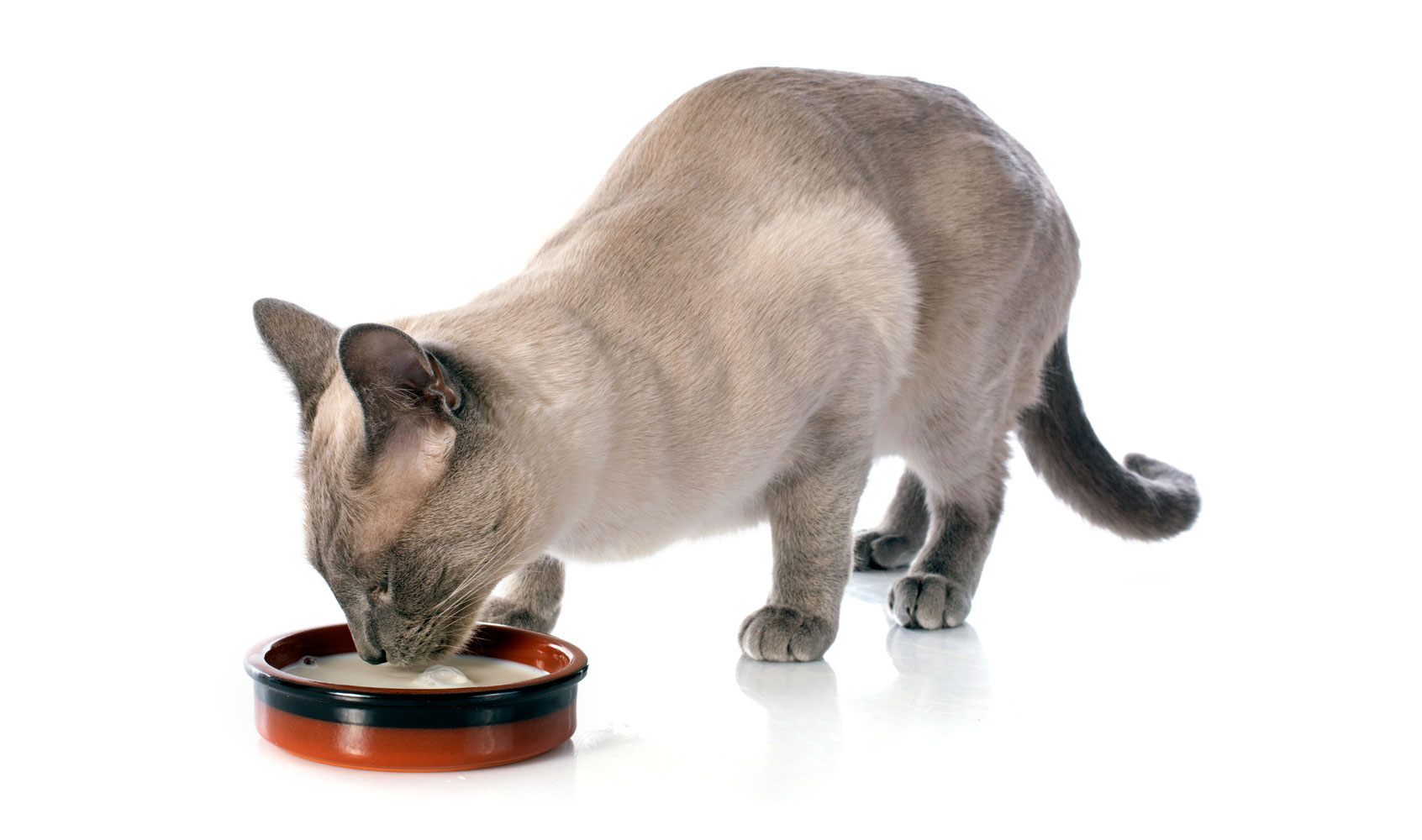
As mentioned, Siamese cats need a varied diet. This also applies to specific protein sources. For example, don't feed your cat only chicken; consider fish and so on. Protein diversity is an important factor in a cat's diet, especially for young, growing cats.
It goes without saying that, among other things, the animal's diet should be supplemented with foods containing iron, manganese, iodine, copper, zinc, and other minerals. Not every breeder has the opportunity to properly feed a Siamese cat natural food, so many people switch their pets to store-bought food. In terms of brands, the following products are recommended:
- Royal Canin with affordable price and quality.
- Hills with a high content of vegetable proteins.
- Advance, food suitable for neutered cats.
- Monge - time-tested Italian quality.
- Farmina — the choice of many breeders in Russia.
These are some of the most popular foods; in fact, there are many more, and many are in demand due to their unique qualities that can benefit your pet. While the final choice of food remains the owner's, it's important to remember that feeding low-quality food is detrimental to your cat's health.
Dry food is the most common choice; it's less expensive and you don't have to worry about how much to feed. The cat will eat as much as it needs and then go away. Plus, dry food acts as a natural toothbrush for the cat. Remember, if you feed your Siamese dry food, give them plenty of water.
There are many advantages to dry feeding, but experts do not recommend switching an animal exclusively to a dry diet, as it contributes to the development of diseases in animals such as cystitis, urethritis, urolithiasis, chronic renal failure.
How to care for Siamese cats
This breed's coat is short, so it doesn't require much grooming. Brush it occasionally, but no more than once a week. If you notice your cat's ears are dirty, you can remove the dirt with a cotton swab dipped in Vaseline.
Regarding teeth, the problem is often related to the food. As mentioned earlier, dry food promotes natural tooth cleaning. If your pet's teeth are completely coated with tartar due to homemade food, take them to the vet. Interfering with this procedure yourself is not recommended.
Siamese cats rarely need baths, with the exception of those that roam outdoors. But here's an interesting fact: many cats of this breed enjoy bathing, unlike other long-eared cats. So, if you see your pet wanting to splash around, don't deny them the pleasure.
Video review of Siamese cats
Read also:


1 comment
Leah
Hello! You write, "Dry feeding has many advantages, but experts do not recommend switching your pet to dry food exclusively, as it can contribute to conditions such as cystitis and urethritis."
I wonder if this is specific to certain breeds or to all breeds? I haven't seen bloody cystitis in Blue Russians, but a couple of days on dry food in Bengals causes severe cystitis, with copious amounts of fresh blood. Do you think it could be breed-specific? Could such severe cystitis be caused by food?
Add a comment