
Swiss Hound
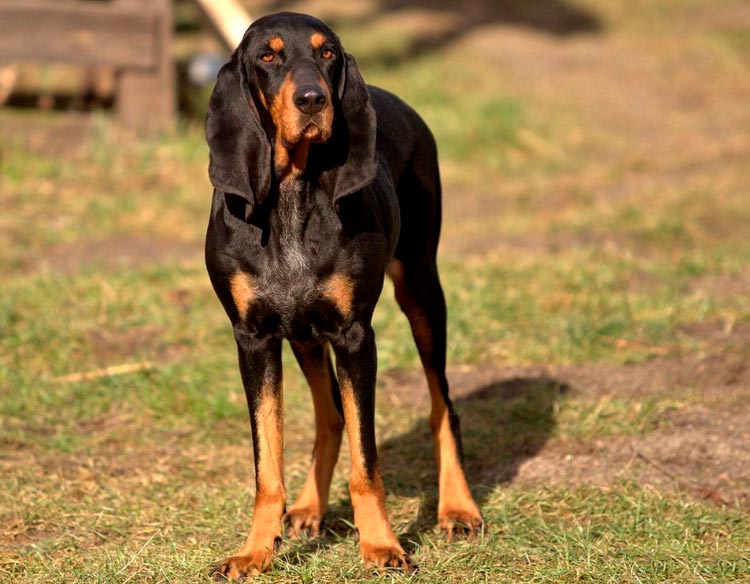
The Swiss Hound is a breed of large hunting dog with a distinctive appearance and is prized for its working qualities: excellent scenting, tenacity, and passion. They are used to hunt foxes, roe deer, hare, and wild boar. They are agile, obedient, affectionate, and loyal. There are four types of the breed: the Lucerne, Schwyz, Bernese, and Jura Hounds, which are virtually identical in all respects except coat color.
Content
History of origin
The Swiss Hound has a long history. Even in the Middle Ages, the breed was renowned for its working qualities and was known far beyond Switzerland. Its appearance has remained virtually unchanged since then, as can be seen in tapestries and paintings.
Swiss hounds were used in the development of the Estonian, Finnish, Hamilton hounds and others.
By the mid-19th century, there were five types of Swiss hounds: the Bernese-Lucerne, the Schwyz, the Jura, and the Turgovian. Each had its own standard. In 1909, the descriptions were revised due to the extinction of the Turgovian hound. A single standard was adopted for the remaining four in 1933. In 1954, the breed was officially recognized by the FCI.
Use in hunting
Swiss hounds are used to hunt hare, fox, roe deer, and, less commonly, wild boar. They possess excellent scent, tenacity, drive, and an independent work demeanor, yet are quite obedient. They often begin working in their first year of life. They can hunt alone or in teams.
They follow a scent calmly. When encountering game, they keep their distance. They are hardy, intelligent, and have excellent navigation skills, which allows them to hunt in virtually any hunting ground. They hunt with a loud, penetrating bark.
Appearance
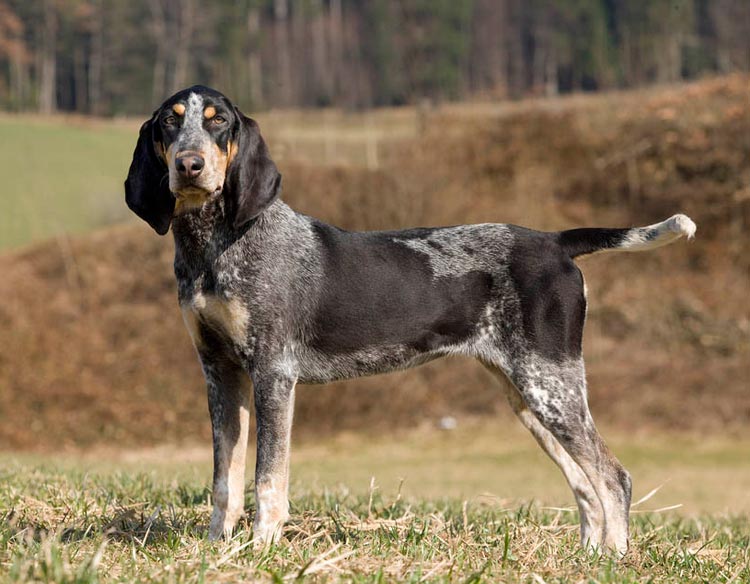
The Swiss Hound is a sturdy, medium-sized dog with an expressive muzzle and long, drooping ears. It is strong and resilient. Sexual dimorphism is pronounced.
- Height at the withers of males: 49-59 cm;
- The height at the withers of bitches is 47-57 cm.
The skull is elongated, lean, and fairly rounded. There is no frontal furrow or folds on the skull. The stop is noticeable. The muzzle is narrow, with a straight or slightly convex nasal bridge. The nose leather is black with wide-open nostrils. The jaws are strong. The bite is scissor-like. The eyes are oval, medium-sized, and dark. The edges of the eyelids are pigmented and lie close together. The ears are pendant, set below eye level, and long, reaching at least to the tip of the nose. The neck is long with loose skin on the throat.
The body is strong, its length to height ratio is 1.15/1. The back is straight. The loin is flexible. The croup is long, slightly sloping. The hip bones are invisible. The chest is deep, reaching to the elbows. The belly is moderately tucked up. The tail is medium length, tapering to a sabre-shaped tip. The limbs are muscular, dry, with medium bone. The paws are rounded, with well-arched toes. The pads are dense and hard.
The skin is elastic and thin. The coat is short and lies close to the body. It is thinner and shorter on the ears and head.
Within-breed types of Swiss hounds:
Depending on the color, there are four types of dogs in the breed, which are named after the cantons of origin:
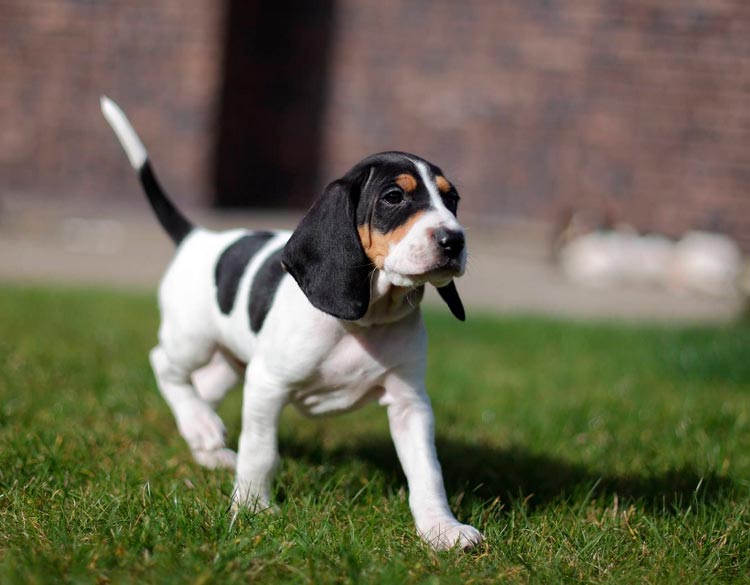
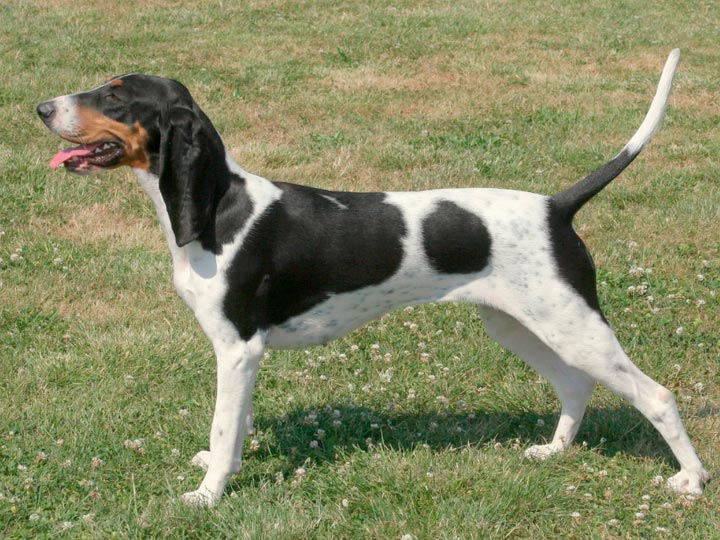
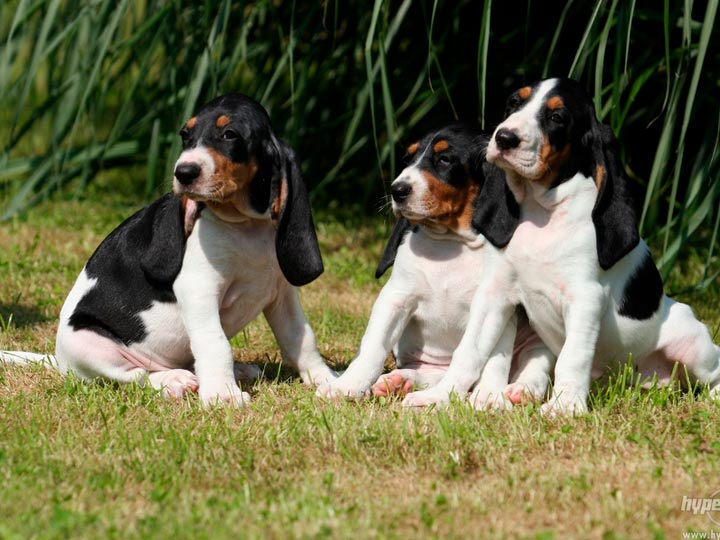
- The Bernese Hound is tricolor. Black spots and bright red tan markings are on a white background. Black speckling is permitted.
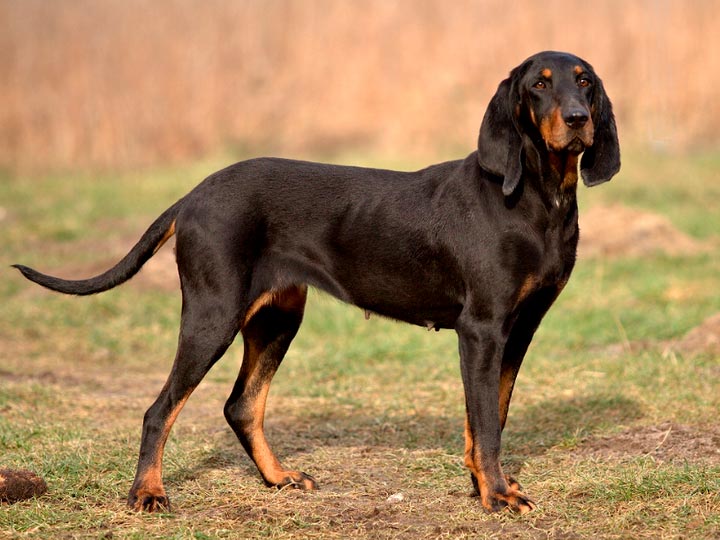
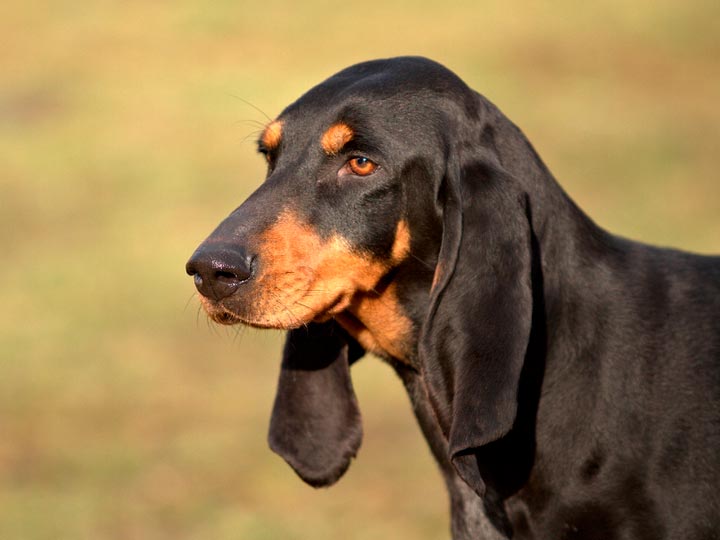
- Jurassic Hound (Bruno) – black with bright red markings or saddle-back. Small white spots, black or gray speckles are permitted.
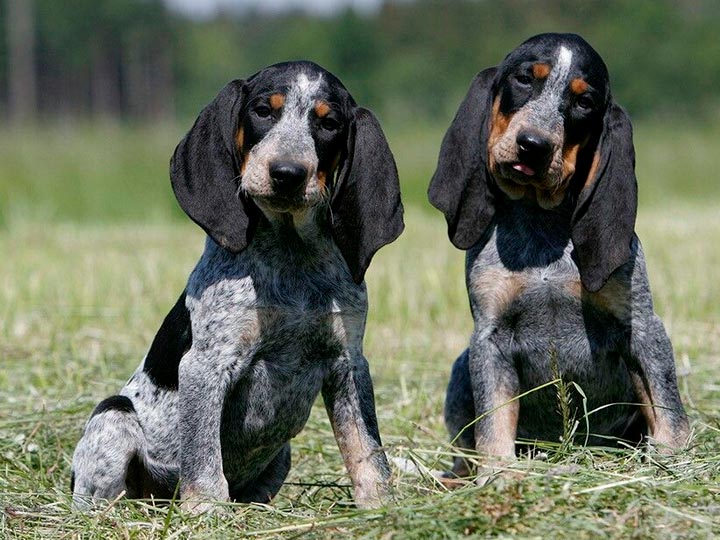
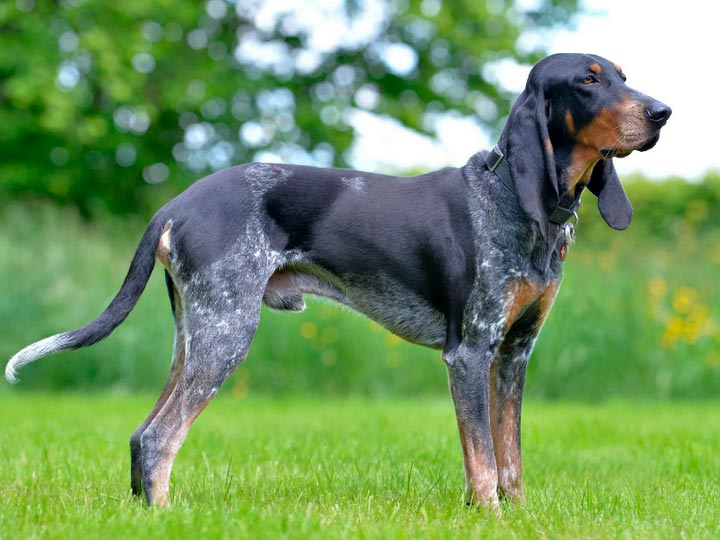
- The Lucerne Hound is a silver-blue coat with black spots or a black mantle and bright red tan markings. The color is formed by a combination of gray and white hairs.
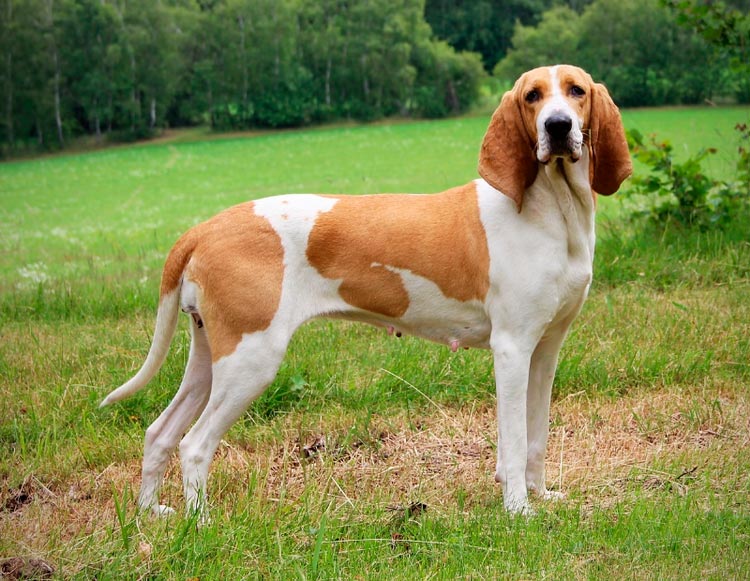
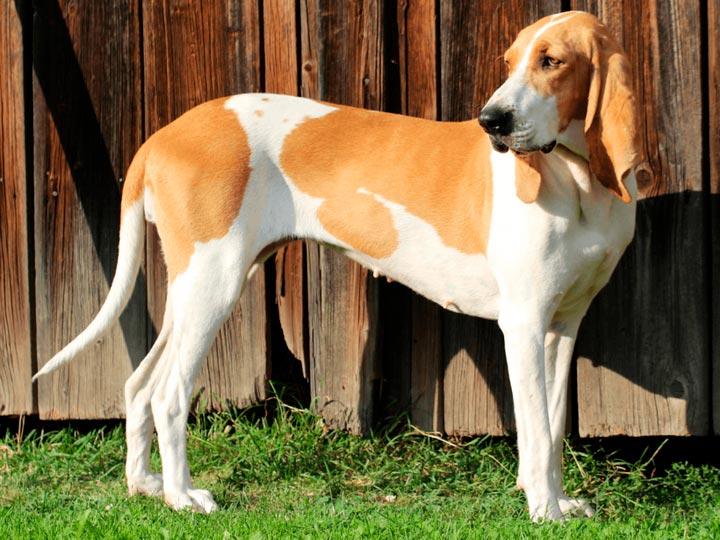
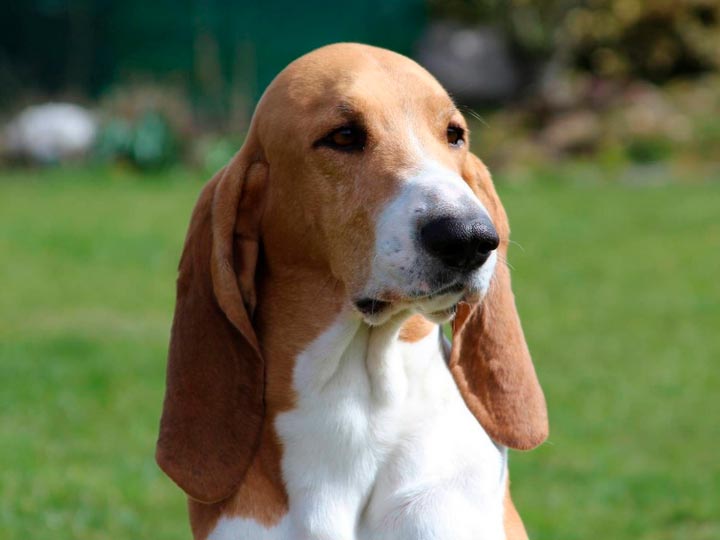
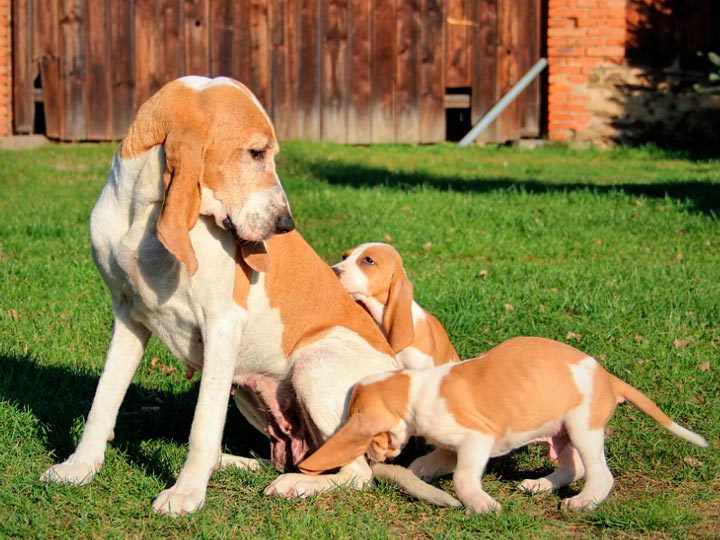
- The Schwyz Hound has a white background with scattered orange spots. Orange speckling is permitted on the white background. A solid red color is also possible.
Character and behavior
The Swissy is affectionate, obedient, and loyal. It forms strong bonds with all members of its family and thrives on companionship. It gets along well with children if properly trained. Most members of the breed are friendly with strangers; some can be wary, but they are never aggressive.
Hunting instincts begin to manifest at a very early age.
Swiss Hounds have always been kept in large packs, so they get along well with other dogs. They are not very territorial. If someone approaches the house, the dog will bark and then greet the newcomer with a wagging tail. Because of this, they cannot be considered a good watchdog, let alone a guard dog. Swiss Hounds get along well with domestic cats and other animals, but this does not apply to any animals outside the yard.
With a typical hound personality, Swissys can be stubborn and independent. Generally, they respond well to positive training methods. They require consistent and firm training, as well as varied socialization. They are quite sensitive and independent. Only close contact with their owner will help them develop an obedient companion.
Content Features
The Swissy adapts well to a variety of living conditions. They thrive in a private home with a large yard and in the company of other hunting dogs. They can be kept outdoors year-round in a spacious enclosure with a well-insulated kennel, or in an apartment.
Requires a lot of exercise. Working dogs should be exercised regularly, but even as pets, they should have the opportunity to run a lot and exercise their hunting skills in games or on walks.
Seasonal shedding is moderate. Light shedding is common during the rest of the year. Brushing once a week or less is sufficient. Bathe as needed. Ear and eye care are essential. Weekly teeth brushing is also recommended. Claws are normally self-wearing.
Health and life expectancy
There is little information about the health of Swiss hounds. A few hereditary diseases are known:
- hip dysplasia;
- elbow dysplasia;
- cataract;
- progressive retinal atrophy;
- eversion and inversion of the eyelids;
- patella dislocation;
- predisposition to ear and eye infections.
Life expectancy is 10-12 years.
Where to buy a Swiss Hound puppy
There are few Swiss hounds in Russia. The first official litter was bred in 2017 from dogs imported from the Czech Republic. Those looking to acquire a puppy from working parents are advised to begin their search for a breeder through national or breed clubs. Different breeds are popular in different countries. For example, in France and Switzerland, the Bruno hound is most common. In Italy, the Schwyz hound is more common.
Price
In Switzerland, the price of a Swiss Hound puppy is 800-1200 euros.
Photos and videos
You can see more photos of Swiss hounds in the gallery. The first eight images show dogs of the four breed types in the following order:
Video about the Swiss Hound dog breed
Read also:


Add a comment