
Swedish Vallhund (Visigothic Spitz)
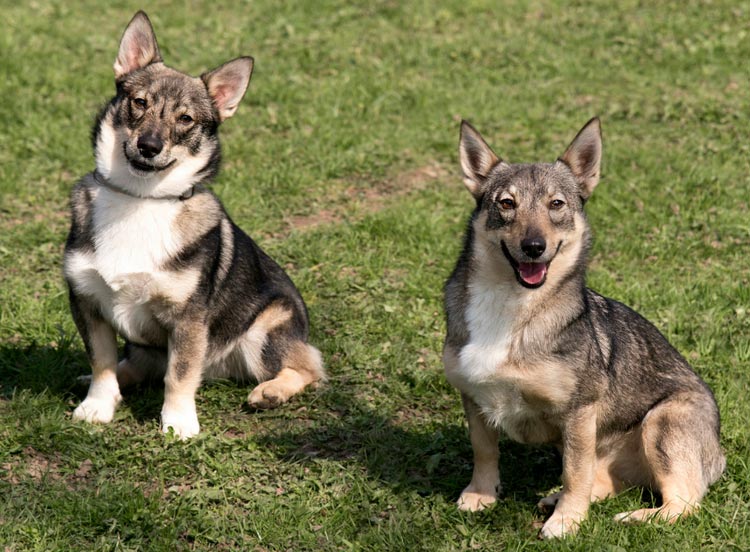
The Swedish Vallhund isn't distinguished by its striking appearance, unusual coat color, or build. It has a strong, stocky body on short legs and a wolf-like coat. But it's far from a mongrel. The Vallhund is a native Swedish breed, a versatile farm dog, a natural-born herder with an affectionate charm, exuding energy and cheerfulness, strong and healthy, and requiring little grooming. Around the world, the Vallhund is known by various names: the Visigothic Laika, the Visigothic Spitz, the Swedish Herding Dog, and the Västergatland Dog.
Content
History of origin
The Swedish Vallhund is an aboriginal breed, but cynologists are not clear why it has so much in common with Welsh CorgiPerhaps the Vikings brought small herding dogs from the British Isles as trophies. Or, conversely, Swedish Spitz were the first to arrive in Great Britain. It is known for certain that these small, stocky dogs were widespread in Sweden since ancient times. Targeted breeding only began in the 20th century, after the breed nearly disappeared. Credit for registering the Swedish Vallhund (Swedish: Västgötaspets) goes to Count Björn von Rosen and the breed's director, K. G. Zetterstein.
In the early 1940s, Count von Rosen discovered the existence of an old type of herding dog in the province of Västergötland. While describing dogs from the area around the town of Vara, he discovered a small, uniform group, large enough for him and Zetterstein to begin breeding. The breed type was consolidated without losing the herding instinct. In January 1954, the Swedish Vallhund was recognized by the Fédération Cynologique Internationale (FCI).
Purpose
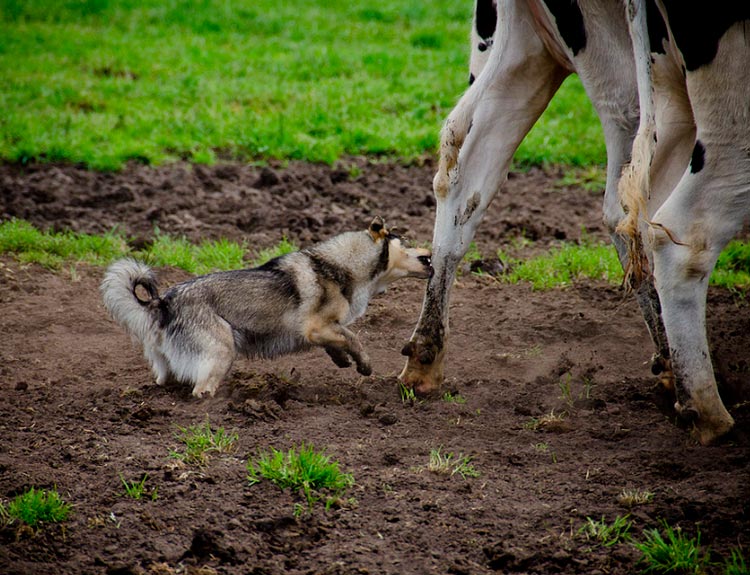
The Swedish Vallhund is still used on farms today as a herding dog, helping to drive cattle, finding cows that have strayed from the herd, and also performing guard duties.
In terms of application, it is practically universal. In Sweden, it can be found serving in the military. Some dogs have successfully participated in search and rescue operations. Vallhunds are sometimes trained to find truffles and even hunt. Among them are specialized canine therapists and outstanding canine athletes. agility, freestyle, obedience, flyball and other sports.
Video about the Swedish Vallhund (Visigothic Spitz) dog breed "Top 10 Interesting Facts" (in English):
Appearance
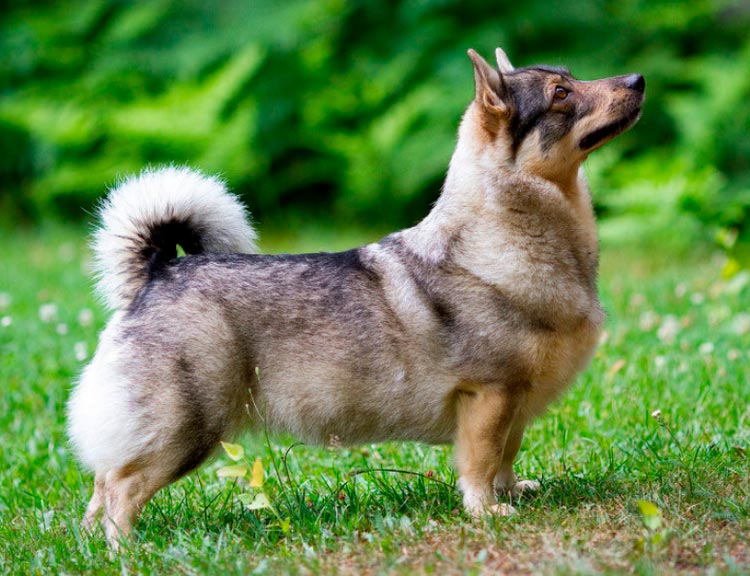
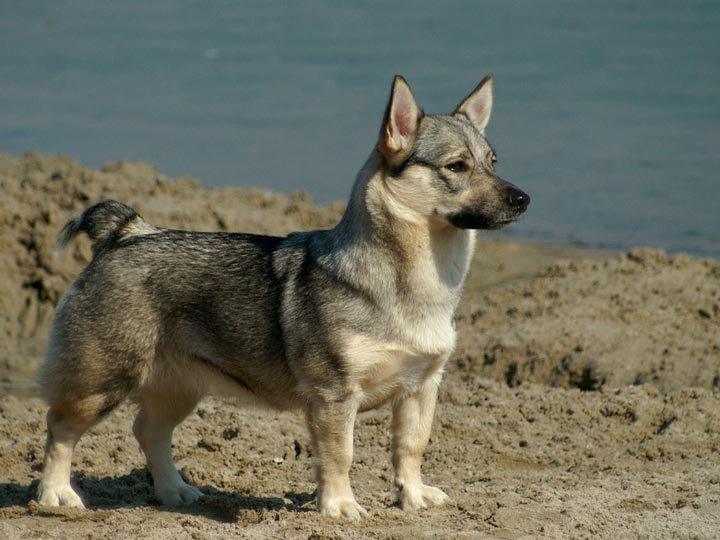
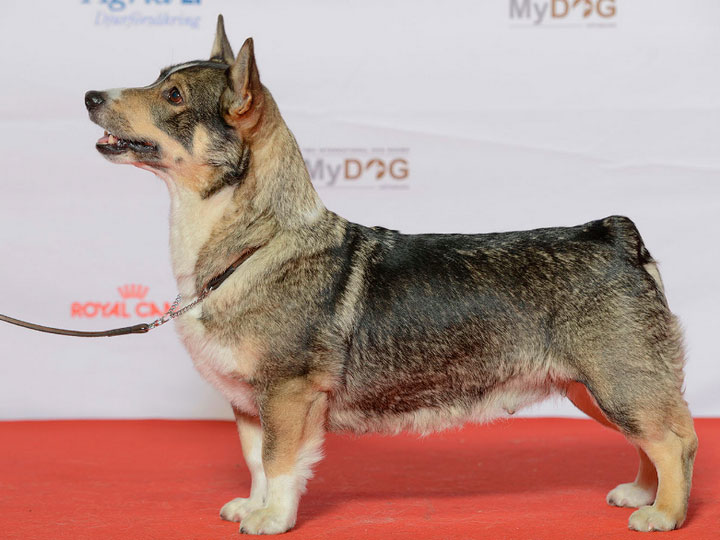
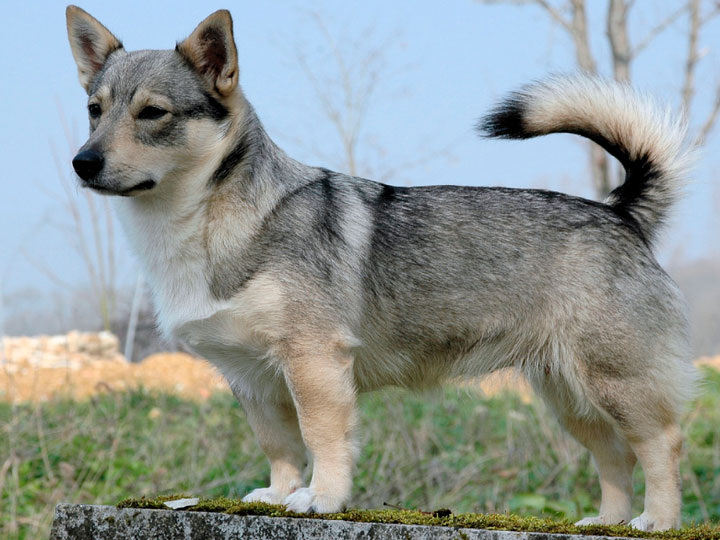
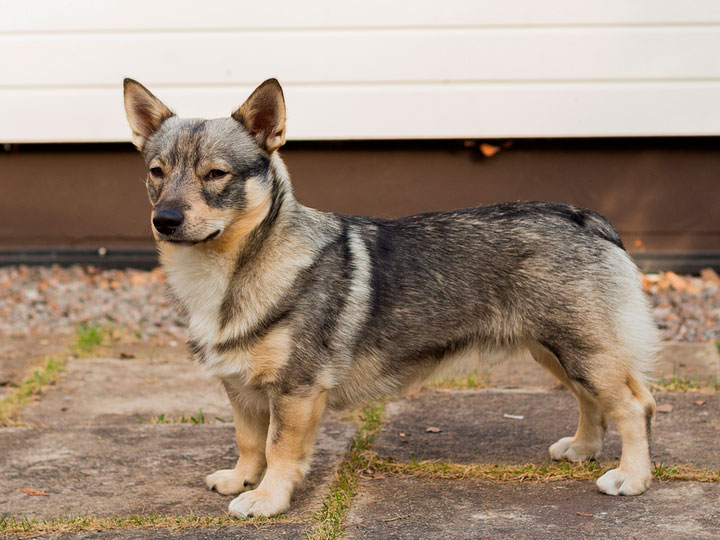
The Swedish Vallhund is a small, strong, short-legged dog with a long build. The height-to-length ratio is 2:3. The distance from the bottom of the chest to the ground is at least 1/3 of the total height at the withers. Sexual dimorphism is well-defined. The height at the withers for males is 32-35 cm, and for females, 30-33 cm.
The skull is relatively broad, tapering evenly toward the nose. The head is fairly long. The lines of the muzzle and skull are parallel. The stop is well defined. The nose is black. The muzzle is blunt wedge-shaped, slightly shorter than the skull. The lips are tight. The jaws are well developed and strong. The bite is scissor-like. The eyes are oval, medium-sized, and dark brown. The ears are medium-sized, erect, and pointed. The auricle is covered with smooth hair and is mobile. The length of the ears is slightly greater than the width at the base.
The neck is flexible, long, and well-muscled. The back is straight. The loin is broad, strong, and short. The croup is wide and slightly sloping. The chest is long and deep with well-sprung ribs, reaching two-fifths the length of the forelegs. The lowest point is behind the elbows. The belly is slightly tucked up. The limbs are strong-boned and relatively short. The paws are oval, short, and directed forward, of medium size. The pads are strong. The toes are tight and arched.
According to the type of tail, there are two varieties of the breed:
- With a long tail (tail of any length);
- Bobtails.
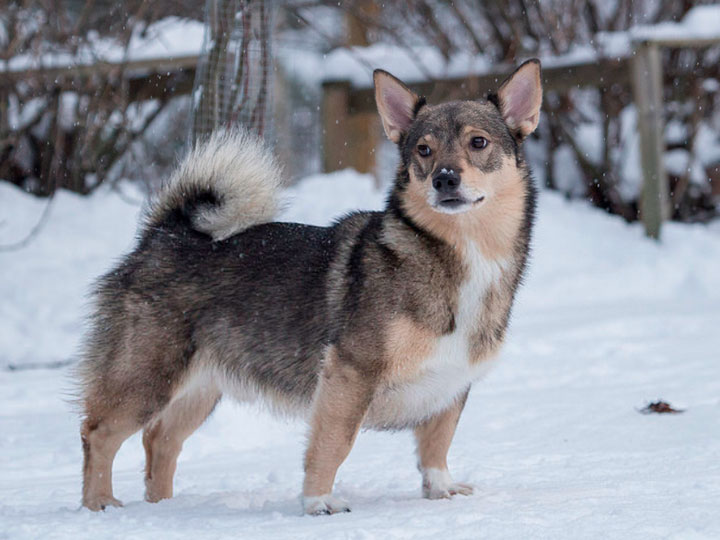
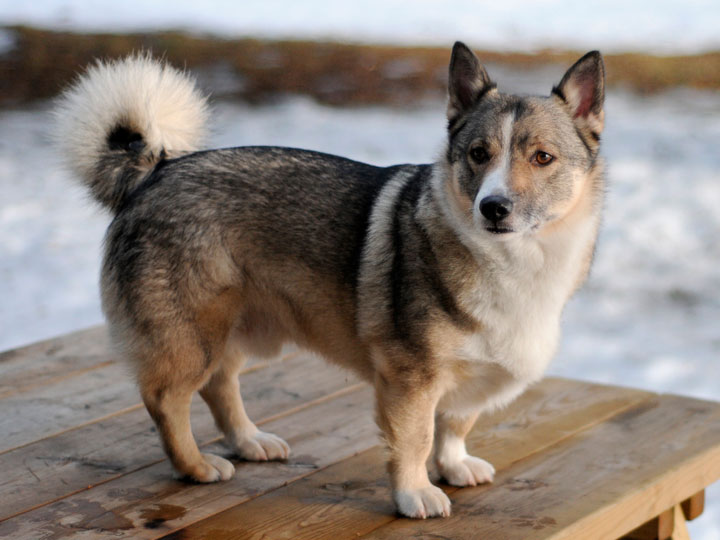
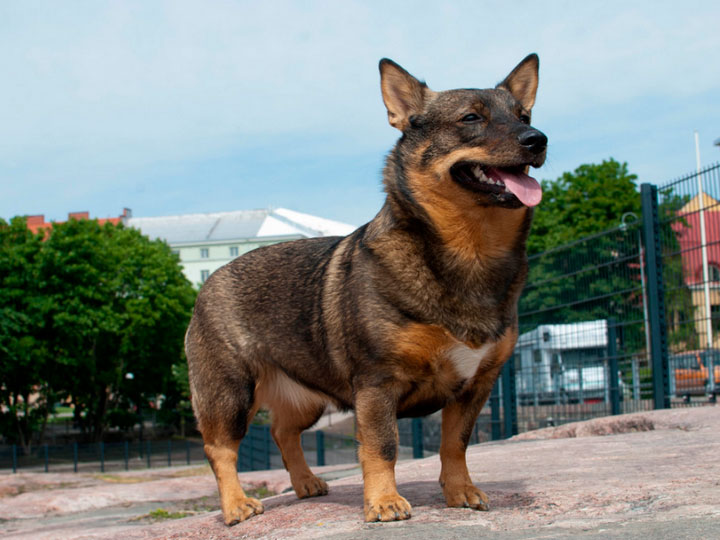
The coat is double, consisting of a medium-length, coarse, close-lying topcoat and a soft, very dense undercoat. The hair on the head and front of the legs is short. It is long on the neck, chest, throat, and back of the thighs. The coat comes in various shades of wolf-like (zonary):
- Grayish-brown;
- Yellowish-brown;
- Reddish-brown.
Lighter areas are required on the muzzle, around the eyes, limbs, body and lower part of the neck.
In Canada and America, the color options are more relaxed. There, you can see bicolor and solid-color Vallhunds at shows.
Character and behavior
The Swedish Vallhund is an obedient, balanced, friendly, and intelligent dog. Its small size and stable nature make it suitable for both house and apartment living. The Vallhund is a wonderful family dog, a good companion for trips or forest walks. Its herding instincts mean it is energetic, resilient, and always close by, ensuring that all family members remain within sight. It is sensitive to children, ensuring they are safe and within its designated area. It will always respond when called. The Swedish Vallhund is people-oriented and enjoys doing everything its owner does.
The Swedish Vallhund is more of a shepherd than a husky. However, it will happily hunt, using its keen sense of smell, if its owner is passionate about this activity.
Vallhunds are prone to excessive barking and are very vigilant watchdogs. However, with proper training, the dog will only respond to truly important things. The Vallhund approaches any task assigned to it responsibly. Its temperament and build allow it to participate in and win a wide variety of competitions. The Visigothic Spitz generally gets along well with other pets, but it's not as if the neighbor's cat would be able to pass it by.
Education and training
The Swedish Vallhund is very trainable. It is people-oriented and eager to please. Even at a young age, it enjoys training and, of course, rewards for successfully completing a task. Sometimes, the owner will need to exercise patience and restraint. A young Vallhund doesn't always understand what is expected of it, and can be stubborn and easily distracted from training. As it matures, it becomes more obedient, provided the owner devotes sufficient time to training and education.
Harsh, coercive training methods should not be used with Vallhunds. They often don't respond well to clickers. Positive reinforcement is the only option: praise and treats.
Content Features
The Vallhund adapts well to a variety of environments. It can live in the city or the countryside, in an apartment, indoors, or outdoors. Confined spaces, tethering, and loneliness are strictly contraindicated for these small shepherds. This devoted companion requires attention and time, good exercise, and mental stimulation. Without work, it withers and develops bad habits. Seasonal shedding is profuse, especially in the winter and spring. The rest of the year, it sheds moderately.
The Vallhund's exercise requirements are quite high. It can spend days herding moving flocks, regulating its own exercise, and is virtually never tired. However, as a family dog, it adapts to its owner's lifestyle and will happily wait all day, knowing it can only run in the morning and evening.
Care
The Swedish Vallhund is completely low-maintenance in terms of grooming. Owners are only required to follow standard procedures:
- Comb the dog 1-2 times a week;
- Bathing is recommended once a month, less often in the cold season;
- Inspect ears weekly and clean as needed;
- Make sure your eyes stay dry and clean;
- Every 3-4 weeks, trim the claws and tufts of hair between the pads;
- Teeth brushing is recommended at least once a week.
Nutrition
The Swedish Vallhund is rarely picky about food unless it's pampered from puppyhood. It adapts well to any diet offered. Owners can decide for themselves which option is preferable: homemade food or commercially prepared food. However, mixing the two is not recommended. The diet is formulated according to standard guidelines. Food is selected based on the dog's age, size, and activity level.
Health and life expectancy
The Swedish Vallhund is a healthy, hardy dog. Health problems are few and relatively rare in the breed:
- Hip dysplasia;
- Rhinopathy;
- Ophthalmological diseases.
Despite its strong immunity and adaptability, the Visigothic Spitz must be vaccinated and treated for parasites in a timely manner. Life expectancy is 14-15 years.
Choosing a Swedish Vallhund Puppy
The majority of Swedish Vallhunds are found in Sweden and Finland. There are also smaller numbers in Denmark, Iceland, and Norway. Representatives of the breed and kennels can be found in other countries of Central and Northern Europe, as well as in the United States and Canada. In Russia, Visigothic dogs are rare, and there are only a couple of kennels. Finding an ad for a Visigothic puppy for sale online is virtually impossible.
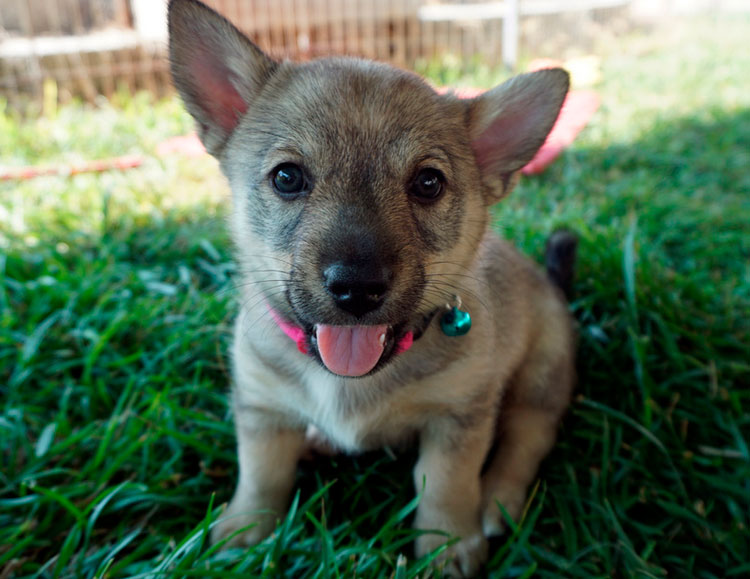
Potential owners should always remember that the only proof of a dog's pedigree is the dog's pedigree papers. For puppies, this is a puppy card, which includes the dog's name, gender, date of birth, parentage information, and other details. For adult dogs, pedigree.
As mentioned above, the Visigothic Spitz's appearance is not exotic. Many owners of similar mongrels, upon seeing photos of Vallhunds online, are convinced they have a purebred dog, or at least a crossbreed. Puppies from such dogs are sold under the resonant name "Swedish Vallhund."
Those who want to buy a good puppy for shows, breeding, sports, or just for themselves, but do not want to wait for puppies to appear at the nearest kennel, should consider purchasing a dog in Scandinavian countries through the Swedish Spitz Association or the Swedish Vallhund Association.
Price
The price of a Swedish Vallhund puppy in Russia rarely drops below 50,000 rubles. In Europe, puppies of this rare breed cost an average of 1,500 euros.
Photos
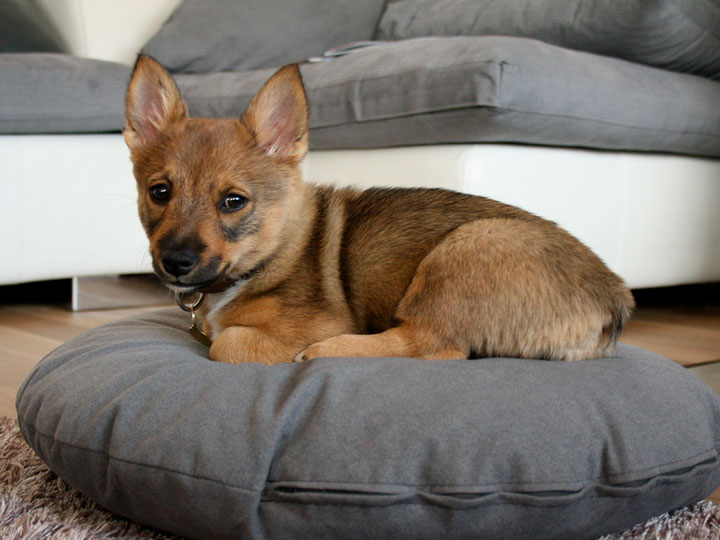
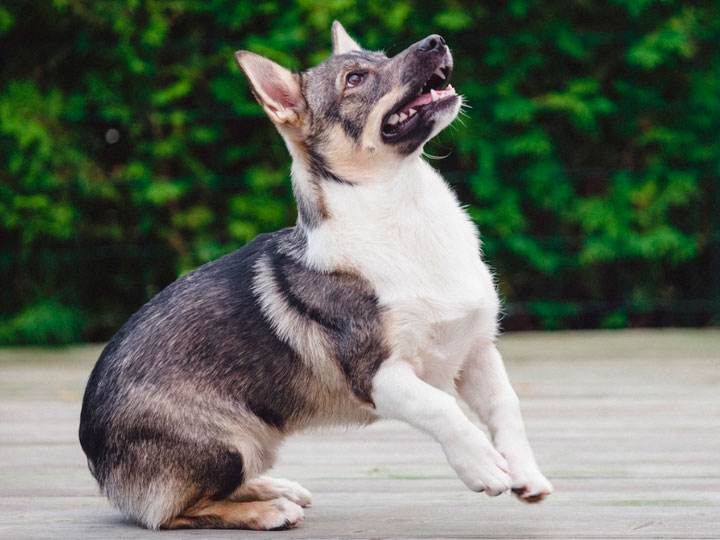
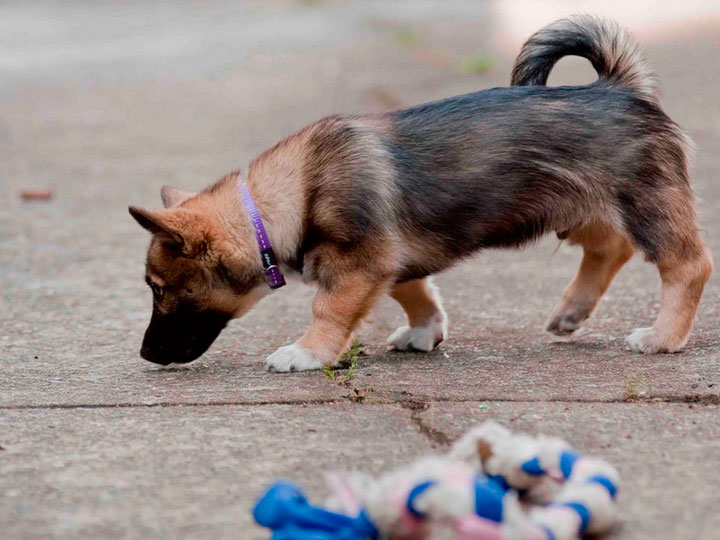
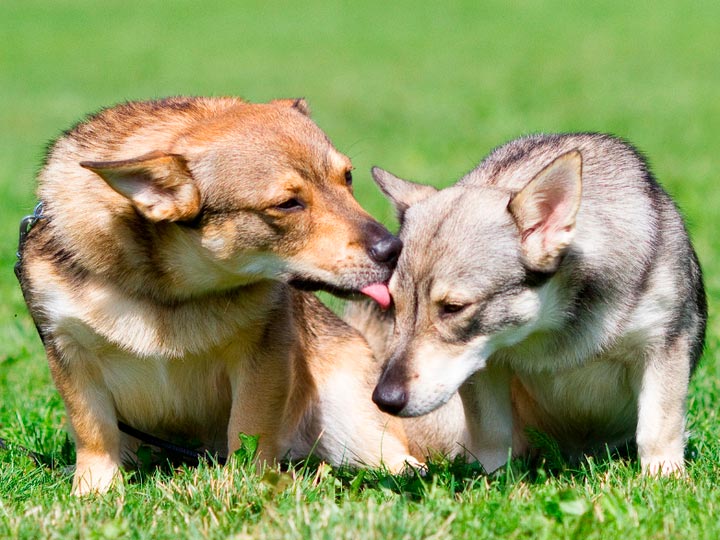
The gallery contains photos of Swedish Vallhund puppies and adult dogs.
Read also:


Add a comment