
Harness for cats
Cats are playful and active animals, and most love to frolic outside. But what if their pets live indoors and their owners are afraid to let them out into the yard? In this case, cat harnesses, available at any pet store, can come to the rescue. A harness is a type of cat leash that allows you to walk your pet without worrying about getting lost. This not only ensures the pet's safety but also provides peace of mind for the owner. What types of harnesses are there? How do you choose the right one and put it on your furry friend? How should you train them, and what are some important considerations? We'll explore these and other questions.
Content
- 1 What types of harnesses are there?
- 2 Price
- 3 How to choose a harness for a cat?
- 4 Advantages and disadvantages of harnesses
- 5 Which harness should you choose?
- 6 How to properly put a harness on a cat?
- 7 How to train your pet to wear a harness?
- 8 The cat's first time going outside in a harness
- 9 How to make a harness for your pet yourself?
What types of harnesses are there?
Even if your pet is strictly indoors, they still need fresh air and walks in nature. But no loving owner would let their furry friend go outside alone, as dangers like dogs, traffic, and so on lurk there. Or the cat might simply get scared and get lost.
Cat harnesses are a great solution, as this convenient product allows your pet to be under your owner's supervision and feel at ease. Although harnesses are now available in all colors and sizes, you shouldn't just buy the first model you see. First, you need to figure out which type of cat leash is right for your pet. Four types are currently the most popular.
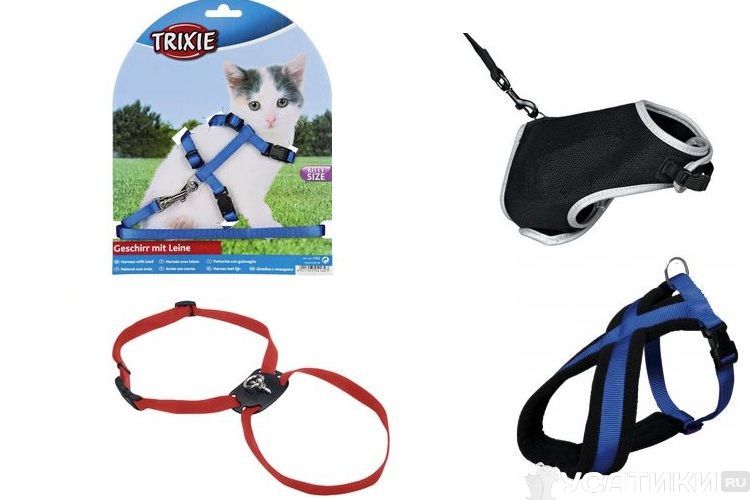
- Eight. This design consists of two loops that attach to the animal's neck and behind its front legs. This device fits snugly around the body, preventing the pet from escaping.
- Type "H". This product is practically identical to the previous one, with the only difference being that the two loops on the back connect to form a placket. As a result, this harness resembles the letter "H."
- Type "V". Similar to the first types, only the loops are connected on the chest in a “V” shape.
- Harness-jacket. A more robust version is not just loops, but a jacket-shaped harness. This design will protect your pet's fur from dirt and their body from the cold. A jacket-shaped harness is considered a fashionable design and is considered a piece of clothing.
How to choose a harness for a cat?
Once you've arrived at the pet store, don't rush to buy the harness you've chosen, as it may not fit your pet's size or meet other criteria. It's best, of course, to have your pet with you so you can try it on. When choosing a harness, consider the following:
- The material the harness is made of is also important. Nylon or cotton are best—they don't chafe and are easy to clean. Leather harnesses aren't particularly popular because they are quite heavy and stiff.
- Measure the width of the straps; they shouldn't exceed one and a half centimeters. Straps that are too narrow will put pressure on the animal's skin, while straps that are too wide may restrict movement.
- Check the fastenings; they should be easy to fasten and unfasten; the harness's durability depends on this. Make sure there's a leash attachment.
- To determine the size, place the harness on your pet and insert two fingers between the harness and their back. If your fingers fit easily, the size is correct. Keep in mind that the leash will put tension on the harness, so allow for some slack.
If you can't take your pet to the pet store, negotiate with the seller about exchanging the harness. This shouldn't be a problem, as everyone understands that anything purchased without trying it on may not fit.
Advantages and disadvantages of harnesses
Like any design, harnesses have their pros and cons. What are their advantages?
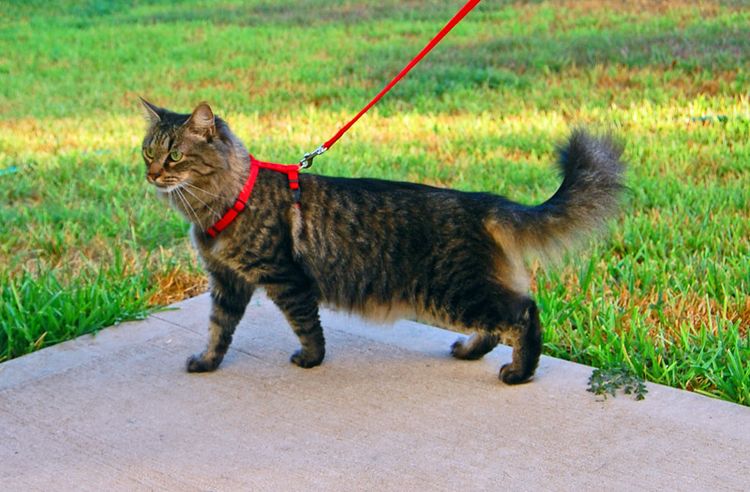
- The opportunity to calmly walk your furry friend in the fresh air.
- Absolute control over your pet on a walk, whether in the yard or on a trip out of town.
- It's very convenient for veterinary visits without keeping your pet in a cage all the time. It's also great for transporting your pet on the train, taking them to the country, visiting friends, and much more.
- A retractable leash allows you to extend your walk by adjusting the distance.
Now about the downsides. They are minor, and if desired, they can easily be avoided.
- Be prepared for the fact that the cat will not accept the harness right away; its first reaction will be fear.
- At first, your pet will struggle and twitch, so you will need to train it.
- Cats sometimes break free from their harnesses and run away. That's why it's important to buy a quality product. The same goes for the quality of the harness leash.
- If the cat gains weight, you will have to buy a new product; the old one will be too tight for him.
Which harness should you choose?
Typically, a leash comes with a harness; it attaches to a special ring and is at least two meters long. However, you can purchase a leash of different lengths, or simply buy one separately as a retractable leash. This allows you to easily adjust the length, as you never know how your pet will react. This option is very convenient and compact, easily retracts, and will not injure your pet. This is especially true if you choose a vest-style harness, which comes with fastenings. Just keep in mind that, although this model is reliable, it can be hot for your cat in sunny weather, especially if they are very furry.
Cat owners are now offered a wide range of products that focus not only on their pets' comfort and convenience, but also on fashion. Pet stores now offer a huge selection of stunningly beautiful harnesses: embellished with rhinestones, ornaments, patches, patterns, and other embellishments. These are primarily purchased by pet owners whose pets participate in shows, to present their pets in the most flattering light. But some owners buy such ornate items simply because, for them, their cat is more than just a pet, but a true, loyal companion.
How to properly put a harness on a cat?
So, you've just bought a harness for the first time, and now you're faced with the question: how to properly put it on your cat? It'll be challenging at first, both for you and your pet, but be patient, and everything will work out. After all, a new product is a strange thing for a cat, and at first, they'll probably struggle and try to escape. Putting the harness on your cat should be done step by step, following these instructions:
- Place the harness next to your pet - let him sniff it, play with it and make sure that this previously unfamiliar design is not dangerous and will not cause him any harm.
- Take your pet in your arms, pet him, calm him down and talk to him affectionately.
- Next, begin putting on the harness. Place one loop around the neck with the carabiner facing up (it should be on the back), and thread the cat's paws through the other loop. If you purchased a model with a clasp, then insert the cat's paws one by one into the loops, adjust the strap under the belly, and secure the clasp on the back.
- Check that nothing is twisted and that everything is securely fastened. Make sure the harness is not pressing against your pet's skin, and adjust the straps if necessary.
- Attach the leash to the carabiner ring and you're done, ready to go for a walk.
If you're having trouble putting on a harness, you can use the internet to help. Search for "how to put a harness on a cat video" and watch the instructions.
How to train your pet to wear a harness?
But putting an unfamiliar item on your pet is only half the battle. The next question becomes: how to get a cat used to a harness? It's rare for an animal to calmly accept something they've never seen before and obediently allow themselves to be walked in it. Therefore, it will need to be acclimated to the new design. This is best done before your pet reaches adulthood; the ideal age is between six months and a year. You can start earlier, at around three months, but avoid taking them for walks, allowing the kitten to get used to the harness gradually. In any case, don't immediately put an unfamiliar item on your pet; the animal should first "get acquainted" with it, sniff it, and play with it. After that, the harness should be placed in your pet's favorite places: near its food bowl, next to its sleeping area, etc. The cat will gradually get used to it, and after a few days, you can put the harness on, but without a leash—let it just walk around in it first.
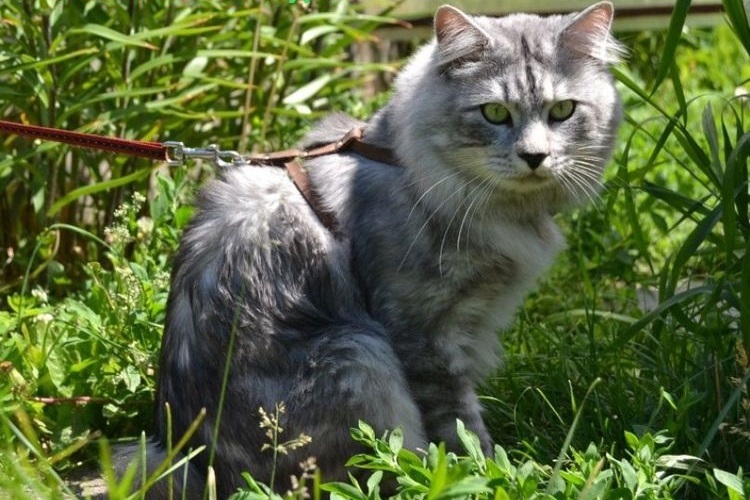
Some cats accept the harness immediately, while others will try to remove it—it depends on your pet's personality. If your cat doesn't accept it right away, try distracting them with something, like a tasty treat or a laser pointer. But don't be stubborn; 5-10 minutes is enough to start. It's recommended to repeat these exercises several times, preferably before meals, so your pet associates the harness with something pleasant. When you notice your cat no longer pays attention to the harness and behaves freely, you can attach the leash and apply gentle tension. Don't get carried away and tug too hard, though—they'll likely dig their paws into the floor and resist. Do what your cat wants: stand next to them, follow them, or simply be present. They'll soon get used to it, and you can go outside.
The cat's first time going outside in a harness
Before we discuss how a cat's first walk should go, let's look at four important reasons why pets shouldn't be walked on a harness at all. Otherwise, nothing good will come of it.
- Kittens under six months old. These little ones still have weak immune systems and can't go outside yet.
- These are elderly cats that haven't seen the outdoors before. Don't risk their health.
- Postoperative or postpartum period. The animal's body is not yet fully developed.
- Personality traits. If your pet is overly aggressive or cowardly.
If your cat or kitten doesn't fit any of these criteria, you can begin acclimating your pet to the outdoors. First, choose a quiet courtyard where there won't be many people or animals. The more secluded the location, the better. If there's no such place nearby, it's best to carry your cat to the nearest park. There, carefully lower your pet to the ground and observe its behavior. In a new place, especially in the open, your cat will be wary and look around fearfully. Don't disturb it; let it explore and get used to the new environment. Be careful not to frighten it, otherwise it will discourage it from going for walks for a long time. Don't try to pressure your cat or force it to walk; you should be the one walking it. You must accept the fact that it's your pet walking you, not you walking it. Be patient, time will pass and walks in the fresh air will become a pleasure for him.
How to make a harness for your pet yourself?
If for some reason you can't buy a harness, couldn't find one in the right size at the pet store, or simply enjoy crafting, you can make this useful accessory yourself. Knitting enthusiasts can simply knit a harness from thread or yarn (depending on the season), while those who enjoy sewing can create a harness from any available material. Denim is ideal; it's soft, comfortable, durable, and breathable. The key is to take accurate measurements, remembering to place your finger underneath to ensure the finished harness doesn't press against your pet's skin.
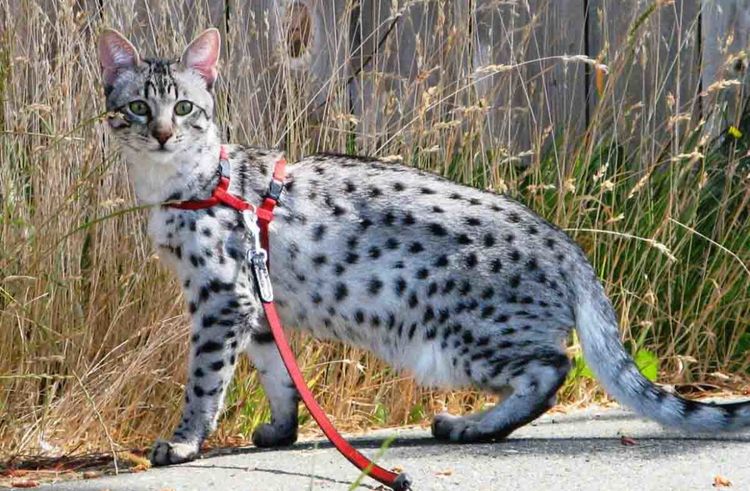
After this, cut out the necessary elements, leaving room for seams, and join them together. You can also make the leash yourself; there are several methods, with and without rivets. More detailed tutorials are readily available online. You'll need the following tools: a thick gypsy needle, strong and durable thread, a large snap or clasp, a metal ring for the carabiner, and, of course, suitable material. The latter is up to you; it can be denim or any other equally durable material, such as nylon or soft leather. The result will be a unique harness for your pet.
Read also:
- Walking your cat safely and correctly
- How to make a cat collar yourself
- If your cat is lost: a systematic approach and notices


1 comment
Sofia
Thanks for the tips, they were really helpful! I went to pick one out for my Vasilisa and was completely overwhelmed by how beautiful it was. We found a soft, bright one at the pet store, complete with whiskers. Now I don't worry about her running away on walks!
Add a comment