
Lumps on a dog's hind legs: causes and treatment
Sometimes, when examining a pet, an owner may discover lumps on the dog's hind legs. They can be single or multiple, and vary in size, location, and color. Ignoring these growths is essential – it's essential to determine the cause and receive professional treatment.
Content
Reasons
Growths and lumps on the hind legs appear for various reasons:
- injuries, bites of ticks and other insects;
- skin damage;
- administration of medicinal injections;
- swelling or complication after surgery;
- dysfunction of the sebaceous glands;
- bacterial infection;
- chronic pathologies and their complications;
- fungal infections;
- allergic reactions;
- age-related changes in joints, arthritis;
- genetics;
- reaction to poor quality food or unsatisfactory living conditions;
- benign or malignant neoplasms.
A preliminary diagnosis of a lump on a dog's hind legs can be made by examining the color and texture of the growth. However, for a definitive diagnosis, a puncture is taken and sent for further testing, including an MRI or CT scan, radiography, and, if necessary, other imaging studies.
Color and texture
- Red bumps with slight swelling or edema are a symptom of several conditions, including abscesses, boils, allergies to bites or injections, and malignant tumors..
- Pink growths can be papillomas, benign, or malignant tumors. Benign growths are typically soft.
- The black bumps are cysts, hematomas or warts.
The absence of hair at the site of the growth should be a concern, as it is one of the symptoms of cancer. Hard, immobile lumps are also observed in cancer or cysts. A bleeding lump is a warning sign.
Important! Do not heat, open the lump, or remove its contents, or apply ointments or other solutions until a definitive diagnosis has been made.
Abscess
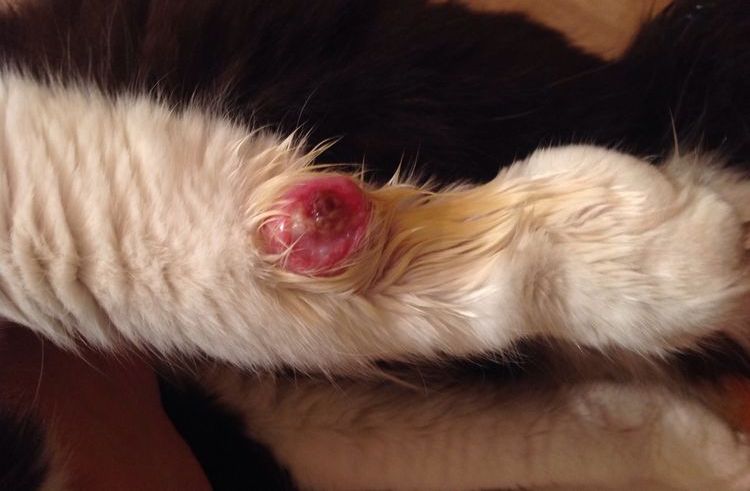
An abscess (colloquially known as a boil) usually occurs after an injury, active play of a puppy, or due to subcutaneous mitesMost often, external abscesses form – they are easily identified by their fluid-filled cavity.
The danger of an abscess is that its contents can rupture and damage healthy cells and tissue. For this reason, owners should not attempt to drain them themselves. The photo below shows what this looks like.
This is important! Large abscesses are treated surgically under sterile conditions in a veterinary hospital. The dog is anesthetized before surgery.
As a home treatment, doctors recommend dressings with Vishnevsky ointment, which accelerates the maturation of the abscess. After opening (surgical or spontaneous), the animal is prescribed vitamins, antibiotics, and anti-inflammatory medications.
Pododermatitis
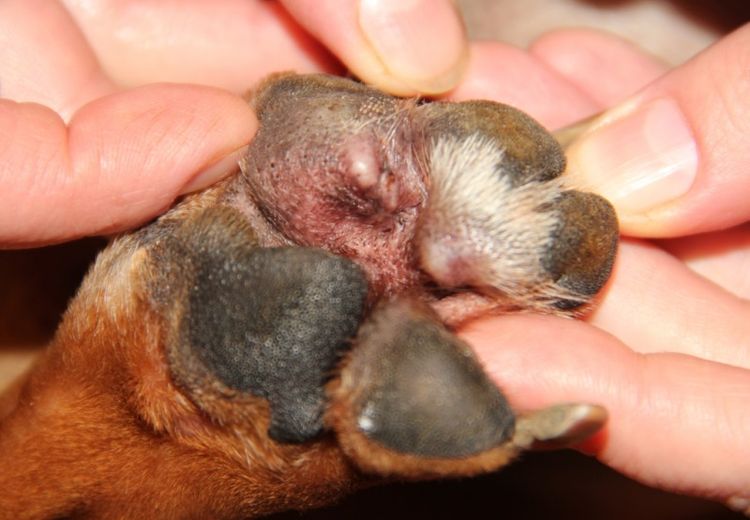
Pododermatitis is a condition affecting the paw pads, causing growths and bleeding swellings to form between the toes. This causes pain and discomfort to the dog, causing it to lie down more than move, and when moving, it limps and whines.
Those at risk include:
- Labradors;
- German Shepherds;
- Shar Pei;
- dachshunds;
- bulldogs.
The breeds listed above are predisposed to pododermatitis. This condition can only be treated by a veterinarian. In advanced cases, it can weaken the joints and lead to death.
Along with treatment, it's necessary to review the dog's diet and living conditions. Pododermatitis often develops as a result of an unbalanced diet or prolonged exposure to damp, cold conditions.
Allergy to injections and bites
An allergic reaction to injections, flea, tick, and mosquito bites is a common cause of hard bumps on the legs, thighs, and other parts of the body.
It usually resolves on its own, but if your dog is bothered by something or their behavior has changed, it's best to take them to a specialist. Sometimes a wasp or bee sting leaves a stinger under the skin—it should be removed to prevent extensive purulent inflammation.
Warts and hematomas
Skin warts are a common problem for smooth-coated breeds. They can vary in color and size and are soft to the touch. If the warts don't grow and aren't bothering the dog, there's no need to remove them.
Hematomas are soft bumps that form after injuries. Small bruises on a pet's body may go unnoticed by owners, but they should be a cause for concern on the paws, as they can result from torn ligaments or tendons. Hematomas are treated with medication and surgery, depending on the location, progression of the condition, and the dog's overall health.
Malignant tumors
Malignant neoplasms In the initial stages, they don't cause any discomfort to the animal, but as they progress and spread, metastases can cause severe pain. It's not so much the size (even a small lump can be malignant) that matters, but its growth rate. Even initially benign growths can pose a danger: if your pet develops a red lump on its paw, the inflammation has subsided, but the tumor itself persists, consult a specialist.
Treatment for cancerous tumors is determined based on the tumor's stage, the presence of metastases, and their location. This may include surgery, chemotherapy, and, in hopeless cases, euthanasia.
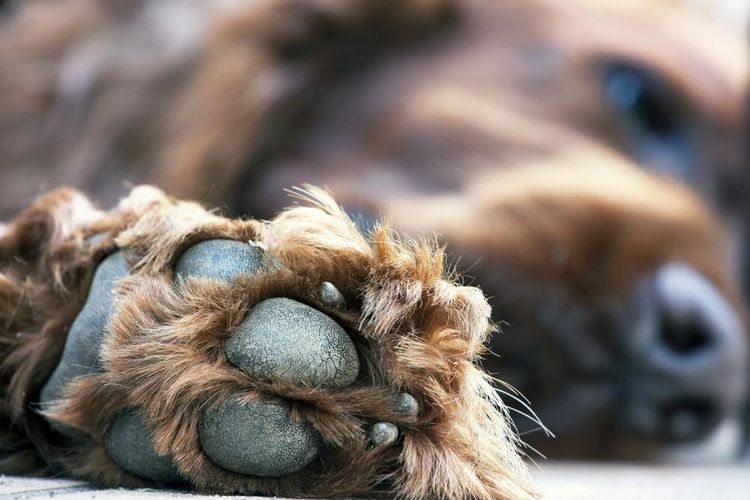
What can you do at home?
If you discover a lump on your dog's hind leg, you should carefully examine and palpate it. It's best to wear sterile gloves during this procedure to protect yourself from possible fungal or viral infection. During the examination, pay attention to the following:
- color, structure and mobility of the formation;
- the presence of a "crater" (like acne or inflammation);
- pain;
- appearance of odor;
- resizing.
In addition, it is important to take into account the absence of other symptoms: increased body temperature, decreased appetite, lethargy, difficulty with bowel movements, etc.
If your pet isn't experiencing any noticeable discomfort or pain, or if there are no purulent processes or skin discoloration at the affected area, you can observe the growth for a few days; it may resolve without intervention. It's a good idea to record the date and circumstances of the discovery of the lump, its exact location, and its size (you can compare it to a familiar object, such as a coin, tennis ball, etc.).
Caution! Under no circumstances should your dog be allowed to lick or chew on the lump, as this may cause a granuloma to develop. If the skin is damaged, it is advisable to treat the affected area with an antiseptic and cover it with a bandage.
A dog's painful or aggressive reaction to palpation, or an increase (especially rapid) in the size or number of growths, may indicate the development of suppuration, the spread of infection, or a malignant tumor. One sign of malignancy is the growth's fusion with the skin, meaning it will not move and will roll under your fingers when palpated. Such situations should prompt immediate veterinary attention. Delaying an examination is undesirable: if a malignant tumor develops, it may take weeks or days, not months.
Do not self-diagnose, determine the severity of a growth's potential health risks, or prescribe treatment! This should be done exclusively by a veterinarian after determining the exact cause of the lump on the dog's paw. The owner should follow the specialist's instructions and not exceed the prescribed dosage to avoid side effects.
If it is not possible to contact a veterinary clinic immediately, possible first aid measures may include the following:
- trim and clean (if necessary) the affected area;
- for bumps associated with injuries - apply cold (no longer than 30 minutes);
- treat with a disinfectant solution, remove pus (if present);
- Provide peace for the animal; if the growth causes discomfort, you can use a carrier or basket to limit movement.

This is important! Even if your animal is in severe pain, never give them painkillers intended for humans. For example, paracetamol is fatal to dogs.
Prevention
How can you prevent bumps on your dog's hind legs? The most important rule is hygiene. Be sure to wash your pet's paws after walks and treat them with a special wax.
It's also advisable to trim nails, as dirt and bacteria accumulate underneath them. Ideally, pets should be walked in special shoes.
It's also important to inspect your dog's paws for cracks, cuts, and scratches at least twice a month. If any damage is detected, be sure to wash them with disinfectant solutions to prevent the risk of inflammation and suppuration.
Over the following days, monitor your dog's reaction. If any abnormalities occur, take it to the veterinarian. The sooner this happens, the better the chances of a full recovery.
Read also:
- The best chondroprotectors for dogs
- The dog eats poorly, but is active: causes and treatment
- Why are ticks dangerous for dogs?


Add a comment