
Schipperke (Schipperke) is a dog breed
The Schipperke is a dog breed from Belgium. Also known as a Schipperke, they are small, energetic, and sensitive companion dogs, wary of strangers, somewhat independent, but immensely loving and loyal.
Content
History of origin
The Schipperke breed likely originates around the 17th century. In the 1690s, this small, black dog was very popular among shoemakers and workers in the Sanjarie district of Brussels. Dog tails have traditionally been docked since the 15th century. Schipperkes were excellent rodent hunters, deftly catching mice and unafraid of tackling rats. They were also used to control moles and other vermin, as well as for herding. In addition to herding, they served on barges as guard dogs and rodent control dogs.
Cynologists believe that the Schipperke and the Belgian Shepherd had a common ancestor, which explains the obvious similarities in appearance and character.
In the second half of the 19th century, Schipperkes became very fashionable among the Belgian nobility, thanks to Queen Marie Henriette. Schipperkes were first shown at a show in Spa in 1882. In 1887, they began to spread around the world, primarily to Great Britain and the United States. In 1888, the first breed club was founded and a standard was approved. The club made enormous efforts to achieve a unified breed type.
The breed name "schipperke" possibly translates as "little shepherd" and is a diminutive of the word "schipper," which means "shepherd" in the Brussels dialect. English-speaking people understood the name "schipperke" to mean "little boatman." However, at that time, barge service was not the original or primary function of these small black dogs.
Video about the Schipperke dog breed:
Appearance
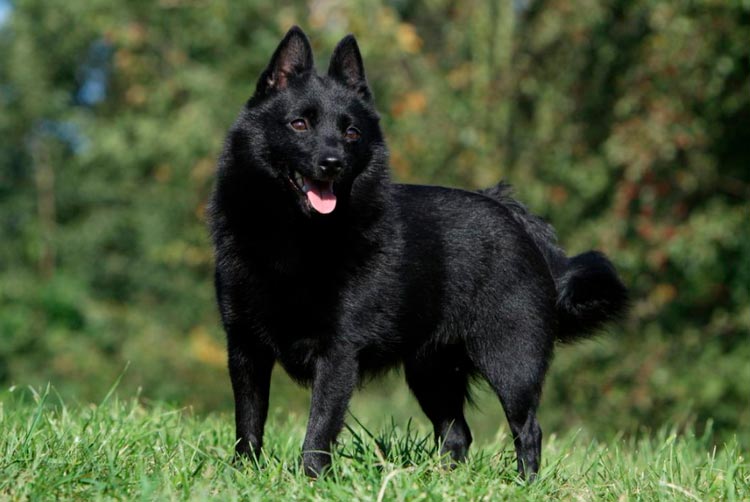
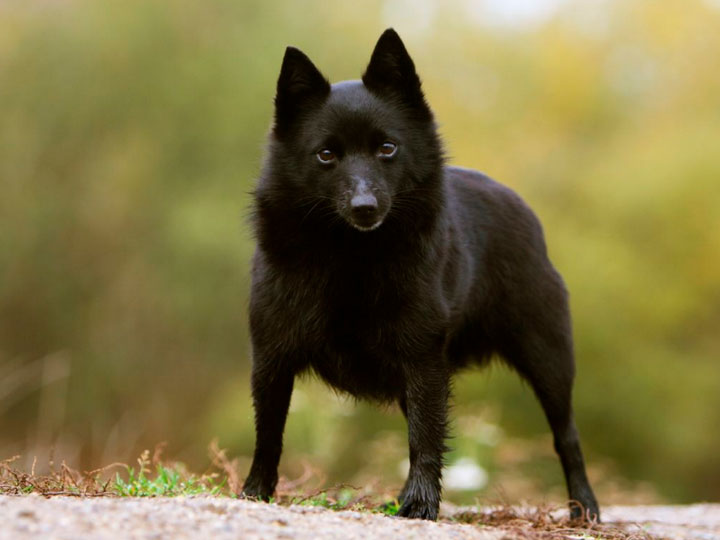
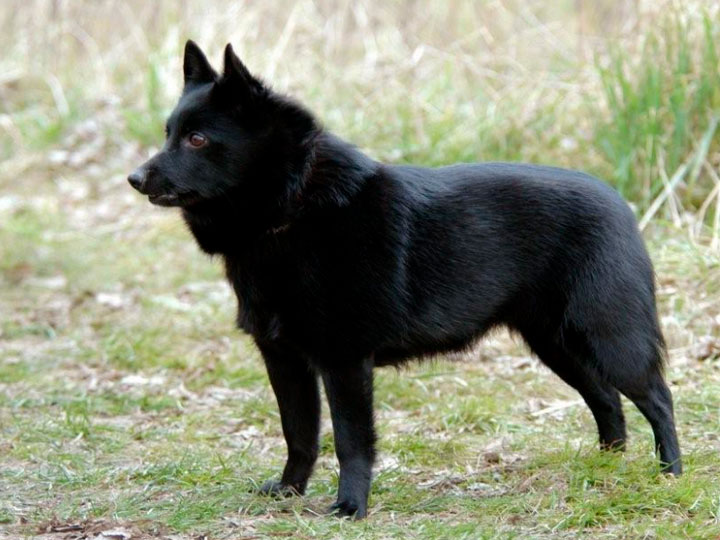
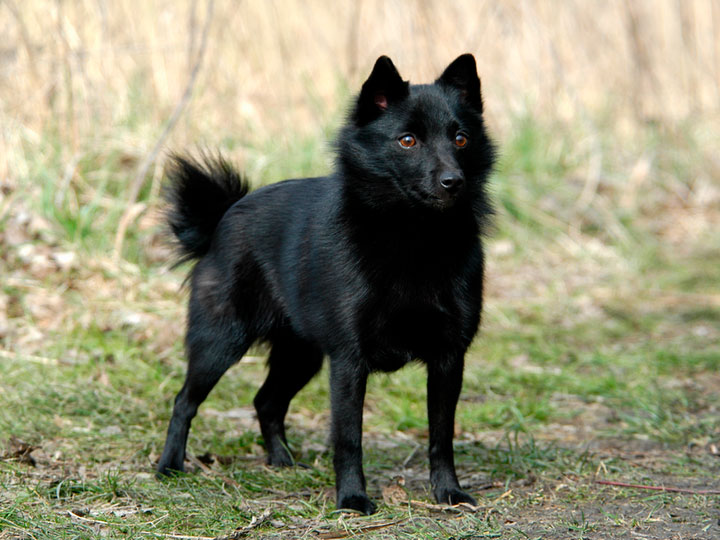
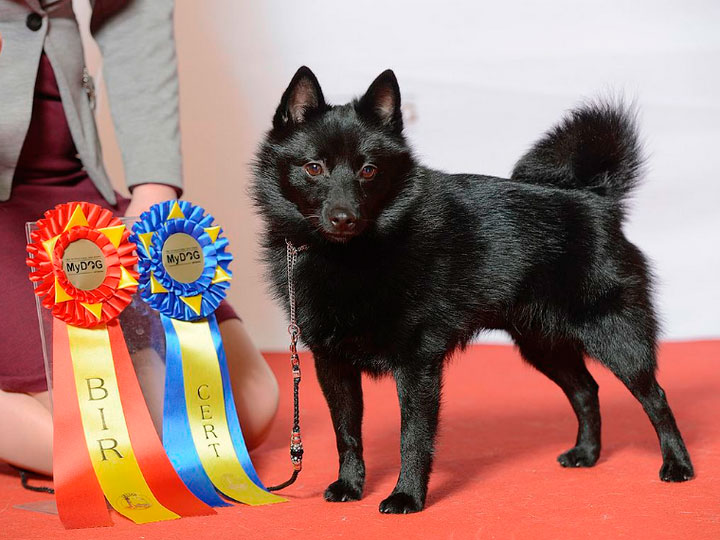
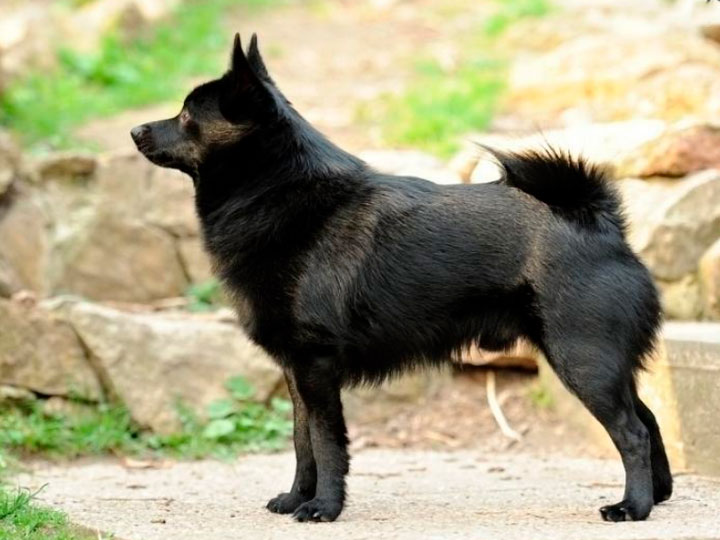
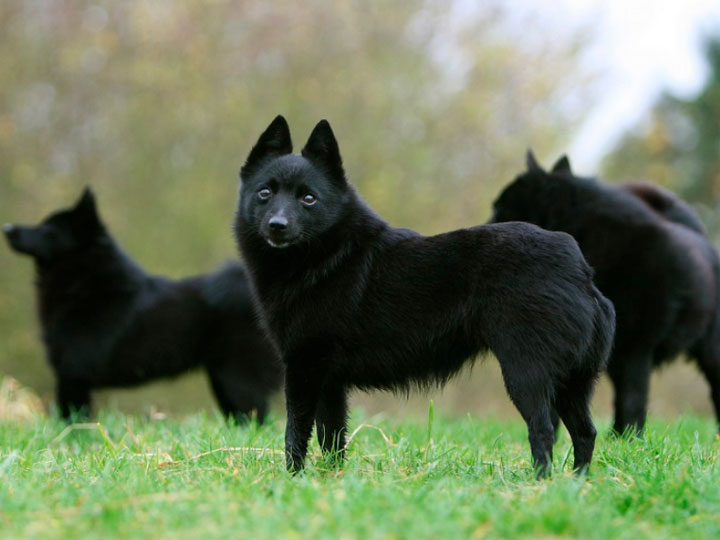
The Schipperke is a small shepherd dog with a harmonious, strong, square build. It has a very expressive muzzle, pointed ears, and a short, black coat. Overall, the Schipperke's appearance should reflect strength, endurance, and a willingness to work. The average weight is 4-7 kg.
The Fédération Cynologique Internationale (FCI) standard only allows black coloring in the breed. In England, golden Schipperkes are also permitted, while in America, golden, chocolate, blue, and black and tan are permitted. There are also some differences in appearance. American-type dogs are heavier, with a thicker, richer coat and a distinctive head, while European-type dogs are more graceful and lighter.
The head is not too long and quite wide, wedge-shaped. The stop is noticeable. The forehead is wide, the upper lines of the muzzle and skull are parallel. The muzzle tapers toward the nose, its length is approximately 40% of the length of the head. The bridge of the nose is straight. The nose leather is small and black. The lips are tight and black. The teeth are healthy, firmly set, with a scissor bite, although a level bite is acceptable. The eyes are dark brown, almond-shaped, and small. The eyelids are black. The look is lively and mischievous. The ears are small, pointed, erect, triangular in shape, set high, and very mobile.
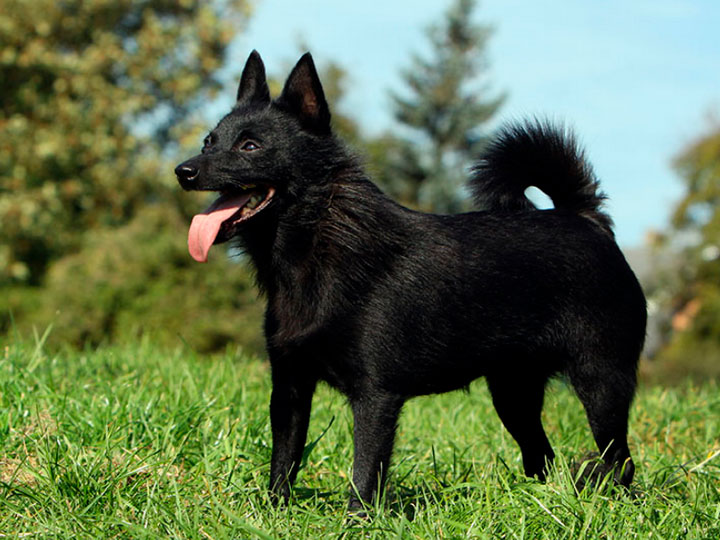
The neck is strong and powerful, appearing very full because of the collar, carried high, with a slightly arched topline. The body is broad and short. The topline is straight, often rising slightly from the croup to the withers. The withers are well defined. The back is straight and short. The loin is wide. The croup is horizontal and smoothly rounded, which is why it is compared to the croup of a guinea pig. The chest is broad with well-rounded ribs, reaching to the elbows. The underline is slightly tucked up. The tail is set high. A bobtail is normal for the breed. Some dogs are born with shortened tails. At rest, the naturally long tail reaches the hocks, hangs down, and curves slightly at the tip. When moving, it can rise to the level of the back. A curled or curled tail over the back is also acceptable.
The legs are well-boned and positioned under the body. The forelegs are straight and parallel, measuring approximately half the height at the withers from the ground to the elbows. The hind legs, viewed from the rear, are parallel, with long, muscular thighs. The hocks are well let down. Dewclaws undesirable. The paws are round, small, the toes are well-knit with very strong, black, short nails.
The coat is double. The outer coat is abundant, dense, rather coarse, straight, and strong in texture, feeling firm and dry to the touch. The undercoat is soft and dense. The hair on the ears, head, front of the legs, hocks, and metatarsus is noticeably shorter. On the body, the hair is of medium length and lies close. On the neck, it is slightly longer, forming a ruff, and on the back of the thighs, it forms "trousers." The tail hair is the same length as the rest of the body. The color is exclusively black. With age, a little graying appears on the muzzle.
Character and behavior
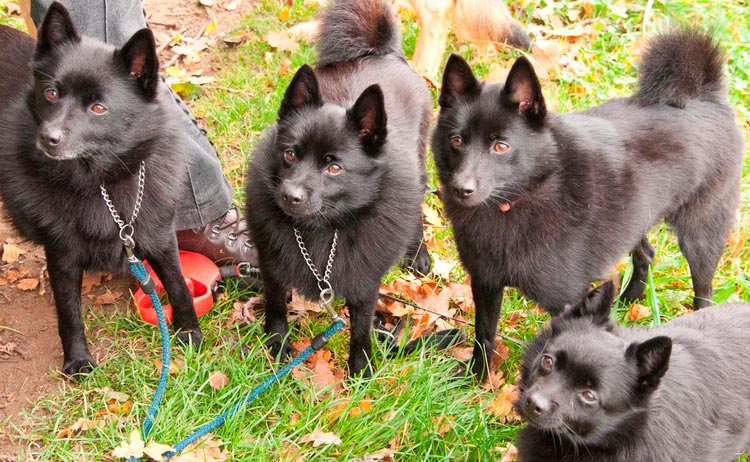
The Schipperke is an energetic guard dog, very devoted to its owner and family members. It is wary of strangers and aloof, but is capable of biting if someone approaches its territory. A strong hunting instinct and a weakness for rodents make it difficult to keep Schipperkes with small animals. They get along well with other dogs and even cats. While generally not quarrelsome on walks, they will not tolerate attacks and will fight back against attackers, regardless of size.
Schipperkes have a decorative appearance and the character of a working dog.
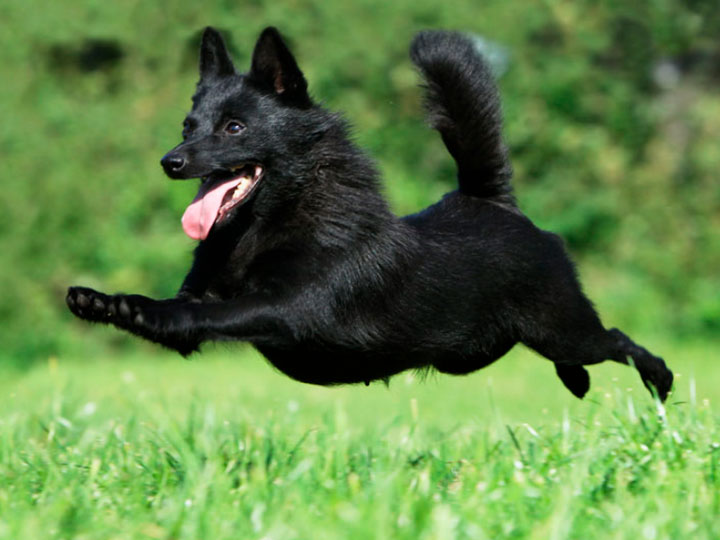
Schipperkes are confident and independent dogs with an opinion on everything. At the same time, they form a strong psychological bond with their owners, being loyal and understanding. They are very agile and tireless in their work, admiring their owner's company and eager to support any initiative. At home, they are exceptionally sensitive. They adapt to the family rhythm and are almost never overly clingy. It's hard to believe when you see a Schipperke on a walk. Outside, they are restless little dogs, ready to run and play for hours.
The Schipperke can be a good choice for a family with older children, who will be able to treat the dog with respect, and the dog, in turn, will become an excellent companion for them in games and on walks.
Education and training
Schipperkes are very intelligent, quick-witted, and relatively easy to train. From early puppyhood, puppies should be treated with care and attention; all family members should be involved in training and socialization, which will help them develop socially acceptable manners.
In terms of training and education, the Schipperke is a rather challenging dog for an inexperienced owner. Consultation or assistance from a professional dog trainer may be necessary.
Training a puppy begins literally from the moment it arrives in the home. The owner should be firm and consistent, never harsh. The puppy is praised for good behavior and correct reactions, and gently scolded for disobedience and mischief. As early as two months of age, the dog can be taught basic commands:to me"," "sit," "stay." By six months, puppies that haven't been trained become very stubborn, and training or correcting their behavior will be very difficult. Training sessions should be short and engaging, with positive reinforcement.
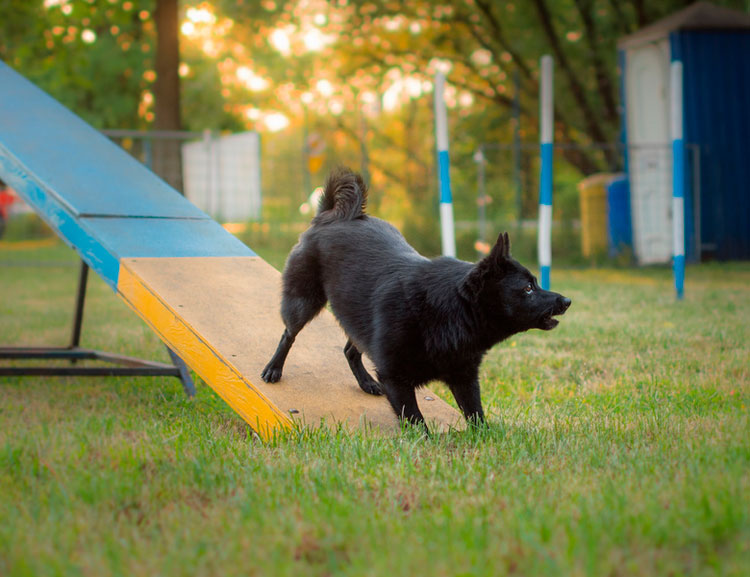
Schipperkes are very agile and maneuverable, love to play and spend time with their owners, making them ideal for a variety of sports, including agility, obedience, flyball, and freestyle. This is also a great way to satisfy the dog's psychological and physical needs.
Schipperkes need to be taught basic commands. The best option would be OKD course, which the dog will complete together with its owner. Joint training sessions will strengthen the bond between animal and owner, allow the dog to channel its boundless energy, and help it get used to working in a social setting.
Content Features
Schipperkes thrive in a private home with a yard. The yard should be well-fenced. They easily and enthusiastically overcome a variety of obstacles, love to dig, and even the electronic fence popular in the West won't stop them from adventuring. Schipperkes thrive in apartments, provided they get plenty of exercise. They tolerate frosts well, but they struggle somewhat in extreme heat. Therefore, it's important to take all necessary precautions in the summer to prevent heatstroke. Schipperkes are very hardy and can live in an aviary during the winter, but due to their nature, they won't be happy outdoors alone.
Schipperkes are very playful and energetic, requiring daily walks of approximately two hours. Walking isn't ideal for them; they need opportunities to run, and active games and activities are encouraged. This small dog can even become a jogging companion. A bored Schipperke develops bad habits, manifesting in obsessive and destructive behavior. When walking, be mindful of their curiosity and strong hunting instinct, which leads them to chase neighborhood cats, squirrels, other small animals, and birds.
Care
Schipperkes don't require extensive grooming. During shedding season, brush their coat daily to help remove undercoat and overgrown guard hairs. During the rest of the year, once a week is sufficient. Bathing is only necessary, such as if the dog is very dirty, before a show, or every 3-4 months.
It's important to teach an independent Schipperke from an early age that hygiene procedures are a normal part of life and should be tolerated. During this process, the owner should maintain a positive attitude and avoid fuss.
Other mandatory hygiene procedures include: nail trimming, cleaning ears and teethNails are trimmed as they grow. The ears are checked weekly for redness and odor, and cleaned of accumulated wax and dust if necessary.
Nutrition
Schipperkes are often picky eaters if they are pampered and offered a variety of foods from an early age. It's best for owners to decide in advance what they will feed their dog. This could include natural foods, prepared dry and wet food, or a raw diet based on the BARF system. In any case, it's important to approach feeding wisely, focusing on calorie intake and a consistent schedule.
It is not advisable to feed such an active dog immediately before a walk or training; after eating, there should be rest.
Health and life expectancy
The Schipperke is a sturdy little dog that enjoys good health, is highly adaptable, and remains active into old age. Although rare, hereditary health conditions can occur in members of the breed:
- Ophthalmological diseases (cataract, progressive retinal atrophy);
- Hypothyroidism;
- Perthes disease;
- Hip dysplasia;
- Mucopolysaccharidosis type IIIb.
- In adulthood, various age-related diseases can develop: arthritis, arthrosis, malignant and benign tumors, gastrointestinal problems, and others.
To keep your Schipperke healthy and active, you need: good exercise, regular grooming, a balanced diet, and veterinary preventative measures (timely vaccinations, treatment for external and internal parasites, and an annual medical examination).
Choosing a Schipperke Puppy
The Schipperke is a rare breed, but there are a few breeders in most European countries. In Russia, they are primarily found in large cities. Puppies often have to be reserved in advance and wait for the puppies to be born and grow up. Finding available puppies for sale is very rare. A dog should be purchased from a reputable breeder who monitors the dogs' health, carefully selects mating pairs, and cares for the young generation according to all the rules. Such a breeder will be able to recommend a suitable puppy and provide ongoing support during their upbringing. The parents should have a good pedigree, and genetic testing for common breed diseases is encouraged. Puppies should have a tattoo, a puppy card, and a veterinary passport with vaccination records and other preventative measures.
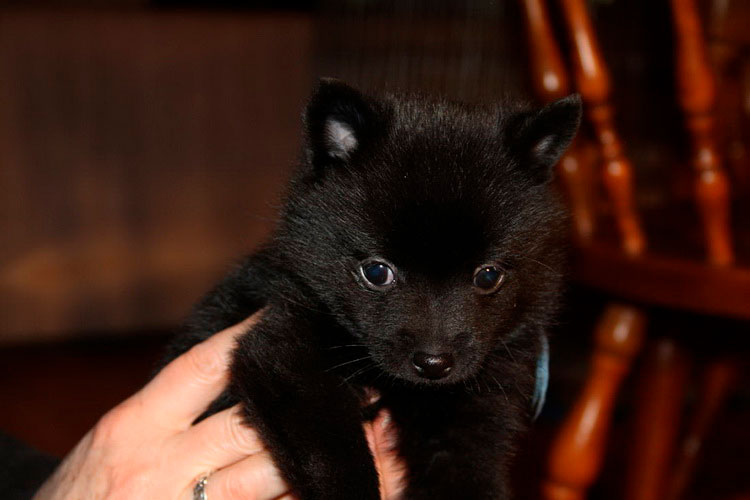
It's best to bring a puppy to a new home no earlier than 10 weeks of age. By the time of the examination, the puppy should be active, curious, and in perfect health, with no signs of fear or aggression. There are no significant gender differences in the breed, provided proper training is provided. Regarding the standard and prospects, even a professional may find it difficult to see a future champion in a small puppy. During the growing period, a show career can be cut short by a variety of small things, so above all, the dog should be welcomed as a family member and companion.
Price
The price of a Schipperke puppy depends on many factors. In rare cases, dogs with obvious breeding defects, such as abnormal coloring, underbite, or cryptorchid males, are sold relatively inexpensively, starting at 20,000 rubles. For promising show dogs that can be used for show or breeding, the price typically starts at 80,000 rubles.
Photos
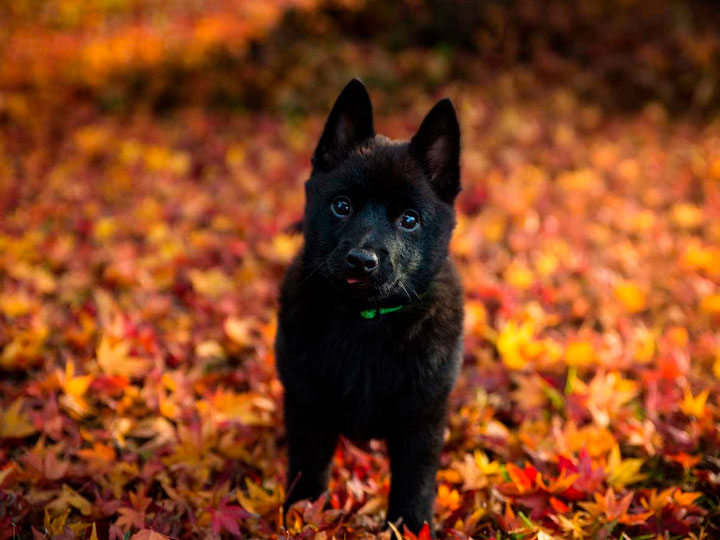
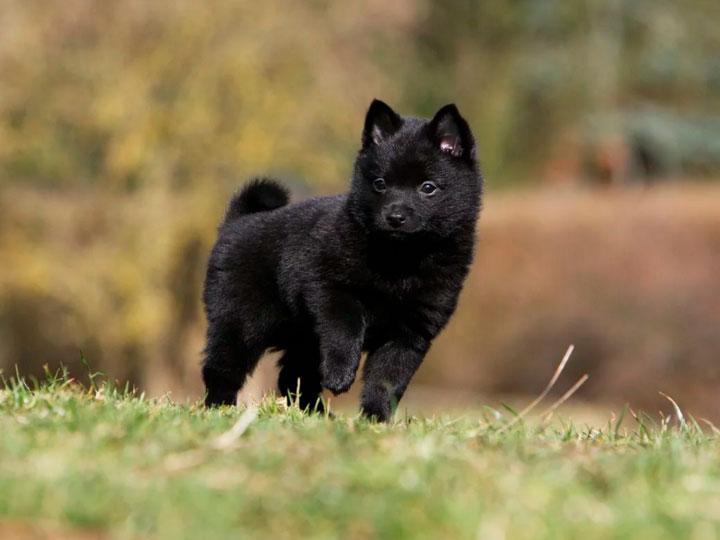
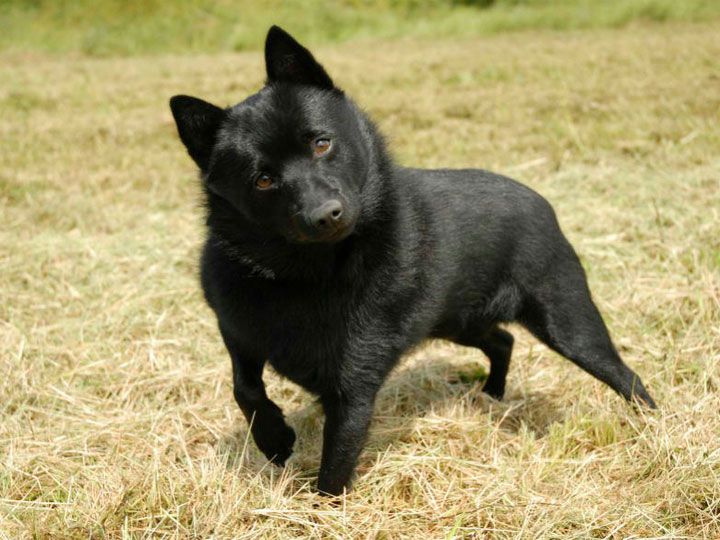
The photos in the gallery show what adult Schipperke dogs and puppies look like.
Read also:


Add a comment