
Shih Tzu is a dog breed
Shih Tzus are small toy dogs with a good-natured, cheerful disposition and high intelligence. One of the oldest breeds in the world, their distinctive feature is their beautiful, long, flowing coat. They make excellent companions, loyal and affectionate.
Content
- 1 History of origin
- 2 Appearance and standards
- 3 Character and psychological portrait
- 4 Education and training
- 5 Content
- 6 Shih Tzu Care
- 7 How to potty train a Shih Tzu
- 8 Diet
- 9 Health and life expectancy
- 10 Shih Tzu's eyes are falling out - reasons
- 11 Choosing a Shih Tzu Puppy and Price
- 12 Shih Tzu Breed – Owner Reviews
- 13 Shih Tzu mating
- 14 Photos
History of origin
The Shih Tzu breed's origins are closely linked to the "top of the world" – Tibet. It was here, several centuries ago, that these miniature, highly intelligent "lion dogs" were bred. They are believed to have originated from crossbreeding with a local breed. Lhan Apso and Chinese PekingeseIn the early 17th century, the Dalai Lama presented several of these dogs to the Chinese Emperor as a sign of respect. The ruler was so impressed by the Shih Tzu that they began to be bred at court. Exporting the dog from the country was punishable by death.
In earlier Tibetan manuscripts, one can find references to two very popular breeds, one of them was the huge Tibetan Mastiff, and the other was small indoor dog With a very long coat, it was prized for its keen hearing and clear intelligence. The dog was the first to sense danger and would rush to warn its fearsome guards. After the Chinese Revolution, most Shih Tzus were killed along with their owners, but enthusiasts managed to preserve the breed. The Beijing Breed Club was founded, and the dogs spread throughout the world for the first time.
One of the first breeders in Europe was Mr. Hoffman, a high-ranking Norwegian official, who was fortunate enough to import a female named Louise from China, and a little later, two males. In England, a breed club was established in 1935, but the modern standard was developed and approved only in 1948.
Video review of the Shih Tzu dog breed:
Appearance and standards
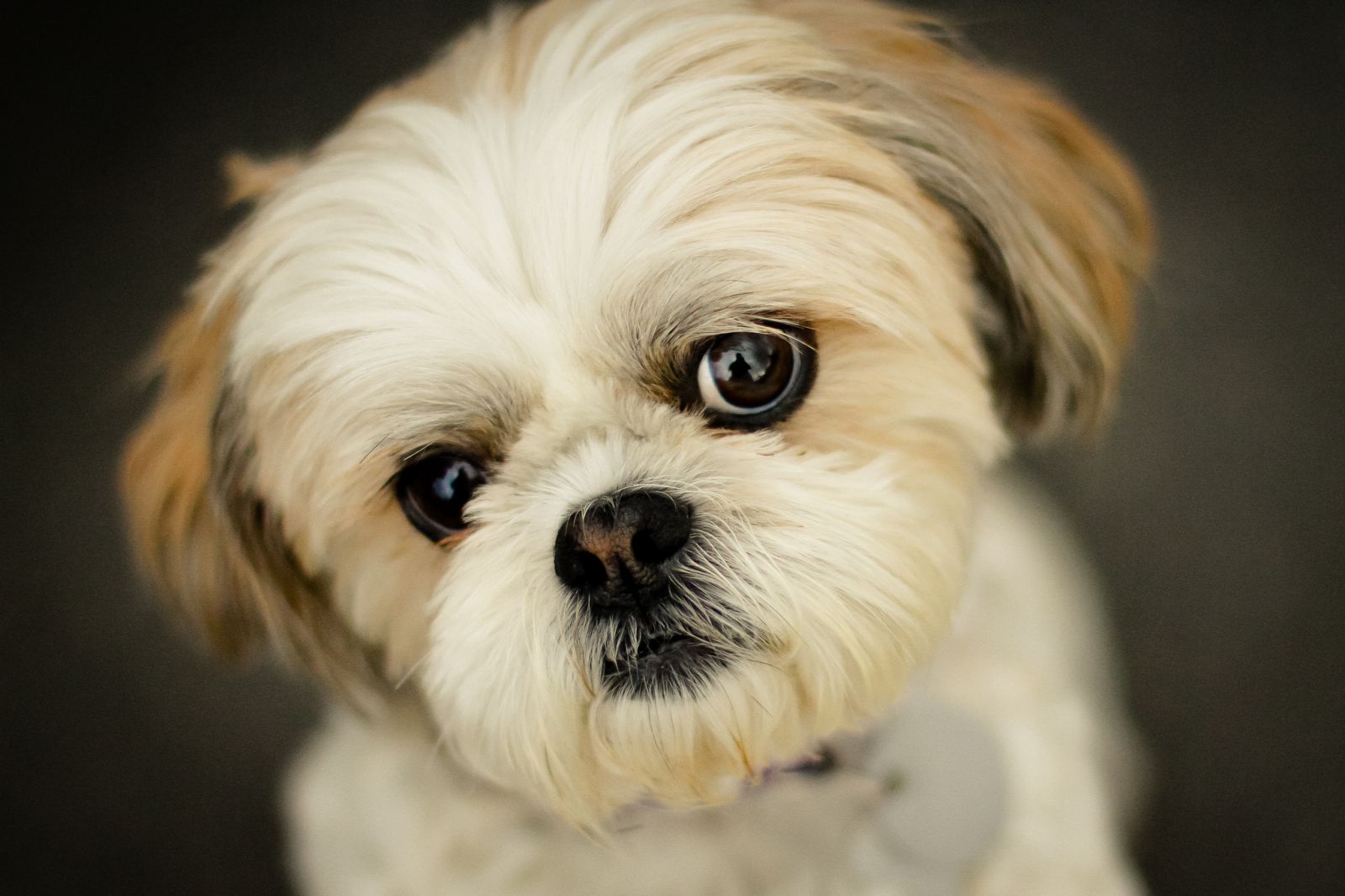
The Shih Tzu is a small, energetic, and elegant dog with very long, straight hair. Its build is dry and compact, with well-developed muscles and bone structure, and a slightly elongated frame. Height is 23-25 cm. Weight ranges from 4.5 to 8 kg.
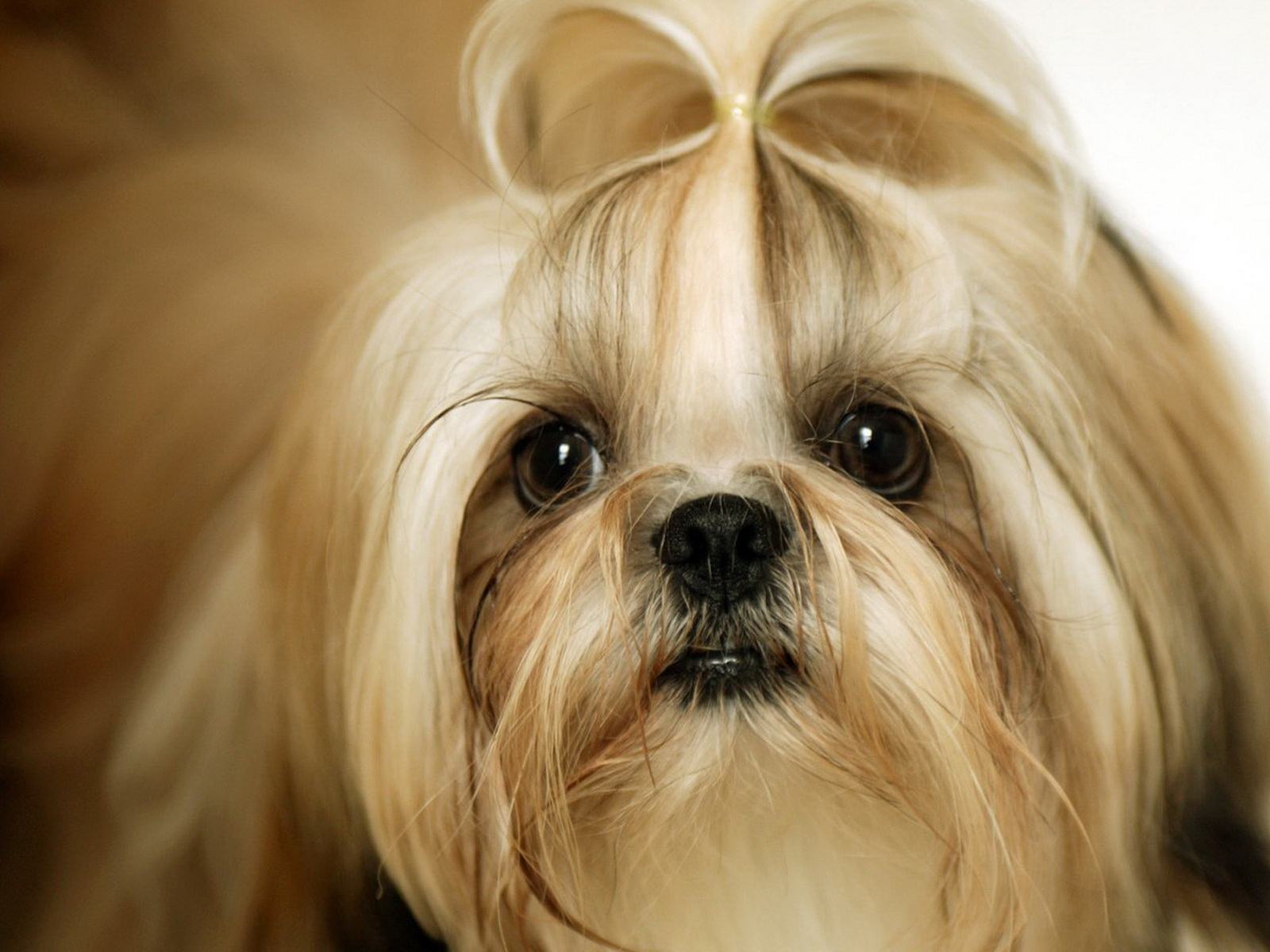
The head is proportional, medium in size, and rounded. The forehead is convex. The stop from the forehead to the bridge of the nose is very bright and deep. The nose is well developed and black. In dogs of a reddish-brown color, it may be lighter. The ears are large, set high, and drooping. The eyes are round, dark, set straight, moderately deep, and quite large. The color of the iris ranges from light to dark brown. The bite is tight undershot or straight. The neck is dry, without folds or dewlap, and of medium length. The line of the back is straight. The croup is rounded and slightly sloping. The tail is set high, lying on the back. The belly is tucked up. The chest is moderately broad. The limbs are straight, parallel. The movements are free and smooth, the posture is proud.
The dog's coat consists of a fine, soft, dense undercoat and a long, slightly wiry, straight coat. Any color is acceptable, but a white blaze on the forehead and a light-colored tail tip are desirable.
Character and psychological portrait
Shih Tzu dogs are excellent companions with a lively and playful nature. Their primary character trait is friendliness. Shih Tzus form very strong bonds with their owners, demanding a lot of attention from their owners, and love to be at the center of any activity.
They absolutely cannot stand being alone. Shih Tzus can sit in your arms or lie nearby for hours, and if their owner allows it, they will play tirelessly with you for hours. Young animals bark loudly and frequently; as they mature, they become more silent, but remain just as alert and courageous. They get along well with children who treat them with care. However, they sometimes view very young children as equals, which can cause some difficulties.
Education and training
Like any other dog, a Shih Tzu requires proper training to avoid behavioral problems. Potty training and socialization are crucial. Without socialization, a Shih Tzu can grow up nervous, aggressive, and distrustful, which is unacceptable for a toy breed. The dog should not be allowed to chew things or take food from the table; in general, it should be prohibited from engaging in anything it won't be allowed to do as an adult.
The concept of training in the full sense of the word doesn't apply to Shih Tzus. It's hard to imagine a small animal serving its owner. But they do need to know basic commands. Shih Tzus are easy to train; they quickly learn commands and are easily taught various tricks, but if training isn't methodical and regular, these acquired skills will begin to fade. If a pet doesn't obey commands, it shouldn't be punished; this is not a breed for which disobedience can be considered a critical flaw.
The Shih Tzu is a purely toy dog and doesn't require regular walks. If desired, it can be litter-trained. However, it's important to remember that outdoor playtime and leisurely walks are beneficial for both dog and owner.
Content
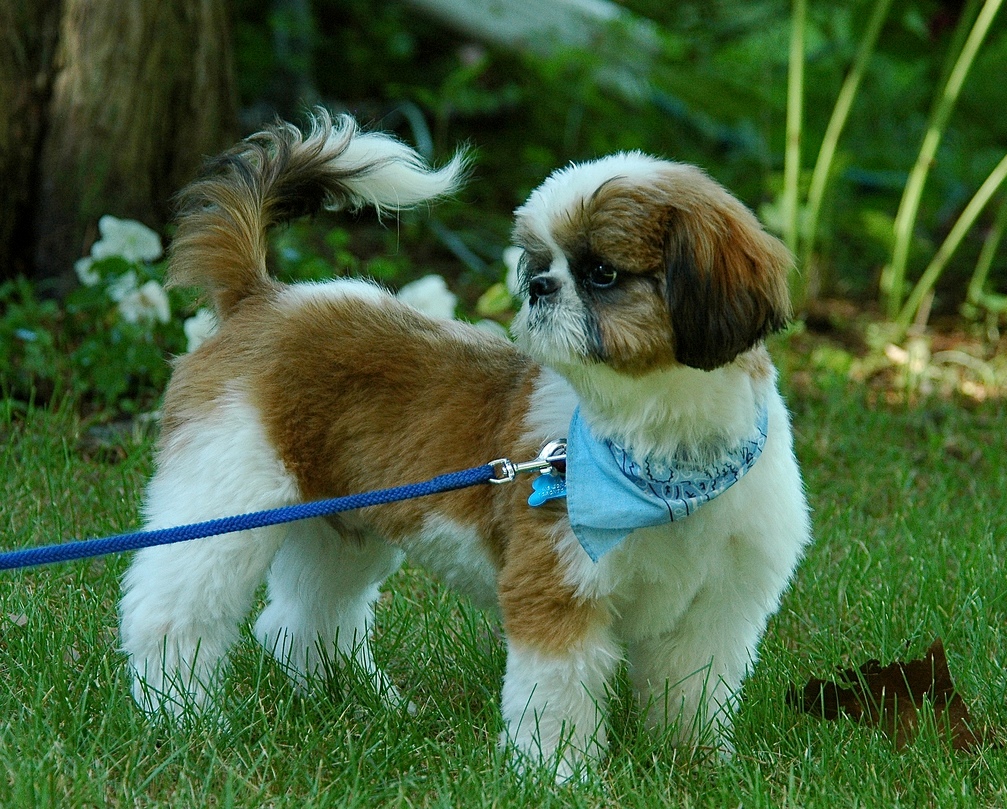
Shih Tzus thrive in apartments of any size, but they should have their own space, a draft-free sleeping area, and a place away from direct sunlight. Their friendly nature makes them excellent companions for both people and animals. Shih Tzus get along with anyone who enjoys their company.
Shih Tzu Care
The Shih Tzu's coat is certainly an asset, but it also makes grooming a complex, time-consuming, and expensive endeavor. The breed's value is determined by the length and quality of its coat. Starting at six months, dogs should be accustomed to regular brushing. It's a good idea to wash their faces after each feeding. Shih Tzus should be bathed once a week, though their paws can be washed more frequently. Before each bath, it's recommended to use special eye drops to protect them from shampoo.
The Shih Tzu requires regular grooming for:
- with eyes;
- teeth;
- ears and claws.
The eyes are washed with a special lotion. The ears are cleaned if necessary. Hair is carefully plucked from the ear canal by hand; this procedure is usually required once every three weeks. Afterwards, the auricle is dusted with a special powder. Teeth are brushed once a week to prevent plaque and tartar buildup, which are the cause of most oral diseases. Claws are trimmed as they grow. The area around the anus is also kept clean, and if necessary, the fur is wiped with a cloth soaked in cleansing lotion. The tuft of hair near the foreskin is not trimmed, as it protects the genitals from contamination.
How to potty train a Shih Tzu
One of the most frequently asked questions on forums dedicated to the breed is how to litter train a Shih Tzu, and what it takes. You won't need much—primarily patience. Potty training can take a long time. A Shih Tzu simply won't understand what's required. Or you might get lucky and your dog will begin using the litter box deftly within a couple of days; it all depends on the individual dog's personality.
If you're unlucky, accept the fact that you'll have to engage in painstaking training. Forget about violence—it's not the answer; on the contrary, punishment can actually be harmful. The key to success is persistence and kindness.
Popular Shih Tzu Haircuts
If your pet isn't participating in shows and is kept as a companion, a haircut will make grooming much easier. There are many hairstyles for this breed, but it's easy to identify the most popular:
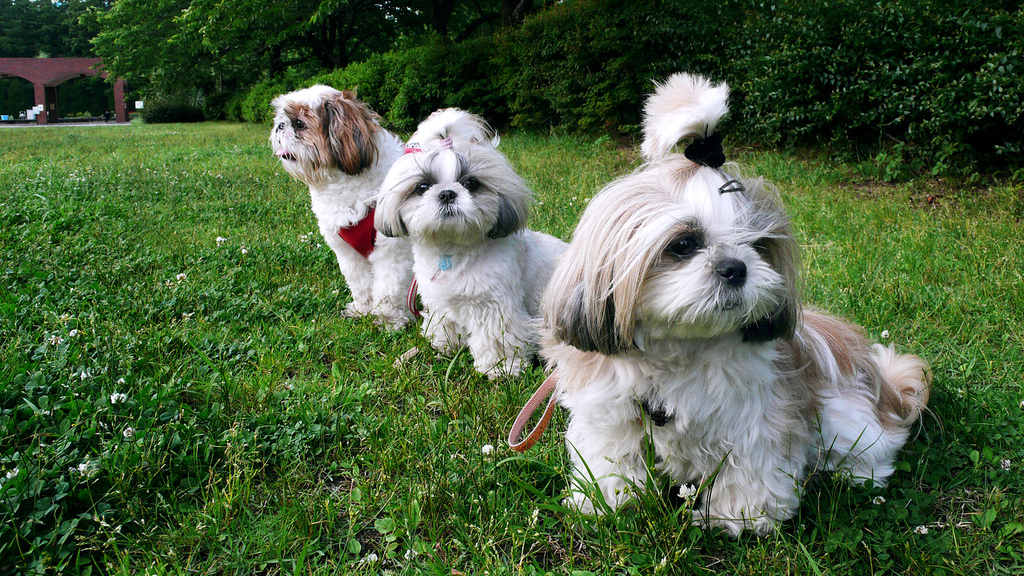
- A home-style Shih Tzu haircut that makes an adult dog look like a puppy in real life and in photos is one of the most popular. In fact, it's called a "puppy cut." The hair is left 2-2.5 cm long all over the dog's body. The hair on the face is often left longer.
- The "teddy bear" haircut differs from the previous one in that the length of the hair all over the body is about 5 cm.
- After a Korean haircut, the dog looks like a cute anime character. This is largely due to the long hair on the ears, which is braided. Long feathering is left on the paws and tail.
-
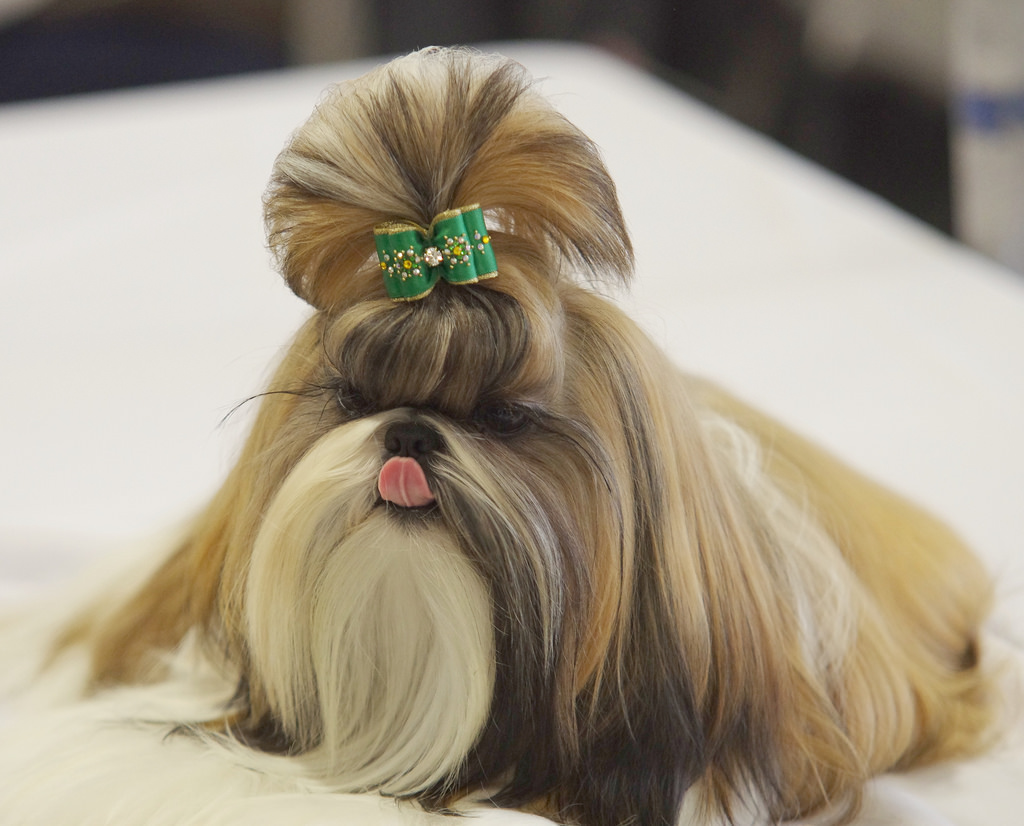
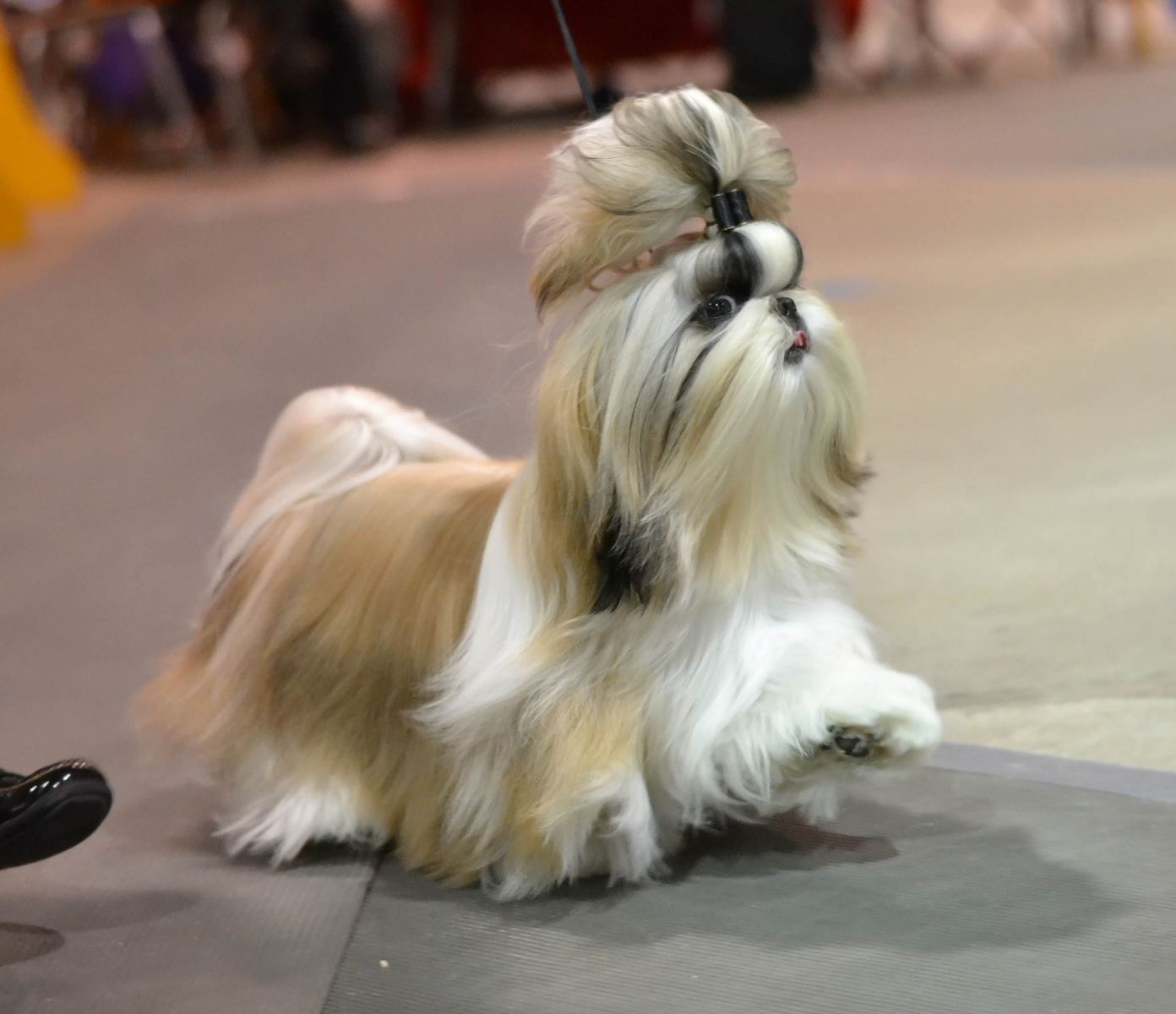
The classic show cut involves a perfectly combed, long coat, trimmed along its entire length for a neat appearance. The topknot is either knotted or braided.
Show grooming
Preparing a dog for a show follows this pattern:
- Bathe with special products (shampoo, conditioner);
- Dry the wool thoroughly with a hair dryer;
- Comb and straighten hair;
- Use scissors to trim the necessary areas, trimming the fur in a circle, but no more than 0.5 cm. Trim the fur between the toes.
- They do a transport hairstyle.
- Immediately before entering the ring, a topknot is done – a hairstyle that meets the standard.
Diet
Shih Tzus can be fed natural or prepared foods. The basis of a natural diet is raw or cooked beef, veal, horse meat, well-cooked organ meats, cooked or raw vegetables, a small amount of grains, fermented milk products, and some seafood. Chicken should be introduced with caution, as it can cause allergies in some dogs. Supplements such as seaweed, fish oil, and multivitamins are also given. Prepared foods are selected based on the physiological needs of each age group.
When a puppy arrives at its new home, it's initially fed the same food the breeder provided. Any changes to the diet should be gradual. A new food is any food the puppy hasn't tried before. It's important not to overfeed the dog. Anything it eats with gusto is the optimal portion. Clean drinking water should always be available.
Health and life expectancy
There are certain health conditions that Shih Tzus are more susceptible to than other breeds, due to genetics, specific conformation, and anatomy. Eye diseases and early tooth loss are common. Mature dogs can experience heart, liver, and digestive problems. Urolithiasis is also reported. Many members of the breed suffer from allergies. With proper care, Shih Tzus can live for about 20 years. The average lifespan is 13-15 years.
Shih Tzu's eyes are falling out - reasons
Eye problems are the most insidious pathologies in Shih Tzus. A seemingly minor injury can suddenly have devastating effects on the dog's health:
- complete or partial blindness;
- myopia;
- headache.
And even such serious complications are just the tip of the iceberg. Shih Tzus, like Pekingese, are prone to eyeball prolapse (proptosis). This isn't a sight for the faint of heart, so every Shih Tzu owner should see a photo of their dog with prolapsed eyes so they can react quickly and provide first aid. Proptosis can be triggered by a blow to the head or strong pressure on the neck. For this reason, it's recommended to walk Shih Tzus on a harness.
The Shih Tzu is not alone in this problem. Prolapse of the eyeball is observed in many breeds. Small animals with rounded skulls and all dogs with short or upturned muzzles are particularly at risk. For example, here are some dog breeds prone to proptosis:
- Pekingese;
- Chihuahua;
- Japanese Chin;
- Maltese lapdog.
Proptosis can only be treated surgically. Ancillary procedures are aimed at reducing swelling if the eye does not retract into the orbital socket. The surgery is performed under general anesthesia. There are only two treatment options:
- The eyeball is repositioned and temporary stitches are placed on the eyelids. The eye will be closed temporarily.
- The eye is removed if it is not possible to reset it due to an injured orbit or a change in the floor of the orbit.
Choosing a Shih Tzu Puppy and Price
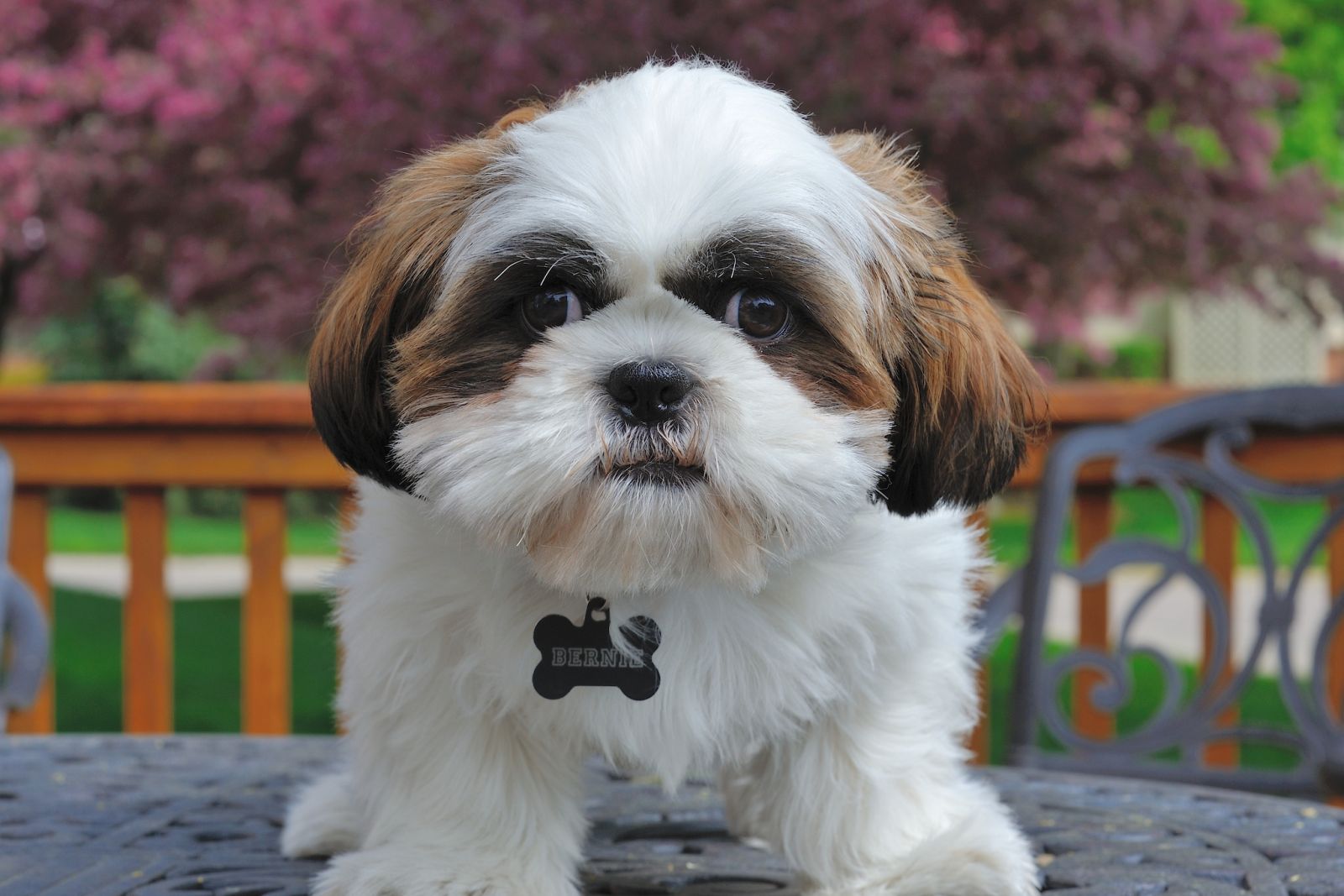
Finding a Shih Tzu puppy on an online classifieds site is no problem these days, and the dogs in the photos and prices vary widely, catering to every taste and budget. However, it's important to understand that this approach carries the risk of buying a sick puppy or a mixed-breed. It's better to get a good, purebred dog from a breeder. Experienced, reputable breeders will always provide comprehensive advice on care and maintenance, providing all the information about the pedigree, parents, and their accomplishments. Puppies should be healthy, active, and inquisitive, with a good appetite, clear eyes, and a clean, shiny coat.
Breeders begin showing Shih Tzu puppies after 45 days, and recommend picking them up only at 2.5 to 3 months of age. By this time, all necessary vaccinations and breed and veterinary documentation should be complete.
It's important to decide in advance what you want the dog for. Will it be used for shows, breeding, or simply as a companion? This primarily affects the price of a Shih Tzu puppy. Shih Tzus are not cheap, and the price of puppies depends on their prospects and ranges from $500 to $1,200.
Shih Tzu Breed – Owner Reviews
We've collected several Shih Tzu reviews for you. Perhaps they'll help you decide whether to buy a Shih Tzu or at least change your attitude toward the breed for the better. Why for the better? The fact is, there are simply no outright negative reviews about Shih Tzus on forums. So, let's get started.
- Andrey. Breeder.
I speak not as an owner, but as a Shih Tzu breeder. What can I say about the breed:
- high intelligence;
- loves people;
- arrogant;
- capricious and affectionate;
- good parent.
All these Shih Tzu reviews are completely accurate. What else can I say? She's good with other animals and gentle. She's a patient dog, and she holds up well during vaccinations and labor. She has good hearing and memory. Overall, she has many positive qualities.
- Larisa. Mom.
A magnificent dog breed. Perfect for a family with children. My Larry is like a member of the family. He's not annoying, but he's always snoring somewhere nearby. The best thing is that he doesn't bark and doesn't bother the cat.
- Anonymous.
The Shih Tzu is a proud, ambitious, and devoted dog. It is balanced, beautiful, strong, and agile, and worthy of love.
It feels like the last review about a Shih Tzu was written by the dog itself, don't you think? So much emotion, though perhaps the person is a man of few words and put everything they thought into one sentence.
Shih Tzu mating
For a Shih Tzu owner, especially an inexperienced one, the first mating of a dog is always a stressful and exciting experience. Fears and questions abound:
- how to knit;
- who to knit with;
- when to knit.
The problem is, however, serious, because in order to mate a Shih Tzu, optimal conditions must be created, including choosing the most favorable day for mating.
Let's lift the veil of secrecy regarding Shih Tzu mating.
Essentially, breeding a Shih Tzu is the same as breeding other dogs. There are some minor nuances, but these are simply due to the pet's small size. But that's not the most important thing, as mastering the veterinary basics of breeding is within anyone's reach. The most important thing to decide first is the purpose of breeding.
If you think breeding a Shih Tzu will improve your dog's health, you're mistaken. Childbirth is a stressful time for a dog's body, and it doesn't always go smoothly. If your goal is to sell puppies, you'll be disappointed again. The price of a Shih Tzu depends largely on its class. Specialized breeders breed Shih Tzus only after careful planning, which allows them to produce outstanding offspring. Other breeders sell dogs at lower prices, and there's not much interest in the breed.
The most favorable time for breeding a Shih Tzu is the third or fourth heat cycle, or around two years of age. By two years of age, the dog's body is fully developed, and the bitch is highly likely to give birth to healthy puppies. In this regard, rushing is not so important, and mating can be delayed if necessary. However, breeders also advise against delaying the mating process, as it has been observed that over time, the elasticity of the dog's birth canal decreases, leading to complications during labor.
Advice! If you have an adult female Shih Tzu, over five years old, and you're considering breeding her for the first time, think twice. This could have serious health consequences for your pet. At the very least, have the dog examined by a veterinarian before mating. Under no circumstances should you breed an animal over eight years old.
Photos
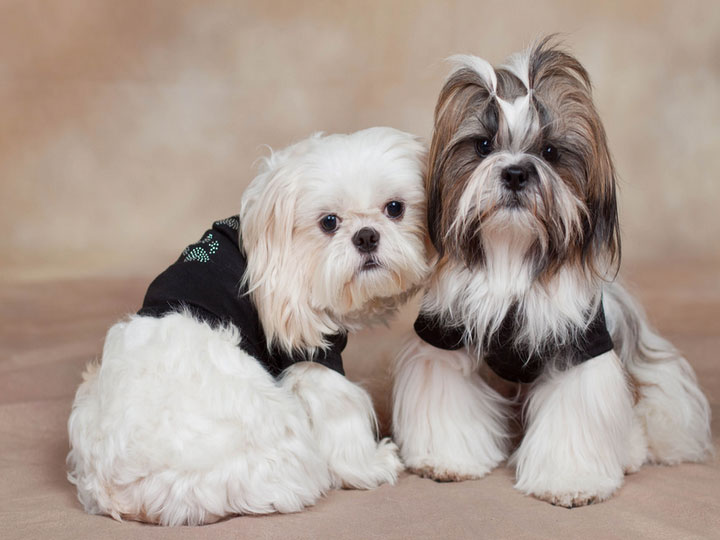
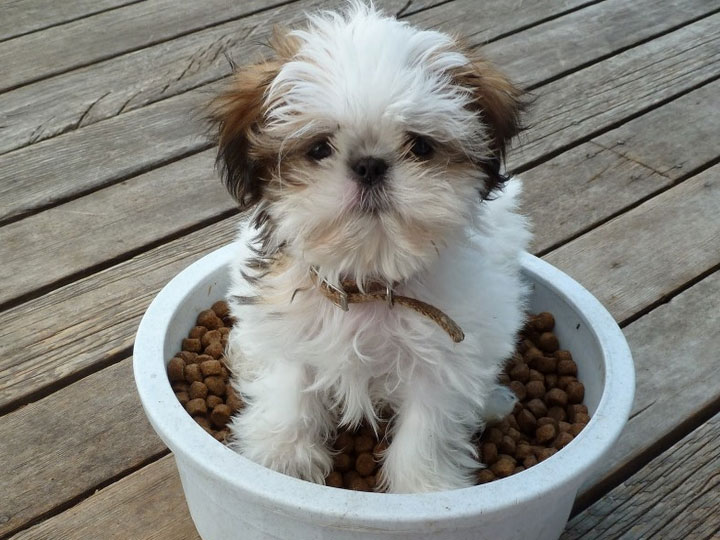
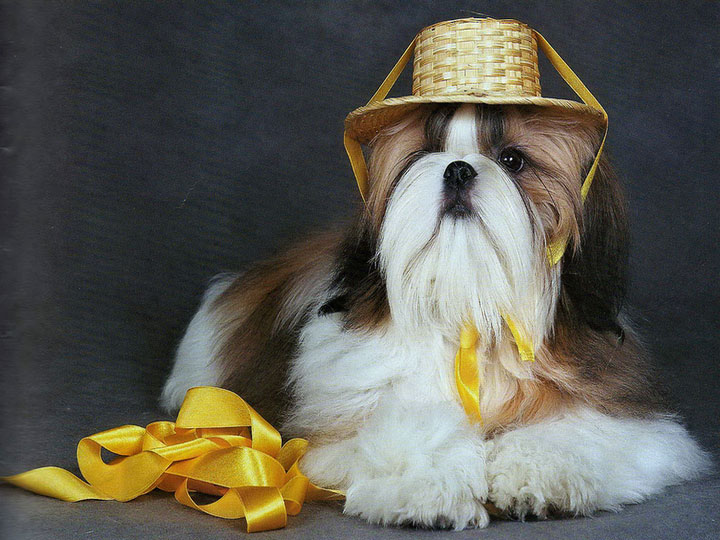
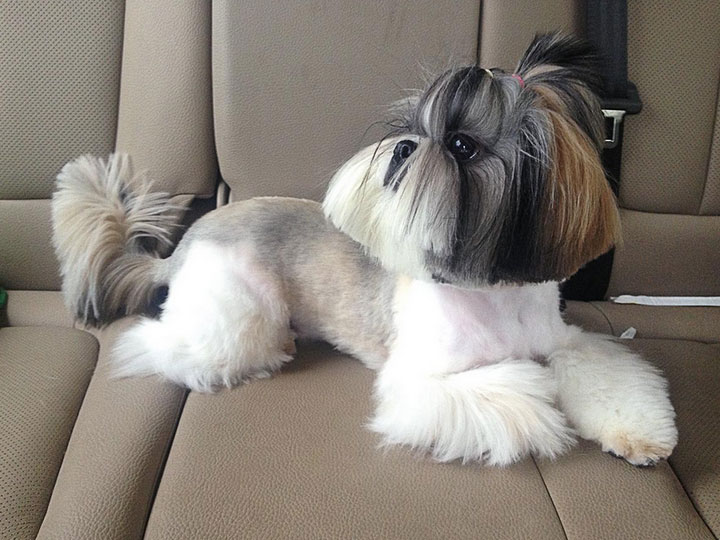
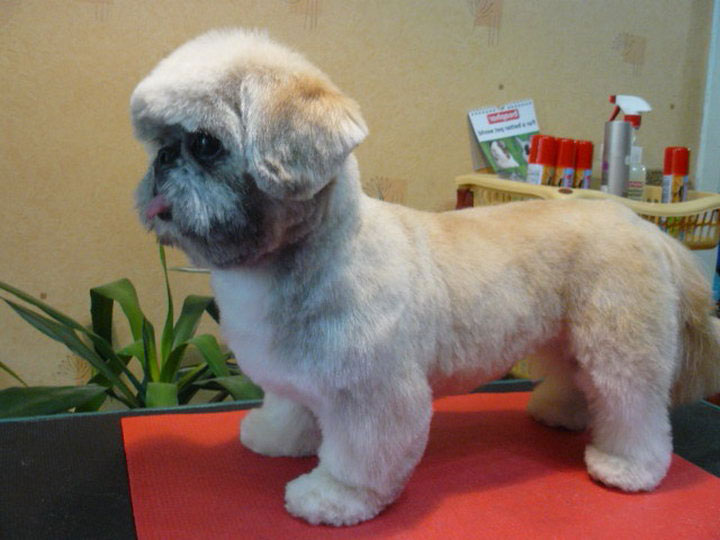
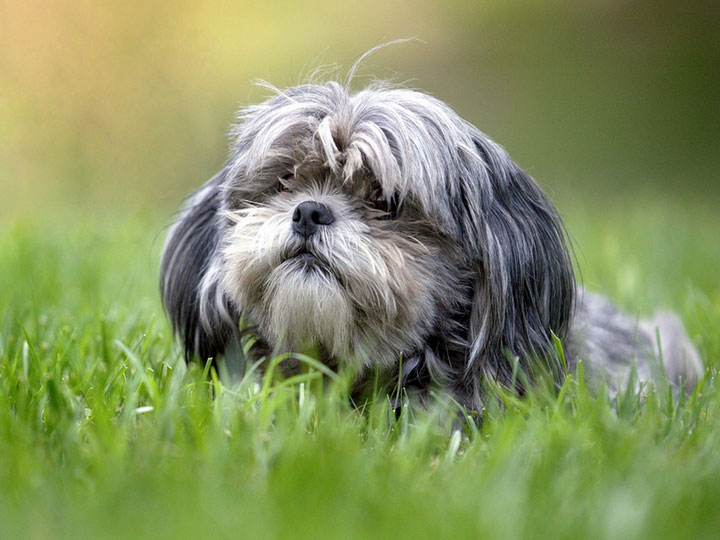
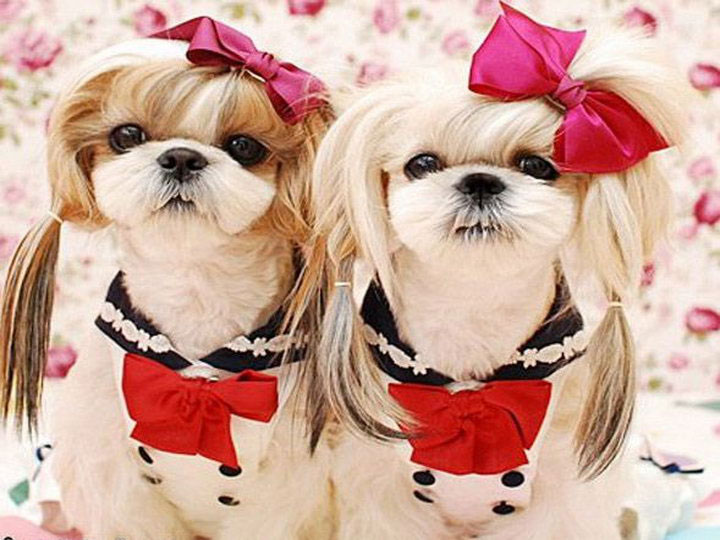
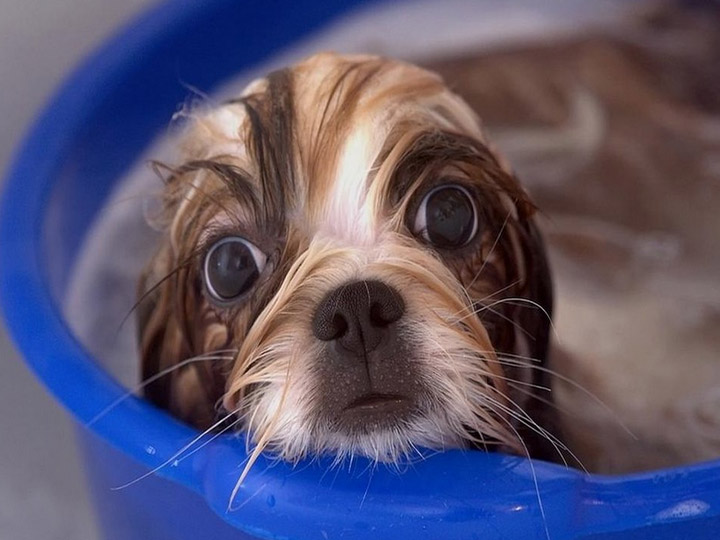
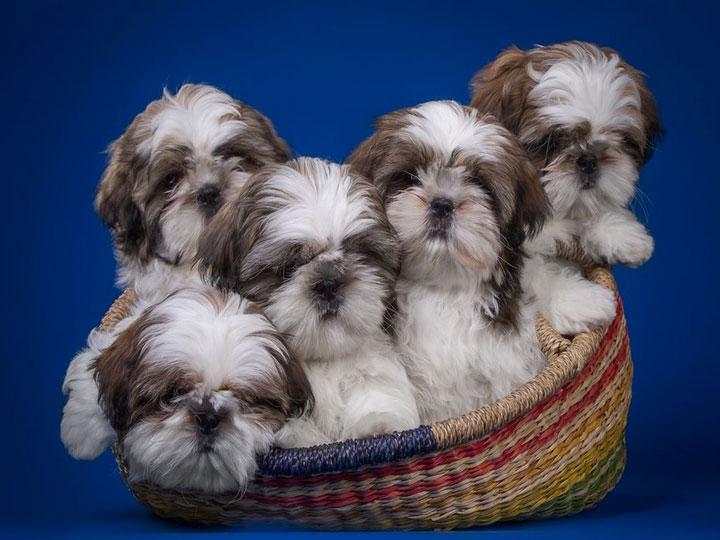
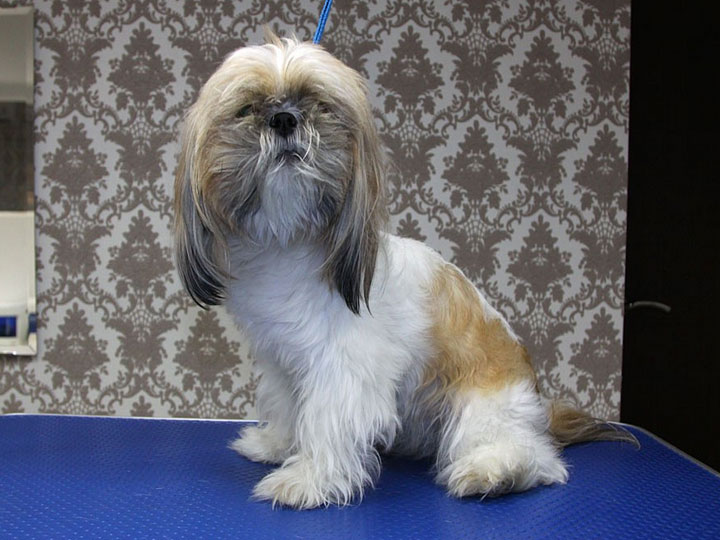
Photos of adult Shih Tzu dogs and puppies:
Read also:
- Shar Pei is a dog breed
- Mating dogs: when and how to mate
- Toy poodle (the smallest poodle)
- Chinese dog breeds


Add a comment