
Chantilly-Tiffany: Cats and Tomcats
Chantilly-Tiffany breed The concept isn't new at all. Back in 1967, Janie Robinson purchased a pair of long-haired, chocolate-colored kittens from a New York City store. By mid-1969, Shirley the cat and Thomas the cat had become parents to adorable kittens.
Content
History of the breed
Over the next seven years, Thomas and Shirley became parents to approximately 60 chocolate-colored longhair kittens. In the 1970s, several of these kittens, led by Thomas, were shown. But eventually, Jennie Robinson gave up her passion for breeding cats, and another breeder named Sijin Lund took Robinson's cats and continued working with the breed.
The show's judging panel found the breed name "Foreign Longhair" too bland and meaningless. So Lund decided to call the breed "TiffanyTheater." This term was more appropriate for high-class and elegant cats. Sigyn Lund herself was a Burmese breeder.
Many people assumed that these chocolate beauties were longhaired Burmese, the offspring of her cats. Although this was completely untrue, the false information spread further and further, appearing in various books and numerous articles. Finally, the long-awaited moment arrived in 1979, when TICA (The International Cat Association) recognized the Tiffany breed, but only as a subspecies of the Burmese. However, the ACA refused to officially recognize the breed, and by the mid-1980s, Lund had completely abandoned breeding this breed, which nearly led to its extinction.
By chance, in 1988, Tracy Oraas, a breeder from Canada, fell in love with Tiffanies. She conducted a thorough investigation and discovered that there never had been, and never could have been, any Burmese in the Tiffanie's lineage.
In 1992, the breed was officially renamed Chantilly-Tiffany, as the name sounded just as refined and elegant as before. Today, the breed remains quite rare, though steadily, gaining popularity.
General characteristics of the breed
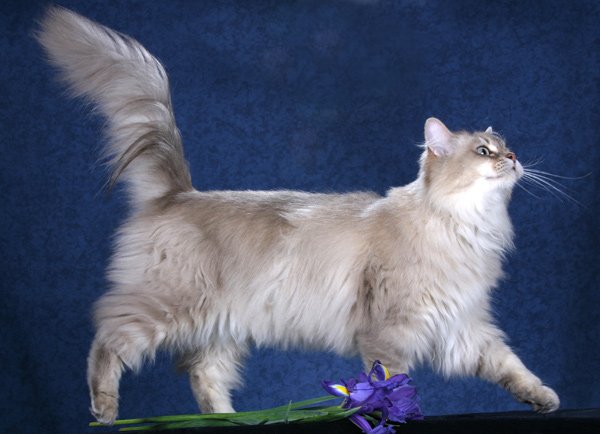
Ideally, the Chantilly-Tiffany is a very beautiful, slender cat with a long body and soft, smooth fur.
Appearance
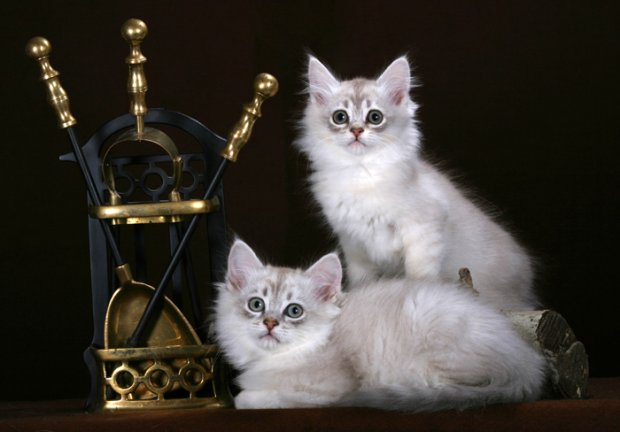
They have no undercoat at all, meaning their fur is completely mat-free. Their tail resembles an unusually lush ornament, and the fur on their ears appears wavy. A luxurious ruff frames their neck, which also softens the contour of their face.
The eyes, bright yellow or golden-amber, are oval. The coat color that originally described this breed was chocolate brown. However, it is now common to find Chantilly cats in blue or lilac, as well as cinnamon and fawn. This breed also comes in a wide variety of colors:
- tabby;
- mackerel;
- striped;
- spotted and striped, and just solid.
Character
Chantilly-Tiffany delight their owners with their gentle and calm nature, but despite their composure, they love to play with people.
Chantillys aren't known for their perfect obedience, but they're also not overly annoying—a happy medium, so to speak. Representatives of the breed typically bond with a maximum of a couple of family members. They follow them around without demanding any attention, as other breeds can do. However, leaving Tiffanies alone for long periods of time or simply ignoring them is not recommended.
Therefore, cats of this breed thrive in large families, where there's always someone at home. Alternatively, getting a second pet can be a welcome relief for the Chantilly Tiffany. Their intelligence and quick wit make them easy to train. They can be taught various tricks and leash-trained. They especially enjoy carrying small objects in their mouths.
They become very attached to people very quickly and need their warmth and companionship. Otherwise, you could end up with a noticeably sad and depressed cat.
Rules of care and nutrition
The Chantilly Tiffany breed is easy and effortless to care for.
Care
Once you're mentally prepared to welcome a Chantilly Tiffany cat into your family, start preparing for her arrival:
- arrange a sleeping place;
- buy a litter box and a scratching post;
- pick up toys.
While you're at it, buy some cat carrier, as you'll need to take your pet to the vet for vaccinations and in case of illness. Incidentally, if you get a large, comfortable carrier, your cat can set up a sleeping area in it.
Don't forget about food and water bowls. It's best to avoid plastic bowls, as they absorb dirt and odors. Furthermore, plastic accumulates static electricity, which isn't ideal for a long-haired cat.
This breed is renowned for its cleanliness. However, they need to protect their weak spot: their ears are particularly susceptible to infections. Therefore, it's crucial to meticulously maintain the cleanliness of your pet's ears to prevent even the slightest risk of infection.
It's important to know that your Chantilly Tiffany's teeth also require care. Clean them with special wipes at least a couple of times a month. Alternatively, feed them special dry food to help them maintain white teeth.
When it comes to Chantilly-Tiffany nutrition, there are several requirements that must be met. First and foremost, they must be thoughtful and balanced.
Nutrition
Some breeders prefer to feed their pets dry food. There's nothing wrong with this, let alone bad. Properly selected food should be high-quality and contain the necessary vitamins and minerals for the cat. However, the truth is that sometimes a Chantilly-Tiffany cat can develop various illnesses due to a monotonous diet. To avoid the worst-case scenario, feeding dry food should be supplemented with high-quality natural foods.
A Chantilly's diet can include fish (boneless), eggs, dairy products, cereals, and, of course, meat, as this is an essential food for almost any cat. Dairy products should be fed with caution, as they often cause digestive issues in cats.
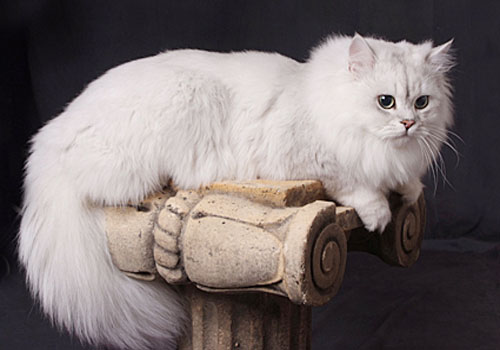
Since the Chantilly-Tiffany breed is classified as a long-haired breed, buy it a special paste that dissolves hair that gets into the stomach.
Health
Cats of this breed are distinguished by excellent robust health, and timely care and proper nutrition will extend the Chantilly's life to 15-18 years.
This breed is prone to a minor problem that requires constant care: fluid drainage from the eyes. To remove the discharge, use paper towels, boiled water, or tea leaves. If you notice excessive discharge, take your pet to the veterinarian. Also, be concerned if there's no fluid at all; this is a symptom of clogged tear ducts, which also requires a visit to the veterinarian.
No hereditary or genetic diseases have been identified in Chantilly-Tiffany; the only problem that can arise is stress.
But the constant presence of a beloved owner will prevent this problem from developing completely. Like any other cat, Chantilly-Tiffany cats are recommended to be examined regularly by a veterinarian to ensure early detection of problems and their proper treatment.
The nuances of buying Chantilly-Tiffany kittens
If you're interested in the breed and have decided to buy a Chantilly-Tiffanie kitten, be prepared for difficulties. There isn't a single cattery in Russia that breeds these rare cats. And they're also rare abroad. Therefore, be wary of "unscrupulous" breeders who try to sell you what they claim are purebred Chantilly cats without registration papers, citing a lack of time for the paperwork involved.
In the vast majority of such transactions, instead of the promised Chantilly-Tiffany, which is quite difficult to find in Russia, buyers receive a simple mongrel cat that resembles a purebred. Considering the scarcity of this rare breed, it's best to reserve kittens from a reputable, official cattery, even if it means traveling a long distance or ordering expensive home delivery.
The price of Chantilly-Tiffany
This is a rare cat breed, and like any rare breed, its price is correspondingly high. The price of a kitten depends on many factors, but it's unlikely you'll find one for less than $500. Also, consider the cost of transporting the animal. It's not a given that there's a cattery or breeder in your city that specializes in this breed.
As you can see, Chantilly-Tiffany cats, whose high price stems from the breed's rarity, are not readily available to the average buyer. Perhaps, in the near future, more catteries will open, their pricing policies will change, and the dream of many cat lovers to have a Chantilly-Tiffany cat will finally come true.
The magnificent and good-natured Chantilly-Tiffany cat will be the best friend and companion for its owner, and he will never regret his choice and the difficulties associated with it.
Video review of Chantilly-Tiffany
Read also:


Add a comment